
 By Cong Updated
Compare cordless neck heating pads by battery capacity, runtime on high vs. low settings, collar closures, and when a wall-powered pad makes more sense.
Overview
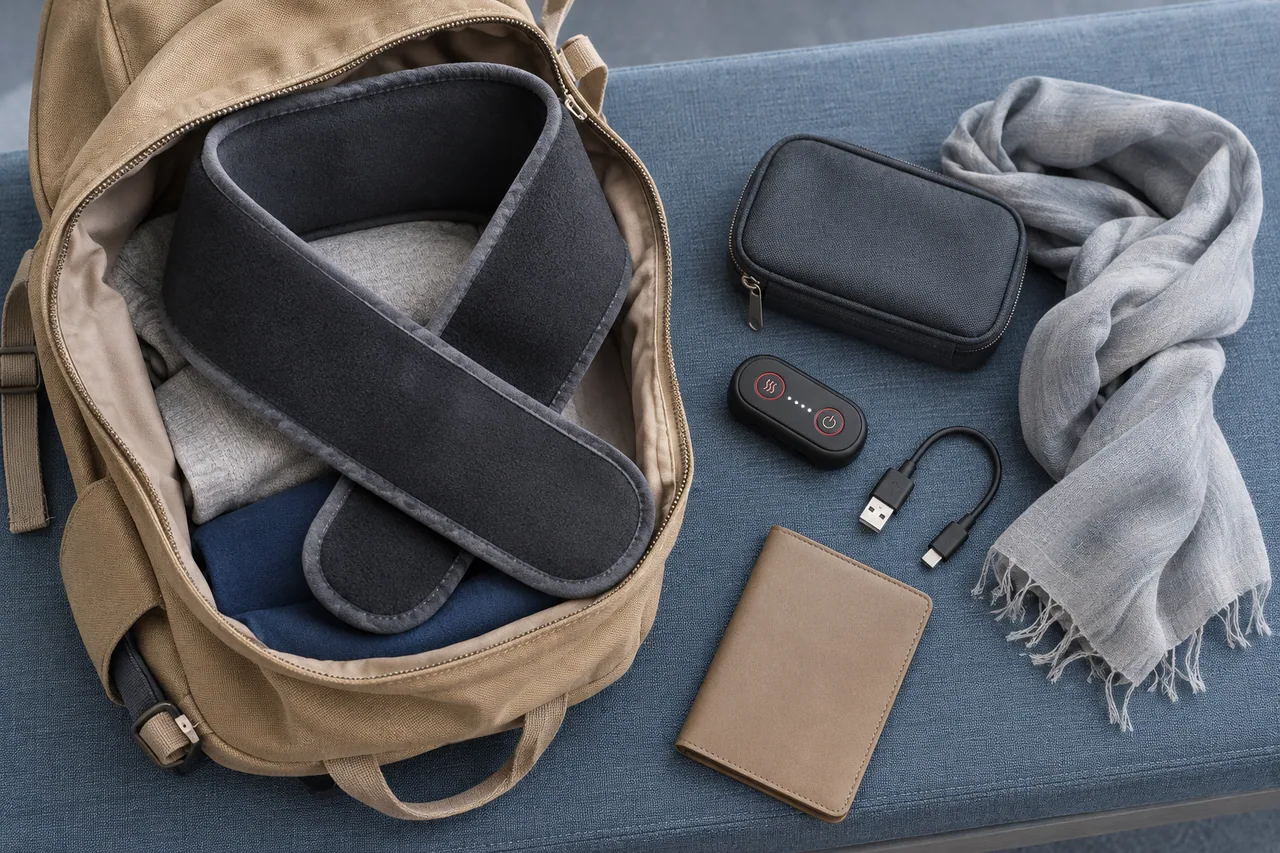
Moving through a busy day—whether managing tasks at a workstation desk, attending to chores around the house, or relaxing in an armchair—often leaves the muscles along your cervical spine and trapezius feeling tight and fatigued. When physical tension builds across your upper shoulders by late afternoon, finding a practical way to unwind becomes an essential part of your daily self-care routine. For many desk workers and active individuals, searching for a cordless neck heating pad introduces a modern category of personal warming appliances designed to deliver gentle surface heat without tethering you to a wall outlet.
Traditional electric heating pads connect directly to household wall sockets, requiring users to remain stationary near a plug point while managing trailing power cords. In contrast, some battery-powered wraps use a rechargeable pack carried in a pocket, allowing movement without a wall cord during use. However, choosing the right portable wrap involves looking beyond general marketing slogans. Because battery capacities, fabric drapes, physical weighting, and heat controls differ among manufacturers, buyers benefit from understanding how to evaluate product specifications objectively before making a purchase.
Evaluating Battery Specifications and Real-World Runtime Claims
The defining advantage of a rechargeable heated neck wrap is its cord-free operation, but evaluating battery performance requires careful attention to published manufacturer details. Rather than accepting generic promises of all-day battery life, prospective buyers should examine how individual sellers describe runtime parameters across different heat levels.
Comparing Pure Enrichment PureRelief and Sharper Image Battery Designs
Comparing official listing documentation for two prominent commercial products illustrates how battery specifications and marketing copy vary across brands:
The Pure Enrichment PureRelief Cordless Neck and Shoulder Heating Pad is engineered for cord-free mobility. Its official listing details a dedicated rechargeable battery pack designed to fit inside a built-in storage pocket sewn into the pad's fabric shell, powering an inline controller with 4 heat settings. On its product page, the manufacturer highlights a 2-hour promotional runtime in its primary marketing copy, while its technical specifications table lists a runtime range of 80 to 140 minutes depending on the selected heat setting.
By comparison, official seller documentation for the Sharper Image Cordless Neck Heat Therapy Wrap details a portable wrap that includes a rechargeable battery pack with 4 heat settings. In its promotional listing materials, the seller states that the battery can supply up to 5 hours of heat on the lowest setting.
Interpreting Runtime Discrepancies and Operating Requirements
Understanding these published details helps shoppers set realistic expectations for daily use. Discrepancies between high-level promotional copy and detailed specification tables—such as Pure Enrichment's 2-hour marketing statement versus its 80 to 140 minute technical range—give shoppers two different figures to consider. The specifications range explicitly depends on the selected heat setting; neither figure is an independently measured result.
Furthermore, seller claims of extended operation—such as Sharper Image's stated 5-hour duration—apply strictly to continuous use on the lowest heat setting. The listing does not establish an exact duration for its other heat settings. Buyers should evaluate battery placement as well; securing a battery pack inside a built-in fabric storage pocket keeps power contained, but users must establish a routine for recharging the battery between warming sessions according to official product instructions.
Rather than declaring one design universally superior, buyers should choose based on their daily schedule. If you prefer straightforward temperature choices with detailed runtime ranges, a model with explicit setting specifications fits your planning. If long operation on low heat is your priority, the seller’s low-setting claim gives you a starting point for comparison.
Fabric Ergonomics, Collar Fit, and Weighted Bead Drape
Beyond battery architecture, the physical construction of a contoured neck and shoulder heating wrap plays a critical role in how comfortably surface heat transfers to your body. The human cervical spine features an inward natural curve, while trapezius muscles slope downward across the upper back. Standard flat rectangular heating pads lay horizontally across flat surfaces, leaving open air gaps around the back of the neck when draped over your shoulders.
To address this anatomical structure, specialized neck wraps feature raised collar contours and extended shoulder drapes. In the Pure Enrichment PureRelief Cordless model, the manufacturer utilizes soft micromink fabric combined with weighted glass beads. The added weight affects how the pad feels across the shoulders; its fit depends on the wearer and the shape of the wrap.
However, prospective buyers should evaluate physical weighting based on personal comfort preferences rather than exaggerated claims. Physical weighting is a matter of individual comfort preference, not a medically established treatment or a guaranteed pain cure. While many individuals enjoy the grounded feel of weighted glass beads across their shoulders, others may prefer a lighter garment or find added weight uncomfortable on sensitive collarbones. Choosing the right weight involves selecting a fabric drape that promotes personal ease without creating restrictive pressure.
Distinguishing Electric Heating Pads from Travel Support Pillows
When browsing personal comfort options online, consumers frequently encounter full-body weighted blankets, mechanical massagers, and specialized travel pillows. Understanding how these distinct product categories differ prevents purchasing an appliance that does not match your intended usage.
As showcased in broader product selections like the Comfytemp heating pad collection, electric warming appliances range from targeted neck wraps to broad back pads and weighted lap wraps. These electric appliances connect to wall sockets or battery packs to deliver active thermal heat to body surfaces. Educational resources on heat therapy from Sunbeam explain that applying gentle warmth to skin surfaces increases local tissue temperature, prompting localized blood vessels to dilate. This vasodilation increases blood circulation across the warmed area, helping tight trapezius muscle fibers feel more relaxed after extended periods of static desk work.
In contrast, non-heated travel support pillows serve a completely different physical purpose. Product documentation for the Cabeau Evolution S3 Neck Pillow details an ergonomic travel collar constructed from memory foam with raised side supports and seat-strap attachments, engineered to prevent forward head-bobbing during long-haul travel.
The Cabeau Evolution S3 and broader Cabeau travel pillow collections are non-heated physical support accessories. They contain no electrical heating elements, battery packs, or thermal wiring, and they are built strictly for posture stabilization during transit rather than active heat therapy at home. Recognizing these structural distinctions prevents mistaking a non-heated travel support pillow for a battery operated heated neck wrap.
Fabric Maintenance, Cleaning Safety, and Battery Handling
Proper maintenance preserves fabric softness while protecting internal electrical wiring and battery components. Cleaning and charging guidelines vary depending on the appliance's construction, making it essential to follow the specific instructions provided by the manufacturer.
Always consult the sewn-in care label and official instruction manual for your specific product before attempting to clean it. For example, in official listing documentation for the Pure Enrichment PureRelief Cordless model, the manufacturer describes the plush micromink fabric cover as machine washable, specifying that users must follow the exact disassembly steps outlined in the product manual before laundering.
Care for the battery and fabric according to the instructions supplied with the specific device:
First, disconnect power before cleaning and remove a battery only as directed for that model. Keep electrical connectors and charging accessories away from water.
Second, never apply water directly to electrical heating pads or attempt to improvise moist heat unless the product instruction manual explicitly permits it. Water entering active electrical connections creates severe short-circuit and shock hazards. Ensure all fabric components and electrical connectors are completely dry before reinserting battery packs or turning on the device.
Third, handle rechargeable battery packs with care. Charge batteries using approved charging accessories, and store power packs in a cool, dry location when not in use.
Workstation Setup, Thermal Safety Protocols, and Operating Guidelines
Integrating a heating pad for neck stiffness or weighted neck and shoulder heating pad for desk workers into your daily routine works best when paired with healthy workstation ergonomics and strict adherence to electrical safety rules.
Workstation Ergonomics and Posture Habits
While applying surface warmth offers comforting relaxation for everyday muscle tightness, addressing daily posture habits is essential for long-term upper body ease:
Adjust your primary computer monitor so the top third of the screen rests at eye level. Keeping your display elevated prevents holding a continuous downward head tilt while typing or reading.
Position your desk chair so your arms rest comfortably at a 90-degree angle without hunching your shoulders upward toward your ears. Take regular movement breaks every hour during extended desk sessions to stand up, gently roll your shoulders backward, and turn your head slowly from side to side to relieve static muscle load across your trapezius muscles.
Keep Electric Pads Out of the Microwave
Never place any electric heating pad, corded wrap, or battery-operated device inside a microwave oven. Electric appliances can be damaged and present a fire hazard in a microwave. Microwaving is strictly limited to specially labeled organic grain or gel packs.
Switch Off Before Sleep
Never wear or use any operating electric heating pad, battery-powered wrap, or thermal appliance while sleeping or napping.
Falling asleep with an active electric heating pad significantly reduces your sensory awareness of rising skin temperatures. This prevents you from removing the heat source if it becomes uncomfortably hot, dramatically increasing the risk of thermal skin burns and electrical hazards. Always power off, disconnect, and remove any heating device before lying down to sleep or nap. Automatic shut-off timers function strictly as secondary safety safeguards and do not replace turning off the device manually before sleep.
Active Skin Monitoring and Medical Precautions
Inspect your skin periodically during every warming session. If a heating wrap feels uncomfortably hot or irritates your skin at any point, stop using the device immediately and turn off the power supply. Do not attempt to cushion an uncomfortably hot pad with extra towels or fabric layers to force continued use. Always follow the exact operating and safety instructions provided in your product's official user manual.
Cong
Cong draws on years of experience in electric heating product processing and manufacturing, together with market research, to explain personal heating products in practical terms.
View author profile