
 By Cong Updated
Compare microwavable lower back heating pads by multi-chamber grain or clay fills, tie-on waist straps, microwave turntable fit, and safe heating steps.
Overview
Unwinding after a long day spent sitting at a computer workstation, driving through heavy afternoon traffic, or performing physical household chores often leaves the muscles along your lower back feeling stiff, tight, and fatigued. Holding a static seating posture for extended periods places continuous strain on your lumbar spine, causing paraspinal muscle tightness to accumulate across your lower back by late afternoon. When lower back discomfort creates persistent physical tension, bringing gentle surface warmth to your waist provides a comforting way to soothe tight muscle fibers and transition into evening rest. For desk workers, drivers, and home relaxers exploring natural relaxation options, searching for a lower back heating pad microwave product introduces a versatile category of non-electric warming packs designed to deliver targeted thermal comfort.
However, choosing and using a microwavable lumbar heat wrap requires looking beyond basic fabric softness or broad promotional headlines. Because microwavable heat packs differ in their organic fills, physical dimensions, securing straps, and thermal retention properties, prospective buyers benefit from understanding how these products operate in daily use. Learning how to distinguish non-electric microwavable packs from electric heating pads, select appropriate lumbar shapes, follow specific heating directions, and practice essential thermal safety ensures you enjoy soothing surface warmth while protecting your home and skin.
Understanding Microwavable Lumbar Heat: How Non-Electric Packs Function
A microwave-labeled, non-electric heat pack is warmed in a microwave according to its own directions and then applied as directed. Unlike an electric pad, it is not connected to a power supply during use.
Microwavable packs come in different shapes and fillings. Their heating and care instructions depend on the individual product, so read the label before use and allow the pack to cool as directed before reheating.
Distinguishing Microwavable Packs from Electric Heating Pads
Check that a pack is specifically labeled for microwave use, and follow its heating instructions. Keep electric pads, cords and batteries out of the microwave.
- STRICT SAFETY WARNING: NEVER MICROWAVE ELECTRIC HEATING PADS. Under no circumstances should any electric heating pad, corded wrap, battery-powered device, power cord, or electrical controller be placed inside a microwave oven. Microwaving electrical components can create a fire hazard. Microwaving is strictly limited to non-electric, specially labeled organic grain or gel packs.
Assessing Form Factors, Lumbar Fit, and Secure Placement
Selecting the right microwavable lower back heat wrap involves evaluating how the garment's physical shape matches your daily seating posture and body frame. The human lumbar spine features an inward natural curve (lumbar lordosis), while lower back muscles span horizontally across the waist.
Rectangular Packs vs. Contoured Lumbar Wraps
Microwavable back packs generally fall into two structural categories:
- Broad rectangular heat packs: Consider the size and shape against the area you want to warm, and follow the pack’s placement instructions.
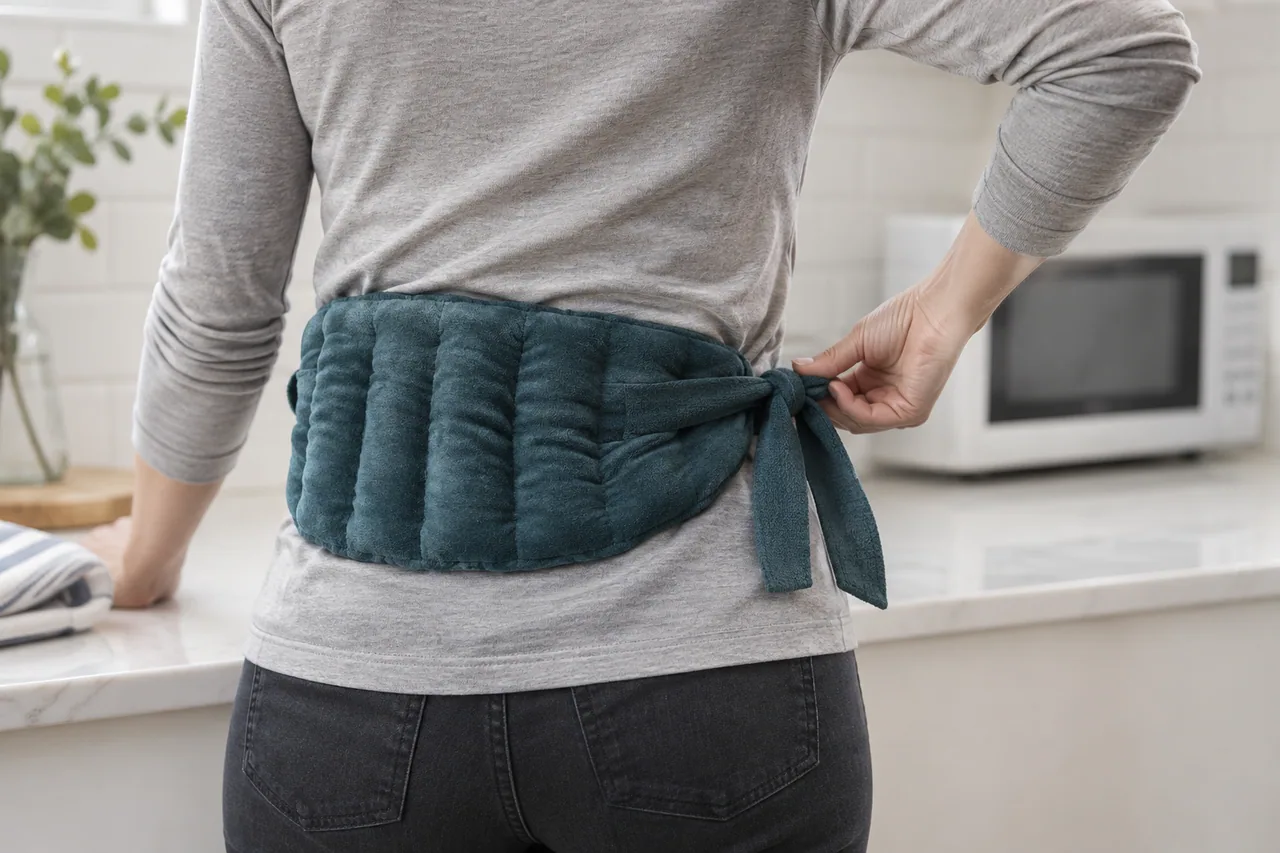
- Contoured lumbar wraps: Some designs use fasteners or ties. Check the fit and follow the product’s directions for placement and use.
Weight Distribution and Internal Channel Construction
Weight and drape affect how a pack feels. Choose a shape and weight that are comfortable for you, without tight or excessive pressure.
Stitched compartments can help keep filling distributed. Examine the construction and follow the product’s instructions rather than assuming a particular temperature or heating performance.
Fabric Care and Maintenance Hygiene
Check the individual pack’s label for cleaning and storage instructions. Keep it in good condition and inspect it for wear before use.
Public Safety Guidelines for Grain Packs: Insights from Fire and Rescue NSW
Operating a microwavable organic grain pack safely requires adhering to established fire safety principles. Official public safety advisories published by Fire and Rescue NSW regarding wheat-filled heat packs (commonly known as wheat bags) offer vital guidance for home safety.
According to Fire and Rescue NSW, overheated wheat bags present serious fire and burn risks. If microwaved for excessive durations or at overly high wattage levels, the organic wheat fill inside the pack can dry out, scorch, and ignite internal fires. Fire safety authorities emphasize several essential operating guidelines:
- Strictly Follow Heating Directions: Always heat wheat packs according to the exact timing and wattage instructions provided on the product packaging. Never guess microwave times or overheat the pack to make it extra hot.
- Continuous Supervision: Supervise the heat pack continuously while it is inside the microwave oven. Never leave a heating pack unattended during a microwave cycle.
- Allow Complete Cooling Before Reheating: Always allow a wheat pack to cool down completely to room temperature before placing it in the microwave for another heating cycle. Reheating an already warm pack can cause the internal temperature to spike unexpectedly, scorching the organic fill.
- Never Warm Bedding or Use While Asleep: Never place a heated wheat pack inside a bed under blankets or duvets to warm the sheets, and never use a wheat pack while sleeping. Trapped heat underneath bedding cannot dissipate, creating severe fire hazards.
- Regular Inspection for Scorching: Inspect the fabric shell and seams regularly for signs of discoloration, fabric fraying, or burning odors. Discard any pack that shows signs of scorching or internal degradation.
- Important Product Distinction: While Fire and Rescue NSW provides critical fire safety principles for wheat-filled packs, users must not generalize wheat-specific directions to all microwavable products. Different organic fills—such as flaxseed, unpolished rice, or cherry pits—and synthetic gel packs possess distinct moisture content and thermal retention properties. Always follow the specific heating instructions supplied on your individual product's label.
Physiological Mechanisms, Back Spasms, and Health Scope
Understanding how surface warmth interacts with lower back tissue helps establish realistic expectations for everyday home comfort. Medical and health publications provide valuable context on how thermal therapy operates on muscle tissue.
Vasodilation and Muscle Relaxation
Healthline and Medical News Today describe heat as one option for temporary relief of muscle stiffness. These general explanations do not establish a specific result for any particular pack.
Soothing Everyday Back Spasms
Cleveland Clinic describes back spasms as involuntary muscle contractions and discusses heat and cold among approaches to relief. A pack does not address every possible cause of back pain.
Distinguishing Heat Therapy from Cold Therapy
Choosing between heat and cold depends on the nature of your physical discomfort:
- Cold Therapy Applications: Cold packs or ice compresses are most effective for acute, brand-new injuries or sudden swelling (typically within the first 48 hours). Cold application induces vasoconstriction (narrowing of blood vessels), limiting blood flow to diminish acute swelling and numb sharp pain.
- Heat Therapy Applications: Thermal heat therapy is ideal for ongoing muscle stiffness, chronic lower back tightness, and non-inflammatory aches. Gentle warmth relaxes tight muscle fibers and eases daily spinal stiffness.
- Clear Scope Boundary: While health literature explains the physiological mechanisms of blood circulation and muscle relaxation, general thermotherapy principles do not constitute clinical proof of guaranteed treatment effects or medical cures. A microwavable lower back heating pad is a supportive home comfort tool designed to soothe everyday muscle tightness; it does not cure underlying lumbar disc herniations, spinal stenosis, or structural nerve conditions.
Dermatological Precautions, Active Monitoring, and Safe Usage Protocols
Operating a microwavable heat pack safely requires practicing active skin monitoring and adhering to essential dermatological precautions.
Understanding Toasted Skin Syndrome (Erythema Ab Igne)
A crucial dermatological consideration associated with repeated heating pack use is Toasted Skin Syndrome, medically known as Erythema Ab Igne. As documented by dermatological resources at the Cleveland Clinic, toasted skin syndrome is a skin condition caused by repeated, prolonged exposure to low-level heat or infrared radiation that is not hot enough to cause an immediate thermal burn.
When a heating pack or warm cushion is applied to bare skin or thin clothing repeatedly for hours at a time over several weeks, the low-level heat causes localized changes in skin blood vessels and elastic fibers. This results in a characteristic net-like, reticulated pattern of hyperpigmentation, skin redness, and brown discoloration across the warmed area.
To protect your skin against toasted skin syndrome, avoid continuous, unbroken heat application. Limit warming sessions to short, discrete periods, inspect your skin regularly, and allow your skin to cool naturally between applications.
Essential Thermal Safety Rules
Check Temperature Before Use: Always test the surface temperature of a microwavable pack with your hands or inner wrist before placing it against your lower back. If the pack feels uncomfortably hot, allow it to cool for a few minutes.
Active Skin Monitoring: Inspect your skin periodically during every warming session. If a heat pack causes skin redness or feels uncomfortably hot, stop using the pack immediately. Do not attempt to cushion an uncomfortably hot pack with extra towels to force continued use.
ABSOLUTE PROHIBITION ON SLEEPING WITH HEAT: Never wear or use any microwavable heat pack, electric heating pad, or thermal wrap while sleeping or napping. Falling asleep with an active heat source significantly reduces your sensory awareness of rising skin temperatures, dramatically increasing the risk of thermal skin burns.
Always follow the exact heating instructions, care guidelines, and safety precautions printed on your individual product's label.
Cong
Cong draws on years of experience in electric heating product processing and manufacturing, together with market research, to explain personal heating products in practical terms.
View author profile