
 By Cong Updated
Understand how air-activated disposable lower back heating pads work, how to size waist wraps vs. adhesive patches, and how to prevent low-temperature burns.
Overview
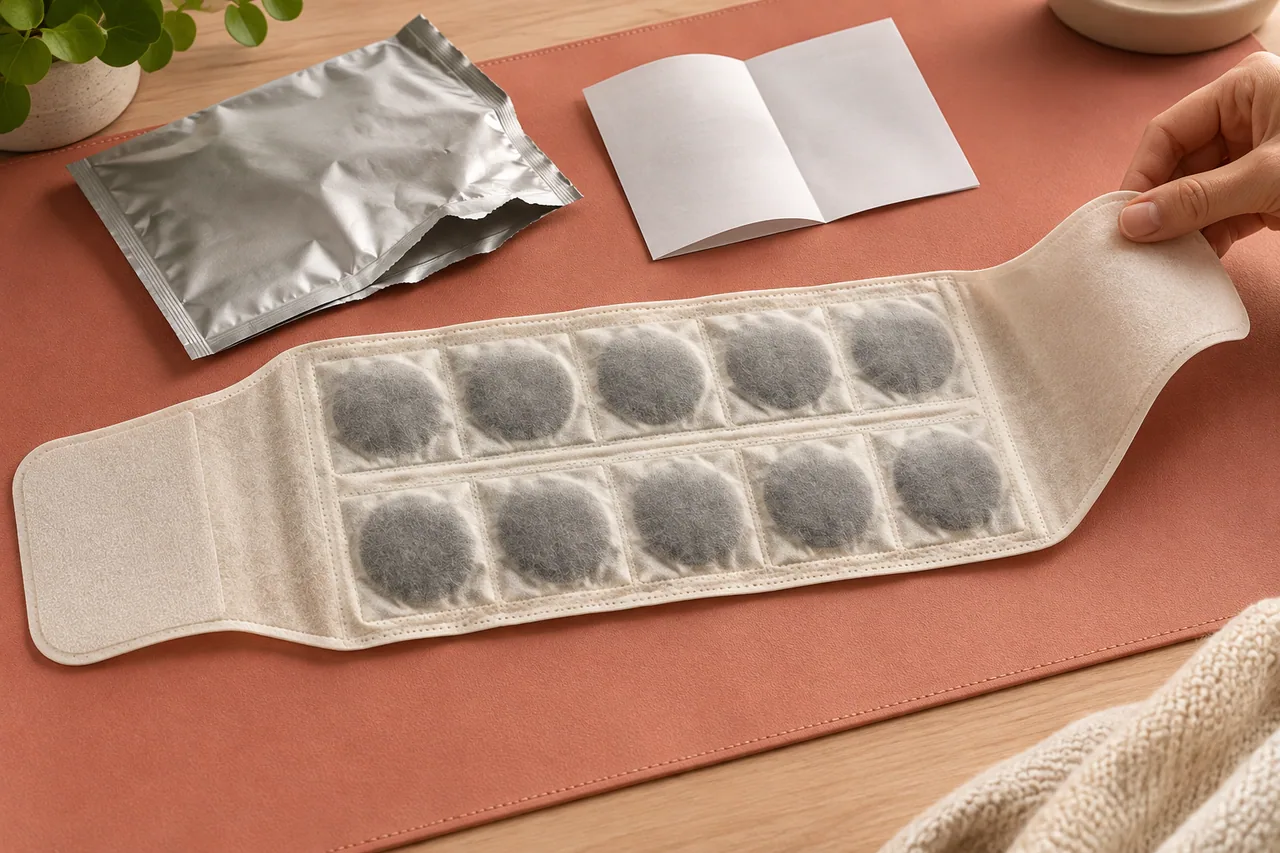
Navigating daily lower back stiffness—whether caused by long hours sitting at a workstation desk, driving during extended commutes, or performing physical household tasks—often leaves lumbar muscles feeling tight, heavy, and fatigued. Holding a static seating posture places continuous load on your lower spine, causing paraspinal muscle tightness to accumulate across your waist by late afternoon. Bringing gentle surface warmth to your lower back provides a comforting way to soothe tight muscle fibers and transition into evening rest. For desk workers, drivers, travelers, and active individuals exploring portable comfort options, searching for a lower back heating pad disposable product introduces a convenient category of single-use, air-activated heat wraps engineered for mobility.
Unlike stationary electric heating pads that require power outlets or corded battery packs, a disposable lower back heating pad operates completely wire-free. Thin, lightweight air-activated wraps fit discreetly underneath everyday clothing, allowing you to maintain an active schedule while enjoying continuous surface warmth. However, choosing and using a disposable heat wrap requires looking beyond basic packaging claims. Because single-use thermal wraps generate heat through chemical oxidation, prospective users benefit from understanding how air-activated technology works, how to fit waist wraps properly, how to follow product label safety directions, and how to protect delicate skin from thermal injury.
How Air-Activated Heat Wraps Function: Disposables vs. Reusables
The defining characteristic of a disposable back heat wrap is its single-use, air-activated heating mechanism. Understanding how air activation differs from electric and microwavable heating formats helps clarify which warming technology best supports your daily routine.
ThermaCare explains that its single-use HeatWraps produce warmth when iron particles react with air after the pouch is opened. Once the reaction is spent, the wrap cannot be reactivated and should be discarded.
Comparing Disposable Wraps, Electric Pads, and Microwavable Packs
Comparing disposable wraps against other warming categories highlights distinct operational trade-offs:
- Air-activated disposable wraps: These single-use products do not need a power cord. Check the selected product’s directions for its intended placement and wear time.
- Reusable electric heating pads: Features and settings vary by model. Follow the individual device’s instructions for placement, cleaning and storage.
- Microwave-labeled packs: Some non-electric packs are designed to be warmed in a microwave. Use only products specifically labeled for that purpose and follow their instructions.
STRICT SAFETY WARNING: NEVER MICROWAVE AIR-ACTIVATED WRAPS
Never place any air-activated disposable heat wrap or electric heating pad inside a microwave oven. Air-activated wraps contain iron powder and metallic components. ThermaCare warns that reheating its wrap in a microwave can create a fire hazard. Microwaving is strictly restricted to non-electric organic grain or gel packs explicitly labeled as microwavable.
Label Analysis and Case Study: ThermaCare Lower Back and Hip Wrap
To understand how a single-use lower back heating pad is designed and used safely, consider the official product labeling, product page, and FAQ documentation for a prominent commercial model: the ThermaCare Lower Back and Hip heat wrap.
Official product documentation for the ThermaCare Lower Back and Hip model details explicit operating parameters, age-specific warnings, and medical safety precautions.
Operating Duration and Rest Intervals
Label instructions for the ThermaCare Lower Back and Hip wrap specify wearing the heat wrap for no more than 8 hours in any 24-hour period. This 8-hour maximum wear limit is an explicit product instruction specific to the ThermaCare Lower Back and Hip label. Users should never treat an 8-hour wear instruction as a universal safety rule for all disposable wraps or general heating pads, as different brands feature distinct thermal outputs.
Age-Specific Application Guidelines (55+ Rule)
Product labeling for the ThermaCare Lower Back and Hip wrap states an explicit age-based safety rule: individuals aged 55 and older should wear the heat wrap over a layer of clothing, rather than applying it directly to the skin. Follow the product’s age-specific clothing-layer instruction, and inspect the skin frequently during use.
Physical Application Precautions
Product labeling outlines strict physical handling instructions to prevent excessive heat build-up:
- Do Not Fold or Crease: Never fold, overlap, or crease heating cells during application, as folding concentrates thermal energy and can cause localized scorching.
- Do Not Reheat or Microwave: Never attempt to microwave, heat in an oven, or submerge the wrap in hot water to reactivate used heat cells.
- Do Not Apply Added Pressure: Avoid wearing the wrap underneath tight waistbands, restrictive belts, or tight clothing, and avoid leaning heavily against hard chair backrests or lying flat on top of the wrap. The product label warns that added pressure increases burn risk.
- Do Not Use on Damaged Skin: Never apply a disposable heat wrap over broken skin, open wounds, bruised tissue, or skin areas that are swollen or inflamed.
Label Warnings and Contraindications
Product label warnings explicitly prohibit using the wrap under specific physical conditions: do not use on skin areas unable to sense heat, do not combine simultaneously with other heat sources (such as electric pads, microwavable packs, or topical pain creams), and do not use if heating cells are torn, damaged, or leaking.
Essential Medical Precautions from the Product Label
Product labeling explicitly states that individuals with specific underlying medical conditions should consult a healthcare provider before using thermal heat wraps: individuals with diabetes, impaired circulation, heart disease, rheumatoid arthritis, or who are pregnant.
Physical Fit, Waist Fasteners, and Clothing Layering
Selecting an air-activated back heat wrap involves evaluating how the garment fits around your waist and sits underneath everyday clothing.
Contoured Lumbar Shape and Adjustable Fasteners
Check the wrap’s stated fit and attachment method before use. Position it flat and adjust it comfortably according to the product directions; do not overtighten.
Layering Strategies for Daily Comfort
Integrating a disposable heat wrap into your wardrobe depends on your age and skin sensitivity:
- Placement: Follow the specific product label for your age and intended body area, and check the skin frequently.
- 55 and Older Application: As specified on product labeling, users 55 and older must position the wrap over a shirt, tank top, or undershirt to protect delicate skin from direct thermal contact.
- Discreet Wardrobe Fit: Thin air-activated wraps fit neatly beneath loose sweaters, button-down shirts, or casual jackets, allowing users to wear the product discreetly at work or during travel without bulky outlines.
Physiological Warmth, Back Spasms, and Health Scope
Understanding how surface warmth interacts with lower back tissue helps establish realistic expectations for everyday home self-care. Medical and health publications provide valuable context on thermal therapy mechanisms.
Vasodilation and Muscle Relaxation
Medical News Today discusses warmth as one approach to temporary relief of muscle stiffness. Its general discussion does not establish a specific result for a particular product.
Soothing Everyday Back Spasms
Cleveland Clinic describes back spasms as involuntary muscle contractions and discusses heat and cold among approaches to relief. Back pain can have different causes.
Distinguishing Heat Therapy from Cold Therapy
Choosing between heat and cold depends on the nature of your physical discomfort:
- Cold Therapy Applications: Cold packs or ice compresses are most effective for acute, brand-new injuries or sudden swelling (typically within the first 48 hours). Cold application induces vasoconstriction (narrowing of blood vessels), limiting blood flow to diminish acute swelling and numb sharp pain.
- Heat Therapy Applications: Thermal heat therapy is ideal for ongoing muscle stiffness, chronic lower back tightness, and non-inflammatory aches. Gentle warmth relaxes tight muscle fibers and eases daily spinal stiffness.
- Clear Scope Boundary: While health literature explains the physiological mechanisms of blood circulation and muscle relaxation, general thermotherapy principles do not constitute clinical proof of guaranteed treatment effects or medical cures. A disposable lower back heating pad is a supportive home comfort tool designed to soothe everyday muscle tightness; it does not cure underlying lumbar disc herniations, spinal stenosis, or structural nerve conditions.
Dermatological Safety, Active Monitoring, and Safe Usage Protocols
Operating a disposable heat wrap safely requires practicing active skin monitoring and adhering to essential dermatological precautions.
Understanding Toasted Skin Syndrome (Erythema Ab Igne)
A crucial dermatological consideration associated with repeated heat exposure is Toasted Skin Syndrome, medically known as Erythema Ab Igne. As documented by dermatological resources at the Cleveland Clinic, toasted skin syndrome is a skin condition caused by repeated, prolonged exposure to low-level heat or infrared radiation that is not hot enough to cause an immediate thermal burn. When a heating pad or heat wrap is applied to bare skin or thin clothing repeatedly for hours at a time over several weeks, the low-level heat causes localized changes in skin blood vessels and elastic fibers. This results in a characteristic net-like, reticulated pattern of hyperpigmentation, skin redness, and brown discoloration across the warmed area. To protect your skin, avoid continuous heat application, inspect your skin regularly, and allow skin to cool naturally between uses.
ABSOLUTE PROHIBITION ON SLEEPING WITH ACTIVE HEAT
Never wear or use any disposable heat wrap, electric heating pad, or thermal appliance while sleeping or napping. Falling asleep with an active heat wrap significantly reduces your sensory awareness of rising skin temperatures. This prevents you from removing the heat source if it becomes uncomfortably hot, dramatically increasing the risk of thermal skin burns and skin damage. Always remove disposable heat wraps before lying down to sleep or nap.
Active Skin Monitoring and Removal Protocols
Inspect your skin underneath the heat wrap frequently during every warming session. Check for skin redness, swelling, or thermal discomfort. If the heat wrap feels uncomfortably hot, or if your skin becomes irritated, red, or burned at any point, remove the wrap immediately. Never ignore discomfort or attempt to force continued wear. Follow the product label and check your skin frequently throughout use.
Cong
Cong draws on years of experience in electric heating product processing and manufacturing, together with market research, to explain personal heating products in practical terms.
View author profile