
 By Cong Updated
Learn how weighted neck heating pads combine gentle pressure and steady warmth, with practical tips on fill materials, shoulder fit, and session safety.
Overview
Modern daily routines place significant physical demands on the neck and upper back. Working for hours at a computer desk, driving long distances, or spending time scrolling on mobile devices often leads to forward-head posture—frequently described as "text neck." Over the course of a day, muscles around the neck, upper back, and shoulders can become fatigued, tight, and uncomfortable.
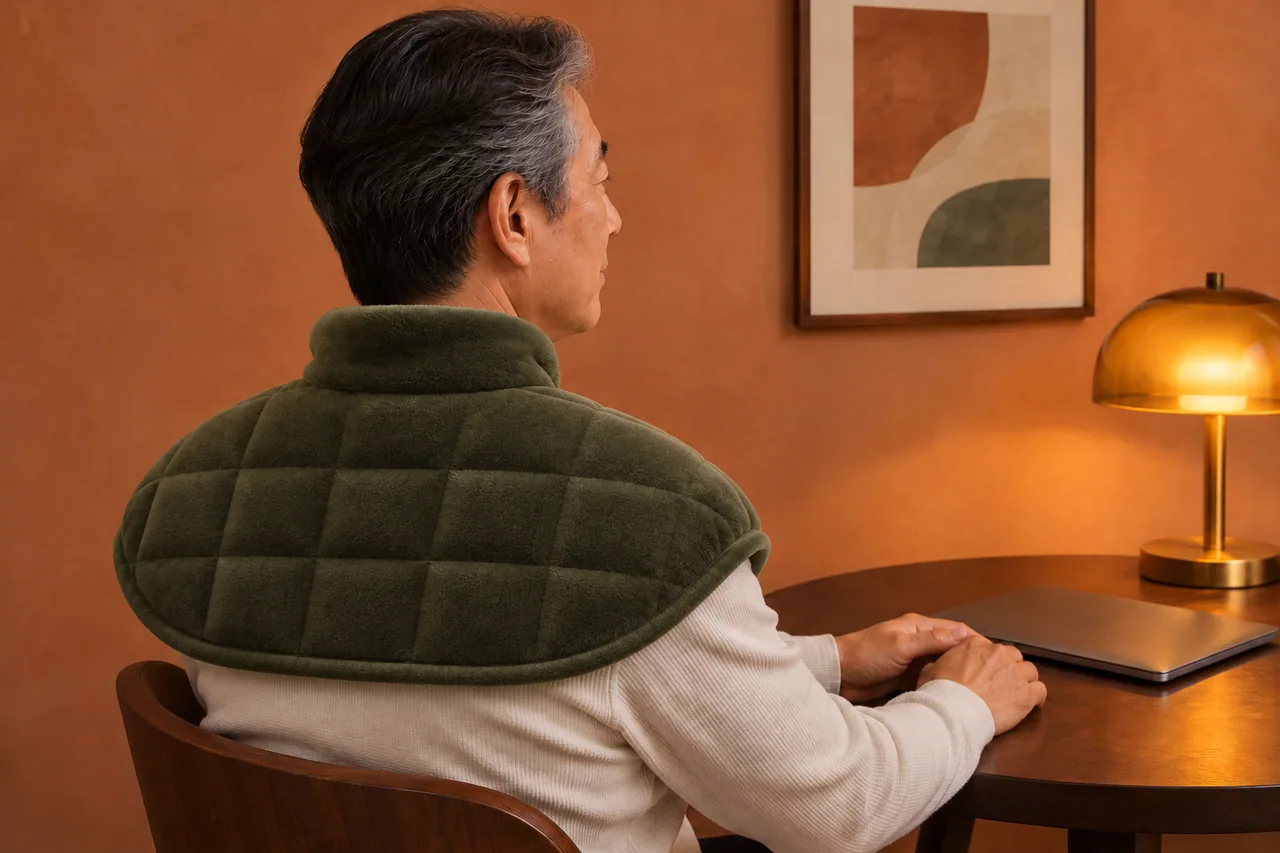
A weighted neck heating pad combines warmth with a wrap that rests across the shoulders. It can be a comforting addition to a quiet break at home, whether you are stepping away from a screen or unwinding in the evening.
To select and use a weighted neck heating pad effectively, it helps to look beyond marketing descriptions. Understanding how tactile weight differs from thermal warmth, adhering to clear safety rules, and knowing when neck pain signals a serious medical issue will help you enjoy safe, reassuring comfort at home.
Weight vs. Warmth: Understanding How Weighted Heating Works
When trying a weighted neck wrap, it helps to recognize that the added weight and the thermal heat perform two distinct roles. One provides physical contact and fit, while the other offers temperature-based warmth.
The Role of Added Weight: Fit, Contact, and Gentle Pressure
Weighted wraps can use different fillings and stitched sections. Depending on its design and fit, a wrap may rest with gentle pressure across the shoulders.
- Conforming to Body Contours: Standard flat heating pads often drape loosely over the shoulders, leaving open air spaces around the neck curve. Added weight helps the fabric conform naturally to the shape of your neck and upper back.
- Consistent Contact Surface: A well-fitting wrap can rest comfortably against the neck and shoulders without needing to be held in place.
- A Reassuring, Grounded Feeling: Many users find gentle downward pressure feels comfortable and steadying, akin to a soft lap pad or a cozy heavy blanket.
- Important Boundary: Tactile weight is a comfort feature designed for fit, positioning, and personal relaxation. Added weight does not cure cervical spine conditions, repair internal tissues, or guarantee medical or therapeutic results.
The Physiology of Applied Warmth
The physical relaxation most people feel comes from thermal warmth. Applying mild heat to the skin prompts simple, natural responses in body tissues:
- Encouraging Local Microcirculation: Warmth causes small blood vessels near the skin to expand slightly (a process known as vasodilation). This increases local blood flow to the immediate area.
- Soothing Stiff Muscle Fibers: Mild heat helps ease stiffness in overworked muscles, making tissues feel softer and more pliable.
- Sensory Distraction (Gate-Control Principle): According to the gate-control theory of pain perception, non-painful thermal signals travel along nerve pathways to the brain, helping temporarily soften or mask dull background muscle aching.
A Note on Clinical Evidence
Gentle warmth and a comfortable fit can make a wrap part of a relaxing break during the day.
Heat vs. Cold: Choosing the Right Approach for Neck Discomfort
When neck tightness occurs, consumers often wonder whether to use an ice pack or a warming pad. The best option depends on what caused the discomfort and how recently it began.
Cold Therapy (Ice)
- What it does: Cold temperatures constrict blood vessels (vasoconstriction), slowing local circulation and temporarily numbing nerve endings.
- When to consider it: Cold is commonly used for a recent minor strain or swelling. Neck pain after a serious fall or collision requires urgent medical assessment.
- How to apply: Apply a wrapped ice pack for short intervals, keeping a protective towel between the ice and bare skin.
Heat Therapy (Warmth)
- What it does: Warmth expands blood vessels (vasodilation), increases local blood flow, and relaxes tight muscle fibers.
- When to consider it: Warmth is typically preferred for ongoing muscle tightness, morning neck stiffness, fatigue from desk work, or relaxing muscles before gentle stretching.
- How to apply: Apply gentle warmth over the neck and shoulders for brief sessions, maintaining a fabric layer between the heating unit and your skin.
Alternating Hot and Cold
For general muscle soreness without swelling, alternating between brief cold and warm applications can provide a comforting sensory balance. Because individual responses vary, listen to your body and stop any application that causes discomfort.
Safe Operational Rules & Burn Prevention
Electric and microwaveable heating wraps provide convenient warmth, but safety should always be a priority. Thermal skin burns and irritation can occur if heating units are misused or applied for too long.
Follow Product Manual Guidelines
Heating element designs, power requirements, fabric thickness, and controller settings vary significantly between products. Always read and strictly follow the instruction manual provided with your specific device.
Keep Sessions Brief (General 15-to-20 Minute Guideline)
A standard guideline for general heat application is 15 to 20 minutes per session. A short session does not guarantee safety; follow the product instructions and check your skin. Because skin sensitivity varies from person to person, never continue a session if your skin feels uncomfortably hot, and allow your skin to return to normal temperature between uses.
Always Use a Protective Insulation Layer
Never place an active heating element directly against bare skin unless the product features an integrated, manufacturer-approved plush lining designed for direct skin contact. Placing a clean towel or layer of clothing between the heater and your skin acts as a protective barrier against excessive heat.
Never Use Heating Devices While Sleeping
Do not wear or use a heating device while sleeping. Falling asleep with an active heating wrap greatly increases the risk of severe thermal burns, as sleeping reduces your awareness of rising skin temperature. Sleeping with plugged-in electrical cords also creates entanglement and fire hazards. Always power off and unplug electric units before lying down to sleep or nap. While automatic shut-off timers are a helpful backup safety feature, they must never replace manually turning off your device before sleep.
Water Exposure, Cleaning, and Maintenance
- Electric Heating Wraps: Electric models contain internal wiring and electrical connectors. Never submerge an electric unit in water or wash it unless the user manual explicitly states that the heating insert or cover is detachable and machine-washable. Ensure all electrical connections are completely dry before plugging the device back in.
- Microwaveable Heating Packs: Microwaveable packs filled with grain or glass beads should not be soaked in water, as internal fillings can trap moisture. Spot clean outer fabrics with a damp cloth according to manufacturer instructions.
When Neck Stiffness Requires Immediate Medical Attention
Most mild neck stiffness stems from routine muscle fatigue, poor posture, or sleeping at an awkward angle, and usually improves within several days of gentle self-care. However, neck pain can sometimes indicate an underlying spinal injury or medical condition.
Seek medical care for neck pain after an injury or with neurological symptoms. Severe trauma, fever with a stiff neck, progressive weakness, or loss of bowel or bladder control warrants emergency care:
- Severe Trauma or Impact: Neck pain following a car accident, fall, or severe athletic impact.
- Progressive Numbness or Weakness: Numbness, tingling, or progressive weakness spreading down an arm, shoulder, or hand.
- High Fever and Neck Rigidity: Severe neck stiffness accompanied by a high fever, sudden intense headache, nausea, vomiting, or sensitivity to light.
- Loss of Coordination or Incontinence: Sudden difficulty balancing, trouble walking, or any loss of bowel or bladder control.
- Persistent Pain: Contact a healthcare professional if discomfort does not improve after a week of gentle care.
Practical Buyer's Guide: Features to Consider
When shopping for a weighted thermal wrap, evaluating practical design features ensures you select a safe and comfortable product:
Ergonomic Shape & Weight Distribution
Select wraps contoured specifically for the neck, shoulders, and upper back. Baffled stitching helps keep weighted beads evenly distributed so the wrap rests naturally without pulling uncomfortably on your neck.
Electrical Safety Testing & Certification
For electric models, confirm the product has undergone independent safety testing by recognized organizations (such as UL or ETL listings). Ensure the device includes automatic shut-off timers and internal overheat protection.
Adjustable Heat Controls
Multi-level temperature controllers allow you to select a heat setting that suits your skin sensitivity and comfort preferences.
Quality Fabric & Washability
Choose soft, skin-friendly fabrics like micro-plush or fleece that permit smooth heat transfer. Check care instructions to confirm how the cover should be cleaned.
Summary: Enjoying Safe Thermal Comfort at Home
A weighted neck heating wrap can be a cozy addition to your daily relaxation routine. Whether taking a break during a long workday, unwinding after a cold commute, or relaxing on the sofa in the evening, gentle warmth paired with soft weight offers a simple way to soothe daily upper body fatigue. By choosing a well-designed wrap, respecting session limits, and prioritizing electrical safety, you can enjoy thermal comfort with peace of mind.
Medical Disclaimer
Disclaimer: The information provided in this guide is for educational and self-care informational purposes only and does not constitute professional medical advice, diagnosis, or treatment. Always consult a qualified physician or physical therapist regarding persistent neck pain, underlying spine conditions, or before starting any new heat therapy routine.
Cong
Cong draws on years of experience in electric heating product processing and manufacturing, together with market research, to explain personal heating products in practical terms.
View author profile