
 By Cong Updated
Review key features to look for when comparing Costco neck heating pads, from contoured shoulder coverage and weighted edges to heat levels and wash care.
Overview
Modern daily routines place continuous demands on the neck, shoulders, and upper back. Working for hours at a computer workstation, driving long distances, or spending extended periods looking down at smartphones and tablets can cause forward-head posture—frequently described as "text neck." Over time, the muscles supporting the cervical spine, particularly the levator scapulae, upper trapezius, and rhomboids, can become fatigued, tight, and sore.
A neck heating pad from Costco can come as part of a larger set. Comparing the shape, controls and care instructions helps you decide whether a bundle fits the way you plan to use it, from a short break at your desk to a quiet evening at home.
However, choosing and safely using a weighted neck heating pad or electric wrap requires looking at product features, understanding the physiological mechanisms of heat therapy, and adhering to strict heat safety guidelines. This practical buyer's guide explores warehouse bundle specifications, the science of relieving myofascial muscle knots, thermal safety rules, and essential medical precautions to help you select and operate a neck heating pad safely.
Evaluating Warehouse Heating Pad Bundles: Key Features and Specifications
Shopping at warehouse clubs often provides access to multi-piece personal care sets. A prominent example is the Sunbeam Neck Shoulder Wrap and King Heating Pad Bundle listed on Costco.com (Item 1659668). Examining the features of this specific set illustrates what to consider when evaluating a multi-device warming package.
Dual-Pad Bundle Versatility
Multi-piece sets typically combine two distinct form factors to target different areas of the body:
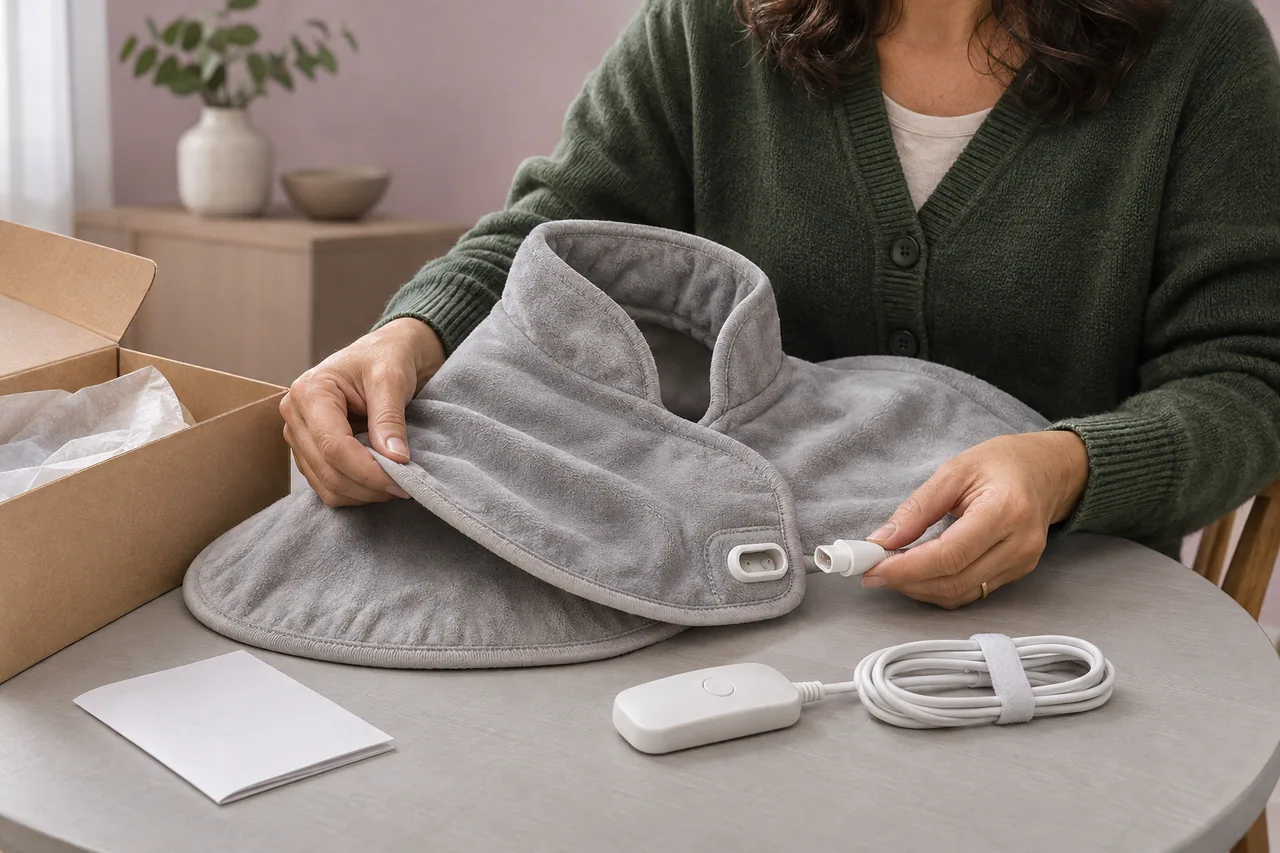
Shaped Neck and Shoulder Wrap: Contoured specifically to fit around the cervical spine and drape over the upper trapezius muscles. Its shape is intended to cover the neck and shoulders.
King-Size Heating Pad: A larger pad designed for broader coverage.
Having both a specialized neck wrap and a broad king-size pad allows users to switch between targeted neck care and general back relaxation depending on where tension accumulates.
Fabric Comfort and Easy Maintenance
Because personal heating pads sit close to the body, fabric quality and washability are essential considerations:
- Micro-Plush Fabric Construction: The listed bundle uses micro-plush fabric with polyester cover and fill.
- Machine-Washable Hygiene: Costco lists the bundle as machine washable with low-heat tumble drying. Always check the product-specific care label and instruction manual before laundering to protect internal components.
Temperature Adjustability and Controls
Select heating pads featuring multi-level temperature controllers. Adjustable heat settings allow users to customize warmth intensity based on personal comfort preferences, ambient room temperature, and individual skin sensitivity.
The Science of Muscle Knots and Neck Stiffness: How Heat Restores Comfort
While a neck and shoulder heating pad is a comforting home accessory, the physical relaxation it provides relies on well-established physiological principles.
Understanding Myofascial Trigger Points ("Muscle Knots")
The medical term for a muscle knot is a myofascial trigger point. These knots feel like small, tight, tender nodules or "peas" under the skin, most commonly occurring around the neck, shoulders, and upper back.
Muscle knots can develop with prolonged tension or overexertion. They can feel tender or stiff and may be associated with aching or reduced range of motion.
Physiological Mechanisms of Applied Heat
Applying controlled warmth to an active muscle knot can offer a comforting sensation:
- Promoting Localized Vasodilation: Heat stimulates thermal nerve endings in the skin, causing local blood vessels to dilate (vasodilation). This expansion boosts regional blood circulation across the warmed area.
- A Warming Break: Comfortable warmth can be part of a short break from a demanding day.
- Relieving Muscle Spasms and Stiffness: As blood circulation increases, tight muscle fibers relax, easing involuntary muscle spasms and restoring tissue flexibility.
- Comfortable Warmth: Use a comfortable temperature and stop if your skin becomes too hot.
Supporting Habits for Muscle Recovery
To maximize the benefits of heat therapy for heating pad for neck stiffness relief, combine regular warming sessions with healthy daily habits:
- Stay Hydrated: Adequate water intake keeps muscle tissues fluid and supports efficient blood circulation.
- Practice Ergonomic Workstation Setup: Keep computer monitors at eye level, support your lower back, and use a raised keyboard to minimize neck strain.
- Take Movement Breaks: Step away from your desk periodically throughout the day to walk, stretch, and reset your posture.
Heat vs. Cold Therapy: Choosing the Right Approach for Neck Strain
When neck discomfort arises, deciding whether to apply an ice pack or a warming pad depends on the timing and underlying cause of the issue. Clinical literature indicates that both temperature modalities offer distinct benefits.
Cold Therapy (Cryotherapy)
- Physiological Response: Cold application contracts local blood vessels (vasoconstriction), slowing regional circulation, curbing fluid buildup, and numbing local nerve endings.
- Primary Indications: Cold is commonly used for a recent minor strain or swelling. Neck pain after a serious fall or collision requires urgent medical assessment.
- Application Method: Apply a wrapped cold pack or gel ice pack for brief sessions of 15 to 20 minutes at a time. Always keep a protective fabric barrier between the ice pack and bare skin to prevent tissue damage or frostbite.
Heat Therapy (Thermotherapy)
- Physiological Response: Applied warmth expands local blood vessels (vasodilation), boosts regional circulation, and relaxes tight muscle tissue.
- Primary Indications: Heat therapy is preferred for chronic muscle tightness, morning neck stiffness, myofascial muscle knots, posture fatigue from computer work, or warming up muscles before gentle stretching.
- Application Method: Apply comfortable warmth over the neck and shoulders in brief sessions of 15 to 20 minutes, using an insulating fabric layer to safeguard the skin.
Alternating Therapy
For general muscle soreness without acute swelling, alternating between brief cold and warm applications can provide a soothing sensory balance. Always stop any application if your skin feels uncomfortably hot or cold.
Safe Operating Protocols and Burn Prevention Guidelines
Electric heating pads and wraps offer convenient home comfort, but thermal safety rules must always be strictly observed. Misusing a heating device or exposing delicate skin to continuous heat can cause thermal skin burns or irritation.
Follow Product Care Labels and Manuals
Because heating element arrangements, cable configurations, fabric layers, and control settings vary between products, always read and strictly follow the user manual provided with your specific device.
Adhere to the 15-to-20 Minute Application Guideline
A general rule for thermal application is to limit individual heating sessions to 15 to 20 minutes. Choose comfortable warmth and check the skin during use.
- Skin Safety Notice: Limiting sessions or using a cloth barrier does not eliminate the risk of burns. Check your skin during and after use and stop if it feels uncomfortably hot or becomes excessively red. Do not apply heat to a fresh injury, an open wound, hot or inflamed skin, or an area that is numb or has reduced heat sensation.
Maintain a Protective Insulation Layer
Never place an active heating element directly against bare skin unless the manufacturer explicitly specifies that the built-in plush cover is tested and approved for direct contact. Placing a clean towel or clothing layer between the heater and your skin acts as an essential thermal barrier against excessive warmth.
Absolute Prohibition on Sleeping While Using Heating Devices
Never use or wear a heating pad while sleeping. Falling asleep with an active heating wrap significantly increases the risk of severe thermal skin burns, as sleeping reduces your sensory awareness of rising skin temperatures and prevents you from removing the heat source when needed. In addition, sleeping with plugged-in electrical cords creates risks of cord damage, tangling, or electrical hazards. Always turn off and unplug your heating device before lying down to sleep or nap. While automatic shut-off timers provide a secondary safety feature, they must never replace manually turning off the device before sleeping.
Water Exposure and Laundry Rules
- Disconnect Power Supplies: Always disconnect electrical power cords and controllers before cleaning washable fabric covers.
- Follow Laundry Instructions: Follow specific care labels regarding water temperature, cycle settings, and drying limits (such as low-heat tumble drying). Ensure electrical connections are completely dry before reconnecting to power.
When Neck Stiffness Requires Immediate Medical Attention
A stiff neck can follow an awkward sleeping position or a day of sustained posture. Neck pain can also be a sign of a more serious condition, so the symptoms accompanying it matter.
Symptoms Requiring Emergency Medical Care
Seek immediate emergency medical care (such as calling emergency services or attending an emergency department) if your neck stiffness is accompanied by any of the following critical warning signs:
- Severe Trauma or Impact: Neck stiffness resulting from a car crash, fall from height, or violent athletic collision.
- Progressive Neurological Deficits: Numbness, tingling, "pins and needles," or progressive muscle weakness radiating down an arm, shoulder, or hand.
- High Fever and Severe Neck Rigidity: Severe neck stiffness accompanied by a high fever, sudden intense headache, nausea, vomiting, light sensitivity, or confusion.
- Loss of Coordination or Incontinence: Sudden difficulty balancing, trouble walking, clumsiness in the hands, or any loss of bowel or bladder control.
When to Schedule a Doctor's Visit
If your neck discomfort is not accompanied by emergency red flags but fails to show any improvement after one week of gentle home self-care, schedule a regular consultation with a physician or physical therapist for a thorough evaluation.
Summary and Buyer Decision Checklist
When comparing a neck heating pad at Costco or a similar warehouse offer, use this short checklist:
- Contoured Fit: Look for shaped neck wraps with high-collar coverage to ensure smooth surface contact across the cervical spine and trapezius.
- Multi-Piece Value: Consider sets that pair a specialized neck wrap with a large king-size pad for versatile whole-body comfort.
- Hygienic Fabric Care: Confirm that fabric covers are machine-washable and easy to maintain according to manufacturer instructions.
- Built-In Safety Controls: Compare temperature controls and any safety features described for the specific device.
- Safety First: Limit warming sessions to 15–20 minutes, keep an insulating layer against your skin, inspect skin regularly, and never sleep with an active heating device turned on.
Medical Disclaimer
Disclaimer: The information provided in this guide is for educational and self-care informational purposes only and does not constitute professional medical advice, diagnosis, or treatment. Always consult a qualified physician or physical therapist regarding persistent neck pain, underlying spine conditions, or before starting any new heat therapy routine.
Cong
Cong draws on years of experience in electric heating product processing and manufacturing, together with market research, to explain personal heating products in practical terms.
View author profile