
 By Cong Updated
Find out how to choose and set up an electric cervical heating pad for desk or sofa use, comparing collar height, cord reach, timers, and skin protection.
Overview
Selecting a personal warming product for neck and shoulder comfort requires evaluating physical design, practical daily usability, and essential safety features. Searching for a cervical heating pad electric option brings up various models designed to drape over the shoulders and wrap around the neck. An electric neck and shoulder heating pad offers accessible, non-invasive relaxation for daily self-care at home or at a desk.
To choose a model that provides reliable comfort without frustration, buyers benefit from understanding how different wrap shapes fit the body, how to integrate a corded heating pad into a workspace, how to interpret product feature listings, and how to practice strict thermal safety habits.
Pre-Purchase Decisions: Coverage Area and Ergonomic Fit
When shopping for a cervical neck heating pad, the first decision is determining how much body area you want the pad to cover. Standard flat heating pads lie horizontally across a lap or back, which can leave open air gaps around the natural curves of the neck.
High-Collar Contoured Wraps vs. Standard Flat Pads
A contoured neck and shoulder pad can be shaped to cover the neck and shoulders. Compare dimensions and closures to find a fit that feels comfortable.
Weighted Borders and Fastening Options
Some designs use weighted edges or fasteners. Consider how a wrap will sit on your shoulders and whether its closure is comfortable and easy to operate.
Workstation Integration: Managing Power Cords and Controllers
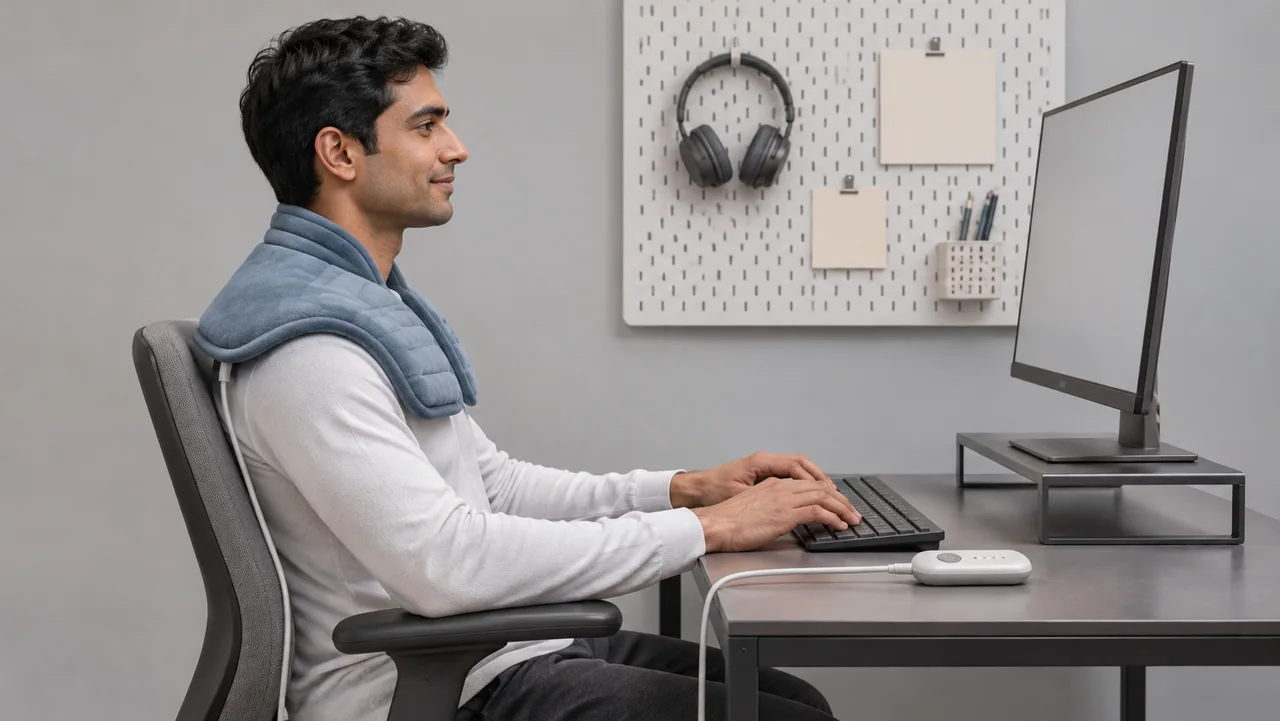
Using a contoured electric heating wrap for cervical trapezius stiffness while working at a desk requires practical setup choices to maintain comfort and safety throughout the day.
Power Cord Length and Socket Proximity
Editorial reviews from Wirecutter emphasize the importance of power cord length and placement. A cord that is too short can pull on the neck wrap, dragging the fabric away from your shoulders or forcing you to sit awkwardly close to a wall outlet. Route the power cord away from walkways to reduce tripping hazards and keeps the cord from catching on office chair wheels. Checking power cord length before setting up your workspace ensures you can sit comfortably at your workstation.
Controller Placement
Positioning the electronic controller within easy reach on your desktop allows you to adjust heat levels without twisting, tugging on the power cord, or interrupting your focus while working.
Navigating Product Specs: Heat Settings, Timers, and Safety Features
Product listings for an electric heating pad for cervical neck pain contain several key features to compare before making a purchase:
- Multi-Level Heat Settings: Look for intuitive digital controllers that offer multiple heat options, allowing you to select gentle warmth or higher heat depending on room temperature, clothing thickness, and personal comfort.
- Automatic Shut-Off Timers: An important feature that automatically powers off the heating element after a set duration. However, automated shut-off features function strictly as a backup convenience and do not replace active user monitoring or manual power-off when you are finished using the pad.
- Safety features: Compare the stated safety features of the particular product. Timers and controls do not eliminate the risk of burns.
Daily Usage Scenarios: Mobility, Storage, Washability, and Fabric Touch
Comparing practical everyday scenarios helps illustrate how an electric heating wrap fits into different parts of your daily routine.
Scenario A: Brief Warming Breaks During Desk Work
When working at a desk, heating pads should be used in short, intermittent warming sessions rather than continuous, uninterrupted heating throughout the workday. Pausing work for a brief 15-to-20 minute warming break allows you to enjoy soothing comfort while giving your skin time to rest.
Scenario B: Evening Relaxation and Multi-Zone Considerations
Applying localized warmth helps relax tight muscle tissue during evening downtime. While cervical wraps are shaped specifically for the neck and shoulders, self-care resources from Verywell Health note that applying localized heat to the lower abdomen can provide comfort on period cramp days. Always ensure any pad used is suitable for the target area and used according to its specific product instructions.
Scenario C: Fabric Texture, Storage, and Cleaning
Soft micro-plush and fleece fabrics feel pleasant against clothing or skin and fold neatly for storage when not in use. When cleaning an electric pad:
- Disconnect power first: Unplug the pad before cleaning, then follow its care instructions.
- Never Submerge Electrical Components: Never submerge electrical wires, plugs, or active controllers in water.
- Follow Care Labels: Only clean or wash removable covers if explicitly permitted by the product care label, and ensure all fabric and connectors are completely dry before plugging the device back in.
Thermal Safety Rules, Skin Monitoring, and Urgent Medical Warning Signs
Understanding heat safety protects your skin from harm, while knowing medical warning signs helps identify when neck symptoms require immediate professional care.
How Heat Soothes Muscle Knots
Cleveland Clinic describes muscle knots as tender areas of tight muscle. Warmth is one of the self-care measures discussed for easing discomfort.
Crucial Burn Prevention Guidelines
Limit Sessions to 15–20 Minutes: Keep individual warming sessions brief to avoid overexposing skin tissue to heat.
Immediate Discontinuation on Excessive Heat: Neither automatic shut-off timers, multi-level temperature settings, nor protective cloth layers guarantee that thermal burns or skin irritation cannot occur. Individual skin sensitivity varies widely. If the heating pad feels uncomfortably hot at any point, stop using the device immediately and turn off the power. Do not attempt to continue use by simply adding extra towels or cloth layers over an uncomfortably hot pad.
Inspect Skin Regularly: Periodically check your skin during and after each session. Discontinue use if your skin appears excessively red or feels irritated.
Absolute Prohibition on Sleeping While Using Heating Pads: Never use or wear an electric heating pad while sleeping. Falling asleep with an active heating device reduces sensory awareness of rising temperatures, significantly increasing thermal burn risks and cord hazards. Always power off and unplug the device before lying down to sleep or nap.
Recognizing Medical Red Flags
Neck discomfort has different causes. However, seek immediate emergency medical care (attending an Accident & Emergency / Emergency Department or calling emergency services immediately) if neck stiffness occurs with:
Severe trauma or impact (such as a motor vehicle collision, severe fall, or athletic collision).
Progressive neurological symptoms (numbness, tingling, or weakness radiating down an arm, shoulder, or hand).
High fever accompanied by severe neck rigidity, sudden intense headache, nausea, light sensitivity, or confusion.
Sudden loss of coordination, difficulty walking, or loss of bowel or bladder control.
Do not rely on standard urgent care facilities as a substitute for emergency department care when these critical red flags appear. If neck discomfort persists for over a week without emergency red flags, schedule a regular doctor's appointment for a professional evaluation.
Planning Your Space Before You Choose
Before choosing an electric neck and shoulder pad, picture the place where you will actually use it. Measure the distance from your preferred chair or desk to a suitable socket, then compare that distance with the cord length in the product details. Allow room to sit naturally without pulling on the wrap. Keep the cable clear of walkways and moving chair wheels, and position the controller where it is easy to reach.
Coverage and care matter after the first use as well. Compare the stated dimensions with the part of your shoulders you want covered, and consider whether the shape and weight suit your preferences. Read the care instructions for the specific model before deciding where to keep it. Store it according to those instructions and let it cool before putting it away. Follow the operating instructions, check your skin during use, and stop if the pad feels uncomfortably hot.
Q1: Is a contoured neck wrap better than a standard flat heating pad for cervical stiffness?
A contoured wrap features a raised collar and shoulder drapes that fit the curves of the cervical spine, keeping warmth directly against the neck without leaving open air gaps.
Q2: How should I clean my electric cervical heating pad safely?
Always disconnect the power cord and controller from the wall outlet first. Follow the product care label strictly, wash only removable fabric covers if permitted, and never submerge electrical components or controllers in water.
Q3: What should I do if the heating pad feels uncomfortably hot?
Turn off the device and stop using it immediately. Inspect your skin for redness or irritation, and allow your skin to cool completely. Do not attempt to continue using a pad that feels uncomfortably hot.
Q4: Can I leave my electric heating pad turned on while I sleep?
No. Never use or wear an electric heating pad while sleeping or napping. Sleeping with an active heating pad significantly increases the risk of severe thermal burns and electrical cord hazards.
Q5: How long should individual warming sessions last?
Follow the product instructions for session length and check your skin. A short session does not eliminate burn risk.
Medical Disclaimer
Disclaimer: The information provided in this guide is for educational and self-care informational purposes only and does not constitute professional medical advice, diagnosis, or treatment. Always consult a qualified physician or physical therapist regarding persistent neck pain, underlying spine conditions, or before starting any new heat therapy routine.
Cong
Cong draws on years of experience in electric heating product processing and manufacturing, together with market research, to explain personal heating products in practical terms.
View author profile