
 By Cong Updated
Learn what to check before packing a heated neck pillow for travel, including U-shape support, USB power banks, and airline carry-on battery rules.
Overview
Navigating long-haul flights, extended train journeys, or lengthy highway road trips places unique physical demands on your body. When sitting upright in a cramped vehicle seat for hours, cold cabin air currents, fixed headrest angles, and static posture often leave the muscles along your cervical spine and trapezius feeling tight, heavy, and fatigued. To make transit hours more comfortable, many travelers explore personal warming accessories designed specifically for travel. A heated travel neck pillow combines the shape of a travel pillow with a warming feature.
However, choosing a warming travel pillow requires looking beyond basic plush covers or impulse airport terminal displays. Because travel accessories differ fundamentally from home heating pads, full-body weighted blankets, and mechanical massagers, prospective buyers benefit from evaluating how different product categories function across real-world travel scenarios. This consumer guide explores how to evaluate travel warming options during pre-trip packing, awake transit rest, and hotel unwinding, while examining verified product features, airline lithium battery rules, and essential thermal safety practices.
Pre-Trip Planning: Sizing, Form Factors, and Packing Decisions
Preparing for an upcoming journey begins with selecting personal comfort gear that fits into your luggage carry-on without creating unnecessary bulk or weight.
Compact Travel Pillows vs. Home Heating Wraps
A common mistake among travelers is assuming that any home warming product can be packed for a flight or road trip. Comparing distinct product categories illustrates why form factor matters:
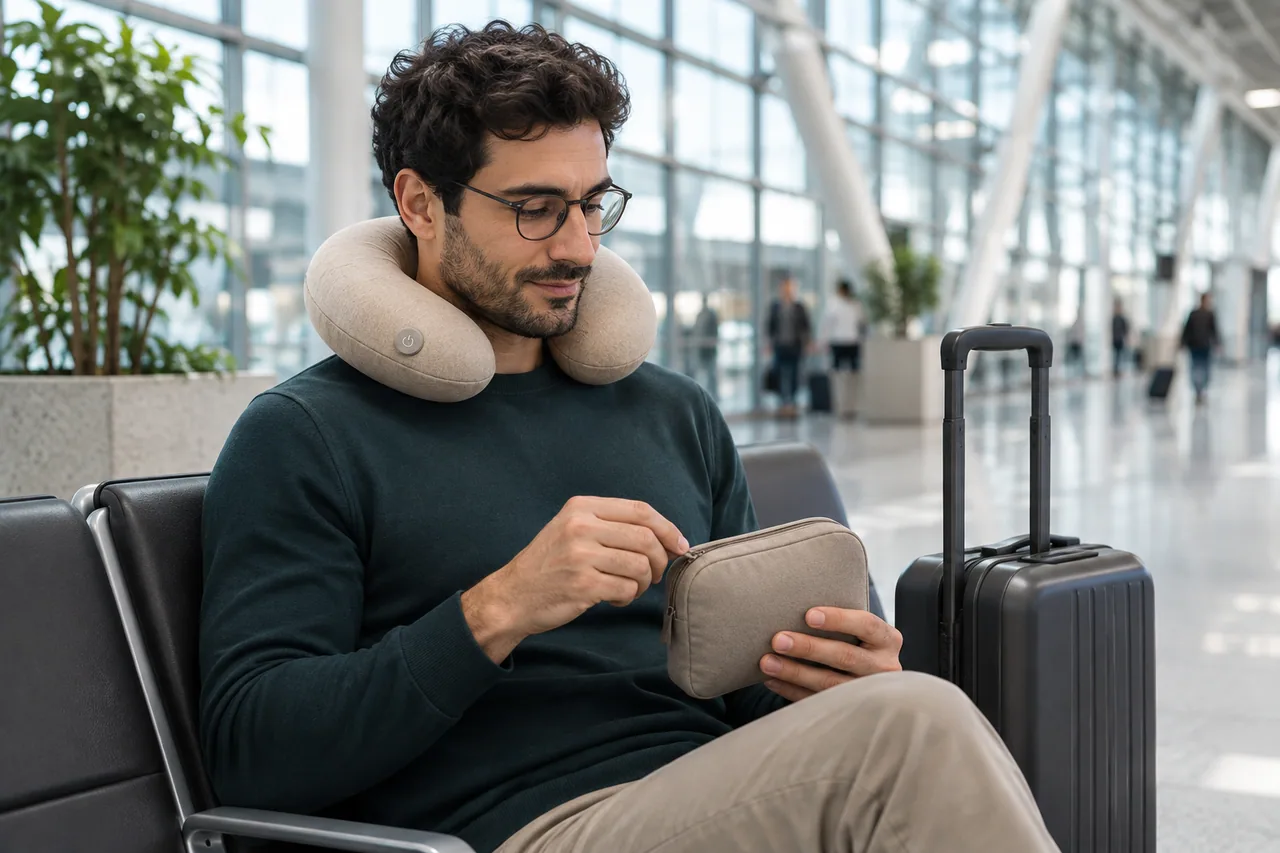
Travel Neck Pillows: Accessories like the Volt Heat Heated Comfort Pillow are built specifically for portable, upright seating. Incorporating a contoured memory foam core, this travel pillow is engineered to cradle the head and neck while providing targeted surface heat behind the cervical spine.
Contoured Neck and Shoulder Wraps: Appliances like the Pure Enrichment PureRelief® Cordless Neck & Shoulder Heating Pad feature extended shoulder drapes and weighted glass micro-beads designed to rest across the upper back while seated in an armchair or couch at home. Its shape is intended to cover the neck and shoulders; compare the listed dimensions with the available space in your bag.
Heavy Weighted Body Pads: Products like the Pure Enrichment WeightedWarmth™ Weighted Body Pad with Heat deliver 6 pounds of distributed weight across a large lap or back surface. At six pounds, it is worth comparing its weight and dimensions with your baggage allowance and personal preference.
Mechanical Shiatsu Massagers: Devices like Renpho Shiatsu Neck and Shoulder Massagers incorporate motorized rotating nodes that knead tissue using mechanical pressure. A massager and a travel pillow have different shapes and purposes; do not assume one can substitute for the other as a cushion.
Understanding these distinctions ensures you do not mistake a heavy body pad or mechanical massager for a packable travel cushion.
Case Study: Volt Heat Heated Comfort Pillow Specifications
To evaluate how warming features are integrated into an actual travel accessory, consider official product documentation for the Volt Heat Heated Comfort Pillow:
- Memory Foam Construction: The pillow utilizes a supportive memory foam interior designed to cushion the neck during upright resting.
- Targeted Cervical Heat Zone: Electrical heating elements are positioned specifically in a heating zone located behind the neck.
- Rechargeable Battery Power: It operates using a rechargeable battery pack that connects to the heating elements, enabling cordless operation while seated in transit.
- Three Temperature Settings: The product page lists a built-in push-button controller with 3 heat levels, allowing users to adjust warmth based on cabin temperature.
- Removable and Washable Cover: The product page describes a removable, machine-washable cover. Follow the instructions for removing and cleaning it.
- Product Specification Qualifier: The features detailed above—including the memory foam interior, neck-centered heat zone, rechargeable battery pack, 3 heat settings, and removable cover—represent manufacturer-published specifications for the Volt Heat model. They do not represent independent lab test results conducted by our editorial staff, nor should buyers infer unstated metrics such as exact battery runtime numbers, price, stock, or specific foam density. Furthermore, while a memory foam collar offers physical cushion, buyers should not assume any travel pillow prevents all forward head movement or guarantees sleep during flight.
In-Transit Rest: Navigating Cabin Drafts and Airline Lithium Battery Regulations
Using a cordless heated neck warmer or battery operated heated neck wrap while aboard an aircraft, train, or bus requires understanding both cabin comfort and transportation safety guidelines.
Managing Transit Drafts During Awake Relaxation
Passenger cabins on long-haul flights and long-distance trains are notorious for uneven climate control. Overhead air vents and window drafts can create chilly air currents around your neck while you read, watch inflight entertainment, or relax in your seat. Using a portable heated neck pad or heated travel pillow provides gentle surface warmth that helps cushion against cold cabin air.
Keep the heat setting comfortable, and follow both the device instructions and cabin crew directions.
Understanding U.S. FAA PackSafe Lithium Battery Rules
For travelers flying on routes subject to U.S. Federal Aviation Administration (FAA) regulations, handling lithium-ion batteries correctly is a critical safety requirement. According to official guidelines from the FAA PackSafe program:
- Carry-On Baggage Requirement: Spare lithium-ion batteries and standalone portable power banks must be carried in carry-on baggage only. They are strictly prohibited inside checked baggage due to fire safety risks.
- Gate-Checked Bag Protocol: If your carry-on bag is gate-checked at the boarding jetbridge because overhead bins are full, you must remove all spare lithium batteries and portable power banks from the bag and bring them into the passenger cabin with you.
- Installed vs. Spare Batteries: The FAA treats batteries installed in devices differently from spares. Its guidance says checked devices must be powered off and protected from short circuit and unintentional activation; applicable capacity limits and airline restrictions also matter.
- Important Aviation Disclaimer: Travelers should recognize that battery regulations, inflight charging policies, and electronic device rules vary across different international airlines, aviation authorities, and specific flight routes. Never assume all carriers enforce identical rules or that a specific warming product holds universal flight clearance. Always review the exact carry-on, battery, and inflight electronic guidelines published by your specific airline before traveling. Do not infer specific battery watt-hour (Wh) ratings for products unless explicitly stated in official device documentation.
Arrival and Hotel Unwinding: Comparing Personal Heating Pads to Bed Warmers
After reaching your destination—whether checking into a hotel room or arriving at a vacation rental—unwinding after a long travel day offers an opportunity to soothe lingering body fatigue.
Targeted Heating Pads vs. Whole-Bed Electric Blankets
When relaxing in your room, it is helpful to understand how localized warming appliances differ from broad bedding options. As explained in commercial buyer guides from Bedsure:
Localized Surface Heating Pads: Compact heating pads and neck wraps deliver concentrated thermal warmth directly to specific body areas, such as the neck, upper trapezius, or lower back. Compare a pad’s shape and power requirements with the place where you intend to use it.
Whole-Bed Electric Blankets: Broad electric blankets and heated mattress pads radiate gentle, ambient warmth across an entire mattress surface. They cover a larger area than a neck pillow and have their own operating instructions.
Recognizing this difference helps travelers understand that a compact travel neck pillow or localized heating pad is built for targeted personal comfort, whereas electric blankets serve broad bedding needs.
Hotel Room Fabric Maintenance and Care
Maintaining your travel gear during a trip requires following proper cleaning protocols:
- Disconnect Electrical Components First: Turn the device off and disconnect it from power before cleaning; follow its instructions for the battery and cover.
- Follow Official Care Tags: Follow the manufacturer's care instructions for your specific product. For example, the Volt product page describes a removable machine-washable cover, while the WeightedWarmth body pad is spot-clean only. Follow each model’s preparation and cleaning instructions.
- Dry Completely Before Reconnecting: Ensure all fabric covers are completely dry before reinserting battery components or connecting power cables.
Using heat and caring for your device
Operating an ergonomic contoured neck and shoulder heating pad or heated travel pillow safely requires adhering to strict thermal and electrical precautions.
Electrical safety
Never place any electric heating pad, battery-powered travel pillow, or corded wrap inside a microwave oven. Only microwave a non-electric wrap when its labeling explicitly permits it, and follow its directions.
Turn the heat off before sleep
Do not use an operating electric heating pad or battery-powered heated pillow while sleeping or napping.
Falling asleep with an active electric heating device can prevent you from noticing excessive heat and removing the device, increasing the risk of burns. Always turn off, disconnect, and remove any heating device before lying down to sleep or nap. Integrated automatic shut-off timers function strictly as secondary safety safeguards and do not replace manually turning off the device before sleep.
Active Skin Monitoring and Operating Compliance
Always inspect your skin periodically during every warming session. If a heating pillow or wrap feels uncomfortably hot at any point, stop using the device immediately and turn off the power supply. Do not attempt to cushion an uncomfortably hot pad with extra towels or fabric layers to force continued use. Always follow the exact operating, charging, and safety instructions provided in your product's official user manual.
Severe pain after an injury or sudden neurological symptoms warrant prompt medical attention.
Cong
Cong draws on years of experience in electric heating product processing and manufacturing, together with market research, to explain personal heating products in practical terms.
View author profile