
 By Cong Updated
Compare Sharper Image heated neck wrap and heated scarf styles by rechargeable battery setup, collar fit, heat settings, and spot-cleaning requirements.
Overview
Spending long hours working at a computer desk, typing at a workstation, or sitting through extended daily commutes often leaves upper body muscles feeling tight, heavy, and fatigued. When daily posture strain builds up across the cervical spine and trapezius muscles, many individuals look for accessible home relaxation options. Searching for a heated neck wrap sharper image option introduces shoppers to personal warming appliances designed specifically to deliver targeted surface heat around the neck without tethering the user to a wall electrical outlet.
However, choosing a battery-powered warming wrap involves evaluating more than basic fabric softness or brand reputation. Because cordless heating pads vary in their physical dimensions, weight distribution, power setups, and operating features, buyers benefit from looking closely at practical shopping questions based on their daily habits. This consumer guide examines how to evaluate cordless neck wraps, analyzing key feature specifications, fitting considerations, general health insights, and essential thermal safety practices.
Who Benefits Most from a Cordless Battery Design?
When evaluating a cordless heated neck warmer or portable heating pad, the first question to consider is how cordless mobility aligns with your daily habits and living environment.
Freedom of Movement vs. Fixed Power Sockets
A corded electric heating pad needs a compatible power connection while it operates. While corded designs supply steady electrical power without requiring battery recharges between sessions, they limit where you can sit while using the appliance. A corded pad forces you to stay near a wall socket and manage trailing power cables around your chair or workstation.
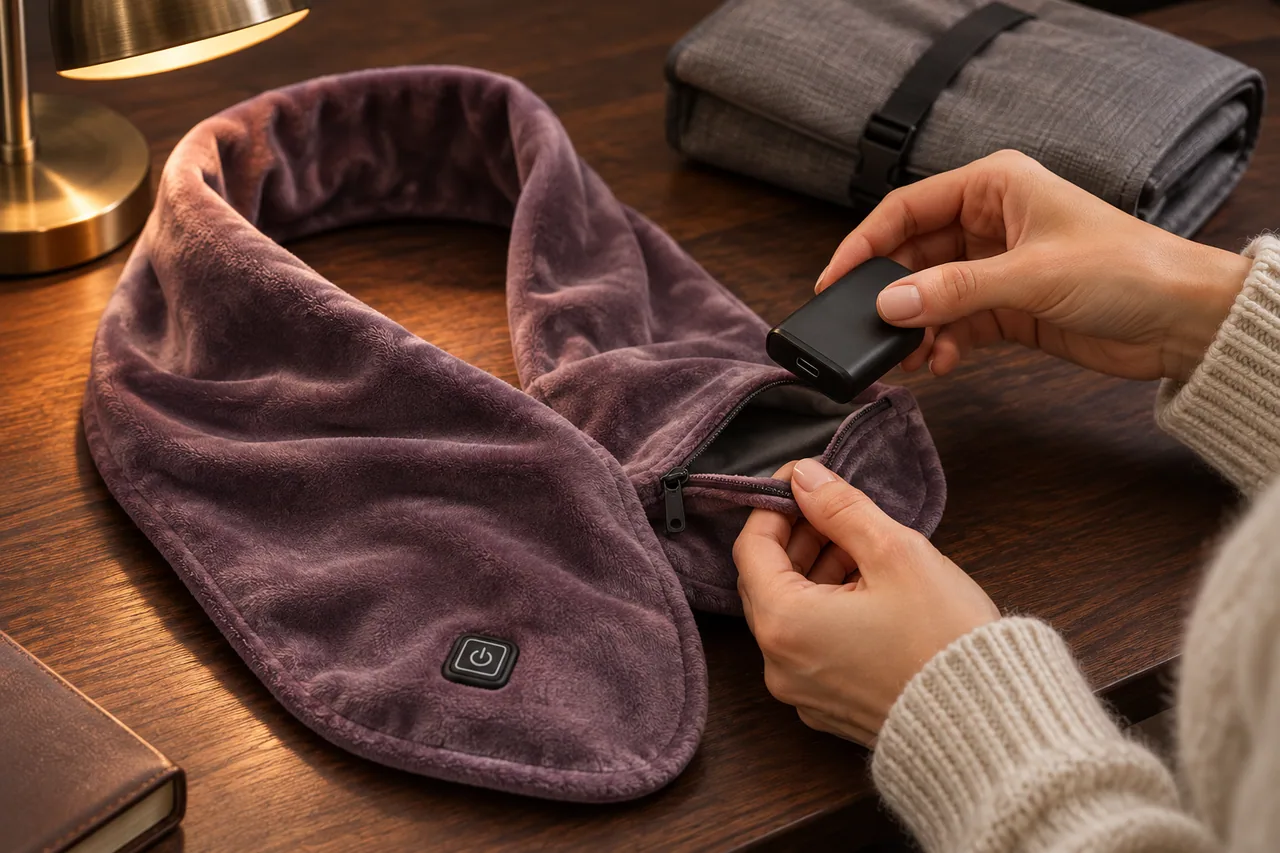
In contrast, a battery-powered wrap—such as a rechargeable heated neck wrap—utilizes a removable or built-in battery pack to supply electrical power to internal heating elements. This cordless setup offers several practical benefits for daily home use:
- Mobility Around the House: Cordless operation lets you choose a seat without placing it next to an outlet. Use the device in accordance with its instructions.
- Desk and Office Convenience: For desk workers, cordless operation eliminates power cables that can tangle around armrests, catch under office chair wheels, or create tripping hazards across walkways.
- Portable Setup: A rechargeable design can be easier to carry between locations. Check the product instructions and local travel rules before packing or using it.
How Do You Evaluate Sizing, Fit, and Temperature Controls Before Buying?
Rather than relying on generic product descriptions or unverified marketing promises, buyers evaluating a heated neck wrap sharper image choice should inspect specific manufacturer-published specifications. Examining a concrete product example illustrates how physical features and control options come together in a real-world appliance.
Case Study: Sharper Image Cordless Neck Heat Therapy Wrap Specifications
Official manufacturer documentation for the Sharper Image Cordless Neck Heat Therapy Wrap (Item 207905) details specific product specifications:
Cordless Power Architecture: The appliance features a rechargeable battery pack that enables cordless operation around the home or office.
Sizing and Neck Fit: The wrap is engineered to fit neck circumferences up to 24 inches, accommodating a wide range of body frames and neck sizes.
Weight Specifications: The product page lists a weight of 1.5 lbs. Whether that feels comfortable is a personal preference.
Temperature Control Settings: It provides 4 heat settings, allowing users to select different warmth levels based on ambient room temperature and personal comfort.
Manufacturer Stated Battery Duration: The manufacturer documentation states that the rechargeable battery can supply up to 5 hours of heat on the lowest setting.
Important Specification Qualifier: It is essential to recognize that the specifications listed above—including the 24-inch maximum neck circumference, 1.5-lb weight, 4 heat settings, and up to 5 hours of heat on low—are manufacturer-published specifications, not independent lab test results or hands-on trial evaluations conducted by our editorial staff.
Furthermore, shoppers should interpret battery claims realistically. The manufacturer's stated 5-hour duration applies strictly to operation on the lowest heat setting. The page describes the maximum on its lowest setting; use that condition when comparing the claim with another product. Buyers should select heat settings based on immediate comfort needs rather than expecting maximum runtime across all temperature levels.
What Are the Trade-Offs Compared to Other Heating Pad Form Factors?
Understanding how cordless neck wraps differ from alternative warming formats helps you choose the right appliance for your physical preferences.
Cordless Neck Wraps vs. Corded High-Collar Electric Pads
Corded electric heating pads designed for the upper body often feature high collar contours and broad shoulder drapes that cover the full trapezius region and upper thoracic spine. Corded models connect to wall sockets without requiring battery recharges. However, corded pads lack portability. If your primary goal is targeted neck warmth while moving around your home, a cordless wrap can offer more freedom to change seats without a trailing power cable.
Cordless Battery Wraps vs. Microwavable Grain Wraps
Cordless microwavable wraps utilize natural agricultural fills—such as wheat, flaxseed, or clay beads—enclosed within fabric compartments. Microwavable pads are completely wireless and provide natural physical weight. However, grain wraps lose heat progressively as they cool down, requiring repeated trips to the microwave to restore warmth. The battery-powered wrap uses rechargeable power; follow its instructions for operation and charging.
How Do General Health Insights Apply to Home Heat Therapy?
Understanding why neck muscles feel tight and how surface warmth interacts with tissue helps establish practical self-care expectations for home use.
Posture Strain and Muscle Knots
Cleveland Clinic describes muscle knots as tight, sensitive areas in muscle tissue and discusses factors including strain and posture.
Physiological Principles of Surface Heat
Cleveland Clinic discusses warmth as one approach to muscle and joint stiffness. Choose a comfortable setting and follow the device instructions.
- Important Clinical Limitation: While medical authorities explain the general physiological benefits of surface heat and vasodilation, general health principles do not constitute clinical proof of product-specific medical cures. A cervical heating pad electric wrap or cordless neck warmer is a supportive home self-care tool for everyday muscle relaxation, not a medical cure for underlying spine disorders or structural disc injuries.
How Can You Integrate Heat Safely into Workstation Setup and Daily Care?
Using a heating pad for neck stiffness safely in your home requires establishing healthy workstation posture, following product maintenance rules, and strictly adhering to thermal safety guidelines.
Workstation Setup and Posture Awareness
While personal warming products offer pleasant relaxation, addressing daily posture habits is essential for long-term comfort:
- Screen Elevation: Position your screen at a comfortable height that does not require a prolonged downward head tilt.
- Taking Regular Movement Breaks: Take brief breaks during extended desk work to stand up, roll your shoulders, and gently turn your head from side to side. Short physical breaks help relieve static muscle load across your trapezius muscles.
Cleaning and Maintenance Rules
Proper maintenance preserves fabric quality while protecting internal electrical wiring and battery connections:
- Disconnect Power Components First: Turn off the device and disconnect it from power before cleaning; follow the specific instructions for the battery and fabric.
- Follow Official Care Instructions: Check the manufacturer's instruction manual for specific cleaning directions. Never submerge rechargeable battery packs, charging cords, or active electrical connectors in water.
- No Improvised Water on Electric Pads: Never apply water or attempt to improvise moist heat on electric heating pads unless the instruction manual explicitly permits it. Water entering electrical components creates severe short-circuit hazards. Ensure all fabric components are completely dry before reconnecting power accessories.
Avoid Sleeping With a Heating Pad
Never use an electric heating pad or battery-powered heating wrap while sleeping or napping.
Falling asleep with an active electric heating pad can prevent you from noticing excessive heat and removing the device, increasing the risk of burns. Always power off, disconnect, and remove any heating device before lying down to sleep or nap. Integrated automatic shut-off timers function strictly as secondary safety safeguards and do not replace turning off the device manually before sleep.
Active Skin Monitoring and Medical Precautions
Inspect your skin periodically during every warming session. If a heating wrap feels uncomfortably hot at any point, stop using the device immediately and turn off the power supply. Do not attempt to cushion an uncomfortably hot pad with extra towels or fabric layers to force continued use.
If you experience severe neck pain, numbness, tingling radiating down an arm, or pain resulting from sudden physical trauma, seek immediate professional medical evaluation rather than relying on self-care warming products.
Cong
Cong draws on years of experience in electric heating product processing and manufacturing, together with market research, to explain personal heating products in practical terms.
View author profile