
 By Cong Updated
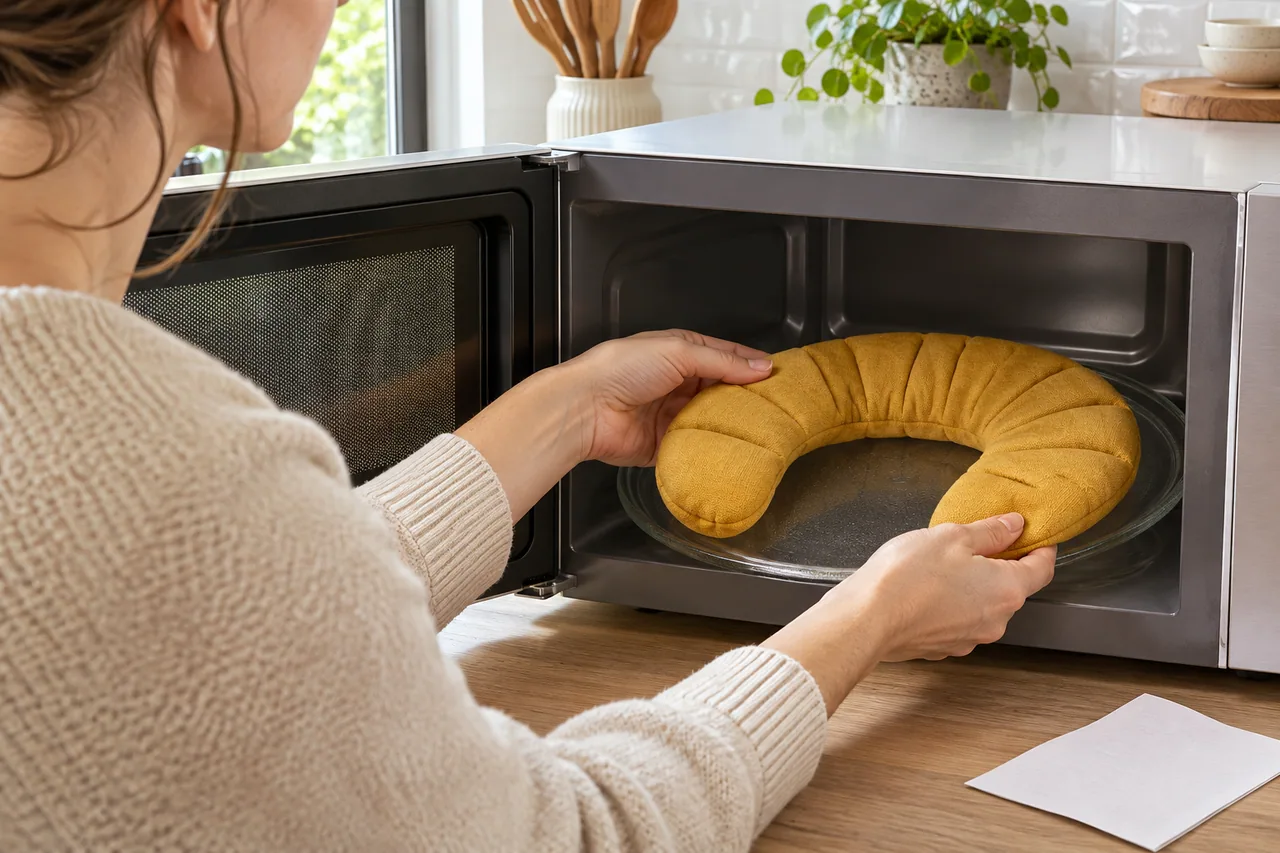
Understand how microwavable neck wraps work, how grain and clay bead fills retain warmth, and how to follow wattage labels and re-heating safety intervals.
Overview
Choosing a personal warming wrap for your neck and shoulders involves evaluating how a product fits into your daily routine, how it handles in the kitchen, and how to operate it safely. Searching for a heated neck wrap microwave option brings up cordless, microwavable wraps designed to rest across the neck and upper back. A microwavable heated neck wrap offers accessible, portable warmth for daily relaxation without requiring an electrical outlet nearby.
To select a product that fits their routine, buyers benefit from understanding when a microwavable wrap is the right choice, how to interpret heating and care labels, how to conduct post-heating safety checks, how drape and texture affect body feel, and how microwavable options compare to other household warming devices.
Pre-Purchase Selection: When Is a Microwavable Neck Wrap the Right Choice?
Before buying a microwave neck heating pad, consider where and how you plan to use it throughout your home.
Cordless Mobility Around the Home
The primary advantage of a microwavable neck wrap is its cordless design. Because it does not require an attached power cable or nearby electrical socket during use, you can wear a microwavable wrap while moving between rooms, sitting at a kitchen table, reading on a sofa, or stepping outside onto a patio.
Soft Drape and Natural Weight
Compare the stated dimensions, weight and fabric texture. Choose a shape that sits comfortably on the neck and shoulders.
Inspecting Product Labels: Heating Times and Care Instructions
Product tags and user manuals contain essential operational guidelines. Carefully reviewing these details before first use protects both your skin and the product's internal materials.
Reading Microwave Heating Guidelines
Because internal fill materials, fabric layers, and wrap dimensions vary significantly between products, there is no single universal heating time. Always inspect the manufacturer's care tag and manual for specific heating instructions.
- Observe Power Limits: Always adhere to recommended microwave power levels and time limits. Overheating can scorch internal fills, damage fabric seams, or create severe thermal burn hazards.
Reading Cleaning and Washability Labels
Fabric maintenance depends entirely on the product's construction:
- Cleaning instructions: Follow the care label for the particular wrap and its components.
- Removable Outer Covers: If a wrap features a removable outer cover, separate the fabric shell from the inner filled compartment before laundering according to tag instructions.
- Care methods: Use only the cleaning method specified on the care label.
Post-Heating Safety Procedures: Temperature Checks and Handling
Handle the wrap carefully after heating and follow the product instructions.
Checking Heat Uniformity
After heating, handle the wrap carefully and check its temperature as directed by the product instructions. A quick touch does not rule out hot spots.
Temperature Touch-Testing
Always test the temperature of the wrap with your hands or inner wrist before placing it around your neck:
Perform a Surface Test: Hold the wrap for a few seconds to evaluate heat intensity.
Immediate Discontinuation if Uncomfortably Hot: If the wrap feels uncomfortably hot, do not place it on your neck or shoulders. Allow it to cool down to a comfortable temperature. Do not attempt to force continued use of an uncomfortably hot wrap by adding extra towels or cloth layers over it.
Neck and Shoulder Fit: Contour, Texture, and Sensory Comfort
A well-fitted heating pad for neck stiffness rests comfortably across your upper back without slipping or causing neck strain.
High-Collar Contour vs. Flat Rectangular Wraps
The cervical spine features pronounced curves. Flat rectangular pads can leave open air gaps around the back of the neck. In contrast, an ergonomic contoured neck and shoulder heating pad with a raised collar sits directly against the cervical vertebrae and drapes smoothly over the trapezius muscles.
Border Weight and Fabric Touch
Compare fabric texture and weight against your personal preferences.
Storage and Long-Term Care Guidelines
Proper storage practices help maintain fabric cleanliness and protect internal fills between uses:
- Complete Cooling Before Storage: Always allow a microwavable wrap to cool completely to room temperature before folding or placing it in storage.
- Dry Storage Environment: Store the wrap in a cool, dry place away from dampness or humidity to preserve internal filling materials.
- Avoid Compression: Store the wrap flat or loosely folded without placing heavy objects on top of it, protecting internal stitching and fabric channels.
Comparing Household Use Scenarios: Microwavable Wraps vs. Other Warming Devices
Understanding how different warming products function helps clarify their roles within a household routine. Editorial comparisons—such as analysis from Bedsure, Wirecutter, and Good Housekeeping—highlight key functional distinctions.
Microwavable Wraps vs. Electric Blankets and Mattress Pads
In an editorial guide comparing personal warming devices, Bedsure notes that different heating products serve distinct functional purposes:
- Targeted Warming Wraps: Designed to concentrate warmth on specific body areas, such as the neck, shoulders, upper back, or abdomen.
- Electric Blankets and Mattress Pads: Designed for broad, whole-bed thermoregulation and general bedtime warmth rather than localized muscle relaxation.
Microwavable Cordless Wraps vs. Electric Corded Heating Pads
Editorial testing guides from Wirecutter and Good Housekeeping evaluate electric heating pads that connect to wall sockets via corded controllers. Comparing these categories shows:
- Cordless Flexibility: Microwavable wraps offer total cordless freedom to move around the house, whereas electric pads require sitting near a power outlet.
- Heating method: A microwavable wrap is warmed before use. Electric models use a power source and may include controls and a shut-off feature. Follow the instructions for the product you choose.
Household Multi-Zone Comfort
The physiological benefit of heat therapy—relaxing tight muscle tissue—applies to multiple areas of the body. Self-care resources from Verywell Health note that applying localized heat to the lower abdomen provides soothing comfort on period cramp days. Use a product only on the areas permitted in its instructions.
Thermal Safety Protocols, Burn Prevention, and Medical Warning Signs
Using heat therapy safely requires adhering to established safety protocols and recognizing when symptoms demand immediate medical evaluation.
Safe Application Rules
Limit Sessions to 15–20 Minutes: Keep individual warming sessions brief (15 to 20 minutes) to allow skin tissue to rest.
Inspect Skin Regularly: Using a wrap for short durations or placing a cloth barrier between the pad and your skin does not guarantee that thermal burns cannot occur. Individual skin sensitivity varies widely. Inspect your skin periodically during use and stop immediately if your skin appears excessively red or feels irritated.
Absolute Prohibition on Sleeping While Using Heating Wraps: Never wear or use a heating wrap while sleeping. Falling asleep with a heated wrap reduces your sensory awareness of rising temperatures, significantly increasing thermal burn risks. Always remove your wrap before lying down to sleep or nap.
Recognizing Medical Red Flags
seek immediate emergency medical care (attending an Accident & Emergency / Emergency Department or calling emergency services immediately) if neck stiffness occurs with:
Severe physical trauma or impact (such as a motor vehicle collision, severe fall, or athletic collision).
Progressive neurological symptoms (numbness, tingling, or weakness radiating down an arm, shoulder, or hand).
High fever accompanied by severe neck rigidity, sudden intense headache, nausea, light sensitivity, or confusion.
Sudden loss of coordination, difficulty walking, or loss of bowel or bladder control.
Do not rely on standard urgent care clinics as a substitute for emergency department care when these critical red flags are present. If neck discomfort persists for over a week without emergency red flags, schedule a regular doctor's appointment for a professional evaluation.
Q1: How do I know how long to heat my microwavable neck wrap?
Always check the manufacturer's care tag or user manual attached to your specific product. Never guess heating times or exceed recommended wattage limits.
Q2: What should I do if my microwavable neck wrap feels uncomfortably hot after heating?
Do not place an uncomfortably hot wrap on your body. Allow it to cool down to a comfortable temperature. Never attempt to use an uncomfortably hot wrap by layering extra towels over it.
Q3: Can I wash my microwavable neck wrap in a washing machine?
Follow the product care label. Wash a removable cover only if its instructions permit it.
Q4: Can I wear my microwavable neck wrap while taking a nap or going to sleep?
No. Never wear or use any heating wrap while sleeping or napping, as reduced sensory awareness during sleep significantly increases thermal burn risks.
Q5: How often should I check my skin while using a heating wrap?
Check your skin periodically during every 15-to-20 minute session. Stop using the wrap immediately if your skin feels uncomfortably hot or appears excessively red.
Medical Disclaimer
Disclaimer: The information provided in this guide is for educational and self-care informational purposes only and does not constitute professional medical advice, diagnosis, or treatment. Always consult a qualified physician or physical therapist regarding persistent neck pain, underlying spine conditions, or before starting any new heat therapy routine.
Cong
Cong draws on years of experience in electric heating product processing and manufacturing, together with market research, to explain personal heating products in practical terms.
View author profile