
 By Cong Updated
Compare sewing a DIY microwavable neck heating pad pattern using 100% cotton and baffled grain channels against choosing a certified electric neck wrap.
Overview
Unwinding after a long day spent typing at a computer workstation, sitting in cold office drafts, or managing household tasks often leaves the muscles along your cervical spine and upper shoulders feeling tight and fatigued. When static head posture causes upper body stiffness by late afternoon, bringing gentle surface heat around your neck provides a comforting way to soothe tight muscle fibers. For craft enthusiasts and home sewers, exploring a neck heating pad pattern opens up an engaging DIY project: sewing a personalized, microwavable neck wrap tailored to your fabric preferences and body shape.
However, creating a functional homemade warming wrap involves much more than sewing two pieces of fabric together and filling them with grain. Because DIY thermal packs rely on microwave heating and physical drape, prospective sewers must evaluate pattern designs, fabric compositions, seam strength, fill distribution, and thermal safety protocols. Understanding how to draft a paper template, choose natural materials, sew internal channels, and recognize when a factory-tested commercial appliance is a better fit helps you make a more informed choice.
Designing Your Custom Thermal Wrap: Rectangular Channels vs. Contoured Wraps
When planning a diy neck heating pad or microwavable neck wrap pattern, your first decision is choosing between two primary form factors. Each design offers distinct trade-offs regarding sewing complexity, physical drape, and daily versatility.
The first option is a long rectangular channelled wrap. This classic shape consists of a straight fabric strip divided into multiple vertical or horizontal compartments. A long rectangular wrap is straightforward to draft and sew, making it ideal for beginner sewers. Its simple geometry allows it to be laid flat across the neck, draped over a shoulder, or wrapped around a knee. However, because a flat rectangular strip lacks neck contours, it may require manual adjustment to stay positioned close against the curve of your cervical spine while seated upright.
The second option is a shaped, contoured shoulder wrap. This design features a curved collar that wraps around the neck, accompanied by side drapes that lay flat across the trapezius muscles. A contoured wrap is shaped to sit over the shoulders; fit will depend on the pattern and wearer. However, drafting a contoured pattern requires drawing smooth curves, sewing rounded seams, and matching shoulder angles.
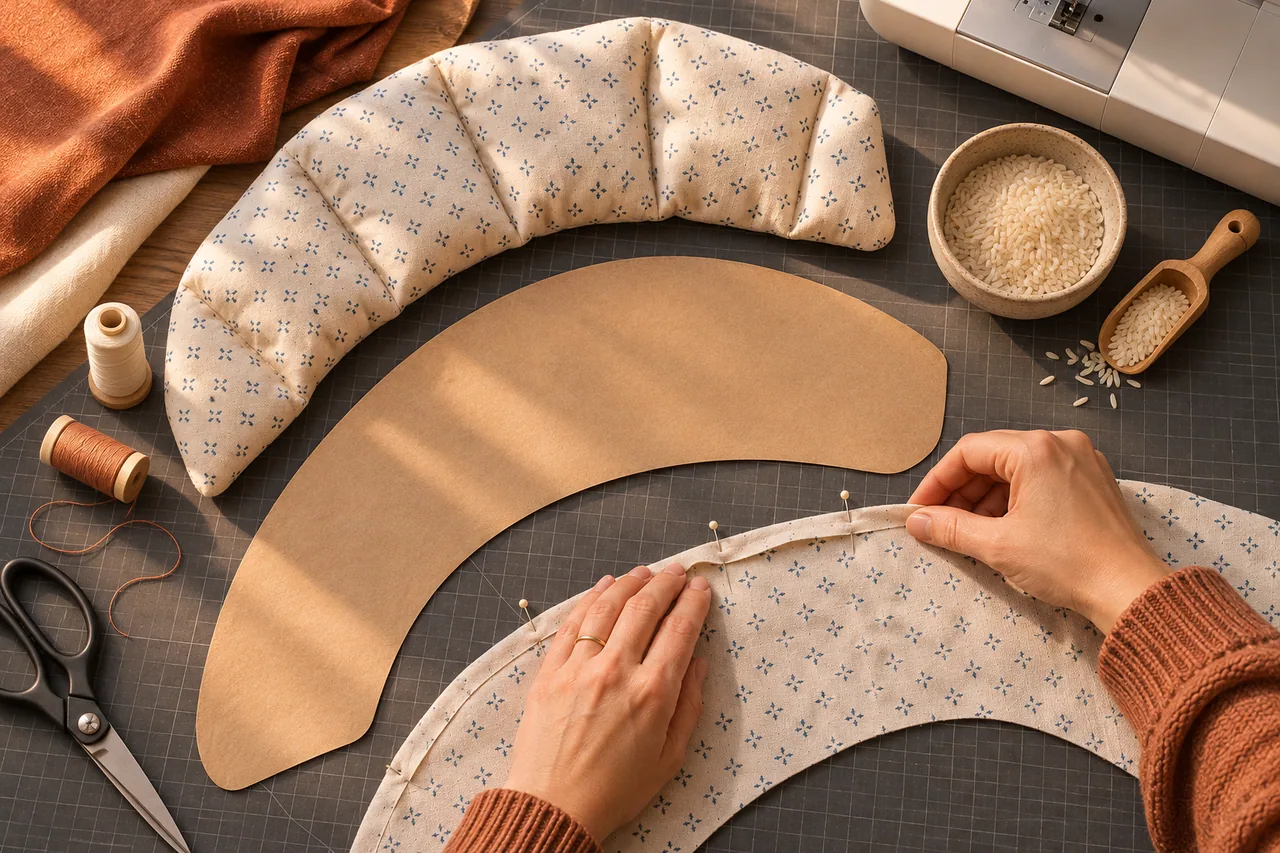
Before cutting into fabric, sewers benefit from fitting a paper template. Draw your proposed pattern onto paper, cut out the shape, and drape it around your neck while sitting in a chair. Check where the collar rests, verify that the shoulder drapes extend comfortably over your trapezius muscles, and adjust the paper outline. Trying the paper shape first lets you adjust the outline before cutting fabric.
Material Selection, Seam Allowances, and Internal Channel Construction
Selecting appropriate materials and understanding fundamental sewing terms is crucial when sewing a neck heating pad at home. For a warming product, material selection and the intended heating method require particular care.
Some patterns use an inner fill insert and a separate outer layer. A removable cover can make cleaning easier, but check the pattern: a cover sewn closed around the insert is not removable for laundering. Keep a filled insert dry and follow the care directions for the specific design.
Fabric selection requires strict attention to fiber content. Craft Picnic calls for muslin, quilting fabric and cotton thread for its particular pattern. Fiber content matters when choosing a pattern, but cotton alone does not establish that a handmade pack is safe to heat.
Seam allowance refers to the distance between the cut edge of the fabric and the line of stitching, as specified by the individual pattern. When sewing a grain-filled pack, execute clean seams and consider double-stitching along primary stress seams to prevent organic grains from leaking through seam gaps over time.
Fill distribution is another critical element. If you fill an open fabric bag with grain without internal compartments, the fill will slump to the bottom of the wrap whenever you sit upright, leaving the top of your neck unheated. Parallel channels divide an insert into compartments, helping keep fill distributed across its length. Their size and construction depend on the chosen design.
Concrete Tutorial Benchmark: Craft Picnic Microwavable Heating Pad Construction
To see how pattern dimensions and internal channel construction come together in a concrete project, consider the popular online tutorial published by Craft Picnic, titled "How to Sew Your Own Microwave Heating Pad – Craft Picnic".
In its tutorial, Craft Picnic details a practical, channelled microwavable heating pad design built using accessible cotton materials. The tutorial specifies cutting 22 by 7 inch rectangular panels for both the outer cover and inner muslin lining. The inner insert is stitched using 100% cotton thread and filled with rice, with internal channels sewn across the insert to divide the rice evenly across the pad. The outer fabric is sewn closed around the filled insert; it is not described as a removable washable cover.
This Craft Picnic tutorial serves as an excellent benchmark for sewers wanting a straightforward rectangular thermal pack project. Readers interested in executing this build should consult the official Craft Picnic tutorial online for complete step-by-step sewing instructions and cutting layouts.
However, crafters must recognize an important safety caveat regarding DIY sewing tutorials. Following an online tutorial or selecting natural cotton fabrics does not provide a universal guarantee that a homemade assembly, seam strength, or organic fill choice is completely microwave-safe. A homemade pack should not be assumed to have undergone commercial thermal testing or certification. Never leave a heating pack unattended in a microwave. Furthermore, never attempt to construct an electric heating device or modify electrical wiring at home. The pattern discussed here is a non-electric grain pack.
Fire Safety Warnings and Guidance on Grain Heat Packs
Understanding safety risks associated with organic grain packs is essential for anyone using or sewing a microwavable heating pad. Official public safety warnings published by Fire and Rescue NSW regarding wheat-filled heat packs (commonly known as wheat bags) offer crucial guidance for home safety.
According to Fire and Rescue NSW, overheated wheat bags pose serious fire and burn hazards. If microwaved for excessive durations, the organic fill inside a heat pack can dry out, scorch, and ignite internal fires. Fire authorities advise users to follow official manufacturer pack directions, supervise microwave heating continuously, avoid using heat packs underneath bedding where trapped heat cannot dissipate, allow packs to cool completely before reheating, and inspect packs regularly for visual signs of fabric scorching, fraying, or burning odors.
It is important to explicitly distinguish Fire and Rescue NSW's safety guidance from a tested, certified protocol for homemade rice packs. The fire service discusses wheat bags and recommends following the instructions supplied with them. Those directions are not a tested heating protocol for a homemade rice pack. DIY crafters cannot assume safety guidelines written for commercial wheat bags constitute a verified safety guarantee for a homemade rice pack. DIY users must monitor microwave heating with extreme caution.
When a Ready-Made Appliance with Built-In Controls is a Better Choice
While sewing a diy microwavable neck wrap is a rewarding project for short rest breaks, a homemade grain pack is not always the most practical solution for every user or scenario. Evaluating when a ready-made commercial appliance is a better fit helps you choose the right comfort tool for your lifestyle.
A grain-filled pack warms when heated and gradually cools afterward. While grain packs offer cordless portability around the house, they require manual microwave heating, lose temperature as they cool down, and cannot supply continuous temperature regulation.
For desk workers or office professionals managing daily posture tightness who require continuous warmth during extended sessions, a factory-manufactured ergonomic contoured neck and shoulder heating pad provides significant advantages. Commercial heating pads vary in their power source, controls and automatic shut-off features. Compare the instructions, fit, care requirements and seller terms for the specific item you are considering.
Health Authority Context, Workstation Setup, and Thermal Safety Protocols
Understanding how surface warmth interacts with neck and trapezius muscles helps establish practical self-care expectations, whether you use a DIY grain pack or a commercial heating pad.
Educational resources from clinical spine authorities—such as Spine-health guides on stiff neck causes, heat application and lower back heat therapy, along with Healthline’s discussion of heat and ice—explain the physiological mechanisms of surface warmth. Everyday neck stiffness often stems from muscle strain in the levator scapulae or trapezius muscles caused by awkward sleep postures, poor desk ergonomics, or stress. Applying gentle surface heat increases localized tissue temperature, prompting local blood vessels to dilate (vasodilation). This expansion increases blood circulation across the warmed area, delivering oxygen and nutrients to help tight muscle fibers relax after extended periods of static desk sitting.
However, prospective sewers and buyers should recognize that general clinical principles regarding heat therapy do not validate a specific DIY sewing pattern or serve as proof of medical cures. A homemade heating pad or commercial wrap is a supportive comfort tool for everyday muscle relaxation, not a medical device designed to cure underlying spinal conditions or structural joint injuries.
Practicing thermal safety is essential during every warming session:
Inspect your skin periodically while using any warm pack. If a heating pad feels uncomfortably hot or causes skin redness, stop using the device immediately.
- Switch off or remove heat before sleep: Never wear or use any microwavable warm pack, electric heating pad, or thermal wrap while sleeping or napping. Falling asleep with an active heat source reduces sensory awareness of rising skin temperatures, significantly increasing the risk of thermal burns.
- Keep electric appliances out of the microwave: Never place any electric heating pad, corded wrap, power cord, or battery-operated device inside a microwave oven. Microwaving is strictly restricted to non-electric, specially constructed organic grain or gel packs.
Cong
Cong draws on years of experience in electric heating product processing and manufacturing, together with market research, to explain personal heating products in practical terms.
View author profile