
 By Cong Updated
Learn how a neck heating pad with vibration combines surface warmth and massage modes, and compare independent controls, noise levels, and collar fit.
Overview
Unwinding after a long workday spent typing at a computer desk, looking at digital monitors, or sitting through heavy traffic often leaves upper body muscles feeling stiff, heavy, and fatigued. When evening comes, many people look for simple home relaxation tools to make their neck and shoulders feel more comfortable. Exploring a neck heating pad with vibration introduces shoppers to personal care appliances designed to deliver surface thermal warmth alongside gentle mechanical motion across the upper back and shoulders.
Selecting a warming product with vibration settings involves evaluating more than basic fabric softness or marketing claims. Because appliances vary widely in their physical shapes, control features, motor designs, and power setups, shoppers benefit from looking at practical buying questions based on their own daily routines. This consumer guide explores how thermal heat and mechanical vibration differ as sensory experiences, how to compare physical coverage and controls, and how to operate warming products safely in your home.
Differentiating Surface Heat and Mechanical Vibration
When comparing products online, the first step is understanding how thermal warming and mechanical motion operate inside a single appliance. Surface heat and vibration provide completely distinct sensory experiences, and the controls available for each feature vary by product.
Surface Thermal Warmth vs. Mechanical Motion
Thermal heating elements and vibration motors serve fundamentally different roles within a personal care pad:
- Surface Thermal Warmth: Heat is the warming feature. Heat therapy is commonly used for comfort and stiffness; use a setting that feels comfortable and follow the product instructions.
- Mechanical Vibration: Vibration creates a moving sensation that is distinct from warmth. Its location, intensity and available settings depend on the product.
Evaluating Dual Controls and Intensity Options
If a product offers both heat and vibration features, evaluate how the control system manages these dual functions during daily use:
- Independent Feature Switches: Look for appliances with separate control buttons for heat and vibration. Independent controls allow you to enjoy surface warmth without turning on the vibration motors, or use the vibration feature on a neutral setting without thermal heat when ambient room temperatures are warm.
- Multiple Setting Levels: If an appliance includes adjustable settings, check whether it offers distinct low, medium, and high temperature options alongside various vibration patterns, such as steady or pulsing modes. Having multiple choices lets you adjust operation to match your immediate comfort preferences and changing room environments.
Realistic Expectations vs. Efficacy Claims
Shoppers should maintain conservative expectations regarding vibration functionality. While surface warmth is a well-documented method for relaxing tight muscles, mechanical vibration in personal warming pads is designed primarily for sensory comfort. Do not assume a consumer product treats an underlying medical condition. Research evaluating thermal heat therapy should never be cited as proof of mechanical vibration outcomes.
Practical Shopping Questions: Fit, Coverage, Controls, and Maintenance
Rather than assuming all heating pads share identical features, buyers should evaluate products using a series of practical questions tailored to their individual preferences and home environment.
What Physical Shape and Coverage Match Your Preferences?
Physical wrap construction dictates how comfortable a warming appliance feels when resting across your upper body:
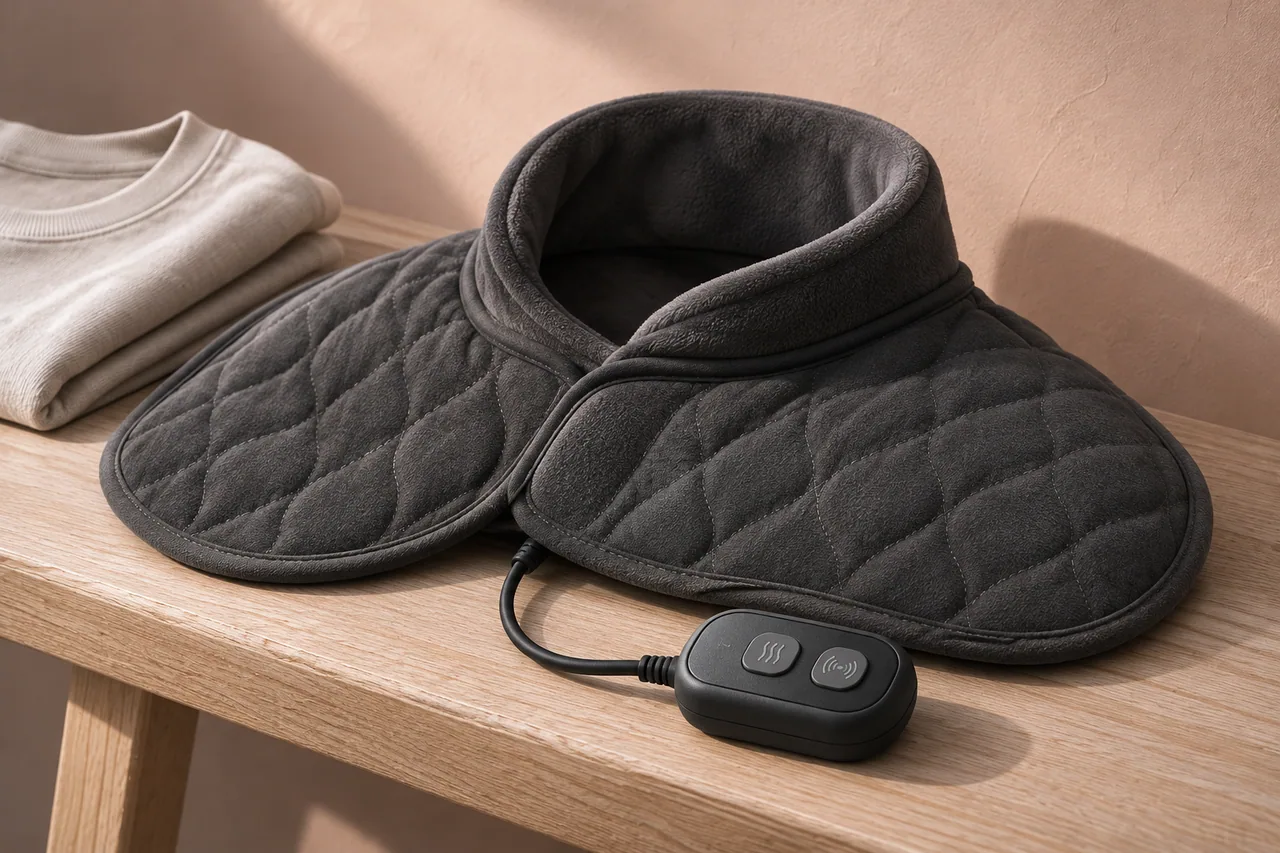
- Contoured High Collars vs. Flat Panels: Standard flat rectangular pads lie horizontally across a surface, which can leave open air spaces around the neck when draped over the upper body. Some contoured wraps have a raised collar or extended shoulder panels; compare the actual shape with the area you want covered.
- Securing Mechanisms: If a product includes magnetic clasps, plastic chest buckles, adjustable straps, or weighted border seams, evaluate whether those features help hold the fabric close to your skin while you sit upright without slipping or requiring manual holding.
What Power Setup Fits Your Workspace and Mobility Needs?
How an appliance receives electrical power influences where and how you can comfortably use it:
- Mains-Powered Corded Electric Models: Corded electric pads plug directly into household wall outlets via power cables. A corded design does not require a rechargeable battery pack. However, corded setups require sitting near an outlet, checking cord reach, and routing power cables safely away from walkways and office chair wheels.
- Cordless Battery-Operated Models: If a product features a rechargeable battery pack stored inside a built-in fabric pocket, it enables freedom of movement around your living space. Portable setups let you move between rooms without managing trailing cables, though sessions must be planned around battery charge cycles.
How Usable Are the Controls, Sound Levels, and Care Protocols?
Three often-overlooked practical considerations are controller ergonomics, operational noise, and fabric maintenance:
- Controller Usability and Display: Check where the controller is located on the appliance and whether its buttons and indicator lights are easy to operate. Clear, intuitive buttons allow you to switch heat settings or turn off vibration without struggling to see the controls while wearing the pad.
- Motor Sound Levels: Operating noise can vary across different products. If you prefer quiet reading or working environments, check product specifications or user feedback for notes regarding motor sound levels.
- Fabric Care Protocols: Always consult the manufacturer's care tag on your specific device. Some appliances feature removable fabric covers that permit gentle hand or machine washing, while others require spot cleaning only with a damp cloth. Never submerge active electrical wiring, plugs, inline controllers, or motor housings in water, and ensure fabric components are completely dry before reconnecting to power.
Workplace Habits, Health Insights, and Safe Operating Rules
Integrating a heated neck and shoulder wrap with vibration or a vibrating neck heating pad into your daily routine works best when combined with mindful workplace habits and strict thermal safety practices.
Mindful Workstation Habits
While personal warming products offer pleasant home comfort, paying attention to daily posture habits helps manage upper body muscle strain:
- Adjusting Display Position: Position your primary computer screen at a comfortable height that allows your head to rest naturally without tilting forward for extended periods. Keeping your screen at eye level helps reduce continuous strain across your neck and upper back.
- Varying Seated Posture and Moving: Take short breaks during long desk sessions to stand up, gently stretch your shoulders, and change your seated position. Integrating brief physical movements throughout the day helps prevent static muscle load.
Health Authority Evidence vs. Product Realism
Understanding why upper body muscles feel tight helps establish practical self-care boundaries:
- Causes of Muscle Tightness: Cleveland Clinic describes muscle knots as tight, sensitive areas in muscle tissue and discusses factors including strain and posture.
- Physiological Principles of Surface Heat: Medical News Today discusses heat and cold as different approaches to discomfort. Choose a comfortable setting and follow the device instructions.
- Joint and Muscle Care: Educational guidance from the Cleveland Clinic on heat versus ice for sore muscles notes that warm compresses and heat wraps can help ease joint stiffness and improve tissue flexibility during daily rest breaks.
- Important Clinical Limitation: While health authorities provide general evidence regarding thermotherapy, muscle knots, and joint flexibility, health articles do not constitute clinical proof that mechanical vibration motors treat medical conditions, eliminate chronic pain, or cure spinal disorders. Using a contoured neck and shoulder heating pad with massage or vibration features offers pleasant, temporary comfort for everyday muscle tightness. If you experience severe pain, numbness, tingling down an arm, or discomfort following physical trauma, seek professional medical evaluation.
Avoid Sleeping With a Heating Pad
Never use an electric heating pad or vibrating heating wrap while sleeping or napping.
Falling asleep with an active electric heating pad can prevent you from noticing excessive heat and removing the device, increasing the risk of burns. Always power off, unplug, and remove any heating pad before lying down to sleep or nap. Integrated automatic shut-off timers function strictly as secondary safety safeguards and do not replace turning off the device manually before sleep.
Operating Rules and Skin Protection
Always touch the warming pad with your hands to check its surface temperature before placing it around your neck. Inspect your skin periodically during every warming session. If a heating wrap feels uncomfortably hot at any point, stop using the device immediately and turn off the power supply. Do not attempt to cushion an uncomfortably hot pad with extra towels or fabric layers to force continued use. Never place an electric heating pad inside a microwave oven. Always follow the exact operating, charging, and safety instructions provided in your product's official instruction manual.
Cong
Cong draws on years of experience in electric heating product processing and manufacturing, together with market research, to explain personal heating products in practical terms.
View author profile