
 By Cong Updated
Looking for fragrance-free warmth? Compare unscented electric neck wraps and odor-free glass or clay bead packs for shared spaces and scent sensitivity.
Overview
Unwinding at the end of a long workday spent typing at a computer workstation, sitting in drafty office environments, or managing a busy household schedule often leaves the muscles along your cervical spine and trapezius feeling tight, heavy, and fatigued. When physical tension accumulates across your upper back by late afternoon, bringing gentle surface warmth to your neck provides a welcoming way to relax and transition into evening rest. As you explore the market for an unscented heated neck wrap, you will discover a variety of personal warming products designed to deliver soothing surface heat directly around the neck and upper shoulders.
Selecting the right warming wrap involves looking beyond basic fabric softness or appealing packaging. Because personal preferences vary regarding fragrance exposure, physical dimensions, heating methods, and fabric care, prospective buyers benefit from evaluating how different product features align with their daily habits. Understanding why some individuals prefer fragrance-free wraps, how microwavable flaxseed options operate, how physical fit affects coverage, and how to use it safely helps you select a wrap suited to your preferences.
Navigating Fragrance Preferences: Why Choose an Unscented Heat Wrap?
The primary decision when shopping for a thermal neck product is deciding whether you want an aromatic herbal wrap or an option described as unscented. Scented wraps incorporate dried botanicals like lavender or chamomile into their internal fill, releasing herbal aromas when heated. While many people enjoy a mild botanical fragrance during relaxation breaks, added scents are not ideal for everyone. Individuals who are sensitive to perfumes, experience respiratory discomfort around strong smells, or work in scent-free environments often seek out an unscented microwavable neck wrap for neutral comfort.
Understanding what "unscented" means in personal care products helps buyers set realistic expectations before purchasing. The meaning of an unscented label depends on the product. For the Sacksy Thyme option described below, the maker says no herbs or essential oils are added to the flaxseed fill. However, choosing an unscented flaxseed wrap does not necessarily mean the product is completely odorless. Natural materials can have their own scent. Furthermore, labeling a wrap as unscented does not guarantee that it is completely allergy-proof or medically safe for every individual, as personal sensitivities to natural fabrics, dyes, or organic seeds vary.
Examining Product Specifications: The Sacksy Thyme Case Study
To understand how an unscented microwavable wrap is constructed and optioned for consumers, consider the official product listing for the Sacksy Thyme Microwavable Heating Pad Neck & Shoulder Wrap. Examining the published manufacturer specifications on the Sacksy Thyme product page illustrates how scent options, dimensions, and fabric materials are detailed for prospective buyers.
On its product page, Sacksy Thyme separately offers both a lavender-and-flaxseed variant and a flaxseed-only option. The flaxseed-only choice is specifically described as unscented, containing purely natural flaxseed fill without any added herbs, essential oils, or fragrance enhancements. This clear separation allows shoppers who prefer fragrance-free comfort to select the unscented option while giving scent-loving buyers the alternative herbal version.
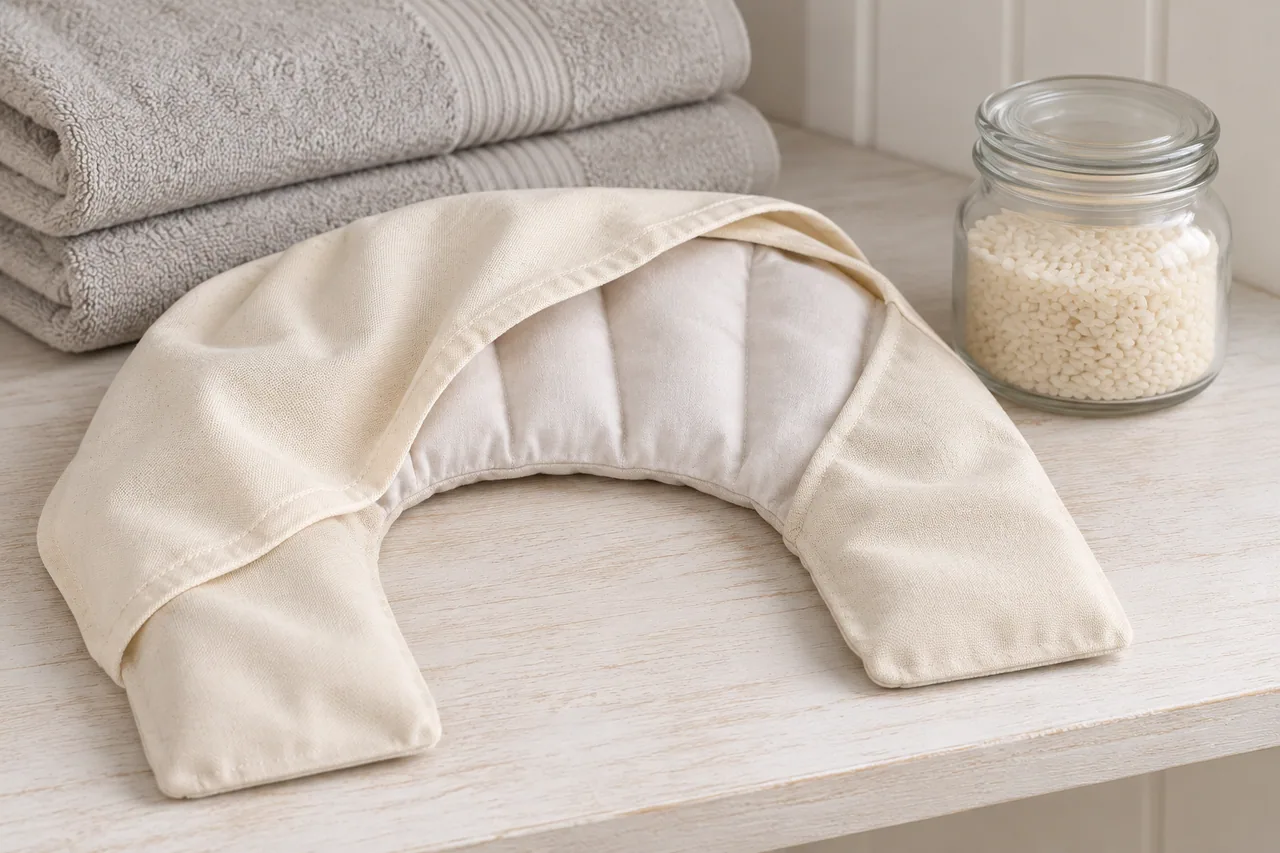
The published physical specifications for the grey and blue color variants of this Sacksy Thyme neck wrap detail several concrete design parameters. The wrap is constructed as a microwavable pad measuring 24 inches long by 6 inches wide, giving it an elongated rectangular shape designed to lie flat across the back of the neck or drape comfortably over the shoulders. It features a total weight of approximately 2 lbs, which is useful to consider when deciding how much weight you want across your shoulders. Additionally, the outer shell is made from a soft cotton and fleece blend fabric, giving shoppers a fabric combination to consider.
It is essential to note that these specific details—including the 24 by 6 inch dimensions, 2 lb total weight, cotton/fleece blend fabric, and the distinction between the flaxseed-only unscented model and the lavender variant—represent manufacturer-published specifications from the official Sacksy Thyme listing page. They do not represent independent lab test results conducted by our editorial staff, nor should buyers assume that all microwavable wraps share identical dimensions, weights, or fabric blends.
Form Factor Choices: Microwavable Organic Grain Wraps vs. Electric Heating Pads
When evaluating personal warming options, another key decision is choosing between a microwavable organic grain wrap and a traditional electric heating pad. Comparing these two appliance categories helps clarify which heating format best supports your daily schedule.
Microwavable grain wraps—such as the Sacksy Thyme flaxseed model—operate through thermal inertia. When placed inside a clean household microwave oven according to official package instructions, the internal flaxseeds absorb thermal energy. After heating, the wrap gradually cools. Because microwavable wraps contain no electrical wiring, power cords, or battery packs, they offer cord-free use after heating. You can wear a warm flaxseed wrap while moving between rooms, typing at a standing desk, or relaxing on a sofa without managing power cables or monitoring battery charge levels.
By contrast, electric heating pads—such as those featured in the broader Comfytemp targeted heating pad collection—use electricity, with designs that connect to a wall outlet or a compatible battery. Settings and automatic shut-off features vary by model.
Highlighting format options from catalogs like Comfytemp serves to contrast general product architectures—such as plug-in electric wraps versus microwavable grain pads—rather than asserting that individual electric products are unscented. Recognizing these structural differences helps you decide whether a quick, cord-free microwavable wrap for short rest breaks or an electric heating pad with its own controls fits your daily routine.
Distinguishing Heating Wraps from Travel Supports and Health Evidence
When researching personal comfort products online, consumers frequently encounter specialized travel accessories and clinical health articles. Placing unscented thermal wraps within this broader wellness context helps prevent confusion regarding product functions.
It is important to distinguish active heating wraps from non-heated travel support pillows. For example, the Cabeau Evolution S3 is a travel pillow with a seat-strap design, while Cabeau’s collection presents other travel pillows. Cabeau travel pillows are engineered specifically to stabilize the head and prevent forward head-bobbing during airplane flights or long automobile rides. They contain no heating elements, flaxseed fill, or thermal wiring, and they are built strictly for transit posture support rather than home thermotherapy.
Similarly, health literature from clinical authorities—such as Spine-health's analysis of heat therapy for lower back discomfort—explains the physiological mechanisms of surface warmth. Applying gentle heat to skin surfaces increases localized tissue temperature, prompting local blood vessels to dilate (vasodilation). This expansion increases blood circulation across the warmed area, helping soothe tight muscle tissue and promote physical relaxation after long hours of static posture.
However, prospective buyers should recognize that general clinical principles regarding lower back heat therapy do not constitute proof of product-specific medical cures or guarantees that an unscented neck wrap treats cervical spine disorders. An unscented microwavable neck wrap or neck and shoulder heating pad is a supportive home comfort tool for everyday relaxation, not a medical device designed to cure underlying spinal conditions.
Practical Heating Guidelines, Fabric Care, and Essential Safety Protocols
Operating an unscented microwavable wrap or electric heating pad safely in your home requires adhering to strict thermal, electrical, and fabric care guidelines.
For microwavable flaxseed wraps like the Sacksy Thyme model, follow proper heating procedures: heat the wrap strictly according to the official microwave timing and wattage instructions printed on your product's packaging. Never exceed recommended heating times, as overheating organic grains can scorch internal seeds, damage fabric seams, and create severe burn hazards. Always allow the wrap to cool completely to room temperature before reheating it for a subsequent session. Always check the surface temperature of the wrap with your hands or inner wrist before placing it against your neck.
Keep electric appliances out of the microwave. Never place any electric heating pad, power cord, battery pack, or electrical accessory inside a microwave oven. Electric appliances can be damaged and present a fire hazard in a microwave. Microwaving is strictly restricted to specially labeled organic grain or gel packs.
Fabric care and maintenance require equal attention. For a cotton and fleece blend wrap like the Sacksy Thyme model, check the manufacturer's official care label for cleaning instructions. Follow the care directions for the fill and cover; do not assume that a grain-filled wrap is machine washable. Store microwavable grain wraps in a cool, dry location when not in use to preserve the natural flaxseed fill.
Switch off or remove warmth before sleep. Never wear or use any active microwavable heat wrap, electric heating pad, or battery-powered warming device while sleeping or napping. Falling asleep with an active warming product significantly reduces your sensory awareness of rising skin temperatures, dramatically increasing the risk of thermal skin burns and electrical hazards. Always remove or power off any heating wrap before lying down to sleep or nap.
Active skin monitoring is essential during every warming session. Inspect your skin periodically while using a heat wrap. If the pad feels uncomfortably hot or causes skin redness or irritation at any point, stop using the device immediately. Do not attempt to cushion an uncomfortably hot pad with extra towels to force continued use.
If you experience severe neck pain, sudden numbness, tingling radiating down an arm or hand, or pain resulting from physical trauma, seek immediate professional medical evaluation rather than relying on self-care warming products.
Cong
Cong draws on years of experience in electric heating product processing and manufacturing, together with market research, to explain personal heating products in practical terms.
View author profile