
 By Cong Updated
Compare weighted electric neck heating pads by micro-bead perimeter fills, contoured shoulder drape, temperature settings, and detachable wash cords.
Overview
Finding a practical home solution for upper body muscle stiffness often leads consumers to explore a weighted electric neck heating pad. When long hours spent typing at a computer desk, driving through daily commutes, or sitting in static workstation postures leave your cervical spine and trapezius muscles feeling heavy, stiff, and fatigued, personal warming wraps offer accessible comfort. Combining gentle surface heat with physical weighting provides a cozy way to unwind during evening rest or work breaks.
However, choosing the right weighted electric wrap requires evaluating more than basic fabric softness. Prospective buyers benefit from comparing how physical weight feels across the shoulders, how different wrap dimensions cover the neck and back, how corded power compares to battery mobility, how control systems vary, and how to practice essential thermal safety habits. This practical shopper's guide walks through these key decisions, helping you compare product specifications and integrate thermal comfort safely into your daily routine.
Evaluating How Weight Feels: Glass Beads, Surface Drape, and Personal Preferences
When shopping for a weighted neck and shoulder heating pad for desk workers, the first consideration is understanding how physical weight is incorporated into electric warming products and what benefits it realistically offers.
High-Density Glass Micro-Bead Weighting
The Comfytemp K9015D61 and PureRelief Cordless product pages describe glass-bead weighting. Other models can use different designs.
Weight changes the feel of a wrap on the shoulders. Its shape, fasteners and your own preference also matter when assessing the fit.
Comfort Preferences vs. Medical Overclaims
While physical weight helps keep fabric close to your skin, prospective buyers should distinguish tactile comfort from unsubstantiated product claims:
- Personal Comfort Choice: Physical weight is a matter of individual comfort preference, not a medically established deep-pressure therapy or a guarantee of pain relief.
- Selecting the Right Weight: Choosing a heavier pad is not automatically better for every user. While some individuals enjoy a firmer, weighted feel across their shoulders, others may find heavier weights uncomfortable or overly restrictive on sensitive collarbones.
- Fit Limitations: Physical weight encourages fabric to rest naturally against your body, but it does not guarantee that a wrap will fit every body frame perfectly or remain motionless during movement. Physical fit still depends on your shoulder width, height, and posture.
Comparing Electric Models: Formats, Dimensions, and Control Features
Shoppers evaluating a cervical heating pad electric wrap will discover distinct structural variations across different models. Comparing specific products based strictly on their published manufacturer specifications illustrates how features, coverage shapes, and control options differ across individual product lines.
Comfytemp K9015D61 Weighted Neck & Shoulder Heating Pad (2.6 lb Model)
Official specifications for the Comfytemp K9015D61 Weighted Neck & Shoulder Heating Pad detail an active electric heating wrap with dedicated upper body shaping:
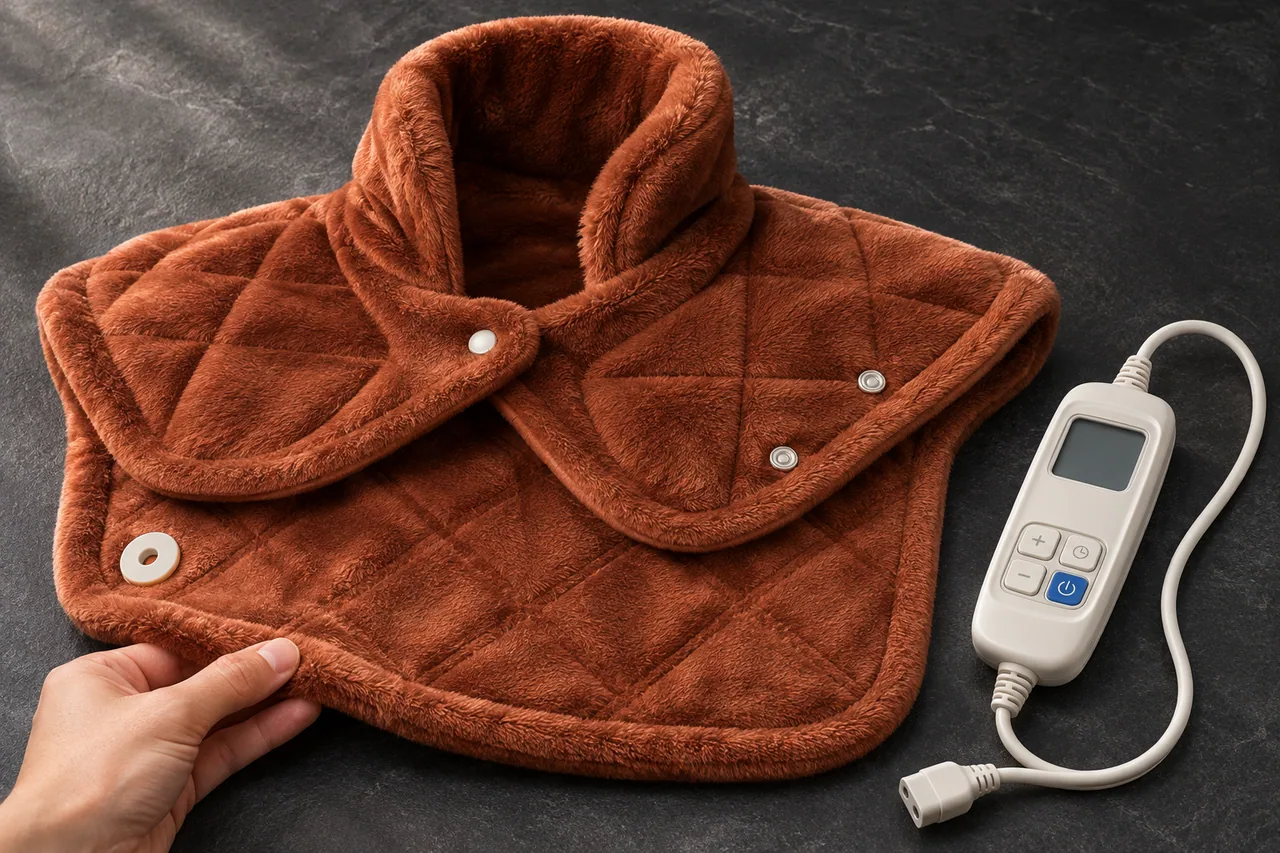
- Weight and Internal Filling: The unit weighs 2.6 lbs and features an internal glass bead filling distributed across the fabric sections.
- High Collar Contour: It incorporates a raised high collar designed specifically to wrap around the back of the neck, accompanied by extended side drapes over the trapezius muscles.
- Control Architecture: It connects to an inline digital controller featuring 9 heat settings and 11 timer options, giving users broad control over temperature levels and auto-off durations.
Comfytemp 22"x33" Weighted Heating Pad (2.4 lb Model)
By comparison, official specifications for the Comfytemp 22"x33" Weighted Heating Pad detail a multi-zone electric pad with distinct physical dimensions:
- Weight and Dimensions: This model weighs 2.4 lbs and features expansive physical dimensions of 22x33 inches.
- Heat Settings and Fastening: It offers 3 heat levels and includes an adjustable waist strap to hold the pad around the body.
Pure Enrichment PureRelief Cordless Neck and Shoulder Heating Pad
For consumers seeking portable mobility around the house, official product specifications for the Pure Enrichment PureRelief Cordless Neck and Shoulder Heating Pad detail a battery-powered design:
- Power Setup and Storage: The wrap includes a rechargeable battery pack stored inside a built-in pocket sewn into the fabric shell, enabling cord-free use around the home.
- Control Settings and Weighting: The manufacturer lists four heat settings and glass-bead weighting for this model.
- Fabric Maintenance: The fabric cover is described as machine washable, with the manufacturer specifying that users must follow the instruction manual for exact preparation steps before laundering.
- Critical Model Comparison Note: Never transfer specifications, features, or runtime numbers among different products. The 2.6 lb Comfytemp model features a high collar design with 9 heat settings and 11 timer options; the 2.4 lb Comfytemp model features 22x33-inch dimensions, 3 heat levels, and an adjustable waist strap; and the PureRelief Cordless model utilizes a rechargeable battery in a built-in pocket with 4 heat settings. Review the particular model’s instructions for operating and charging.
Power Architecture and Mobility Trade-offs: Wall Outlet vs. Battery Power
Deciding between a corded electric pad and a battery-operated wrap comes down to how you plan to use your heating device at home or at work.
Mains-Powered Corded Electric Pads
Corded electric pads connect directly to household wall outlets via power cables.
- Continuous Power Architecture: A corded model uses its specified power connection rather than a rechargeable pack during use. Its controls and shutoff behaviour depend on the model.
- Workstation Placement: Using a corded pad at a computer desk requires evaluating cord reach and cable routing. Ensure the power cable reaches your seat naturally without placing cord tension on the neck collar. Route cords neatly along desk legs or skirting boards to avoid creating tripping hazards or catching wires under office chair wheels.
Battery-Operated Cordless Wraps
Battery-powered models provide complete freedom of movement around your living space.
- Active Mobility: A battery-operated wrap allows you to move between rooms, prepare meals, or sit on a patio without managing power cables or checking outlet proximity.
- Battery Handling: Portable power requires managing battery charging cycles according to the manufacturer's official instructions and keeping battery packs properly secured inside designated storage pockets while worn.
Physiology Insights and Realistic Home Self-Care Boundaries
Understanding why neck muscles feel tight and how surface warmth interacts with body tissue helps establish practical expectations for home self-care.
Causes of Cervical Stiffness and Initial Care Choices
Clinical guidance on neck pain from Spine-health details common causes of cervical muscle discomfort. Stiff necks frequently stem from minor posture strain in the levator scapulae or trapezius muscles, often triggered by holding a forward-head posture while staring at computer screens ("tech neck"), sleeping at an awkward angle, or repetitive daily movement.
When managing newly onset neck tightness, clinical guidance from Healthline on ice versus heat for neck pain highlights an important distinction between cold and heat application:
- Initial Cold Care for Acute Strain: Healthline discusses ice for new neck injuries, sudden pain or swelling.
- Surface Warmth for Muscle Stiffness: Healthline discusses heat after swelling has diminished and for recurring stiffness or tension.
Physiological Mechanisms of Thermal Warmth
Medical News Today discusses heat and cold as different approaches to discomfort. Follow the instructions supplied with the particular heating product.
Spine-health’s application guide discusses heat sources and attention to skin safety.
Responsible Use Without Medical Overclaims
Important Clinical Limitation: While health authorities provide general evidence regarding thermotherapy and muscle relaxation, general health research does not constitute clinical proof of neck-specific treatment outcomes or medical cures. Using a heating pad for neck stiffness offers pleasant, temporary comfort for everyday muscle tightness. However, heat therapy is a supportive home self-care tool, not a clinical cure for underlying spine disorders, structural disc injuries, or chronic medical conditions.
Cleaning Rules, Device Maintenance, and Essential Thermal Safety
Operating a best weighted neck heating pad safely in your home requires following manufacturer care instructions, inspecting equipment, and adhering to strict thermal safety rules.
Cleaning Protocols and Water Safety Warnings
Proper care preserves fabric softness and protects internal electrical wiring and battery connections:
- Disconnect Power First: Disconnect power before cleaning and handle any battery according to the specific product instructions.
- Follow Individual Care Labels: Never assume all electric heating pads are machine washable or share identical cleaning rules. Check your specific model's care tag. For example, while the PureRelief Cordless model permits machine washing of its fabric shell, users must follow its instruction manual for exact preparation steps before laundering.
- Water Safety Warnings: Never submerge active electrical wiring, mains plugs, or non-detachable inline controllers in water. Never apply water to electric pads or attempt to improvise moist heat unless the product manual explicitly permits it, as moisture entering active electrical components creates severe short-circuit hazards. Ensure all fabric components and electrical connectors are completely dry before reconnecting to power.
- NEVER Microwave an Electric Heating Pad: Never place any electric heating pad or battery-powered wrap inside a microwave oven. Electric pads are not intended for microwave heating; use the model only as directed.
ABSOLUTE PROHIBITION ON SLEEPING WITH OPERATING HEATING DEVICES
Never wear or use any operating electric heating pad, battery-powered wrap, or warming device while sleeping or napping.
Falling asleep with an active electric heating pad significantly reduces your sensory awareness of rising skin temperatures. This prevents you from removing the heat source if it becomes uncomfortably hot, dramatically increasing the risk of thermal skin burns and electrical hazards. Always power off, unplug, and remove any heating pad before lying down to sleep or nap. Integrated automatic shut-off timers function strictly as secondary safety safeguards and do not replace turning off the device manually before sleep.
Active Skin Monitoring
Inspect your skin periodically during every warming session. If a heating wrap feels uncomfortably hot at any point, stop using the device immediately and turn off the power supply. Do not attempt to cushion an uncomfortably hot pad with extra towels or fabric layers to force continued use.
Medical Disclaimer
Disclaimer: The information provided in this guide is for educational and purchasing informational purposes only and does not constitute medical advice, diagnosis, or treatment.
Cong
Cong draws on years of experience in electric heating product processing and manufacturing, together with market research, to explain personal heating products in practical terms.
View author profile