
 By Cong Updated
Compare weighted microwavable neck heating pads by clay bead vs. grain fills, channel stitching, turntable clearance, and safe microwave heating times.
Overview
Choosing a personal relaxation accessory to ease upper body muscle tightness often leads shoppers to consider a weighted microwavable neck heating pad. Combining the gentle physical contact of weighted grains with cordless warmth, a microwavable neck heating pad offers a flexible option for home comfort. Whether you are taking a quiet break from typing at a desk, lounging on a sofa, or unwinding before bedtime, a grain-filled wrap provides portable warmth without needing electrical sockets or trailing cords.
However, selecting and using a weighted neck heating pad effectively requires looking closely at how natural fills are constructed, how different physical shapes fit the shoulders, how microwave operating instructions vary between products, and how to practice essential thermal safety habits. This comprehensive shopper's guide explores these key decisions in detail, helping you evaluate product features and use a microwavable wrap safely in your home environment.
Understanding Organic Fills: Grain Cores, Botanical Herbs, and Weight Preferences
When exploring options for a microwavable neck heating pad, the first consideration is understanding what goes inside the fabric cover. The filling and fabric can differ by model. Read the listing and care label to see what the particular wrap contains and whether its entire construction is approved for microwave use.
Natural Grain Fill and Aromatic Blends
To understand how organic fills function in a real consumer product, consider the Warmies Lavender Sherpa Neck Wrap. According to official product details for this specific Warmies model:
Natural Grain and Flower Ingredients: The wrap features an internal fill constructed from natural grains blended with real dried French lavender flowers.
Dual Warmth and Cooling Functionality: The wrap is designed for dual-temperature use. It can be heated in a microwave for comforting warmth or placed inside a sealed plastic bag in a freezer for chilled cooling.
Sherpa Fabric Cover: It is finished with a soft sherpa fabric cover designed for comfortable tactile contact against bare skin or clothing.
Surface Cleaning Only: Maintenance for this specific model is strictly limited to wiping the outer fabric surface with a damp cloth.
It is important to recognize that these specific features—natural grain with French lavender, dual warming/chillable function, sherpa fabric finish, and surface-clean-only care—apply specifically to the Warmies Lavender Sherpa model. Other microwavable wraps on the market utilize different fill materials, such as unscented flaxseed, clay micro-beads, or cherry pits, and may feature smooth fleece, cotton, or removable fabric covers. Always review the product label on a specific wrap to confirm its internal ingredients and care instructions.
Evaluating Physical Weight
A filled wrap has a tangible weight. Think about whether you prefer a lighter feel or a heavier drape, and compare the listed weight and dimensions when available.
However, buyers should maintain realistic expectations regarding physical weight:
- Tactile Contact: The feel and fit of a weighted wrap depend on its shape, filling and the person wearing it.
- Individual Comfort: Weight preferences vary among users. Some people prefer a lighter drape, while others enjoy a heavier feel. Physical fit still depends on your shoulder width, body frame, and posture.
- No Medical Claims: Natural grain weight provides comfortable physical contact, but it does not constitute a clinical medical therapy or guarantee that a wrap will remain perfectly positioned during active movement.
Scented vs. Unfragranced Options
Aromatic fills like dried lavender offer a mild floral background during quiet rest. However, personal scent preferences differ:
- Scented Wraps: Suitable for individuals who enjoy subtle botanical notes during personal relaxation routines.
- Unfragranced Wraps: Preferred by individuals with sensitive skin, respiratory allergies, or a preference for pure warmth without floral scents.
Physical Design and Category Differences: Active Warmth vs. Passive Travel Support
How a microwavable wrap rests across your upper back influences how warmth transfers to tight muscles. It is also essential to distinguish active warming wraps from passive structural travel accessories.
High Collars and Trapezius Drapes
The human cervical spine features a natural inward curve. Standard flat rectangular heating pads lie horizontally across a lap or lower back, which can leave open air gaps around the back of the neck when placed over the shoulders. In contrast, an ergonomic contoured neck and shoulder heating pad features a raised collar that wraps around the neck, accompanied by side drapes that extend over the trapezius muscles. This contoured shape helps keep the warming surface close to tight neck and upper back muscles while you sit upright.
Active Microwavable Wraps vs. Passive Travel Support Accessories
When browsing retail catalogues or online wellness listings, active heating wraps are sometimes displayed alongside travel sleep accessories. Buyers should distinguish active microwavable warming products from passive structural travel pillows, such as those in the Cabeau travel neck pillows collection and the specific Cabeau Evolution S3 neck pillow:
- Cabeau Evolution S3 Neck Pillow: A passive travel support pillow featuring a patented seat-strap system designed to attach directly to airplane seat headrest wings or vehicle seat backs. The strap system is designed to attach to an airplane headrest for travel support.
- High-Density Memory Foam Construction: The Evolution S3 is intended for travel support rather than heating.
- Category Distinction: The Cabeau Evolution S3 is a passive travel support pillow rather than a microwavable heat wrap. Understanding this distinction ensures you do not inadvertently purchase a non-heated travel pillow when you intend to buy a microwavable neck wrap for home relaxation.
Thermal Science Principles and Realistic Expectations for Home Use
Understanding how surface warmth interacts with muscle tissue helps establish practical self-care habits for daily home use.
Physiological Insights on Heat Therapy
Spine-health discusses heat therapy in relation to lower-back pain. Its advice provides background on heat application, while a specific wrap’s instructions remain the guide for preparing that product.
Its application guide discusses different heat sources and attention to skin temperature during use.
Responsible Application of Clinical Research
Important Clinical Limitation: While Spine-health details blood circulation and muscle relaxation principles in its lower-back heat articles, findings regarding lower-back heat therapy do not constitute clinical proof of neck-specific treatment outcomes or medical cures.
Using a heating pad for neck pain sitting at computer all day provides pleasant, temporary comfort for everyday muscle tightness. However, heat therapy is a supportive home self-care tool, not a clinical cure for underlying spine disorders, structural joint injuries, or chronic medical conditions.
Microwave Heating Directions, Safety Rules, and Maintenance
Because microwavable grain wraps absorb intense thermal energy inside a microwave oven, strict heating guidelines, skin checks, and fabric care instructions must be observed to prevent burns or product damage.
Essential Microwave Operating Directions
Unlike corded electric pads that maintain continuous power via an electrical socket, microwavable wraps must be heated strictly according to their specific manufacturer label:
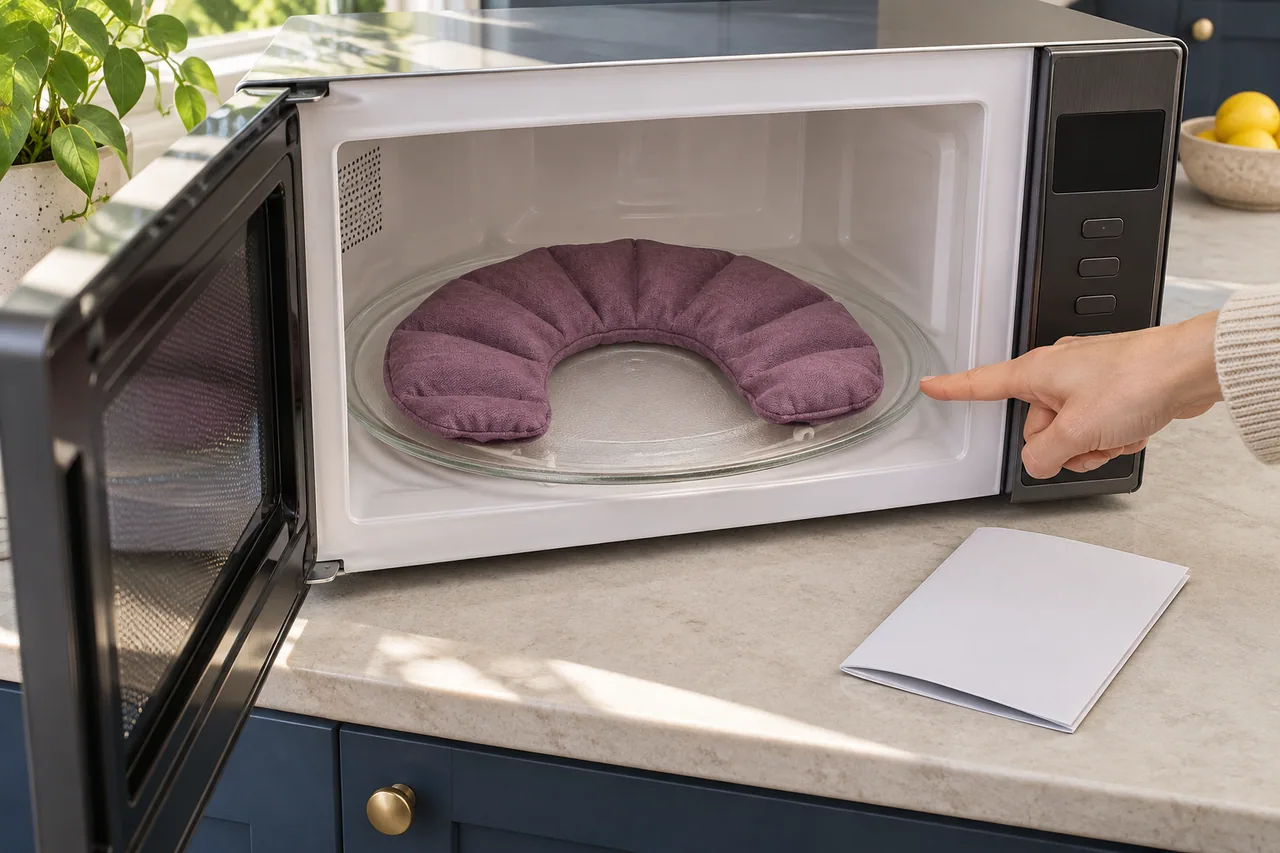
- Follow Package Wattage and Time Limits: Always read and adhere to the exact microwave wattage settings and heating time limits printed on your product's instruction tag. Microwave power levels vary significantly between household appliances; overheating a grain wrap can scorch internal seeds, damage fabric seams, or create hidden thermal hotspots inside the wrap.
- Allow Complete Cooling Before Reheating: If a wrap cools down and you desire additional warmth, allow the internal grain core to cool down completely to room temperature before placing it back in the microwave if required by its operating instructions. Reheating an already-warm grain wrap can cause internal overheating and burning.
- Never Overheat: Never exceed the recommended heating times or attempt to boost warmth by guessing microwave settings.
ABSOLUTE PROHIBITION ON SLEEPING WITH A HEATED WRAP
Never wear or use any heated wrap or thermal pad while sleeping or napping.
Falling asleep with a recently heated wrap significantly reduces your sensory awareness of rising skin temperatures. This prevents you from removing the heat source if it becomes uncomfortably hot, dramatically increasing the risk of thermal skin burns. Always remove any warming wrap before lying down to sleep or nap.
Skin Checks and Discontinuation Rules
Always touch the wrap with your hands to check its surface temperature before placing it around your neck. Inspect your skin periodically during use. If a wrap feels uncomfortably hot at any point, stop using the device immediately and remove it from your body. Do not attempt to cushion an uncomfortably hot pad with extra towels or fabric layers to force continued use.
Fabric Care and Cleaning Rules
Proper care preserves fabric quality and protects internal organic fills:
- Check Product Care Labels: Organic grain fills require specific care. For example, product care instructions for the Warmies Lavender Sherpa model specify surface cleaning only by wiping gently with a damp cloth.
- Warmies Lavender Sherpa Care: The Warmies product page says not to immerse or machine-wash its Lavender Sherpa wrap because this may damage the filling. Follow the individual care instructions for other products.
Medical Disclaimer
Disclaimer: The information provided in this guide is for educational and purchasing informational purposes only and does not constitute medical advice, diagnosis, or treatment.
Cong
Cong draws on years of experience in electric heating product processing and manufacturing, together with market research, to explain personal heating products in practical terms.
View author profile