
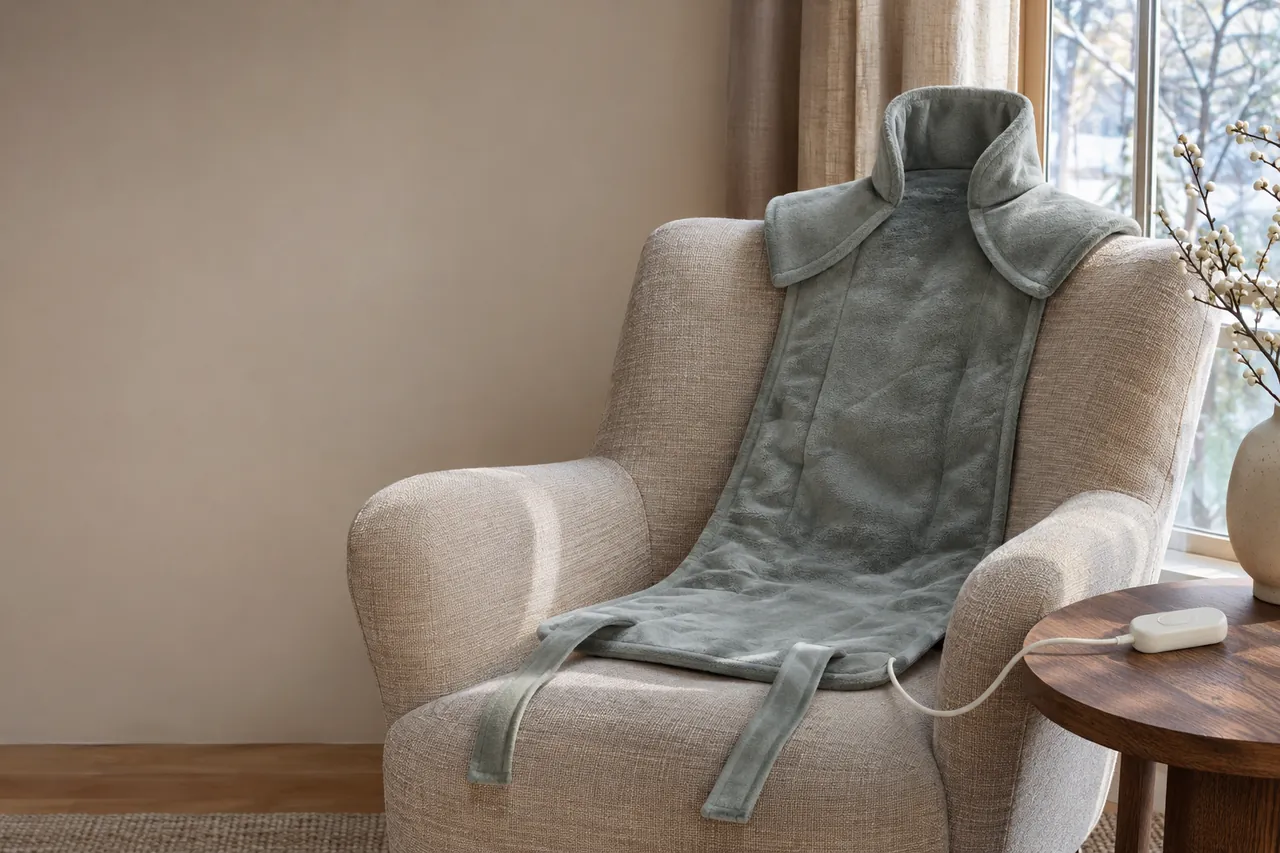
Can you use a back heating pad in bed? A localized electric pad can be used for an awake warming break, but remove it before going to sleep. Its automatic shutoff is a safety feature, not an invitation to sleep on the pad. Keep the device uncompressed and follow its own instructions for positioning and skin contact.
Introduction
For warmth across the whole bed, heated bedding serves a different purpose. The sections below help you set up an awake session, compare these options, and recognize when back pain needs more than home care.
Start with a safe awake warming session
Set up your pad where you can reach its controls, stay awake and finish the session before you settle in for the night. Keep the pad flat and free of body weight, and check your skin as you use it.
Finish the Warming Session Before Sleep
The most critical rule for a back heating pad for bed relaxation is to use the localized pad while awake and remove it before sleep.
Switch off, unplug, and remove the localized pad from your bed before falling asleep. Checking your comfort and skin while awake helps you notice when it is time to stop.
Automated Shut-Off Timers Are Not Wear-Time Recommendations
Some electric heating pads have automatic shut-off timers. An automatic shutoff is a device feature, not a recommended length of uninterrupted skin contact.
Do not treat a 120-minute timer as permission for two hours of uninterrupted skin contact. Follow the device directions and stop if warmth becomes uncomfortable or your skin looks irritated.
Keep Body Weight Off the Pad
Another essential safety rule for pre-sleep rest is avoiding body-weight compression. Never lie flat on top of, sit on, or press your full body weight against an electric heating pad.
Placing body weight on a localized electric pad can trap heat and put pressure on the device. Keep the pad uncompressed and follow its instructions for placement.
Trapped warmth: Pressing a pad beneath your body can increase the risk of overheating and burns.
Pad care: Avoid folding, crushing, or placing body weight on an electric pad; handle it as directed for the device.
Choose a position allowed by the exact pad’s instructions, with its controls within reach and the pad free from pressure or folds. The Sunbeam GoHeat manual, for example, says not to sit on or lean against that pad and to place it on top of the body part being warmed. Finish the session and remove the pad while you are still awake.
Which kind of warmth do you need?
A warming pad, a heated mattress pad and an electric blanket may all appear in the same search, but they serve different jobs. Start by deciding whether you want warmth over one part of your back or across more of the bed; then check how the individual product is intended to be used.
Here is how the three options fit into an evening routine:
1. Localized Electric Heating Pads
Localized electric heating pads, such as the PureRelief® Lumbar & Abdominal Heating Pad, are intended to warm a particular area. Their compact shape makes them a different choice from bedding that covers a larger surface. Use a localized pad while awake, following the product directions, and remove it before sleeping.
2. Full-Bed Heated Mattress Pads
Heated mattress pads cover part or all of a mattress and are designed as bedding. They distribute warmth across a larger area than a localized pad. Some models are intended to pre-warm the bed, while others permit use during sleep: follow the directions for the particular product.
3. Electric Blankets
Electric blankets are covers that provide warmth over a larger area than a localized pad. Their controls and permitted use vary by model, so follow the product directions for placement and overnight use.
Choose a localized pad when you want warmth in one area during an awake rest break. For broader bed warmth, look for heated bedding designed for the intended use and follow its instructions.
Skin checks and care after use
A comfortable session should leave your skin comfortable too. Check the area during use, stop if it feels too hot or becomes irritated, and let the pad cool before putting it away.
Increased Burn Risk from Reduced Skin Sensation
People with reduced skin sensation may be less able to notice excessive heat. Do not use a heating pad on an area where you cannot feel heat normally.
Preventing Toasted Skin Syndrome (Erythema Ab Igne)
A primary dermatological risk associated with repeated, prolonged heat exposure is Toasted Skin Syndrome, medically known as Erythema Ab Igne. As documented by dermatological experts at the Cleveland Clinic, toasted skin syndrome is a skin condition caused by repeated, long-term exposure to low-level heat that alters skin tissue over time without causing an immediate burn. Repeated exposure causes a characteristic net-like pattern of hyperpigmentation and brown skin discoloration across the warmed area. To protect your skin, limit warming sessions to short, discrete periods and allow skin to cool naturally between applications.
Essential Operational and Care Rules
Skin protection: Follow your pad’s instructions for fabric barriers and skin contact; check your skin during use.
Active Skin Monitoring: Inspect your skin underneath the pad frequently during every session. If the pad feels uncomfortably hot, or if skin shows redness or irritation, stop using the device immediately and turn off the power supply.
Never microwave an electric heating pad, controller, cord or battery. Heat a separate gel pack only when its own instructions explicitly permit it.
Fabric Maintenance: Always disconnect power cords or battery units before laundering machine-washable fabric covers. Ensure all fabric components are completely dry before reconnecting electrical leads.
A closer look at a lumbar pad and a massager
A wrap and a massager solve different problems. A lumbar wrap holds a flat pad around the lower back; a massager adds movement and may need a different sitting position. The details below can help you decide which format suits an awake evening break.
Pure Enrichment PureRelief® Lumbar & Abdominal Heating Pad
Official manufacturer details for the PureRelief® Lumbar & Abdominal Heating Pad (Gray, Model PELUMBAR-G) outline a mains-powered corded wrap designed for targeted lower back placement:
Physical Dimensions: Features an elongated footprint measuring 19.69 inches by 9.5 inches, designed to drape across the lumbar spine or lower abdomen.
Dual Adjustable Fastening Straps: Incorporates two adjustable straps that wrap around the waist, holding the pad flat against your lower spine without requiring you to lean backward against a chair.
Thermal Controls: Connects to an inline digital controller offering 4 heat settings and a 120-minute automatic shutoff feature.
Detachable Controller and Washable Fabric: The manufacturer lists a detachable controller and machine-washable fabric; follow this model’s instructions for preparation and cleaning.
Included Accessories: Includes a hot/cold gel pack in the box for optional cold therapy .
RENPHO Motorized Heated Massagers
RENPHO’s collection includes neck and back massagers, a separate category from a flat lumbar heating pad. A massager adds a mechanical component; individual models differ in design and features, so compare each product with the way you expect to sit and use it.
The dimensions, settings and shutoff above describe the specific PureRelief model, not all heating pads.
What warmth can do for an aching back
Understanding how surface warmth interacts with lower back tissue helps set realistic expectations for evening home self-care.
How Surface Heat Soothes Fatigued Muscles
Sunbeam describes heat as a way to soothe muscle discomfort. NHS back-pain guidance also discusses using a heat pack for stiffness or muscle spasms. Treat the warmth as a comfort measure, and avoid assuming it can correct the underlying cause of pain.
A comfortable warmth level can make a quiet rest break feel more pleasant. Adjust it as directed for your own pad and stop if it feels too hot.
If back pain is worse at night, interrupts daily life or is not improving after several weeks, the NHS recommends arranging an assessment. Note where the pain occurs, whether it wakes you and which movements make it worse; those details can help explain the pattern at an appointment.
Gentle activity: NHS guidance recommends staying active and continuing everyday activities where possible. Move comfortably rather than forcing a stretch through pain.
Clear Scope and Medical Boundaries
A heating pad is a comfort tool; it does not cure spinal conditions or permanently increase flexibility.
When comparing a lumbar wrap, consider whether the shape covers the area you want to warm, whether the straps fit comfortably, and whether the controls are easy to reach.
Red Flag Symptoms: When Back Pain Requires Immediate Medical Assessment
Some symptoms accompanying back pain require immediate medical attention.
According to official back pain clinical guidance from the National Health Service (NHS), you should seek immediate emergency medical assessment (going to an emergency room or calling emergency services) if your back pain occurs alongside any of the following urgent red flag symptoms:
Bladder or Bowel Changes: Sudden loss of bowel or bladder control, difficulty urinating, or sudden inability to pass urine.
Saddle Area Numbness: Sudden numbness, loss of feeling, or a pins-and-needles sensation around your genitals, buttocks, or back passage (anus).
Symptoms in Both Legs: Pain, tingling, weakness or numbness in both legs.
The NHS also recommends emergency assessment for back pain with changes in sexual sensation or function, chest pain, or pain that began after a serious accident. Do not drive yourself to emergency care. Seek urgent medical advice if severe pain starts suddenly or worsens quickly, or if you feel feverish, shivery or generally unwell.
An intentional pre-sleep routine starts with the right product, a comfortable awake position, and a clear end to the warming session before you go to sleep.
Sources
Bedsure — Heating Pad vs Electric Blanket vs Heated Mattress Pad https://bedsurehome.com/blogs/bedsure/heated-pad-vs-electric-blanket-comparison
Pure Enrichment — PureRelief® Lumbar & Abdominal Heating Pad (Gray, Model PELUMBAR-G) https://pureenrichment.com/products/purerelief-lumbar-abdominal-heating-pad-gray
RENPHO — RENPHO Neck and Back Massagers with Soothing Heat https://renpho.com/collections/neck-back-massagers
Sunbeam — Pain Relief with Heat Therapy https://www.sunbeam.com/pain-relief-education.html
National Health Service (NHS) — Back pain - NHS https://www.nhs.uk/conditions/back-pain/
Cleveland Clinic — What Is Toasted Skin Syndrome (Erythema Ab Igne)? https://my.clevelandclinic.org/health/diseases/toasted-skin-syndrome