
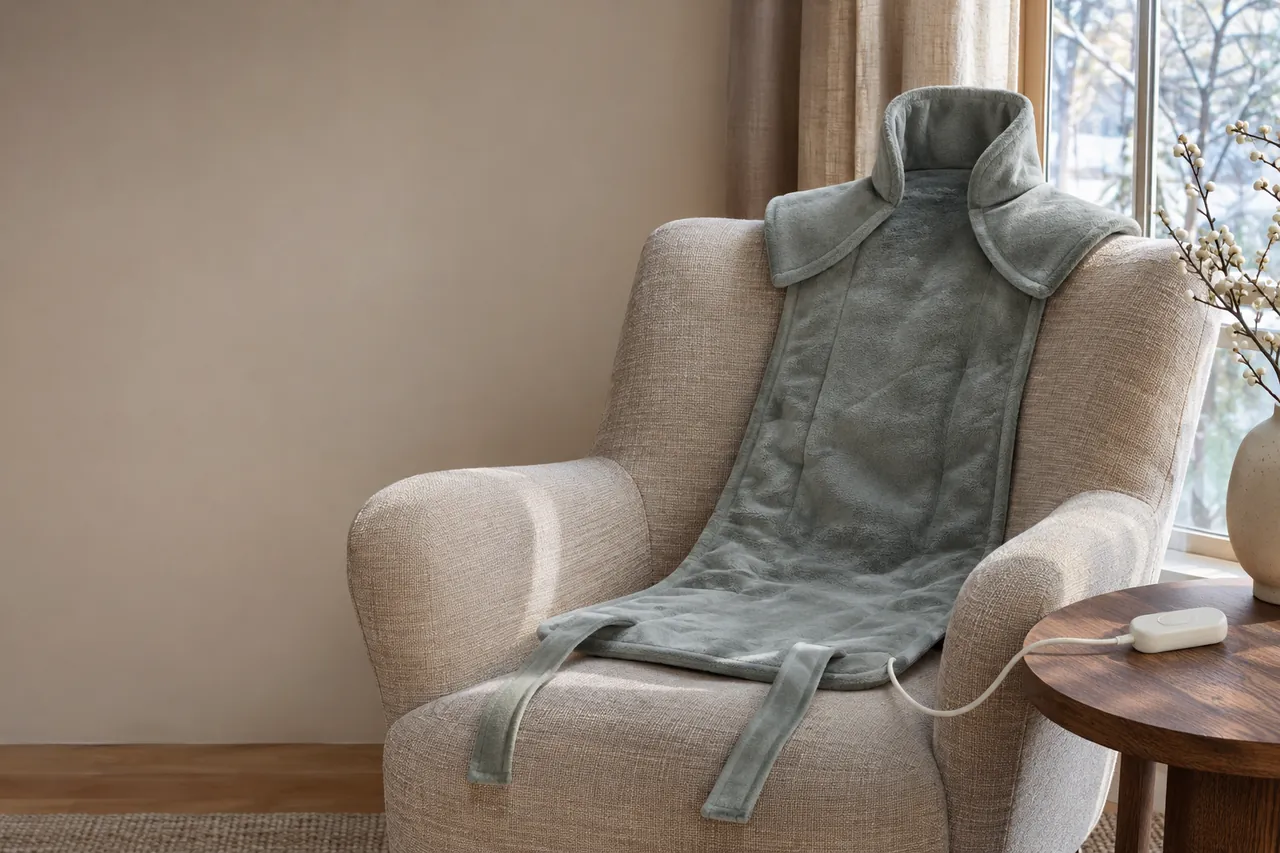
Back pain in pregnancy can make familiar activities feel different: sitting through a meeting, getting dressed or turning over in bed may take more thought. A back heating pad for pregnancy is one possible comfort measure, but it is useful to start with the pattern of the pain and any symptoms accompanying it. Some situations need medical attention before a home comfort routine.
First, know when back pain needs prompt attention
Contact your maternity team or seek urgent medical advice for back pain with a fever, vaginal bleeding, pain when you pass urine, or pain in either side under the ribs. The NHS also recommends urgent advice for back pain in the second or third trimester, because it can sometimes be a sign of early labour. These symptoms need assessment rather than a change in pillows or heat alone.
Seek emergency care if back pain comes with loss of feeling in one or both legs, your bottom or your genitals. ACOG also advises contacting an obstetric care professional when back pain is severe or lasts more than two weeks. A clear description of when pain began, where it occurs and any other symptoms can help the care team assess it.
These signs are a reason to seek assessment, not a diagnosis. Back pain has several possible causes, including problems that require treatment. A heating pad cannot tell you which cause is present. If your care team has given you individual instructions, follow those alongside the advice for the specific device.
What ACOG says about warmth for sore back muscles
For painful back muscles during pregnancy, the American College of Obstetricians and Gynecologists (ACOG) describes a heating pad or warm water bottle as an option. ACOG recommends the lowest setting on a heating pad, wrapping the pad or bottle in a towel to help prevent burns, and limiting the time heat or cold is used.
Leeds Teaching Hospitals NHS Trust gives a specific example for pregnancy-related pelvic and lower back pain: a towel-wrapped hot water bottle on the lower back for 15 minutes, not on the bump. That example describes the hospital’s guidance for a hot water bottle; it is not a blanket instruction to operate every electric pad for the same period. Follow the directions and pregnancy warnings for your own product.
Comfortable warmth should not hurt. Remain awake, check the skin and stop if the area feels too hot or becomes irritated. Make sure a towel or other barrier is consistent with the device instructions; do not cover electrical controls or improvise a setup that the device does not permit. The purpose is temporary comfort for sore muscles, not a way to treat every cause of back pain.
Some pads have timers or automatic shutoff settings. These are features of a particular appliance, not instructions to use it for the whole timer period. Keep the controls accessible, avoid pressure on a pad where its directions prohibit it, and switch it off after use. Never put an electric pad, controller or battery into a microwave.
Why the back can feel different during pregnancy
ACOG explains that an expanding uterus changes the centre of gravity and stretches the abdominal muscles that support the spine. The extra load and changes in posture can place more demand on the back. Pregnancy hormones also affect the ligaments around pelvic joints. The combination is different for each person, so a particular movement or resting position may become uncomfortable at a different stage.
Pain location and timing are useful observations. Notice whether discomfort appears after standing, after a long sitting period or when rolling over. A brief record of activities and symptoms can make a discussion with a midwife or obstetric care professional more specific, especially when the pain persists or limits everyday movement.
The location of discomfort can shape the adjustments you make. Leeds Teaching Hospitals notes that pelvic and lower-back pain may be felt around the hips, buttocks, thighs, pubic bone or groin. If standing on one leg makes getting dressed uncomfortable, sit down to dress. For walking, the hospital suggests trying shorter steps; when turning in bed, keep the knees together. These are practical ways to make individual movements easier, not a diagnosis of the source of pain.
A more comfortable way to sit, move and rest
Heat is only one option. ACOG suggests supportive shoes with a low heel and good arch support. For sitting, place a small cushion or rolled towel behind the lower back if it improves comfort, and change position regularly rather than remaining in one posture for a long time. When standing for a long period, ACOG suggests resting one foot on a low stool or box to reduce strain.
For sleep or a short rest, try lying on your side with a pillow between your knees. ACOG also suggests a pillow under the abdomen or a full-length body pillow. Leeds Teaching Hospitals describes a pillow between the knees and ankles and another under the bump. Arrange the pillows so you feel supported rather than forcing a position that causes pain.
The NHS advises avoiding heavy lifting during pregnancy. If you need to pick something up, bend your knees and keep your back straight; move your feet to turn instead of twisting. Balance shopping between two bags rather than loading one side. Leeds also suggests changing position regularly. To stand from a chair, move toward the edge, bring your feet under your knees and lean forward as you rise.
The NHS includes a warm bath and pregnancy-appropriate movement among ways to ease back pain. Choose movement that does not make the pain worse. If exercise causes pain, stop; ACOG recommends discussing exercise with your obstetric care professional to ensure it is suitable for you. Ongoing pain may benefit from assessment and, where appropriate, a referral to physiotherapy.
Warming the bed is a separate decision
A whole-bed electric blanket and a small pad used for sore back muscles are different products. For a simple resting setup, use ordinary bedding and adjust layers when you feel too warm. If a blanket is used to warm the bed beforehand, follow that blanket’s instructions, turn it off and unplug it before getting in or sleeping. Do not use an electric heating pad while asleep.
Avoid overheating. The CDC notes that pregnancy can make people more susceptible to heat-related illness, particularly in very hot environments. Feeling excessively hot is a cue to remove layers and cool down. An appliance timer does not replace attention to your comfort or a product’s own safety instructions.
For a water bottle, check for wear and leaks before filling it, use a cover or towel, and keep it away from direct contact with skin. A source of warmth should feel comfortable rather than intense. If reaching or positioning it is awkward, arrange your pillows first so you can remove it easily without twisting or pressing your back against a hard surface.
Inspect an electric product before use and do not use it if its cord, controller or fabric is damaged. Keep controls clear and follow the directions for positioning, cleaning and storage. A washable cover, a detachable controller and a washable electric pad are not necessarily the same thing: check which parts the specific product allows you to clean.
Put the pieces together
A practical plan can be modest: identify any warning signs, support your back while sitting, change position when comfortable and use a towel-wrapped warm water bottle on the lower back as described by Leeds if that advice suits your situation. If you use an electric pad, ACOG’s lowest-setting and limited-time advice sits alongside the device’s own warnings.
Track a change that matters to you, such as whether sitting through a meal is more comfortable or turning in bed is easier. If symptoms are severe, persistent or accompanied by the warning signs above, seek clinical care rather than extending heat use. The goal is a comfortable routine that leaves room for the medical assessment pregnancy-related pain sometimes needs.
References
ACOG — Back Pain During Pregnancy: https://www.acog.org/womens-health/faqs/back-pain-during-pregnancy
NHS — Back pain in pregnancy: https://www.nhs.uk/pregnancy/common-symptoms/back-pain/
Leeds Teaching Hospitals NHS Trust — Pelvic girdle pain and lower back pain: https://www.leedsth.nhs.uk/services/physiotherapy-2/pelvic-health-physiotherapy/obstetric-physiotherapy/pelvic-girdle-pain-and-low-back-pain/
CDC — Heat and Pregnancy: https://www.cdc.gov/heat-health/risk-factors/heat-and-pregnancy.html
Cleveland Clinic — Back Spasms: https://my.clevelandclinic.org/health/diseases/22881-back-spasms
Cleveland Clinic — Muscle Knots: https://health.clevelandclinic.org/what-are-muscle-knots-and-how-do-i-get-rid-of-them
Verywell Health — Hot Packs Used in Physical Therapy: https://www.verywellhealth.com/hot-packs-physical-therapy-modalities-2696130
Verywell Health — 15 Things to Help With Period Cramps on Pain Days: https://www.verywellhealth.com/what-helps-with-period-cramps-8413517