
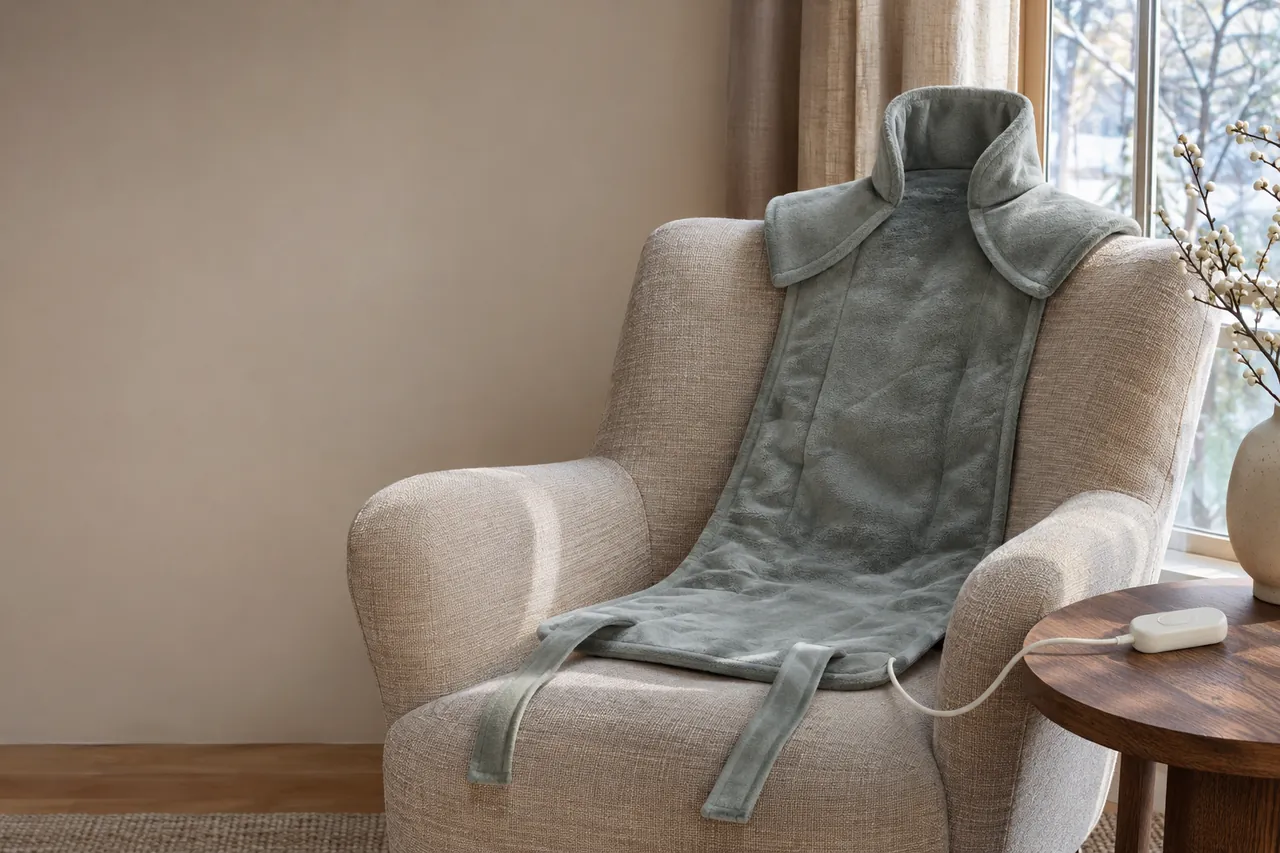
A back heating pad for travel needs a place in your bag and a plan for its power source. Before a flight, identify whether the battery is installed or separate: spare lithium batteries and power banks belong in carry-on baggage under FAA rules. Keep them accessible in case a bag must be checked at the gate.
Introduction
Once the battery is packed, consider what happens at your destination. A compact wrap and a larger massager take up different amounts of space, need different accessories, and may be suited to different positions. The details below help you prepare for a comfortable, awake warming break.
Before you fly: pack the battery correctly
If your travel includes a flight to, from, or within the United States, check the relevant FAA rules for the battery configuration and the airline’s own policies.
According to official safety guidelines from the FAA PackSafe program regarding lithium batteries, air travelers must adhere to specific packing rules:
1. Spare Lithium-Ion Batteries and Power Banks: Carry-On Only
The most critical rule for air travel is that all spare lithium-ion battery packs, uninstalled batteries, and standalone portable power banks MUST be packed strictly in carry-on baggage ONLY. Spare lithium batteries are strictly prohibited in checked luggage. Because lithium-ion batteries carry a risk of thermal runaway—which can cause overheating or short-circuiting—stowing spare batteries in the passenger cabin ensures flight crews can respond immediately if an issue arises.
2. Protecting Battery Terminals Against Short Circuits
Keep spare batteries where you can reach them during boarding. If your carry-on is checked at the gate or beside the aircraft, remove spare lithium batteries and power banks first and keep them with you in the cabin. Protect each battery from damage and prevent its terminals from touching metal objects.
Protect each spare battery’s terminals from metal contact: leave it in retail packaging, cover the terminals with tape, or place it snugly in its own protective pouch. Do not bring a damaged or recalled battery that is likely to spark or generate dangerous heat aboard unless it has been made safe under FAA guidance. If a battery overheats, expands, smokes or burns during a flight, tell the crew immediately.
3. Installed Batteries vs. Spare Power Units
FAA guidance generally permits lithium-ion batteries up to 100 watt-hours. Batteries over 100 and up to 160 watt-hours require airline approval; FAA guidance prohibits batteries over 160 watt-hours on passenger aircraft. Up to two spare batteries in the larger permitted range may be carried with airline approval. A detached battery counts as a spare and must travel in the cabin with protected terminals. The FAA recommends carrying devices with installed lithium batteries in the cabin as well. Its separate guidance requires checked devices to be completely off and protected against damage and accidental activation, with additional precautions for devices capable of generating extreme heat. Check the airline’s rules for your particular appliance and itinerary before packing.
4. Airline Policies and In-Flight Crew Instructions
Individual airlines reserve the right to enforce stricter carry-on limits or specific in-flight rules regarding electronic heating appliances. Travelers must never assume universal airline approval or operate a heating pad aboard an aircraft without verifying airline policy and obtaining permission from the flight crew. Always follow crew instructions and store battery-operated appliances securely during takeoff, turbulence, and landing.
Pack the pad and its accessories
Organizing your travel gear effectively ensures your heating wrap remains protected during transit and clean throughout your trip.
1. Packing and Folding Precautions
Pack the pad as its instructions direct, avoiding sharp creases, crushing and damage. Keep detached lithium batteries protected and accessible in your carry-on bag.
2. Waist Fit and Clothing Layers
To ensure a strapped heating wrap fits comfortably over your lower back during rest breaks, measure your waist circumference over the actual clothing layers you plan to wear while traveling—such as t-shirts or lounge pants. Select wraps with wide, adjustable hook-and-loop straps that hold the heating surface flush against your lumbar curve without slipping.
3. Fabric Care and Travel Hygiene
For the Sunbeam GoHeat, remove the battery unit, disconnect the pad cable, and follow the washing instructions. Let the pad and connector dry completely before reconnecting. Keep the battery unit out of the wash.
A wrap or a massager in your bag?
A flexible wrap and a shaped massager need different amounts of luggage space; neither should be squeezed into a bag in a way that damages it. Consider where you will use either device as well as what you can pack: a flat pad and a kneading massager call for different positions.
1. Portable Heating Wraps and Battery-Operated Pads
The Sunbeam GoHeat Cordless Heating Pad is a flexible, battery-powered example with an adjustable strap. Its battery and controller fit into a pocket on the pad. When comparing portable wraps, check their dimensions and packing instructions against the space available in your bag.
2. Motorized Heated Massagers
RENPHO’s neck and back collection includes massagers, a different category from a flat heating pad. Some offer heat as well as massage; features and dimensions vary by model. Compare the exact item’s specifications with your luggage space and intended use.
Key Travel Trade-Offs
A soft pad and a structured massager can occupy luggage differently. Compare each item’s size and weight before choosing, and leave room for its charger and accessories.
One example: Sunbeam GoHeat cordless pad
To understand how a portable warming wrap is engineered for mobile use, examine published product page specifications for a primary commercial model: the Sunbeam GoHeat™ Cordless Heating Pad.
Published details on the official Sunbeam GoHeat product page outline several specific design parameters:
Cordless Battery Power: Powered by a removable, rechargeable lithium-ion battery pack stored inside a dedicated fabric pocket, supplying wireless thermal heat without trailing wall cords.
Up to 4 Hours of Battery Runtime: Sunbeam’s maximum of four hours applies to the low setting on a full charge. Plan charging time around the trip and keep the pack accessible if your carry-on is checked at the gate.
Three Selectable Heat Settings: The battery unit also serves as the controller and fits into the pad’s side pocket. It offers three heat settings; check that you can reach the unit comfortably where you plan to sit.
Adjustable Fastening Strap: Incorporates an adjustable fabric strap designed to wrap securely around the torso for hands-free support.
Machine-washable pad: For this model, Sunbeam says to remove the battery/controller, disconnect the pad cable and tuck that cable into the pocket before washing the pad. Let the pad and connector dry completely before reconnecting, so the kit is ready to pack.
Before packing the GoHeat, disconnect the pad from its battery and let it cool. Sunbeam advises avoiding sharp creases and heavy items on the pad, with the cord looped loosely. If the battery is detached for a flight, protect its terminals and keep it in the cabin as a spare.
Crucial Safety Distinction: Battery Runtime vs. Safe Wear Duration
Sunbeam’s stated battery runtime describes operation on its low setting. It is not a recommendation for continuous skin contact.
For this GoHeat model, the manual recommends 20 minutes on high or two hours on low, and the pad has a two-hour automatic shutoff. Plan an awake break around the instructions rather than the maximum battery life, and stop if your skin feels uncomfortable or irritated.
Operational Safety, Skin Protection, and Driving Prohibitions
Operating a back heating pad for travel safely in hotel rooms, transit lounges, or rest areas requires practicing active skin monitoring, respecting electrical boundaries, and adhering to essential safety rules.
Essential Travel Safety Precautions
Use While Awake Only: Never wear or operate any electric heating pad or battery-powered wrap while sleeping or napping—whether in an airplane seat, hotel bed, train berth, or passenger lounge. Falling asleep reduces sensory awareness of rising skin temperatures, trapping heat against your body and increasing thermal burn risks.
Active Skin Monitoring: Check skin under the pad frequently and stop if it feels too hot or causes redness or irritation. Follow the exact product’s instructions for skin contact and fabric layers: the GoHeat manual tells users to place its lighter fabric side against the body and prohibits covering the pad with insulating material while it is in use. Other models may have different requirements.
Keep body weight off the pad: Do not sit or lie on a localized heating pad. Compression can trap heat and increase burn risk.
NEVER Use While Driving: Users should never wear or operate an electric heating pad while driving an automobile. Adjusting digital controls or responding to thermal discomfort while operating a motor vehicle creates dangerous driving distractions. For a rest-stop break, follow the specific device instructions for positioning and avoid pressing it against a seat.
Never microwave an electric heating pad, battery, cord or controller.
Heightened Risks for Vulnerable Groups
Comfytemp notes that reduced skin sensation can make it harder to notice excess heat. Do not use a heating pad on skin that cannot feel heat normally; stop if skin becomes irritated.
A little planning makes it easier to find a suitable place for a warm, awake break and pack the device responsibly for the next leg of your trip.
Sources
RENPHO — RENPHO Neck and Back Massagers with Soothing Heat https://renpho.com/collections/neck-back-massagers
Sunbeam — Pain Relief with Heat Therapy https://www.sunbeam.com/pain-relief-education.html
Sunbeam — GoHeat™ Cordless Heating Pad https://www.sunbeam.com/pain-relief/general-muscle-pain/sunbeam-goheat-cordless-heating-pad/SP_438956.html
Comfytemp — Heating Pad Safety Burn: Who's Most at Risk at Home https://comfytemp.com/blogs/news/heating-pad-safety-burn-risk
Federal Aviation Administration — PackSafe: Lithium Batteries https://www.faa.gov/hazmat/packsafe/lithium-batteries