
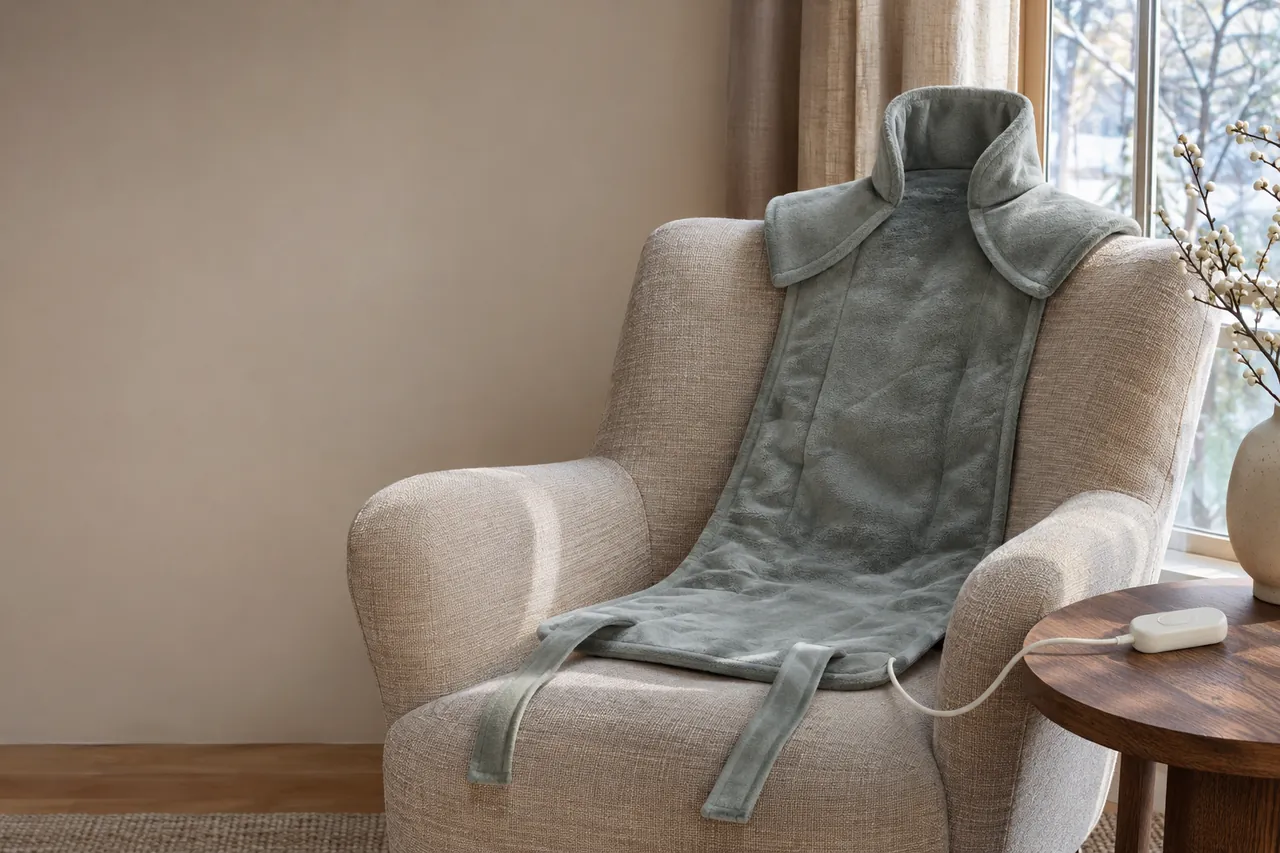
Vibration, rolling and kneading describe different sensations, even when all three appear in a search for a back heating pad with vibration. Before comparing products, decide what you want to feel and where you want to use the device: a waist wrap moves with you, while a massage cushion is designed around a chair.
Introduction
The two examples below—the Comfytemp wearable wrap and the Homedics VC-110 chair cushion—both offer vibration, not kneading. They differ in how they fit, how they are powered and how their controls work. Understanding those differences helps you choose a setup for your own chair or routine, while keeping each product’s instructions separate.
What does vibration feel like compared with kneading?
The movement is the first difference to consider.
Vibration massage produces a pulsing or shaking sensation. In a heating pad, it adds a tactile option alongside warmth; the feel depends on the product and the selected setting.
Rolling or kneading devices use moving massage mechanisms to apply pressure. Their movement feels different from vibration, so look at the device description and controls to decide which sensation suits you.
Choose between vibration and kneading according to the kind of sensation and form factor you prefer. A wearable pad and a chair cushion also fit into different parts of the day.
The controls and materials worth checking
Consider where you will use the device and how you will adjust it.
Compare controls, fabric and power before choosing a device. These details affect how easy it is to use the heat and vibration settings in the places you have in mind:
Control Ergonomics: Controllers should feature intuitive button layouts and clear indicators so users can adjust settings easily.
Fabric Quality: Outer fabric shells made from plush micro-fleece or soft velour offer comfortable tactile contact.
Power Versatility: Long power cords provide better reach to wall outlets, while rechargeable battery packs enhance physical mobility.
Also look at how the controls sit when the belt is fastened or the cushion is in a chair. Easy-to-reach controls make it simpler to adjust the sensation or turn the device off without interrupting what you are doing.
A wrap or a chair cushion?
Another primary decision when shopping for a vibrating warming appliance is choosing between a wearable lumbar belt and a stationary chair cushion. Match the form factor to where you expect to use it.
Wearable Cordless Lumbar Belts
A wearable belt wraps around the waist and holds its warming area against the lower back. The Comfytemp model described below uses adjustable straps and rechargeable power.
A cordless belt can be used without a trailing power cord during a session. Check the fit while standing and sitting, and choose a position that remains comfortable without pulling the strap too tight.
Stationary Chair Massage Cushions
A chair cushion rests against a chair back and provides a surface to lean against. Its shape, power connection, coverage and controls depend on the model.
A cushion is useful when you prefer a seated setup. Check where its warming and vibration areas fall against your back and whether its controls are easy to reach.
Two examples: how the published features differ
To understand how vibration modes, heat settings, and form factors come together in commercial appliances, examine the published product page specifications for two representative models: the Comfytemp Cordless XL Heating Pad with Massager and the Homedics Portable Back Massage Cushion (VC-110).
Comfytemp Cordless XL Heating Pad with Massager
Published merchant specifications for the Comfytemp Cordless XL model outline a versatile wearable warming wrap:
Power Architecture: The product is described as rechargeable and cordless, allowing use away from an outlet. Its listing also shows a power-bank connection in the FAQ; check the contents and directions for the version you purchase.
Securing Mechanism: It features adjustable straps designed to wrap around the torso, securing the pad snugly against the lower back or abdomen.
Thermal and Vibration Controls: Comfytemp lists 3 heat settings and 3 vibration modes.
Flexible Operating Modes: The manufacturer explicitly details that the appliance supports flexible operation—users can activate heat-only mode, vibration-only mode, or combined heat and vibration mode simultaneously.
Homedics Portable Back Massage Cushion (VC-110)
By comparison, official product page documentation for the Homedics Portable Back Massage Cushion (VC-110) details a stationary seat cushion format:
Form Factor: The device is constructed as a portable cushion designed to rest against chair backrests.
Vibration and Thermal Feature: It incorporates surface heating elements combined with vibration massage.
Speed Selection: Homedics lists 2 speeds.
Using and cleaning the cushion: The VC-110 manual describes a chair strap and separate heat control. Its heat function relies on a pressure switch in the seat; heat switches off when pressure is removed. The manual limits use to 15 minutes at a time and says to unplug the cushion and let it cool before wiping with a slightly damp sponge. Do not immerse it in water.
Use and skin safety
Operating an electric or battery-powered warming appliance safely requires practicing active skin monitoring and adhering to essential safety protocols.
Understanding Toasted Skin Syndrome (Erythema Ab Igne)
Cleveland Clinic describes toasted skin syndrome, or erythema ab igne, as a skin change caused by repeated, prolonged heat exposure. Over weeks or months, a patchy or net-like area of redness or darker skin can develop without an immediate burn or discomfort. Stop applying heat to affected skin, and seek medical care if the change persists, thickens or develops sores. Check the skin during use and follow the device’s instructions for each session.
Turn the heat off before sleep
Never wear or use any active electric heating pad, battery-powered wrap, or vibrating cushion while sleeping or napping. Falling asleep with an active heat source significantly reduces your sensory awareness of rising skin temperatures, dramatically increasing the risk of thermal skin burns and electrical hazards. Always power off, disconnect, and remove any heating device before lying down to sleep or nap.
Keep electric devices out of the microwave
Never place any electric heating pad, battery-powered wrap, vibrating cushion, or power cord inside a microwave oven. Only microwave a heat pack when it is specifically labeled for microwave use, and follow that product’s directions.
Active Skin Monitoring and Operating Safety
Inspect your skin underneath the pad frequently during every warming session. If a heating pad feels uncomfortably hot or causes skin irritation at any point, stop using the device immediately and turn off the power supply.
Additionally, safety and focus must take precedence during travel. While some users wear heating belts while seated as passengers in vehicles, users should never adjust controller settings or operate heat/vibration controls while driving, as managing device settings while operating a vehicle creates dangerous driving distractions. Always follow the specific operating instructions, care guidelines, and safety warnings printed in your individual product's user manual.
Where heat fits in back care
Understanding how surface warmth and tactile vibration interact with lower back tissue helps establish realistic expectations for home self-care. Medical and health publications provide valuable context on thermal therapy and muscle relaxation.
Soothing Involuntary Back Spasms and Trigger Points
Cleveland Clinic describes muscle knots and back spasms, and discusses warmth as one option for easing discomfort:
Involuntary Paraspinal Spasms: Cleveland Clinic describes back spasms as involuntary muscle contractions and discusses heat among options for symptom relief.
Myofascial Trigger Points: Cleveland Clinic describes muscle knots as tight, sensitive areas in muscle tissue. Its guidance includes heat among methods used for relief.
Post-Acute Physical Therapy Hot Packs: As described in physical therapy literature from Verywell Health regarding clinical hot packs, thermal compresses are frequently applied in rehabilitation settings to soothe tight muscle tissue, improve tissue extensibility, and prepare joints for movement. Note that clinical hot packs refer to moist thermal packs used in physical therapy clinics, not electric consumer vibrating devices.
Menstrual Comfort Context
Some wearable belts can be positioned across the abdomen as well as the lower back. Verywell Health lists heat applied to either area as one option for easing menstrual cramps. Check the selected belt’s placement instructions, keep the warmth comfortable and inspect your skin. Severe cramps accompanied by vomiting, dizziness or excessive bleeding need prompt medical attention.
Making your choice
Choose a wrap if you want a wearable setup, or a cushion if you prefer using a chair. Check how the chosen model controls heat and vibration, then follow its directions for positioning, use and care.
Sources
Comfytemp — Cordless Heating Pad with Vibration Massage Relief
https://comfytemp.com/collections/lower-back/products/comfytemp-cordless-heating-pad-with-massager
Homedics — Portable Back Massage Cushion (VC-110)
https://www.homedics.com/products/portable-back-massage-cushion
Cleveland Clinic — Back Spasms: Causes, Treatment & What Is It
https://my.clevelandclinic.org/health/diseases/22881-back-spasms
Cleveland Clinic — What Is Toasted Skin Syndrome (Erythema Ab Igne)?
https://my.clevelandclinic.org/health/diseases/toasted-skin-syndrome
Cleveland Clinic — How To Get Rid of Muscle Knots
https://health.clevelandclinic.org/what-are-muscle-knots-and-how-do-i-get-rid-of-them
Verywell Health — Hot Packs Used in Physical Therapy
https://www.verywellhealth.com/hot-packs-physical-therapy-modalities-2696130
Verywell Health — 15 Things to Help With Period Cramps on Pain Days
https://www.verywellhealth.com/what-helps-with-period-cramps-8413517
Wirecutter — The Best Heating Pad
https://www.nytimes.com/wirecutter/reviews/best-heating-pad/