
How long should a heating pad stay on? Can you lean back against it? Those questions depend on the product instructions as well as the way you use it. Begin with practical answers, then check skin safety, pad design and the symptoms that need urgent care.
Four Questions About Everyday Use
To help users navigate daily heating pad decisions, this section addresses common practical questions regarding setup, duration, and body placement.
Q: How long should I keep an electric heating pad on my lower back during a rest break?
A: Spine-health describes 15 to 20 minutes as a possible short session for minor back tension. The duration depends on the circumstances and product: follow the exact device instructions and check your skin during use. An automatic shutoff is a device feature, not a substitute for those directions.
Q: Can I wear or lean against an electric heating pad while sitting at my office desk?
A: Use a wrap at a desk only in a position permitted by its own instructions. Do not sit on, crush, or lean against a pad when its instructions prohibit that.
Q: Should I remain completely still after applying heat, or is gentle movement beneficial?
A: NHS guidance encourages staying active where possible and choosing movement that does not make symptoms worse. A short walk can be one option; stop an activity if it increases pain.
Q: Is it safe to use the same electric heating pad for lower back stiffness and menstrual cramps?
A: Verywell Health discusses applying warmth to the abdomen or lower back for menstrual cramps. Use a product only on areas allowed by its instructions, and follow its safety warnings.
Prepare and Monitor the Session
Operating an electric heating pad safely in your home requires practicing active skin monitoring, respecting electrical boundaries, and adhering to essential safety rules.
Always read and follow the exact user manual provided with your specific heating device regarding application duration, body placement, fabric layering, and moisture compatibility.
Essential preparation steps for a safe warming session include:
Placement and Layers: Follow the product’s instructions for skin contact and any required cover or clothing. Do not add layers that the instructions prohibit.
Understand Automated Shut-off Timers: Many electric heating pads feature built-in automated shut-off timers (such as 30, 60, or 120-minute auto-off). However, an auto shutoff is a shut-off feature—it does NOT replace active user attention or serve as a recommended continuous wear time against skin.
Active Skin Monitoring: Inspect your skin underneath the pad frequently during every session. If the pad feels uncomfortably hot, or if skin shows redness or swelling, stop using the device immediately and allow skin to cool naturally.
Heightened Burn Risks for Vulnerable Groups: As detailed in consumer safety literature from Comfytemp regarding home heating pad burn risks, individuals with reduced skin sensation—such as seniors, individuals with diabetes, peripheral neuropathy, or impaired blood circulation—face significantly higher risks of thermal skin burns because diminished nerve sensitivity prevents detecting rising temperatures. Some devices prohibit use by people unable to remove the pad independently; follow the product’s warnings.
Preventing Toasted Skin Syndrome (Erythema Ab Igne): As documented by dermatological experts at the Cleveland Clinic, repeated, prolonged exposure to low-level heat can cause toasted skin syndrome, resulting in a net-like pattern of hyperpigmentation and skin discoloration across the warmed area. Limit warming sessions to short, discrete periods and allow skin to cool between applications.
Observe three strict safety prohibitions during every session:
Never Sleep with an Active Heating Pad: Always power off, unplug, and remove any heating pad before falling asleep or napping. Reduced sensory awareness during sleep prevents detecting rising skin temperatures.
Never Sit On, Lie On, or Crush an Electric Pad: Do not sit directly on, lie flat on top of, or lean heavy body weight against an electric heating pad unless that exact model's official manual explicitly permits compression. Pressure or folding can increase risk, so follow the device’s positioning restrictions.
STRICT SAFETY WARNING: NEVER MICROWAVE ELECTRIC APPLIANCES. Never place an electric heating pad, power cord, digital controller, or battery pack inside a microwave oven. Electric appliances contain internal copper wiring and circuitry that can spark or cause a fire if microwaved. Microwaving is strictly restricted to non-electric gel or organic grain packs explicitly labeled as microwavable.
Choosing a Flat Pad or Wearable Wrap
When shopping for an electric warming device, evaluating physical design formats helps you select a model that aligns with your daily routine and seating habits.
Personal warming appliances generally fall into two primary structural categories:
Flat Rectangular Heating Pads: A flat pad can cover different areas depending on its dimensions and the positions permitted by its instructions.
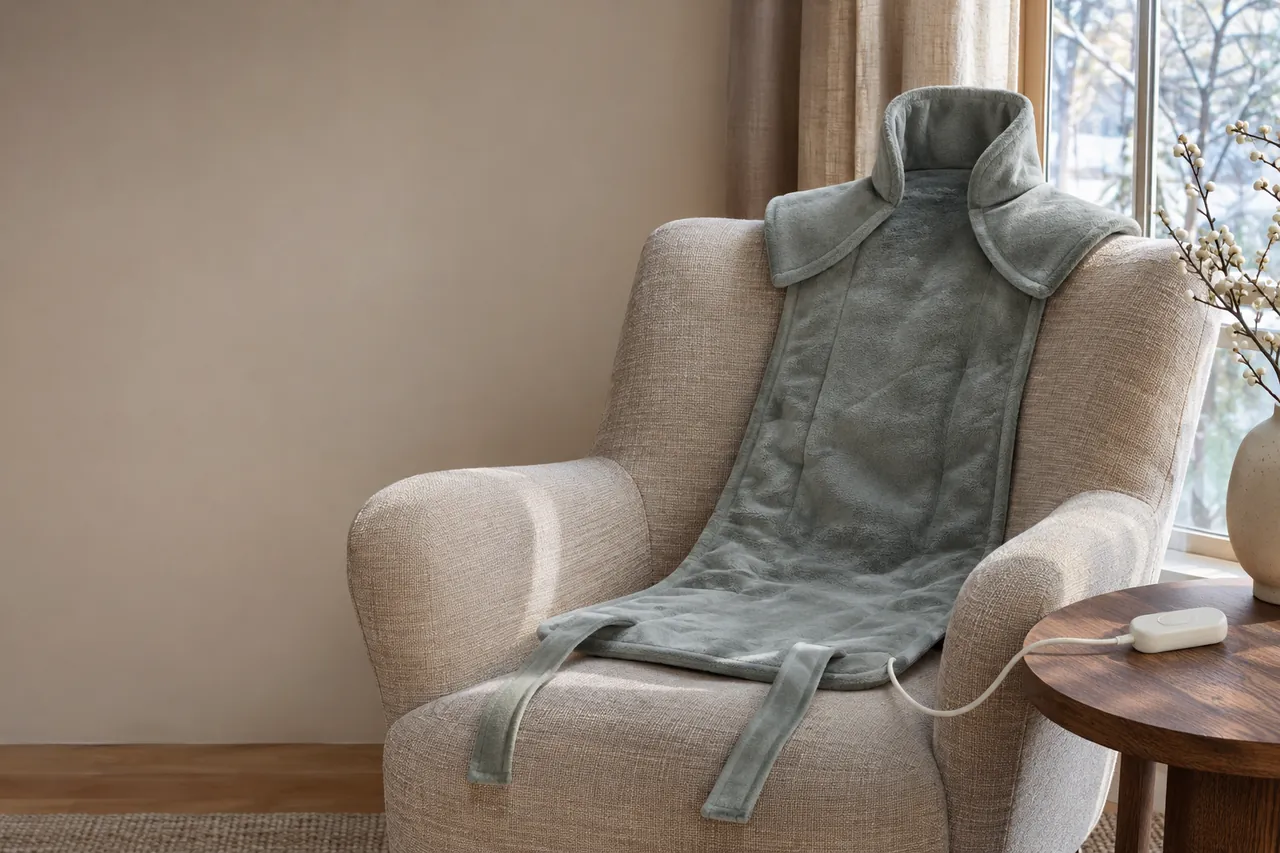
Wearable Lumbar Heat Wraps: Some wraps have adjustable straps that help hold them in place. Compare the dimensions and strap range with your needs and follow the model’s placement restrictions.
For individuals seeking an ergonomic targeted lumbar and back heating wrap to support rest breaks, a wrap with adjustable straps and clear controls may suit your routine.
Controller Features and Fabric Care
Review technical control features and fabric maintenance requirements before purchasing:
Multi-Stage Temperature Controls: Inline digital controllers offering multiple heat settings allow customizing thermal output based on room temperature and personal comfort.
Cleaning: Check whether the pad or its cover is washable. Disconnect the power and follow the exact care directions; ensure washable parts are dry before reconnecting.
Heat, Cold and Different Kinds of Discomfort
Heat vs. Cold Therapy: Start by considering what you are trying to ease: recent swelling and stiffness may call for different comfort measures. The NHS describes wrapped cold packs for pain and swelling and wrapped heat packs for stiffness or muscle spasms. Follow the directions for the particular pack or pad you use.
Before reaching for an electric warming pad, understanding the physiological differences between heat and cold therapy helps you select the appropriate comfort method for your body's needs.
According to medical guidance from Healthline and Medical News Today, choosing between heat and cold depends on the timing and nature of your discomfort:
Cold Therapy: For a recent injury or swelling, a cold pack can be an option. The NHS recommends wrapping an ice pack in a towel to protect the skin. Follow the pack’s directions and stop if the cold causes discomfort or skin changes.
Heat Therapy: Gentle warmth can provide temporary comfort for muscle stiffness. It is not appropriate for every condition, so follow the product’s instructions and safety warnings.
Soothing Involuntary Spasms and Trigger Points
Back spasms and muscle knots are two possible sources of discomfort, but a heating pad cannot establish the cause of back pain. Cleveland Clinic describes both and discusses ways to ease symptoms:
Involuntary Spasms: Cleveland Clinic describes a spasm as a sudden involuntary muscle contraction and includes heat among possible at-home measures.
Myofascial Trigger Points: Cleveland Clinic describes muscle knots as trigger points and discusses heat and stretching as possible ways to ease discomfort.
Multi-Region Comfort Applications
Verywell Health discusses using a heating pad on the abdomen or lower back for menstrual cramps. That advice addresses period discomfort and is separate from a diagnosis of back pain.
Dry Heat vs. Moist Heat
Spine-health discusses both dry and moist heat. Use moisture with an electric pad only if the instructions for that exact product permit it.
When Back Pain Needs Emergency Care
Back pain can have many causes, so a heat pad cannot identify the problem. The NHS recommends an urgent GP appointment or NHS 111 if severe pain begins suddenly, gets worse quickly, or comes with feeling hot, cold, shivery or generally unwell. It also recommends a GP appointment if pain has not improved after a few weeks, disrupts daily activities, or is worse at night. The signs below require emergency assessment.
According to official back pain clinical guidance from the National Health Service (NHS), you should seek immediate emergency medical assessment (going to an emergency room / A&E or calling emergency services) if your back pain occurs alongside any of the following urgent red flag symptoms:
Bilateral Leg Symptoms: Pain, tingling, weakness or numbness in both legs.
Saddle Area Numbness: Loss of feeling around your genitals or anus.
Bladder or Bowel Changes: Sudden loss of bowel or bladder control, difficulty urinating, or sudden inability to pass urine.
The NHS also lists changes in sexual sensation or function, chest pain, and back pain that began after a serious accident as reasons for emergency assessment. Do not drive yourself to emergency care; have someone take you or call emergency services. Some neurological symptoms can indicate serious nerve compression, including cauda equina syndrome, and need immediate assessment.
A heating pad is one option for temporary comfort, not a diagnosis. Choose a design that suits the positions you actually use, follow that model’s directions, and pay attention to symptoms that need medical care.
References
Cleveland Clinic — Toasted Skin Syndrome (Erythema Ab Igne): Causes and Prevention
https://my.clevelandclinic.org/health/diseases/toasted-skin-syndrome
Cleveland Clinic — Back Spasms: Causes, Treatment & What Is It
https://my.clevelandclinic.org/health/diseases/22881-back-spasms
Cleveland Clinic — How To Get Rid of Muscle Knots
https://health.clevelandclinic.org/what-are-muscle-knots-and-how-do-i-get-rid-of-them
Verywell Health — 15 Things to Help With Period Cramps on Pain Days
https://www.verywellhealth.com/what-helps-with-period-cramps-8413517
National Health Service (NHS) — Back pain - NHS
https://www.nhs.uk/conditions/back-pain/
Spine-health — How to Apply Heat Therapy for Pain Relief
https://www.spine-health.com/treatment/heat-therapy-cold-therapy/how-apply-heat-therapy
Healthline — Treating Pain with Heat and Cold
https://www.healthline.com/health/chronic-pain/treating-pain-with-heat-and-cold
Comfytemp — Heating Pad Safety Burn: Who's Most at Risk at Home
https://comfytemp.com/blogs/news/heating-pad-safety-burn-risk