
When a cordless heated back massager feels uncomfortable, the cause may be its shape or pressure rather than its heat setting. A pillow with moving nodes and a flexible vibrating wrap sit differently against the body, and their instructions can set different limits on positioning and session length.
Introduction
Begin by considering how you will position the device and reach its controls. Then compare the massage action, heat settings and battery details on the model you are considering. These devices provide a comfort option; they do not diagnose or cure the cause of back pain.
Positioning, Body Pressure, and Posture: Following Product Manuals
A critical distinction between ordinary flat heating pads and structured massage cushions involves body positioning and pressure management.
Distinguishing Flat Heating Pads from Massager Cushions
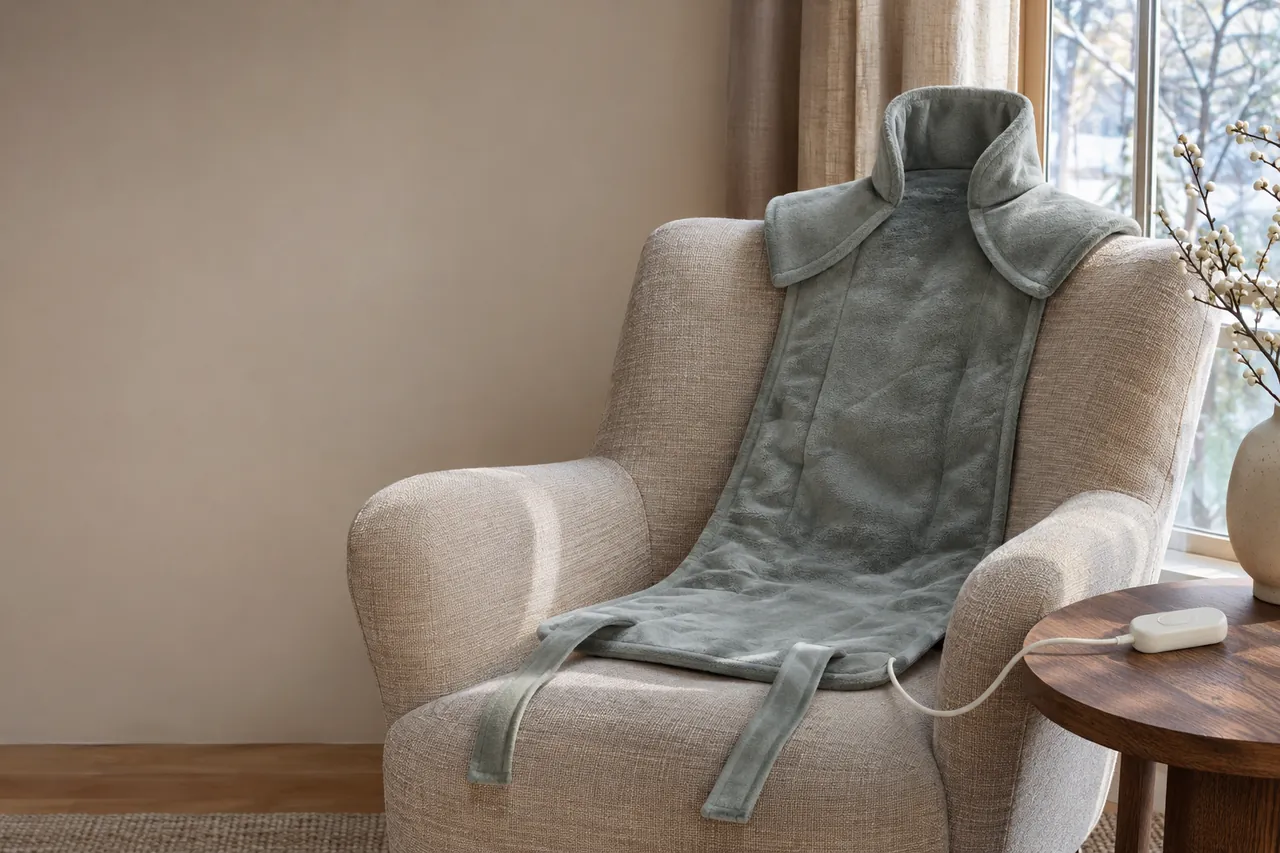
Do not sit or lie on or compress an ordinary localized heating pad.
A massage pillow is a different product: HoMedics describes its pillow for use on the back and other areas. Follow that specific device’s instructions for positioning and pressure rather than assuming every product is used the same way.
Always Follow Individual Device Manual Directions
Because physical construction varies widely between flat fabric pads, weighted wraps, and rigid massage cushions, users must strictly follow the exact positioning, body pressure, and posture directions printed in their specific product's user manual:
Positioning: Use the positions permitted in the device instructions. Make sure the controls remain within reach and avoid trapping any cord or charging cable.
Pressure: Follow the device’s instructions about body pressure. Stop if the massage feels painful or uncomfortable.
Adjustments: Use the available settings and follow the instructions before adding any covering or barrier.
How the three designs feel different
A flat pad supplies warmth without massage. A shiatsu pillow uses moving nodes, while a flexible wrap can add vibration. The feel and fit are different, so compare how each device is positioned as well as its heat controls.
1. Passive Heating Pads vs. Active Heated Massagers
If you want warmth without movement, a plain heating pad is the simpler choice. A heated massager adds motion, which can feel different depending on whether the device vibrates or kneads. Check the model’s controls if you want to use either function on its own.
2. Mechanical Kneading: Shiatsu Rotating Nodes
Some shiatsu-style pillows use rotating nodes to create a kneading sensation. The shape, position and intensity vary by model, so consider whether a firm massage surface is comfortable for you.
As a primary commercial example, the HoMedics Cordless Shiatsu Massage Pillow with Heat illustrates mechanical kneading design parameters:
Cordless Battery Power: HoMedics describes a rechargeable design for this pillow.
Operating Runtime and Charging Time: HoMedics’ product page for SKU SP-115HJ links a manual labeled SP-115H-CL; that manual lists a 4-hour charge and 45 minutes of runtime.
Automatic Reverse Feature: Incorporates an automated node rotation mechanism that periodically reverses direction, varying the kneading pattern across back and neck muscles.
Controls and Heat: HoMedics lists integrated controls and a heat function. Check the instructions for the available combinations of functions.
Versatile Body Placement: Formatted as a compact pillow cushion designed for placement behind the lower back, mid-back, upper shoulders, or neck while seated.
3. Vibration massage belts
A vibration wrap produces a pulsing sensation instead of the kneading motion of rotating nodes. The flexible shape and adjustable belt make it a different format from a massage pillow.
As a representative commercial example, the Comfytemp Cordless Heating Pad with Vibration Massage Relief illustrates vibration design parameters:
Cordless Portable Design: Uses rechargeable battery power, so the wrap does not need a wall cord during use.
Vibration and Thermal Settings: For Comfytemp model K9224130, the product page lists three heat levels and three vibration modes. Heat and vibration can run separately or together, so someone seeking warmth without movement can choose heat alone.
Adjustable Waist Belt: Comfytemp lists a dual-strap design that reaches a waist circumference of up to 58 inches with the extension. Compare your measurement over the clothing you plan to wear with that range; the strap length is separate from the area covered by the pad.
Integrated Safety Timer: Features an automated 30-minute automatic shut-off function for electrical safety.
Independent Control Capabilities
The SP-115H-CL manual linked from HoMedics’ SP-115HJ listing describes one press to start the rotating nodes and a second press to add heat. Comfytemp says its K9224130 wrap can run heat and vibration separately or together. That distinction matters if you want warmth without vibration; check the controls on the exact device.
Battery life and session length
Evaluating a cordless heated back massager requires understanding how battery runtimes and automatic shut-off timers relate to safe personal use.
Battery Runtime is Not a Safe Continuous Use Recommendation
Battery runtime describes how long a charge lasts; the limit for a single session is a separate instruction. An automatic timer is also a device feature, not a guarantee of a suitable exposure time for everyone.
The linked SP-115H-CL manual specifies no more than 15 minutes at a time. It also calls for gentle pressure and warns against use in bed or on a soft surface where air openings could be blocked. Stop if the pressure or warmth feels uncomfortable, and follow the directions for the specific device.
Automated Shut-Off Timers as Electrical Safeguards
Comfytemp lists a 30-minute automatic shut-off for its cordless wrap. Automatic shut-off and battery runtime do not by themselves establish an appropriate length of skin exposure.
Use the device while awake and follow the time limits in its instructions. Check your skin during use and stop if you notice irritation or excessive heat.
Physiological Principles, Heat vs. Cold, and Operational Safety Rules
Understanding how surface warmth and mechanical movement interact with lower back tissue helps set realistic expectations for daily self-care.
How Heat and Massage Soothe Tense Muscles
The selected health sources describe several self-care approaches and important precautions:
Warmth: Healthline and Medical News Today discuss heat as an option for muscle stiffness. Use a comfortable setting and protect your skin.
Back Spasms: Cleveland Clinic describes a spasm as an involuntary muscle contraction and discusses heat and massage among possible measures. Back spasms have different causes, and a home device does not diagnose them.
Heat and Cold: The two methods have different uses. Consult the selected health guidance for the circumstances and protect skin from excessive temperatures.
Essential Operational Safety Rules
Operating a cordless heated back massager safely requires adhering to essential operational guidelines:
Use While Awake Only: Never operate any electric heating device or motorized massager while sleeping or napping. Reduced sensory awareness during sleep prevents detecting thermal discomfort or excessive mechanical pressure.
NEVER Use While Driving: Users should never wear or operate a heated back massager while driving an automobile. Adjusting control buttons or responding to intense kneading while driving creates dangerous distractions.
Charging: Use the power accessories and charging method specified in the device instructions. Keep the device and charger away from water.
Fabric Care: Follow the specific cleaning directions for the device. Keep electrical components dry and do not immerse a motor or battery.
Microwave Safety: Never put an electric massager, battery, power cord or controller in a microwave.
Dermatological Safety and NHS Emergency Red Flag Guidance
Practicing active skin monitoring and recognizing urgent medical warning signs ensures your lower back care remains safe and effective.
Dermatological Precautions and Burn Prevention
As documented by dermatological experts at the Cleveland Clinic, repeated, long-term exposure to low-level heat can cause Toasted Skin Syndrome, medically known as Erythema Ab Igne. This condition results in a characteristic net-like pattern of hyperpigmentation and brown skin discoloration across the warmed area. To protect your skin:
Follow the product instructions on whether a protective layer is required or permitted.
Inspect your skin frequently during every session. If your skin shows unusual redness or irritation, or if heating feels uncomfortably hot, stop using the device immediately.
Reduced skin sensation can make it harder to notice excessive heat. The manual linked from the HoMedics pillow listing says not to use it on insensitive skin or with poor circulation and does not recommend it for people with diabetes. It also advises seeking medical guidance before use during pregnancy or with a pacemaker.
Emergency Warning Signs: NHS Red Flag Guidance
Some symptoms accompanying back pain require urgent medical attention.
According to official back pain clinical guidance from the National Health Service (NHS), you should seek immediate emergency medical assessment (going to an emergency room / A&E or calling emergency services) if your back pain occurs alongside any of the following urgent red flag symptoms:
Bladder or Bowel Changes: Sudden loss of bowel or bladder control, difficulty urinating, or sudden inability to pass urine.
Saddle Area Numbness: Sudden numbness, loss of feeling, or a pins-and-needles sensation around your genitals, buttocks, or back passage (anus).
Symptoms in Both Legs: Pain, tingling, weakness, or numbness in both legs.
These symptoms require emergency assessment rather than home self-care. NHS guidance also calls for emergency help when back pain occurs with chest pain, changes in sexual sensation or function, or follows a serious accident. Sudden severe pain, pain that is worsening quickly, or back pain with feeling hot, cold, shivery or generally unwell warrants urgent medical advice.
Choose a format that suits your preferred position, read the specific product’s directions and pay attention to how your skin and body feel during use.
Sources
Healthline — Treating Pain with Heat and Cold https://www.healthline.com/health/chronic-pain/treating-pain-with-heat-and-cold
Medical News Today — Heat and cold treatment: Which is best? https://www.medicalnewstoday.com/articles/29108
Cleveland Clinic — What Is Toasted Skin Syndrome (Erythema Ab Igne)? https://my.clevelandclinic.org/health/diseases/toasted-skin-syndrome
Cleveland Clinic — Back Spasms: Causes, Treatment & What Is It https://my.clevelandclinic.org/health/diseases/22881-back-spasms
HoMedics — Cordless Shiatsu Massage Pillow with Heat
Comfytemp — Cordless Heating Pad with Vibration Massage Relief
National Health Service (NHS) — Back pain - NHS https://www.nhs.uk/conditions/back-pain/
HoMedics product page: https://www.homedics.com/products/cordless-shiatsu-massage-pillow-with-heat
HoMedics user manual: https://www.homedics.com/content/pdf/instructionbooks/SP-115HJ_IB.pdf
Comfytemp cordless heating pad with massager: https://comfytemp.com/products/comfytemp-cordless-heating-pad-with-massager