
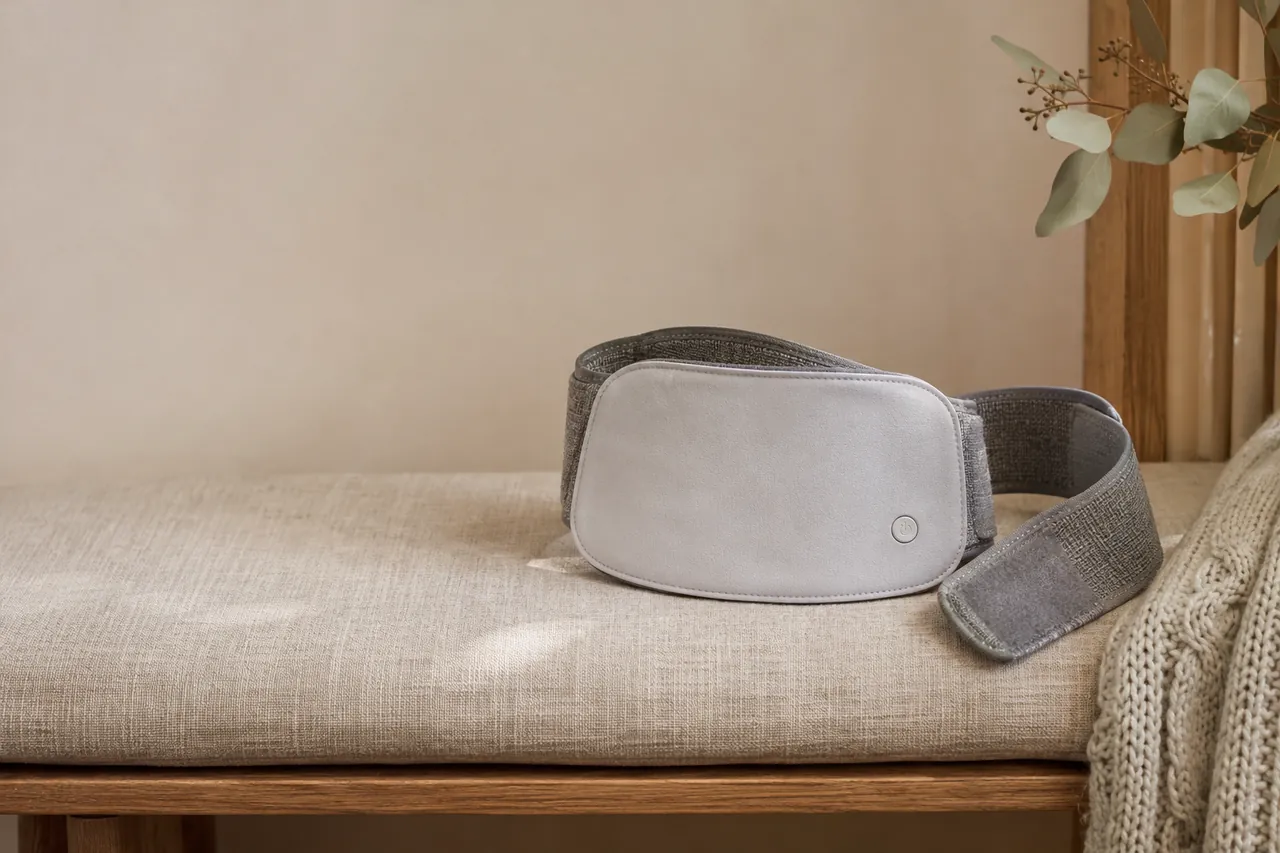
A cordless heating pad gives you one less cable to manage during an awake warming break. It still needs a little planning: the battery needs charging, the strap has to fit without pressure, and the pad should be easy to remove if the warmth becomes uncomfortable. A few habits before and after your period can make the device simpler to use.
Introduction
Verywell Health lists warmth on the lower abdomen or back among ways to ease period cramps. Mayo Clinic also includes heat in its discussion of self-care. The sections below focus on getting a rechargeable pad ready, using it with attention to your skin, and putting it away for the next cycle.
Before your period: make the pad easy to find and use
Keep the pad, its charging equipment, and the instructions together in a dry place. When you take it out, inspect the fabric, battery housing, and connections for damage. If a cable is frayed, a battery is damaged, or the device behaves unusually, stop using it. Follow the instructions for that exact model rather than transferring a charging routine from another product.
Charge the battery with the equipment specified for the pad. For Sunbeam GoHeat models 2000-825 and 2003-825, the manual describes a flashing green light during charging and a steady green light when fully charged. The manual says charging can take up to three hours with the standard charger or up to one hour and 15 minutes with the quick charger. These figures apply to GoHeat models 2000-825 and 2003-825 and the specified chargers; use the equipment and instructions for your exact model.
Try the strap over the clothing you expect to wear. It should hold the pad in place without a tight waistband or sharp folds. Check that you can reach the controls and remove the wrap without assistance. If a battery pocket rests in an awkward spot while you sit, adjust your position or use the pad elsewhere instead of pressing your weight against it.
A closer look at two similarly named PureRelief products
The PureRelief Lumbar & Abdominal Heating Pad in the topic’s reference list is a corded model. Pure Enrichment describes two adjustable straps and a pocket for an optional hot/cold gel pack. Its power cord means it needs an outlet during use. The company lists a 120-minute automatic shutoff and machine-washable fabric for this particular pad.
Pure Enrichment also sells a separate PureRelief Cordless Lumbar and Abdominal Heating Wrap. Its product page describes a rechargeable battery, four heat settings, and two pockets: one for the battery and another for an optional hot/cold gel pack. The fabric is described as machine washable. Read the instructions for the cordless wrap you have rather than assuming the corded model’s connections and care steps are identical.
Pure Enrichment describes two hours of cordless use in the product overview and lists a 60–140 minute runtime in its specifications. Battery figures describe operation under product conditions; they do not tell you how long your skin should receive uninterrupted heat. Stop if the area feels too warm or your skin becomes irritated, even when the battery still has charge.
A corded pad can make sense at a regular resting place near an outlet. A cordless wrap avoids a trailing cable during use, but adds a battery to charge and store. Compare the heated area, strap fit, controls, and care instructions as well as the power source. Neither form needs to be treated as universally better.
When cramps begin: set up an awake warming break
Choose a comfortable place where you can monitor the device. Position it over the area you want to warm according to its instructions, keeping the pad flat and avoiding tight pressure. Use a clothing layer if required by the product directions. Select a comfortable setting and check the skin beneath the pad periodically.
Remove the pad if it becomes uncomfortably hot or your skin looks red or irritated. Avoid using heat on an area where you cannot sense temperature normally. If your pad has an automatic shutoff, remember that it is a device feature rather than a prescription for continuous contact. Stay awake and switch the device off before sleeping.
Cleveland Clinic describes toasted skin syndrome, a netlike discoloration associated with repeated or prolonged exposure to low-level heat. Paying attention to your skin matters even when warmth initially feels pleasant. Give the area a break and do not use a timer as a substitute for noticing discomfort.
Moving, sitting, and taking the pad off
A wearable design may allow you to change rooms without carrying a cable, but movement should not pull the heating panel into a fold or make the belt tight. Pause and adjust it if the fit changes. If you need to leave the device unattended or take a longer break, switch it off and remove it according to its instructions.
For the Sunbeam GoHeat cordless pad, the user manual specifically says not to sit on, lean against, or crush the pad, and directs users to place it on top of the area needing heat. The same manual says the product must not be used by people with diabetes, poor circulation, or insensitivity to heat, and prohibits use on sleeping people and others unable to use it safely. These are rules for that model.
When you are sitting, make sure the chair back does not press against the pad and that the controls remain reachable. If you are driving, avoid using or adjusting a heating device while operating the vehicle. A rest stop gives you an opportunity to choose a position where you can monitor the device and remove it easily.
After use: clean, dry, and store
Switch the pad off and disconnect or remove components as the instructions require. Allow it to cool before storing. Avoid wrapping a cable tightly around a controller, crushing the pad under heavy objects, or placing the battery where it can be damaged. Keep all parts together so that the right charging equipment is easy to identify next time.
Cleaning methods vary. For Sunbeam GoHeat 2000-825 and 2003-825, the manual says to remove and disconnect the battery controller, set it aside without washing, and tuck the pad cable into its pocket. It permits a cold gentle machine wash or hand wash, followed by low tumble drying or air drying. Reconnect only when the pad and connector are completely dry. PureRelief models have their own instructions.
Some products include a separate hot/cold gel pack. It has its own preparation directions and must not be confused with the electric pad. Only heat an insert if its instructions explicitly permit the method; never put an electric pad, cord, controller, or battery in a microwave.
If you lend the pad to someone, include its own instructions and make sure they can use the controls and remove it independently. Do not assume that a setting or a strap position that feels comfortable to you will suit another person. Check the product’s user restrictions each time the device changes hands.
Between cycles: track what helps
A brief note about when cramps start, where you feel them, and how they affect your activities can help you prepare for the next period. Record whether you used heat or another measure and whether you noticed skin irritation. Such notes are useful if the pattern changes or you decide to discuss symptoms with a clinician.
Heat is one option among several. Mayo Clinic discusses exercise and pain relievers as other approaches for some people. Follow medicine labels and any medical advice that applies to you; not every medicine is appropriate for everyone. Choose gentle movement that feels manageable, and stop an activity if it makes pain worse.
Get emergency help for severe or worsening pelvic pain, pain that hurts when you move or touch the area, or pelvic pain accompanied by faintness, dizziness, shoulder-tip pain, difficulty breathing, heavy vaginal bleeding or sudden confusion. If you have pelvic pain and are pregnant or might be pregnant, or have a high temperature or vomiting, seek urgent medical advice. Pain that disrupts ordinary activities also deserves medical assessment. A heating pad should not delay evaluation of concerning symptoms.
References
Verywell Health, What helps with period cramps — https://www.verywellhealth.com/what-helps-with-period-cramps-8413517
Pure Enrichment, PureRelief lumbar and abdominal heating pad — https://pureenrichment.com/products/purerelief-lumbar-abdominal-heating-pad-gray
Pure Enrichment, PureRelief cordless wrap — https://pureenrichment.com/products/purerelief-cordless-lumbar-and-abdominal-heating-wrap
Sunbeam, GoHeat cordless heating pad — https://www.sunbeam.com/pain-relief/general-muscle-pain/sunbeam-goheat-cordless-heating-pad/SP_438956.html
Sunbeam GoHeat user manual — https://newellbrands.imgix.net/ebc87331-047b-3ddc-a7bf-c7795cb72a72/ebc87331-047b-3ddc-a7bf-c7795cb72a72.pdf
Mayo Clinic, Menstrual cramps: diagnosis and treatment — https://www.mayoclinic.org/diseases-conditions/menstrual-cramps/diagnosis-treatment/drc-20374944
Cleveland Clinic, Toasted skin syndrome — https://my.clevelandclinic.org/health/diseases/toasted-skin-syndrome
NHS — Pelvic pain: https://www.nhs.uk/symptoms/pelvic-pain/