
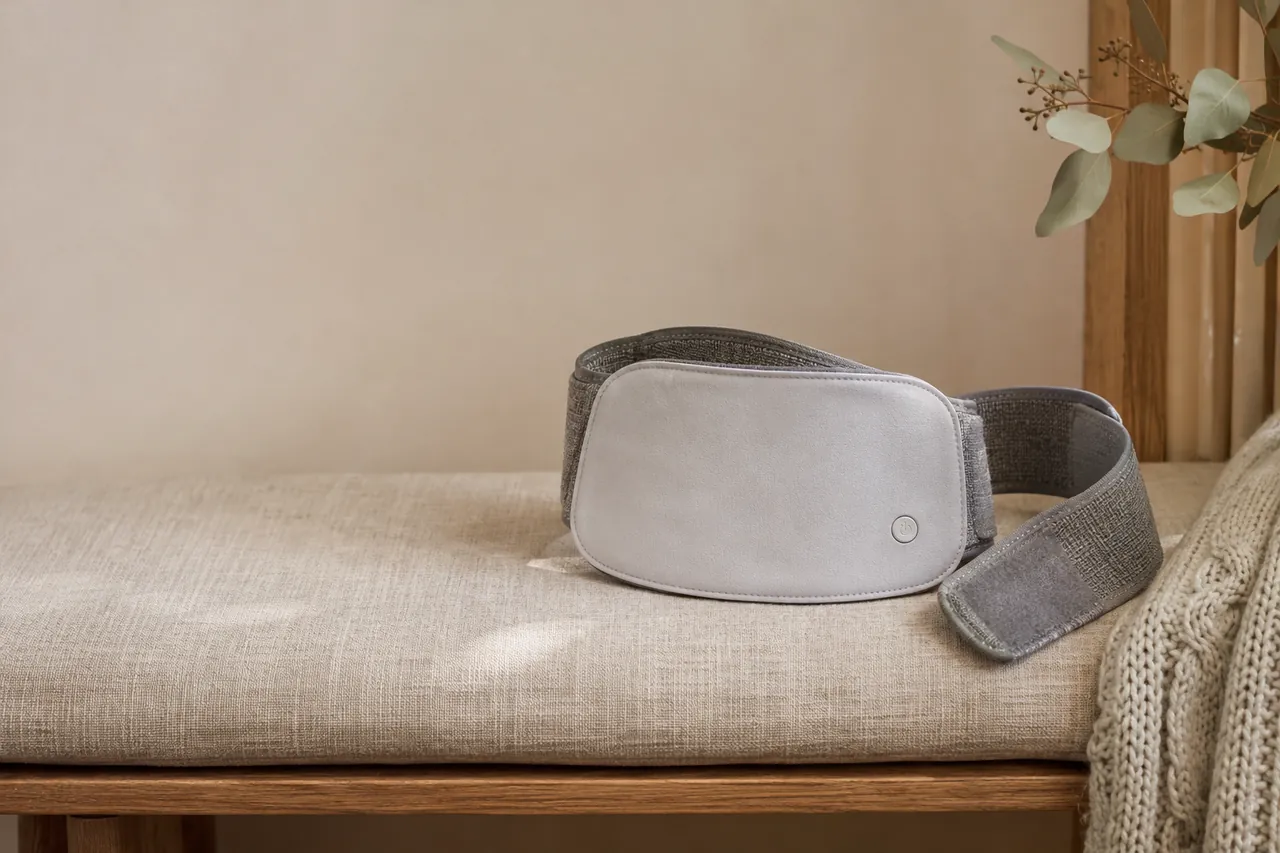
A cordless heating pad for your period can free you from sitting beside an outlet, but portability comes with a trade-off: the wrap has to fit your body, its battery needs charging, and its heating cycle may end before the battery runs out. Before comparing a long list of features, decide where you want warmth and how you plan to wear the pad.
Introduction
Heat is one established self-care option for menstrual cramps. Mayo Clinic includes a heating pad, heat patch, hot water bottle, or warm bath among measures that can ease discomfort. A wearable wrap changes the way heat is delivered; it is not evidence that one particular model will work better than another. The following choices help make sense of the practical differences.
Start with the area you want to warm
A wrap worn across the lower abdomen serves a different purpose from one positioned on the lower back. Some period discomfort is felt in the abdomen, some in the back, and some people experience both. Think about where you would place the heating panel before judging a product by its overall size. A wide belt does not necessarily mean that every part of the belt heats.
Look at the placement shown for the specific model. A design with distinct front and back heating areas may suit someone who wants coverage in both places, whereas a single panel can be moved according to the product’s instructions. The difference matters when comparing photographs: the strap holds a wrap in place, while the heating area is the part that supplies warmth.
Comfytemp’s Portable Heating Pad for Belly & Back, listed as K9242080, has separate heating areas for the abdomen and lower back. The listing describes three heat settings and an adjustable waist strap accommodating up to 53 inches. That gives a shopper concrete points to compare: where the two panels sit, whether the strap fits comfortably, and whether the control remains easy to reach while seated.
A comfortable fit leaves the wrap positioned without pulling it tight. Check the listed waist range, the way the fastener closes, and whether the controls remain accessible in the position you intend to use. A product that fits on paper still needs to sit flat and feel comfortable when you sit or stand. Follow its placement instructions instead of fastening it as tightly as possible.
Battery life and the timer answer different questions
Battery runtime describes how long a charged battery can supply power under the conditions stated by the seller. An automatic shutoff controls how long a heating cycle runs before it switches off. A wrap can therefore advertise several hours of battery life while ending an individual session after a much shorter interval. Neither number should be read as permission to use heat continuously.
For the belly-and-back model, Comfytemp lists a 5,000 mAh rechargeable battery and optional 15-, 30-, and 45-minute timers. The company describes up to six hours on low and two hours on high. Those figures are the manufacturer’s runtime claims, not independent measurements or a recommendation to keep the pad on for that long.
The useful comparison is not simply the largest number on the box. Check which heat setting accompanies the stated runtime, whether vibration was in use when a figure is given, and how the automatic timer is described. Different settings place different demands on a battery, and a timer may stop a session even when charge remains. Keep the charging routine separate from the decision about how and when to apply heat.
The separate Comfytemp Cordless XL Heating Pad with Massager, listed as K9224130, has three heat levels, three vibration modes and a 30-minute automatic shutoff. Comfytemp states up to 5.5 hours on low and approximately 1.5 hours on high with vibration for that model. These numbers describe that listing only and should not be transferred to the belly-and-back wrap.
Two choices, depending on what matters most
The belly-and-back model is useful to compare when both areas matter. Its listing describes one-button control with an LED indicator; consider where that control sits once the belt is fastened and whether the display is easy to see while seated. The two heating zones and the strap solve different fit questions, so look at the placement diagram as well as the waist measurement.
If you prefer the option of vibration alongside warmth, the massager model offers separate heat and vibration settings in its listing. Treat vibration as a comfort feature you can choose, not as a proven treatment for menstrual cramps. The sources on heat for period pain do not establish an additional medical benefit for vibration or test this specific retail model.
Neither use case automatically makes a cordless pad the right choice. A corded pad can suit a person who mainly rests in one place and does not want to manage a battery. Medical News Today’s heating-pad overview illustrates the variety of designs available, while Comfytemp’s collection includes several formats. Compare the actual pad, power source and controls rather than assuming all products in a category behave alike.
A microwaveable pack is another cordless option after heating, but it works differently: it stores warmth rather than drawing power from a rechargeable battery. Use only an item explicitly labeled for microwave heating, following its own directions. An electric pad, controller or battery does not belong in a microwave.
A simple routine for using the wrap
Charge and operate the device according to its own instructions. Position the heating area as directed and choose a comfortable setting rather than assuming that more heat is better. Make sure the pad stays flat and the strap does not squeeze. The goal is comfortable warmth that you can monitor, not the hottest setting available.
Check your skin regularly and stop if the area becomes uncomfortable, irritated or unusually red. Cleveland Clinic explains that repeated or prolonged heat exposure can cause a netlike change in skin color called toasted skin syndrome. Persistent changes deserve medical attention. A timer is useful, but it does not make skin checks unnecessary.
Stay awake when using an active electric heating pad and switch it off before sleep. Avoid lying on or compressing the heated area. Follow the model’s instructions for any clothing layer and do not combine heat sources over the same area. If you have reduced sensation in the area, the risk of not noticing excessive heat is a reason for particular care.
Cleaning instructions also belong to the individual product. Switch the device off and disconnect removable power components as directed before cleaning. Do not immerse a battery or controller, and do not reconnect power while any component remains damp. Some covers or pads have specific washing restrictions, so use the care label instead of assuming that every wrap can be machine washed.
When comfort measures are not enough
Warmth can be part of a period-care routine, alongside a warm bath or gentle activity if those feel comfortable. Healthline’s discussion of heat and cold also places thermal care in a wider pain-management context. These measures address comfort; they do not identify the cause of unusually severe or changing pelvic pain.
Pain that regularly interrupts work or school deserves medical evaluation. Get emergency care for severe or worsening pelvic pain, pain that hurts when you move or touch the area, or pelvic pain accompanied by faintness, dizziness, shoulder-tip pain, breathing difficulty, heavy vaginal bleeding or sudden confusion. Get urgent medical advice for pelvic pain if you are pregnant or might be pregnant, or have fever or unusual bleeding or discharge. A wearable pad cannot identify the cause or replace care in these situations.
The best comparison begins with a short list: where you want the warmth, whether the wrap fits without pressure, how the controls and timer work, and what the stated battery figure actually covers. Once those practical details are clear, the decision between a portable wrap and another format becomes much easier to make.
References
Mayo Clinic — Menstrual cramps: diagnosis and treatment: https://www.mayoclinic.org/diseases-conditions/menstrual-cramps/diagnosis-treatment/drc-20374944
Comfytemp — Portable belly and back heating pad: https://comfytemp.com/collections/abdominal/products/comfytemp-portable-belly-and-back-heating-pad
Comfytemp — Cordless heating pad with massager: https://comfytemp.com/products/comfytemp-cordless-heating-pad-with-massager
Comfytemp — Heating pad collection: https://comfytemp.com/collections/heating-pad
Medical News Today — Heating pads for cramps (redirects to its heating pad overview): https://www.medicalnewstoday.com/articles/heating-pads-for-cramps
Healthline — Treating pain with heat and cold: https://www.healthline.com/health/chronic-pain/treating-pain-with-heat-and-cold
Cleveland Clinic — Toasted skin syndrome: https://my.clevelandclinic.org/health/diseases/toasted-skin-syndrome
NHS — Pelvic pain — https://www.nhs.uk/symptoms/pelvic-pain/