
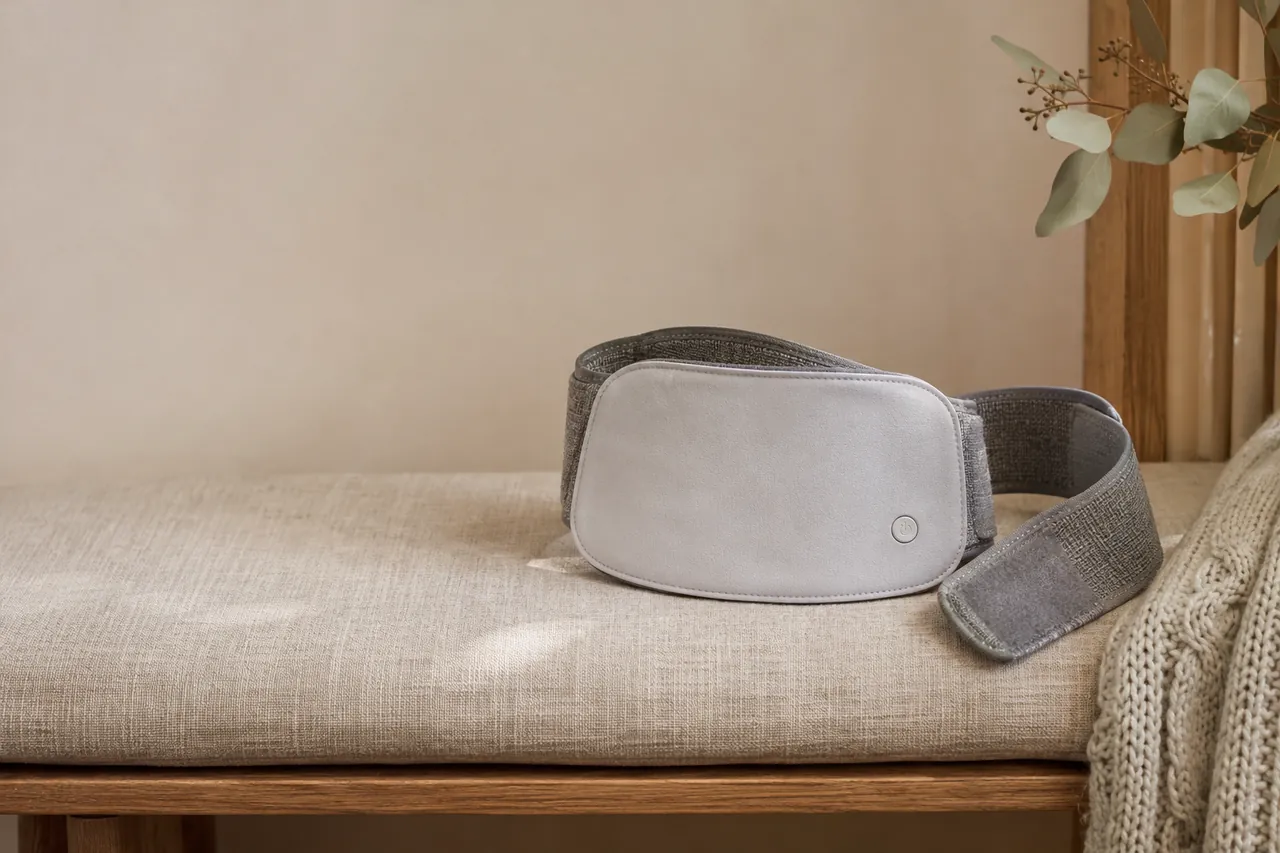
Before choosing a cordless period heating pad, notice where discomfort occurs and whether it resembles your usual symptoms. A wearable pad offers warmth away from an outlet; it is one option within a broader self-care plan.
Introduction
Mayo Clinic includes heat among measures that can ease menstrual cramps. The same guidance also discusses exercise, stress reduction and other treatments. Here is a practical way to think through those options during a cramp day, with space to pause, reassess and seek care if your symptoms change.
First, notice what feels familiar
Before reaching for a pad, take stock of where you feel discomfort and whether it resembles your usual period pain. Menstrual cramps are often felt in the lower abdomen; pain can also be felt in the lower back. Noticing the location helps you choose where to place a heat source rather than fastening a wrap in a position that does not address the area bothering you.
Consider intensity as well as location. Pain that prevents work, school or normal activities deserves medical evaluation. Seek emergency help if pelvic pain is severe, worsening or painful when you move or touch the area. Pelvic pain with faintness, dizziness, shoulder-tip pain, difficulty breathing, heavy vaginal bleeding or sudden confusion also calls for emergency care. Get urgent medical advice for pelvic pain if you are pregnant or might be pregnant, or have fever or unusual bleeding or discharge. Do not rely on warmth alone in these situations.
A short note about the timing of pain, bleeding and other symptoms can be useful if you decide to discuss your cycles with a clinician. Record what you actually notice rather than trying to fit your experience into a fixed schedule. Period symptoms and their impact differ from one person to another.
Choose a heat source that fits the moment
For a period cramp, Mayo Clinic suggests warmth from a heating pad, heat patch, hot water bottle or warm bath. These choices do not all work in the same way. A bath is an option when you can pause at home; a plug-in pad keeps you close to its power source; a wearable wrap relies on its battery and the way its strap holds the warming area in place.
A cordless wrap can be useful when you want to move between rooms or sit without a trailing power cord. Check the actual product instructions for the intended area, fit and controls. A waist strap should hold the pad comfortably without squeezing, and the heating area should lie as the directions describe. The size of the fabric belt alone does not tell you how much of it is heated.
Before a day away from home, check the charge indicator and pack any accessories the device requires for its intended use. Think about where you can adjust or remove the wrap privately and where it can be stored when switched off. A rechargeable pad avoids a wall cord during use, but it still needs a charging routine.
If you prefer a microwaveable pack, use one specifically labeled for microwave heating and follow its own instructions. An electric heating pad, its controller and its battery should never go into a microwave. A hot water bottle is a separate choice with its own directions for filling and use. Whatever the format, the aim is comfortable warmth rather than the hottest possible setting.
Settle in, then check your skin
Use the pad according to its instructions, including any guidance about a clothing layer and session length. Place it on the intended area, keep it positioned as directed and avoid pressing your body weight onto an active electric pad. If it feels too hot or uncomfortable, switch it off and remove it. Do not try to tolerate excessive heat simply because the timer has not finished.
Check the skin periodically during use. Heat can cause burns, and Cleveland Clinic describes another effect of repeated or prolonged heat exposure: toasted skin syndrome, which may appear as a netlike red or brown discoloration. Stop applying heat if you notice irritation or skin changes; persistent changes warrant medical attention. A fabric layer or automatic timer is not a guarantee against injury.
Stay awake while using an active electric heating pad and turn it off before sleep. A timed shutoff is a control feature, not a reason to fall asleep with heat against your body. If sensation in the area is reduced, it can be harder to notice excessive heat. Follow the product’s safety directions and take that limitation seriously.
Battery duration and a timer are separate things. A runtime statement describes charge under specified conditions, while an automatic timer ends a heating cycle. Neither figure establishes a universal amount of time to apply heat. Settings, wear instructions and care requirements vary between products, so use the instructions for the wrap you have.
Add another measure if it suits you
Warmth can be paired with a period-care routine that feels manageable. Mayo Clinic lists exercise among measures that may help ease menstrual cramps. That does not require an intense workout: a gentle walk or another activity you already find comfortable can be an option. Rest is also a reasonable choice when that is what you need.
Stress reduction is another part of Mayo Clinic’s self-care advice. A quiet break, a comfortable position or slow breathing can create room to check in with yourself during a difficult day. These are supportive habits, not tests you need to pass or promises that cramps will disappear. Choose what feels useful and adapt it as the day changes.
Some people also use over-the-counter pain relievers for menstrual cramps. Mayo Clinic discusses medicines including ibuprofen and naproxen. Read the medicine label and follow its directions; these medicines are not suitable for everyone, and the article is not a substitute for individual medical advice. Heat can be one comfort measure within a broader treatment plan.
Keep the electrical side of the routine simple. Switch the device off and disconnect removable power components as instructed before cleaning. Follow the specific care label, keep the battery and controller dry, and let components dry completely before reconnecting them. Do not assume that the fabric cover, heating element and battery all have the same washing instructions.
What the research tells us about heat
Research on menstrual pain distinguishes primary dysmenorrhea, painful periods without an identified underlying pelvic condition, from pain associated with another condition. A 2018 systematic review of heat therapy for primary dysmenorrhea included six randomized trials and reported favorable pain results in the groups studied. Its authors also noted that the studies were few and small, a limit to keep in mind when applying the findings to an individual routine.
A research review combines studies that can use different interventions and methods. Findings about heat in general do not establish that a particular rechargeable wrap was tested, that vibration adds a medical effect, or that a specific retail product will produce the same result for every person. The reviewed evidence also does not make a product’s battery runtime a recommended wear time.
Healthline’s overview explains that heat and cold are used in different pain contexts. Menstrual cramps are only one reason someone might consider warmth, and a general explanation of heat therapy should not be turned into a precise claim about how much heat reaches the uterus. For the reader, the practical takeaway is more direct: select comfortable warmth, monitor the skin and pay attention to the response.
Reassess as the day goes on
After a break, check both the skin under the pad and how you feel overall. If a heating session is uncomfortable, stop; a different comfort measure may suit you better. Notice whether the pain has changed, whether you can resume ordinary activities, and whether the symptoms resemble your usual pattern. There is no need to wait until evening to reassess if something feels wrong earlier.
When recurring cramps interfere with daily life, an evaluation can help identify their cause and guide treatment. Bring notes about when symptoms occur, where they hurt, how they affect your activities, and which measures you have tried. Mayo Clinic lists these details among the questions a clinician may discuss. Follow the emergency-care guidance above if severe or worsening pelvic pain occurs.
At the end of the day, put the wrap away according to its care instructions and charge it if needed for next time. A useful cramp-day plan is flexible: recognize your pattern, choose a comfortable form of warmth, check your skin and adjust your next step to how you feel. That approach keeps the pad in its proper place as one option rather than the entire plan.
References
Mayo Clinic — Menstrual cramps: diagnosis and treatment:
Healthline — Treating pain with heat and cold:
Medical News Today — Heating pads for cramps:
Cleveland Clinic — Toasted skin syndrome:
PubMed — Heat therapy for primary dysmenorrhea: systematic review and meta-analysis:
NHS — Pelvic pain — https://www.nhs.uk/symptoms/pelvic-pain/