
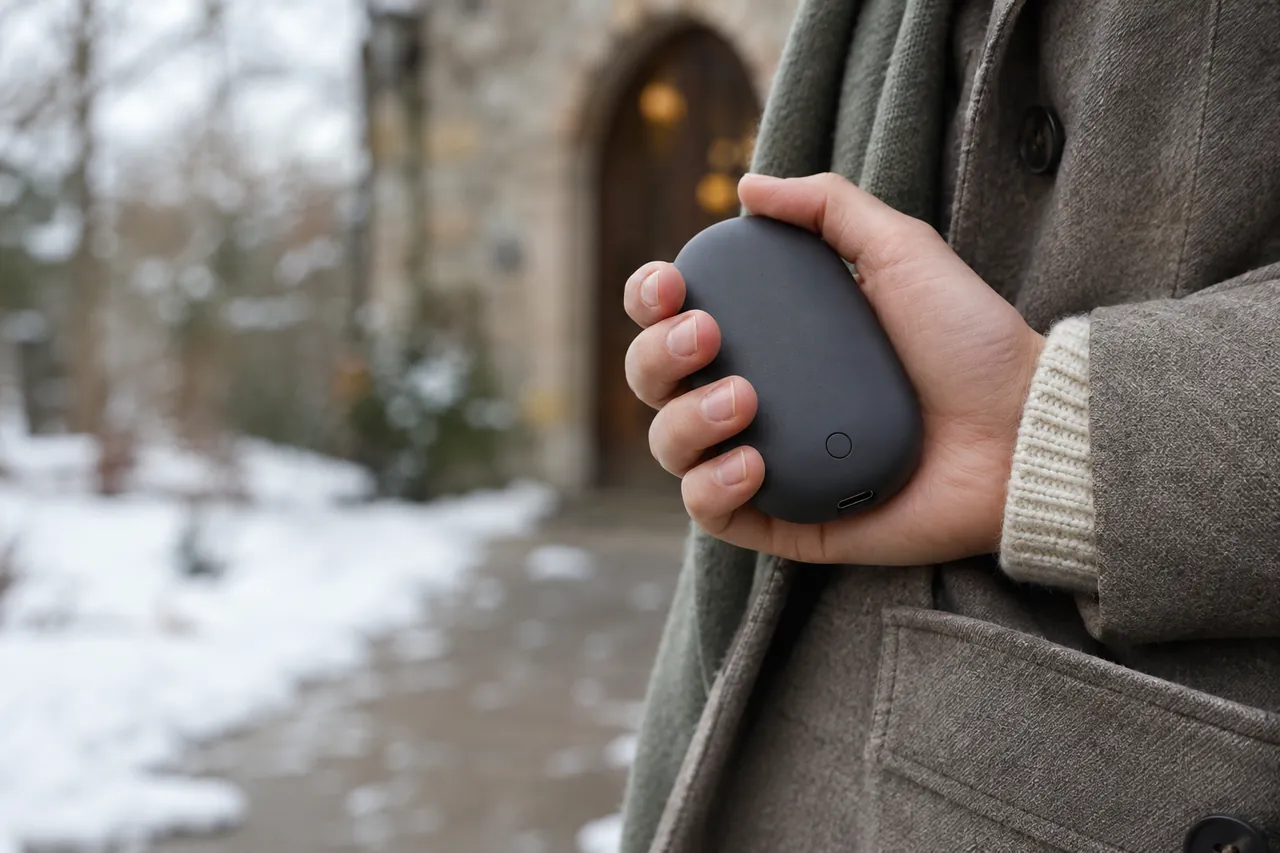
A search for an electric hand warmer at Kmart can lead to a Kmart Australia Marketplace listing, a different retailer product, or a general review of rechargeable warmers. The most useful starting point is the exact listing: who sells it, what arrives in the box, and which instructions belong to that model. Those details matter more than a familiar retailer name at the top of the page.
Introduction
This guide walks through a Lifebay Marketplace listing as an example, then uses a separate Kmart-published HT602 manual to show how a product’s instructions can answer practical questions. They are different products. Specifications and operating directions from one should not be transferred to the other.
First, identify the seller and the actual listing
The Kmart Australia page for the Lifebay 2-Pack Rechargeable Pocket Hand Warmers identifies it as a Marketplace product sold and shipped by Lifebay. The listing describes it as online only. That tells you where this particular order is handled; it does not establish that the same item is on the shelf at your nearest store.
Look closely at the seller name and delivery information before comparing it with another hand warmer. A familiar website can show items from different sellers, and similar titles or photographs do not make those products interchangeable. Keep the listing, model information and order confirmation together so that you can find the correct instructions and return details later.
For a time-sensitive purchase, use the current listing and checkout to see the delivery options, total price and expected arrival information. A screenshot or an old review is less useful for these changing details. If collecting an item in person matters, look for an offered collection option on that particular listing rather than assuming one exists.
Then compare the format, controls and included pieces
A hand warmer needs to fit the way you intend to carry it. A single handheld unit is straightforward to move between pockets; a pair gives you two items to keep track of. Check the dimensions and shape on the relevant page and think about the pockets, gloves or bag you already use. A compact product is easier to bring along only if its controls are convenient for you to operate.
The Lifebay page describes a rechargeable 2-in-1 design, three heat settings, ABS and aluminium construction, and a USB charging port. It lists a charging cable and manual among the contents. The description also says that separation depends on the model, so inspect the details of the exact variant instead of assuming every similarly named pair separates in the same way.
Settings are worth comparing as controls, not as a promise that two brands will feel identical. A three-setting product gives the user several choices on that model; its labels alone do not tell you the surface temperature or how long each setting lasts. Read the stated operating information for the product you are considering and avoid borrowing numbers from a different device.
Packaging also matters. A listing may show a protective pouch, a charging lead or more than one warming unit, but images can show accessories alongside optional items. Read the written contents and retain the instructions once the order arrives. If a listed component is missing or damaged, use the seller’s order and return process before using the device.
A separate manual example: Kmart HT602
Kmart publishes a user manual for hand warmers identified as model HT602. This is a separate product from the Lifebay Marketplace listing. Its manual illustrates how specific a useful specification can be: it lists two main units, two charging cords, an input of 5 V DC at 2 A, and a 3.7 V, 2,000 mAh lithium-ion battery per unit. These figures apply to HT602, not automatically to any other Kmart-site listing.
The same manual states an approximately two-hour charging time and approximately five-and-a-half hours of working time after a full charge. It describes the operating temperature as approximately 40°C. These are the manual’s stated figures for this model, rather than independent test results or a guarantee of identical performance in every situation.
For HT602, the instructions say to switch the appliance off before charging, use the supplied USB charging cable and connect it to the specified supply. The indicator lights show the battery level during charging and use. Once you have the actual device, keep its model-specific instructions with it: a USB-shaped connector by itself does not establish that another product uses the same charging requirements.
The manual also recommends a dry cloth for cleaning, keeping the device away from liquids and storing it switched off in a cool, dry place. It says to recharge the HT602 every three months if it remains unused for a long period. These care directions are a useful example of the details a manual can contain; follow the directions supplied for the warmer you own.
Make a useful comparison without relying on marketing labels
Start with the full product name and model, then note the number of units, supplied cables, controls, battery information and charging instructions. Add the delivery cost and estimated arrival shown at checkout. A short comparison written in these terms is usually more helpful than ranking products by a generic description such as “powerful” or “long lasting.”
Reviews can add context about shape, controls and how a product is carried. GearJunkie’s hand-warmer review discusses a range of portable options; treat its observations as applying to the models it reviewed, not as proof about a different Marketplace item. For any comparison, check that the reviewed model and the model on the listing are the same.
For the Lifebay example, the page title says “2-Pack,” while the package list describes one 2-in-1 warmer, one USB charging cable and one manual. Its description says the warmer can separate depending on the model. Read those details together when comparing listings: the name, package contents and configuration each answer a different question. The page also identifies the item as online only and sold and shipped by Lifebay, so delivery terms belong to that Marketplace order rather than to an assumed in-store purchase.
Use, charge and store the warmer with care
Before using a rechargeable device, inspect the casing, cable, port and controls for damage. The ACCC advises against using lithium-ion products or chargers that are damaged, swollen, leaking or overheating. It recommends the supplied charger or a reputable one recommended by the manufacturer, charging on a non-flammable surface, and disconnecting the product once fully charged. Follow the device’s own charging instructions as well.
The HT602 manual also warns against leaving the warmer against the same area of skin for too long and suggests a cloth barrier. That is a practical reminder to pay attention to comfort rather than treating a setting as permission for prolonged, unattended contact. Stop using a product that feels uncomfortably hot or shows signs of damage.
People with reduced sensation may not notice excessive heat promptly. Product instructions and supervision warnings matter especially when choosing a warmer for a child or someone who cannot easily move it or operate the controls. The HT602 manual specifically addresses supervision for children and people with reduced physical, sensory or mental capabilities.
Cold fingers and Raynaud’s: keep the purpose clear
Cold weather can make hands uncomfortable, but recurring colour changes, numbness or pain have several possible causes. NHS guidance describes Raynaud’s as a condition in which fingers or toes can change colour and feel numb or painful, often in response to cold or stress. Its advice includes keeping the whole body warm and using gloves in cold weather.
A pocket warmer is a comfort accessory; it is not a cure for Raynaud’s or a substitute for the condition’s medical care. Avoid placing direct heat on numb skin, where it may be difficult to judge temperature. The Mayo Clinic’s discussion of Raynaud’s provides broader information about symptoms and causes; it does not certify a particular hand warmer.
Check recalls and keep your purchase details
Save the exact model number and purchase record. Product Safety Australia publishes recall notices, and the ACCC advises people who own a recalled product to stop using it, keep it away from children and follow the supplier’s recall process for a remedy. Match the name and model in the notice rather than assuming that every product from a brand is affected.
A recall search is a separate step from reading a product listing. Repeat it if you encounter a safety notice or buy a second-hand device, and follow any instructions specific to the affected item. Do not continue using or charging a product covered by a recall while waiting to decide what to do.
Quick questions before ordering
Does “Kmart” in a search result mean the item is stocked in store?
No. The Lifebay example is described as an online-only Marketplace item sold and shipped by Lifebay. Check the seller and fulfilment options on the exact listing you intend to buy.
Can I use HT602 charging numbers for the Lifebay warmer?
No. The HT602 manual describes a separate product. Use the input marking and instructions supplied with the Lifebay model, including its cable and power-supply directions.
What should I save after purchase?
Keep the receipt or order confirmation, the model identification and the manual. Together, they make it easier to locate the correct care instructions, compare a recall notice with your device, and use the seller’s return process if an issue arises.
Sources
Kmart Australia, Lifebay Marketplace listing: https://www.kmart.com.au/product/lifebay-2-pack-rechargeable-pocket-hand-warmers-black-110264984/
Kmart Australia, HT602 user manual: https://www.kmart.com.au/wcsstore/Kmart/pdfs/43624997_Manual.pdf
GearJunkie, hand warmer review: https://gearjunkie.com/winter/best-hand-warmers
NHS, Raynaud’s: https://www.nhs.uk/conditions/raynauds/
Mayo Clinic, Raynaud’s symptoms and causes: https://www.mayoclinic.org/diseases-conditions/raynauds-disease/symptoms-causes/syc-20363571
ACCC Product Safety Australia, recalls: https://www.productsafety.gov.au/consumers/respond-to-recalls-and-unsafe-products/what-to-do-when-a-product-is-recalled