
The choice between electric hand warmer mittens and a handheld warmer starts with what your fingers need to do. A heated mitten surrounds the hand while its built-in elements provide warmth. A flip-top design gives you access to your fingertips for brief tasks. A separate rechargeable warmer stays in a pocket or hand and can be used with handwear that already fits you.
Introduction
Each setup asks you to make a different trade-off between coverage, dexterity, charging and care. Looking at the actual construction is more useful than assuming every “heated glove” or “hand warmer” works alike. Here is how to compare them before choosing a pair.
For continuous coverage: a heated mitten
A full mitten is a useful starting point if you want the hand covered during an outdoor break, a walk or a period of standing outside. Look for a fit that lets your fingers move without forcing the fabric tight at the tips. Check the wrist closure, the location of the battery pocket and whether the controls are accessible with the mitten on. A good fit should allow you to take the handwear off easily.
ORORO describes its Amsterdam Heated Mittens 2.0 as having a mitten-shaped exterior and a split-finger interior. The company says the heating elements outline the fingers and the back of the hand, and lists three heat settings. The split interior is a feature of this particular model; it does not mean every heated mitten has separate finger spaces.
The Amsterdam listing gives up to 8.5 hours on low, four hours on medium and three hours on high. Those are the manufacturer’s figures for the stated settings. Use them to compare the model’s settings and your planned time outdoors, not as a promise of identical performance in every situation or a recommended period of uninterrupted heat against skin.
The outer shell and insulation are important even before the heating system is considered. Review the product’s description of water resistance and the care label, and match the size to the manufacturer’s chart. Water resistance is not a license to immerse electrical components; use the product as its instructions direct.
For occasional fingertip access: a flip-top mitten
A flip-top design is worth considering when you need brief access to fingers for tasks such as sorting keys or handling a small object. Opening the cover exposes the fingertips, so think about how often and for how long you will need that access. Close it again when the task is finished and keep the rest of your cold-weather clothing appropriate to the conditions.
ORORO’s Fargo Heated Flip Top Mittens have a convertible top, according to the product page. The company describes heating zones from the edge of the thumb and back of the hand toward the fingertips, with three settings. Its stated battery durations are up to seven hours on low, four on medium and three on high. These figures describe that model’s listed settings, not a comparison test performed by HeatNap.
The Fargo’s details are designed around that switch between coverage and access. ORORO lists an anti-slip silicone palm, adjustable knitted cuffs and clips for keeping the mittens together in storage. Its Oxford-cloth shell has a water-resistant coating and the insulation is PrimaLoft. When trying the pair, flip the top open and closed, reach the controls and check that the cuff sits comfortably with your jacket sleeve.
For flexible use with existing gloves: a handheld warmer
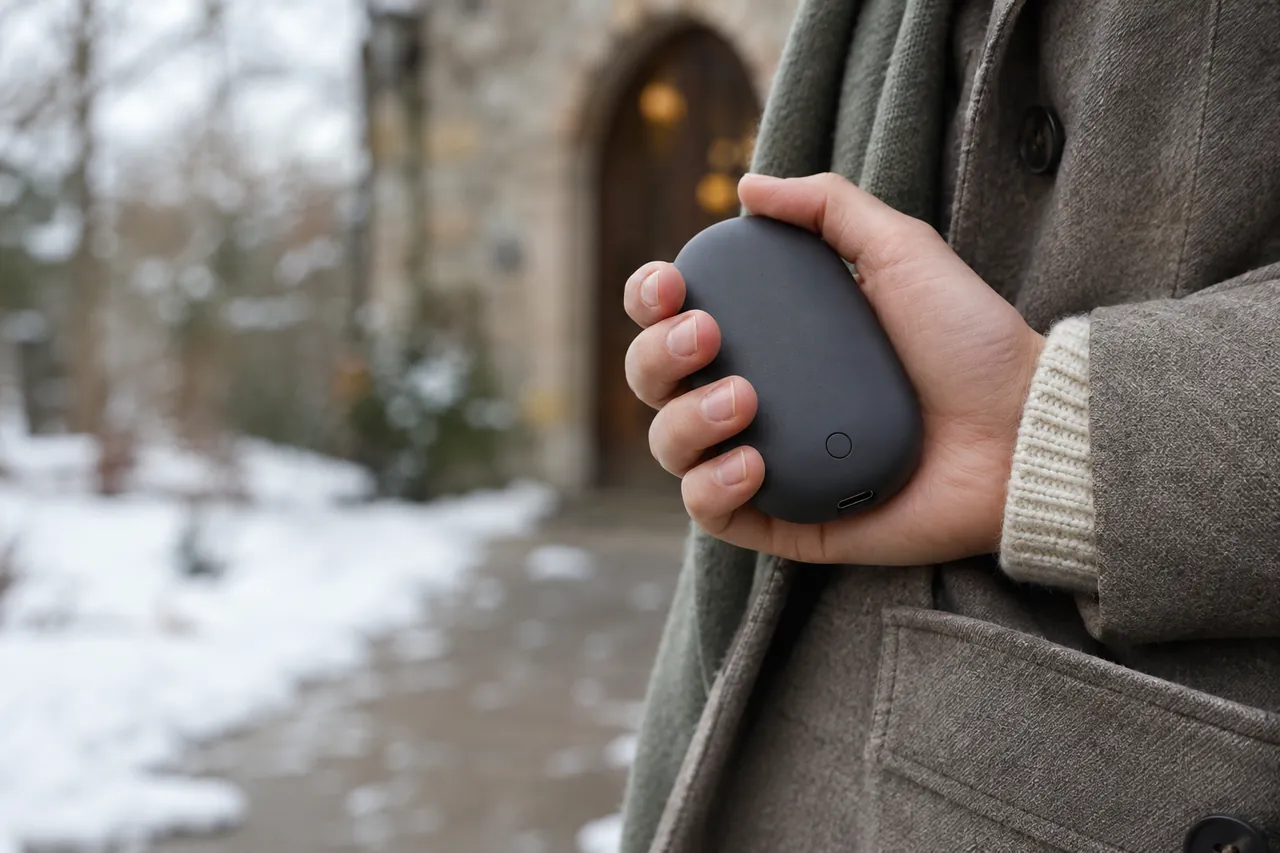
A rechargeable pocket warmer is a separate object rather than a heating element sewn into a mitten. It can be carried in a coat pocket and held when needed, then put away. Some designs are sold as a pair. OCOOPA’s hand-warmer collection shows several formats, so check the exact model and package quantity instead of assuming all of its products are interchangeable.
The trade-off is that the warmer occupies space and needs to be held or positioned. Compare its dimensions with the pocket or pouch you intend to use. Do not force a rigid device into a tight glove or against your skin. Follow the product’s instructions on contact and any protective pouch, and remove it if it feels uncomfortable.
A separate warmer can be useful if you already own comfortable insulated gloves, want an item to move between pockets, or prefer not to wash a heated garment. It does not heat the glove in the same pattern as sewn-in elements. If you need both hands free, a wearable pair may be more convenient than an item that must be held.
Compare fit and controls before comparing the battery
Measure your hand using the sizing guide for the model you are considering. Look at finger length, palm fit and the wrist opening rather than relying only on a familiar clothing size. A mitten that bunches can make a small control difficult to reach, while an overly tight fit can make the handwear uncomfortable. If you expect to wear a liner, account for it when checking the fit and directions.
Try the actions you expect to perform: fastening a jacket, opening a bag, adjusting a strap and operating the power button. A touchscreen-compatible area, where provided, is a model feature and may not replace fingertip access for every task. The point is to assess the whole routine, not just the moment when the mitten is first put on.
Look at the display or indicator and learn what it means for that product. Multiple settings give you choices; they do not establish that a higher setting is always preferable. Start with comfortable warmth, follow the instructions and stop if the device or your skin becomes uncomfortably hot. Battery runtime is an operating figure, not a target for continuous contact.
Charging and care: keep each set together
Recharge the batteries using the equipment and method specified in the instructions for your exact mittens. The Amsterdam and Fargo listings describe their own battery sets and charging arrangements; another brand or earlier generation can differ. Keep the relevant cable, batteries and instructions together so that the right parts are easy to identify before the next outing.
ORORO’s care page says to remove the battery before washing its heated accessories. For its heated gloves and mittens it describes hand washing with mild detergent, followed by air drying; leather surfaces have their own gentler care directions. The company advises against machine drying, ironing and dry cleaning. Follow the label for your specific pair, and allow it to dry fully before reconnecting components.
Inspect the shell, seams, battery pocket, connectors and cable before use. Set a damaged or unusually behaving device aside. After an outing, let the handwear dry according to its instructions and store its components where they will not be crushed. A separate pocket warmer also has its own care directions, which should not be replaced with those for a garment.
Cold injury is a different situation
Cold hands deserve attention, especially when sensation changes. Do not apply a hot device directly to numb skin where you cannot judge its temperature. Heated mittens and pocket warmers supply external warmth; they should not be treated as a way to diagnose a circulation condition or as a treatment for frostbite. OCOOPA’s Raynaud’s article discusses keeping hands warm, but the device itself does not establish a medical outcome.
The NHS advises getting medical help if you think someone has frostbite. Signs can include cold, firm or numb skin, pain, and changes in color; hard frozen skin, swelling with loss of feeling, blisters, or signs of hypothermia require emergency help. Move to shelter, remove wet clothing and jewellery carefully, and follow local emergency guidance.
While waiting for help, the NHS advises sheltering the person, wrapping them warmly and gently warming the affected area with warm rather than hot water. Do not rub it or use a fire, radiator, hot-water bottle or heat lamp. If the person also shows signs of hypothermia, emergency care comes first. The AAP cautions against rewarming an area that could freeze again. Do not press a heated mitten or pocket warmer against suspected frostbitten or numb skin, where a burn may go unnoticed.
Choose the setup around the task
For covered hands throughout an outing, start with a well-fitting heated mitten. For brief fingertip tasks, compare a flip-top design and try its closure. For a warmer you can move between pockets and use with existing gloves, consider a separate rechargeable unit. Check each product’s instructions, size, battery arrangement and return terms for the exact variant you select.
For the Amsterdam mittens, ORORO’s size guide asks for two measurements: the circumference around the centre of the palm and the length from the base of the palm to the longest fingertip. Compare both with the chart for that model before choosing a size. Then consider the tasks you will actually perform: opening a mitten flap, reaching a pocket warmer or adjusting a cuff each requires a different movement. A good choice leaves you able to handle those steps while following the product’s directions for warmth and care.
Sources
ORORO, Amsterdam Heated Mittens 2.0
ORORO, Fargo Heated Flip Top Mittens
OCOOPA, hand warmer collection
OCOOPA, rechargeable hand warmer article
Pure Enrichment, WeightedWarmth body pad