
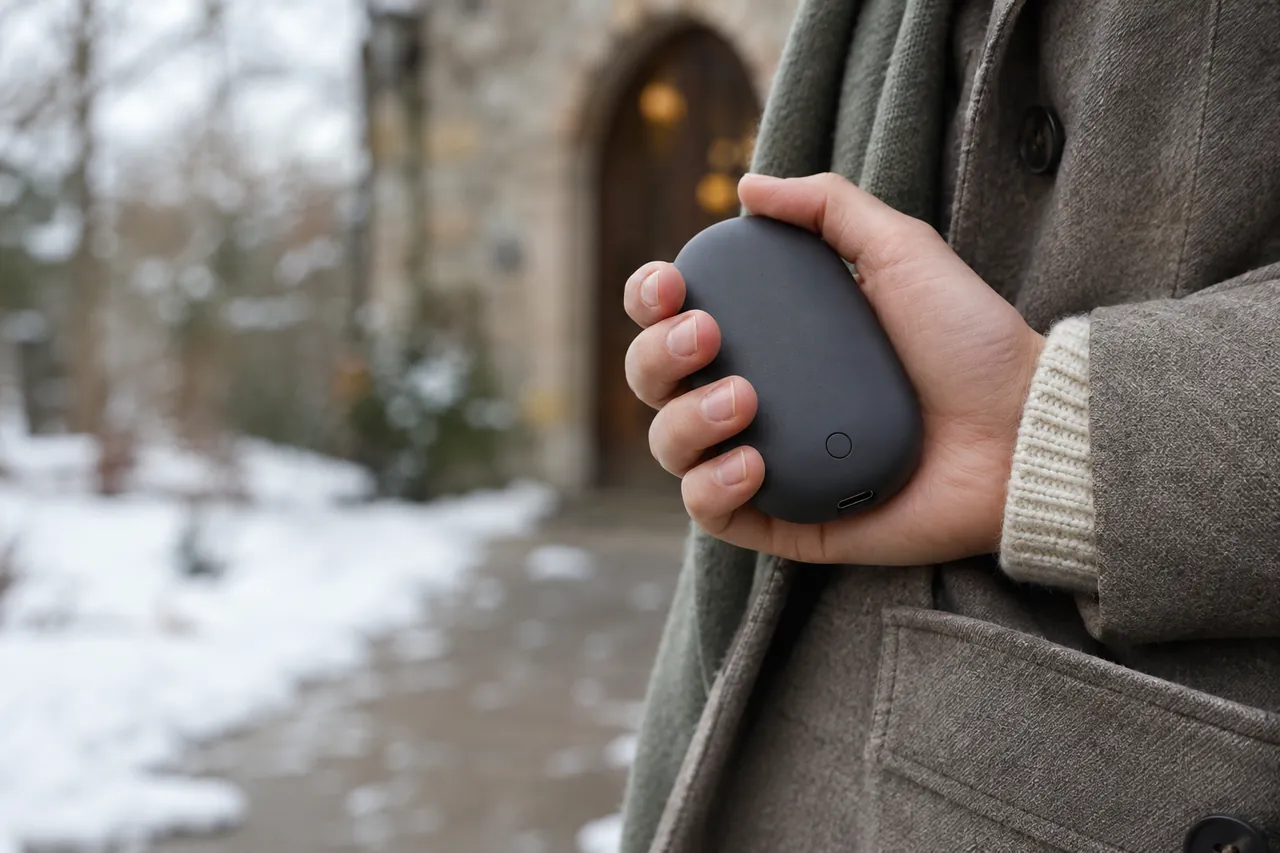
A hand warmer can look like a straightforward purchase until you compare the details: one listing promises pocket-sized warmth, another also charges a phone, and a third is sold by a marketplace trader you have never heard of. Start with the task you need it to do, then check the actual model and seller before comparing the extras.
Introduction
This guide follows a UK purchase from the first product search to the moment a parcel arrives. It uses a real retailer listing to show what to look for, explains the difference between online and shop purchases, and points to an official safety notice for one identified model.
First decide where the warmer will live
Think about the coldest part of the day rather than the longest product description. If you want something to hold while waiting for a train, you may care most about the shape, the accessible controls and whether it will fit beside your hands in a coat pocket. For a long walk, an easy-to-reach pocket and a charging plan may matter more than a second function you never use.
A rechargeable hand warmer is designed to be used again after charging. Disposable hand warmers are a different format, while refillable fuel warmers have their own handling requirements. GearJunkie reviews several types in its hand-warmer guide, which is useful for seeing how varied the category can be. Compare like with like: a thin packet, a rigid rechargeable unit and a fuel warmer do not solve exactly the same problem.
Also consider whether you want to warm one hand at a time, share a warmer or carry separate pieces. A product photo can suggest an answer, but the listing should say how many units are included. If the picture shows accessories or several colours, check which items are included in the option you put in the basket.
Read the listing as a buyer, not as a specification sheet
The most useful details are often scattered across the title, description, photographs and delivery information. Find the model name and look for the precise variant. A familiar brand may sell several sizes or generations under similar names, and a marketplace result can combine different options on a single page. Select the colour or version first and then read the details attached to that choice.
A UK retailer page for the Lifesystems Rechargeable Hand Warmer offers a helpful example. The listing identifies SKU 42461, describes four heat settings and says the unit can also act as a power bank. Those are features of that particular listing, not a checklist that every rechargeable warmer will meet. The page also identifies a USB charging cable, so the contents can be considered alongside the device itself.
Lifesystems’ 2024 catalogue identifies the XT as product 42461 with a 10,000 mAh battery, dimensions of 58 × 117 × 32 mm and a weight of 226 g. The catalogue separately lists the smaller standard model, 42460, at 5,200 mAh and 141 g. The retailer’s detailed copy contains figures for more than one capacity, so keeping the model numbers beside the figures makes the distinction clearer when comparing listings.
Three small checks that make a difference in use
Start with size and shape. A device needs to sit comfortably in your hand as well as fit in the pocket where you plan to carry it. A wide, rigid warmer may be comfortable in a coat pocket yet awkward in a close-fitting glove. Product dimensions help you compare it with something you already own; a photograph without a scale can be misleading.
Next, look at the controls. Can you identify the power control and the way heat settings are changed from the listing or instructions? A clearly described control is useful when you are wearing gloves or want to put the warmer away. Different devices use different button sequences, so learn the sequence for the model in your hand rather than transferring instructions from a review of another model.
Finally, decide whether an additional charging function matters. A power-bank feature can be useful when you carry a phone, but it is a separate job competing for the device’s stored energy. Treat the warmer primarily as the item you bought it for; a listing’s extra feature should not be assumed to deliver a particular phone charge or warming duration.
Who is actually selling it?
A search result may lead to a specialist outdoor shop, a large retailer, or an individual seller using a marketplace. Before paying, check the seller’s identity, the full price including delivery, the expected delivery window and the return process. Save the order confirmation and the listing for the selected variant. Those records give you a useful reference if the wrong item arrives or the description does not match.
A marketplace’s familiar logo does not make every offer the same. Open the seller information and read the terms attached to that particular listing. If two listings have similar photos but different model names, do not assume they are interchangeable or use the same instructions.
Online returns and shop purchases are not identical
When buying goods online from a business, UK government guidance generally gives customers 14 days after receiving the goods to notify the seller that they want to cancel, and another 14 days to return them. Exceptions apply. A purchase from a private individual is different: the statutory change-of-mind cooling-off right does not generally apply. Identify whether a marketplace seller is a trader or a private individual, and keep your cancellation message and proof of return.
For a purchase made in a shop, a business is not generally required to provide a refund simply because a customer changes their mind, although it may offer its own returns policy. A faulty item or one that is not as described is a different issue: the government guidance explains the relevant refund obligations. This distinction matters when comparing a convenient local purchase with an online offer.
For an eligible online cancellation, GOV.UK says the seller must also refund the standard delivery cost, although an extra charge for a more expensive delivery option need not be refunded. The guidance says a customer may handle an item as they would in a shop to inspect it. Check how to notify the seller and who pays return postage, and keep evidence of the cancellation and return. A retailer’s voluntary policy may provide additional options alongside statutory rights.
Check the exact model against safety notices
The UK Office for Product Safety and Standards published a product safety report about a rechargeable hand warmer identified as model HZU003, sold through Amazon and eBay. The report describes a high risk of fire associated with that identified product and tells owners to stop using it and seek redress. The model identifier is essential: this notice concerns the product named in the report, not every electric hand warmer or the Lifesystems listing discussed above.
When the parcel arrives, compare the product and packaging with the listing and retain the model information. If you check a safety alert, match its identifying details rather than relying on a similar shape or photograph. Use the product according to its own instructions and do not use a damaged device.
Cold hands, pain and the limits of a hand warmer
A pocket warmer is a comfort accessory, not a diagnosis. Mayo Clinic describes Raynaud’s as a condition in which some areas of the body, often fingers or toes, feel numb and cold in response to cold temperatures or stress. The experience is not the same as simply wanting warmer hands at a football match. Avoid placing a hot device against numb skin, where you may not notice excessive heat.
Cleveland Clinic discusses heat and cold as options for arthritis symptoms, but its general guidance does not establish a treatment effect for a particular hand warmer. Keep the device easy to remove and follow its instructions; if heat becomes uncomfortable or irritates the skin, stop using it. A product’s high setting is not a measure of its suitability for a person with reduced sensation.
A practical shortlist before checkout
Choose the format that fits the activity, then compare the actual selected variant: its shape, controls, included items and any extra functions. Read the seller and delivery details, note how returns work for the purchase, and keep the model and order information. Finally, check relevant safety notices by the model named. These steps are more useful than choosing solely on the largest number in a search result.
Sources
UK government: returns and refunds
OPSS: HZU003 product safety report
Mayo Clinic: Raynaud’s disease
Cleveland Clinic: heat or ice for arthritis