
Back discomfort is common during pregnancy, but a change in symptoms deserves attention before choosing a comfort measure. ACOG describes posture, weight distribution and ligament changes as possible contributors. Severe pain or back pain accompanied by other symptoms calls for medical advice; loss of feeling in the legs, buttocks or genitals needs urgent assessment.
Introduction
For ordinary back soreness, this guide brings together pregnancy-specific advice on local warmth, non-heated support and the different considerations for heated bedding. It begins with warning signs, then turns to practical choices for a comfortable day.
Start here: when back pain needs medical attention
Back pain is common during pregnancy and can have several causes, including changes in posture and the support around the pelvic joints. Some symptoms need prompt medical attention. ACOG and the NHS identify the warning signs below; do not use heat as a substitute for assessment.
When to Contact Your Maternity Clinician
Contact your midwife, obstetrician, or healthcare provider promptly about the symptoms below. Back pain with fever, bleeding, painful urination or pain beneath the ribs warrants urgent contact; do not wait for a routine appointment.
Severe back pain or pain that lasts more than two weeks warrants contact with your maternity clinician. The NHS advises urgent contact for back pain in the second or third trimester because it can be a sign of early labor.
Back pain accompanied by a fever, chills, or flu-like symptoms.
Back pain occurring alongside vaginal bleeding, spotting, or unusual fluid discharge.
Pain or burning when urinating, or pain in one or both sides beneath the ribs.
Regular, rhythmic cramping or lower back tightening occurring before 37 weeks of pregnancy, which may indicate preterm labor.
When to Seek Emergency Urgent Care
Seek immediate emergency medical evaluation if you experience any of the following urgent neurological red flags:
Loss of feeling in one or both legs, the buttocks, or genitals. The NHS advises calling emergency services or going to an emergency department for this symptom.
Local warmth for a sore lower back
For expectant mothers experiencing everyday lumbar muscle soreness, official guidance from the American College of Obstetricians and Gynecologists (ACOG) outlines specific protocols for applying localized heat to painful back muscles safely:
Select the Lowest Heat Setting: Always operate electric heating pads on the lowest available temperature setting to minimize thermal buildup against skin.
Use a Protective Fabric Barrier: ACOG advises wrapping the heating pad or warm water bottle in a towel to help prevent burns. Follow the device instructions as well.
Limit Application Time: Keep warming sessions short and discrete, applying warmth only for brief periods to soothe tight lower back muscles rather than leaving heat applied continuously.
Restricted Placement: ACOG discusses warmth for sore back muscles. Leeds Teaching Hospitals advises placing a towel-wrapped warm water bottle on the lower back, never on the pregnancy bump. Keep the warmth comfortable, check your skin and follow the instructions for the heat source you choose.
Additional localized guidance from the Leeds Teaching Hospitals NHS Trust suggests placing a towel-wrapped warm water bottle against the lower back for up to 15 minutes to ease pregnancy back ache, while strictly cautioning never to place warm water bottles over the pregnancy bump. It is important to understand that this 15-minute duration represents specific local advice from the Leeds NHS trust for hot-water bottles, rather than a universal clinical limit or a certified safe operating standard for electric heating pads.
Regardless of the heat source used, active personal monitoring is essential. Always inspect your skin frequently during use. If the warming surface feels uncomfortably hot, or if your skin shows redness or irritation, remove the heat source immediately. Furthermore, remain awake throughout every warming session. Never fall asleep while using an active electric heating pad, battery-operated wrap, or warm pack. Always power off and unplug electrical heating devices before lying down to nap or sleep.
Local warmth and whole-body overheating
Overheating means a rise in body temperature when the body absorbs more heat than it releases. MotherToBaby describes heat exposure, including hot tubs and saunas, as a potential cause of overheating during pregnancy. Avoid becoming overheated, and keep local warmth comfortable rather than hot.
However, it is vital to separate whole-body heat exposure from localized surface heat:
Whole-Body Heat Exposure: A heated blanket covers a broader area than a small pad. Avoid overheating and switch off electric bedding before sleep.
Localized Heat Application: ACOG discusses a heating pad or warm water bottle for sore back muscles, using the lowest available pad setting and a towel barrier for a limited period.
A heating device setting and a body-temperature reading measure different things. Neither is a guarantee that a particular device or length of use is suitable for every pregnancy.
Heated bedding and sleep
Electric blankets and heated mattress pads present a different set of considerations during pregnancy due to their broad surface coverage. As detailed in consumer guides from Bedsure, electric blankets are engineered to provide ambient, broad-area warmth across an entire bed, whereas compact heating pads deliver concentrated, localized heat to specific muscle areas.
A heated blanket warms a larger area. To avoid using active heat during sleep, follow the blanket’s directions, warm the bed beforehand if those directions allow it, and switch it off before sleeping.
Pre-Heat the Bed: If the blanket’s instructions permit prewarming, warm the bed before getting in and switch the blanket off as directed.
Power Off Before Sleep: Switch off the blanket before getting into bed or going to sleep, following its instructions.
Automatic shutoff is an additional feature on some products; do not rely on it as a reason to leave active heat on while asleep.
Support without heat
While localized warmth can offer temporary relaxation, managing pregnancy back discomfort effectively often involves incorporating gentle, non-heated comfort strategies to support your spine and pelvic alignment:
Maternity Support Belts: ACOG describes an abdominal support garment as one option to help support the back.
Supportive Body Pillows: ACOG suggests side sleeping later in pregnancy, with a pillow between the knees and another under the belly if helpful.
Gentle Movement and Prenatal Exercise: ACOG notes that walking is generally safe during pregnancy. Stop any exercise that causes pain.
Comforting Warm Baths: The NHS lists a warm bath among ways to ease pregnancy back pain. Avoid becoming overheated.
Physical Therapy Modalities: Verywell Health describes moist hot packs in clinical rehabilitation. Those packs and a home electric device have different instructions.
Choose a product with controls that are easy to use, and follow the product instructions alongside the pregnancy-specific guidance above.
Making a plan for a comfortable day
The small choices around a sore back can be as useful to consider as the heat source itself. ACOG suggests a chair with good back support or a small pillow behind the lower back. If you need to stand for a long time, resting one foot on a low stool can take some strain off the back. When lifting an object, bend your knees and squat, keeping your back straight. The NHS also advises avoiding heavy lifting and moving your feet as you turn instead of twisting your spine.
At night, arrange pillows before you settle into bed. A pillow between bent knees and another beneath the belly can make a side-lying position more comfortable later in pregnancy, according to ACOG. A warm room, ordinary bedding and an extra layer that can be removed are other ways to adjust your comfort without keeping a device switched on. Choose a setup that lets you change position easily.
What to look for in a heating pad
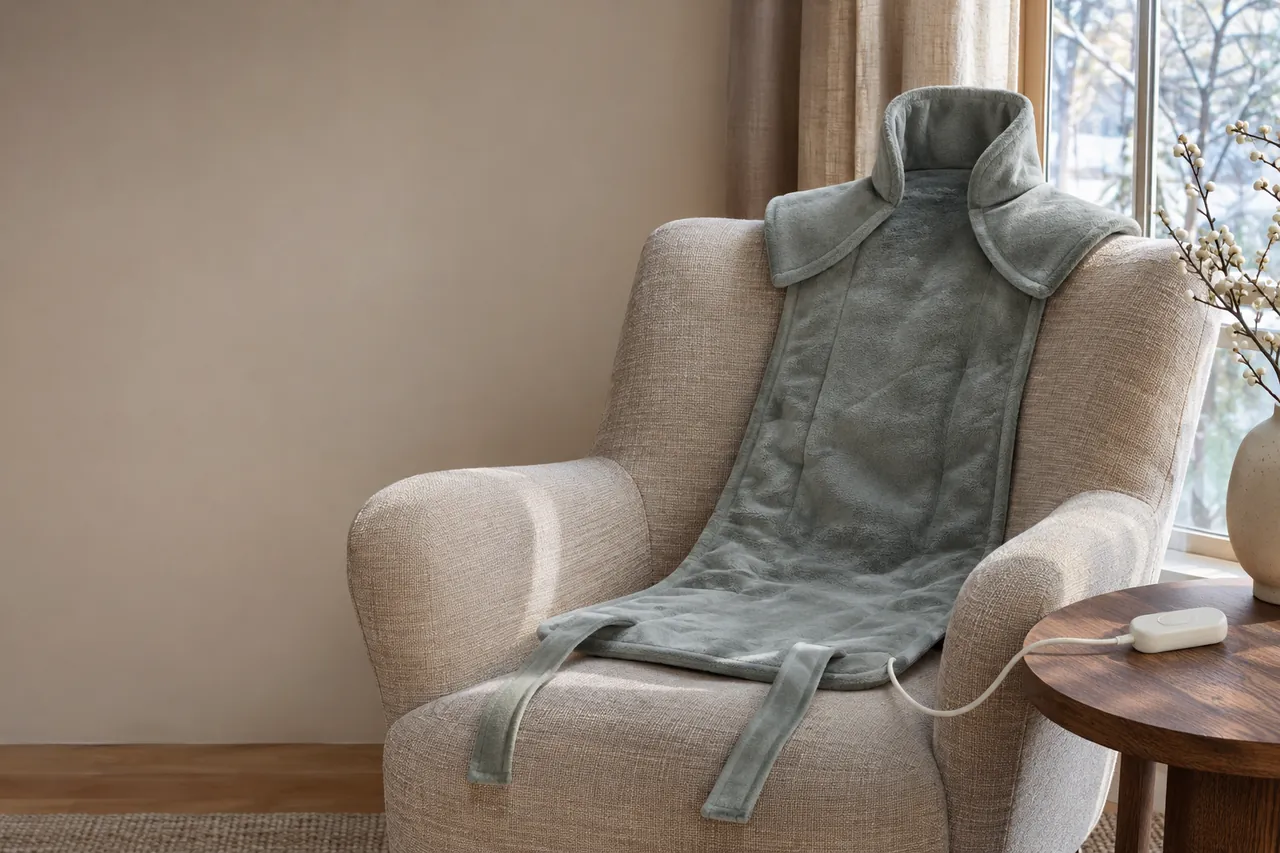
Look for a control you can read and reach easily, with a lowest setting you can select without guessing. Consider the size of the warming area and whether the product can be positioned comfortably on the lower back while leaving the abdomen clear. The instructions should explain how to operate, clean and store that particular device; follow them along with the pregnancy guidance above. A timer may be useful as a reminder, but it does not replace staying awake and checking your skin.
A hot-water bottle is a different product with its own handling instructions. Leeds Teaching Hospitals describes using one wrapped in a towel on the lower back for 15 minutes, away from the bump. Keep the water comfortably warm, not hot, and stop if the warmth feels uncomfortable. Use these practical steps to build a routine around short, attentive periods of warmth, with rest and position changes when needed.
Sources
American College of Obstetricians and Gynecologists (ACOG) — Back Pain During Pregnancy
https://www.acog.org/womens-health/faqs/back-pain-during-pregnancy
National Health Service (NHS) — Back pain in pregnancy
https://www.nhs.uk/pregnancy/common-symptoms/back-pain/
MotherToBaby — Fever/Hyperthermia Fact Sheet
https://mothertobaby.org/fact-sheets/hyperthermia-pregnancy/
Leeds Teaching Hospitals NHS Trust — Pelvic girdle pain and lower back pain
Verywell Health — Hot Packs Used in Physical Therapy
https://www.verywellhealth.com/hot-packs-physical-therapy-modalities-2696130
Good Housekeeping — 9 Best Heating Pads of 2024, Tested by Experts
https://www.goodhousekeeping.com/health-products/g30647898/best-heating-pads/
Bedsure — Heating Pad vs Electric Blanket vs Heated Mattress Pad
https://bedsurehome.com/blogs/bedsure/heated-pad-vs-electric-blanket-comparison
NYT Wirecutter — The Best Heating Pad
https://www.nytimes.com/wirecutter/reviews/best-heating-pad/