
Customer reviews can reveal what a product description cannot: two people may like the same heating pad’s shape yet feel differently about its warmth. When shopping for a lumbar heating pad at CVS, use those accounts as questions to investigate alongside the model’s specifications and instructions.
Introduction
This guide begins with the listing and individual feedback, then looks at fit, controls, care and skin safety.
Start With the Listing and Buyer Feedback
When shopping on retail websites or browsing store shelves, reviewing category pricing and customer review feedback provides helpful context regarding real-world usability.
What the Listing Tells You
CVS lists the Lumbar and Abdominal Heating Pad as item 964666. Its description gives the pad dimensions, four heat settings, elastic straps and a two-hour automatic shutoff. The listing and reviews are useful for different questions: the first describes features, while the second shows how individual buyers experienced the fit and warmth. Price, availability and review totals can change by time and location.
Reading Customer Reviews
Analyzing specific customer feedback from CVS reviewers illustrates diverse user experiences:
Shape and Warmth: One reviewer liked the fabric and shape but found the pad insufficiently warm for their preference.
Versatility: Another reviewer liked being able to move while wearing the wrap. A separate promotional reviewer found the material soft but wished the strap could adjust more tightly. Together, the comments suggest checking both the pad’s coverage and the amount of strap adjustment you need.
Promotional Review Context: Some reviews on the page are labeled as collected as part of a promotion.
It is essential to recognize that individual customer reviews reflect personal, unverified experiences rather than controlled laboratory tests or statistical quality surveys. Pain tolerance, thermal sensitivity, and body shape vary significantly among individuals; a heating pad that feels comfortably warm to one user may feel too mild or too intense to another. Buyers should evaluate customer feedback as general context rather than definitive proof of product performance.
Four Questions Before Buying
Choosing the right personal warming device requires evaluating practical design features alongside retailer fulfillment policies before making a purchase.
1. Waist Sizing and Strap Ergonomics
An adjustable strap can help hold a wrap in place. Compare the pad’s dimensions and the strap range with the area you want covered, and use the product only in positions permitted by its instructions.
2. Controller Options and Auto-Off Timers
Review controller layout and safety timer features before buying. Multi-stage heat settings allow you to customize temperature levels based on room temperature and personal comfort. However, users must understand a critical safety distinction: an automatic shut-off timer (such as a 2-hour auto-off) is a shut-off feature—it is NOT a recommended continuous wear duration against human skin. Follow the model’s instructions and check your skin during use.
3. Fabric Hygiene and Maintenance
A washable pad can be convenient if it will be used often, but check what actually goes in the wash. CVS describes item 964666 as machine washable and dryer safe after the cord is disconnected. Its listing also mentions a snap-latch connector. Follow the supplied washing and drying directions, and reconnect only when the pad and connector are dry. Other models may have a separate removable cover or different care requirements.
4. Retail Fulfillment and Return Terms
When purchasing through retail drugstores like CVS, evaluate local fulfillment options and store policies:
Store Pickup vs. Home Delivery: Availability, pickup and delivery options can differ by location. Check the listing for item 964666 and your preferred store before deciding how to receive it. A nearby store may not offer the same fulfillment options as another location.
Return Terms for Electrical Items: Familiarize yourself with the retailer's store return window and receipt requirements for personal care electrical items before opening product packaging.
For individuals seeking an ergonomic targeted lumbar and back heating wrap to integrate into their daily rest routine, selecting a warming device equipped with adjustable elastic waist straps, multi-stage temperature controls, and automated safety features can help match a wrap to your needs.
A Closer Look at CVS Item 964666
To understand how a dedicated drugstore warming wrap is engineered, examine published product listing specifications for a primary commercial model sold at CVS: the CVS Lumbar and Abdominal Heating Pad (Item 964666).
Official product listing details for Item 964666 outline several specific physical and technical parameters:
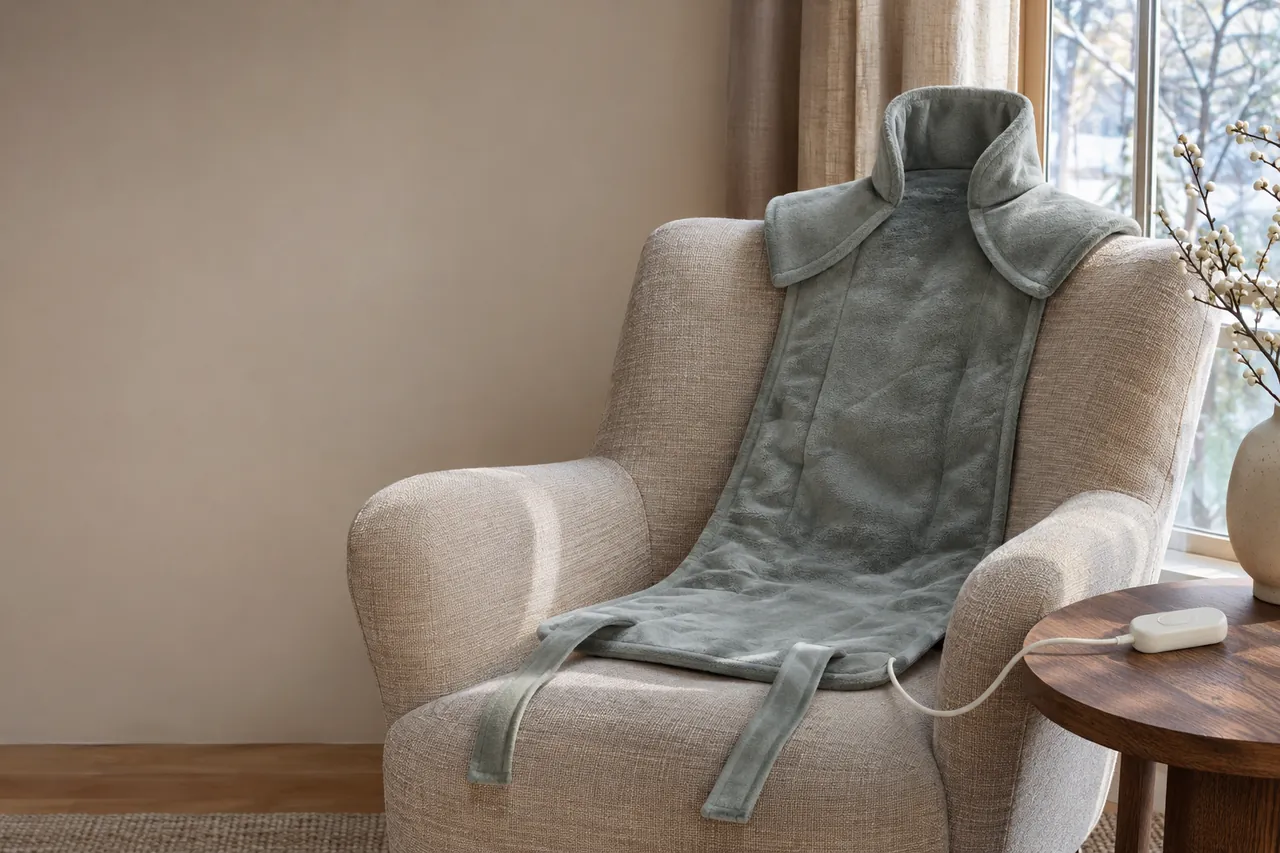
Generous Physical Dimensions: Features physical measurements of 23.2 inches by 10.1 inches, providing an elongated rectangular heating surface designed to drape across the lower back, lumbar curve, or abdomen.
Elastic Securing Straps: Incorporates built-in elastic straps that wrap around the torso, holding the heating pad flat against the waist for lower back or abdominal warmth; use the pad only in positions allowed by its instructions.
Four Digital Heat Settings: Connects to an inline controller offering 4 selectable heat settings to adjust thermal output based on room temperature and personal preference.
Two-Hour Automated Shut-Off: Incorporates an integrated 2-hour automatic shut-off feature engineered for electrical safety.
Machine-Washable Fabric Shell: Designed with a detachable power cord assembly, the CVS listing describes the pad as machine washable when disconnected from the cord; follow its care instructions.
Storage: The CVS listing includes a storage bag with this pad. Store it according to the supplied instructions, keeping the pad and cord protected from damage between uses.
Skin and Electrical Safety
Operating an electric heating pad safely in your home requires practicing active skin monitoring, respecting electrical boundaries, and adhering to essential safety protocols.
Increased Burn Risk from Reduced Skin Sensation
As detailed in consumer safety literature regarding home heating pad burn risks, individuals with reduced skin sensation—such as seniors, individuals with diabetes, peripheral neuropathy, or impaired blood circulation—face significantly higher risks of thermal skin burns. Because diminished nerve sensitivity prevents individuals from detecting rising skin temperatures or thermal discomfort, low-level heat can cause gradual tissue damage without warning. Some products prohibit use by people unable to remove the pad independently; follow the specific product’s warnings.
Preventing Toasted Skin Syndrome (Erythema Ab Igne)
A primary dermatological risk associated with repeated, prolonged heat exposure is Toasted Skin Syndrome, medically known as Erythema Ab Igne. As documented by dermatological experts at the Cleveland Clinic, toasted skin syndrome is a skin condition caused by repeated, long-term exposure to low-level heat that alters skin tissue over time without causing an immediate thermal burn. Repeated exposure causes a characteristic net-like pattern of hyperpigmentation and brown skin discoloration across the warmed area. To protect your skin, limit warming sessions to short, discrete periods and allow skin to cool naturally between applications.
Summary Daily Safety Rules
Follow Product-Specific Manuals: Always read and adhere to the exact operating instructions, placement guidelines, and safety warnings printed in your individual product's user manual.
Use While Awake Only: Never use any electric heating pad or wearable wrap while sleeping or napping. Reduced sensory awareness during sleep prevents you from detecting thermal discomfort or rising skin temperatures.
Active Skin Monitoring: Inspect your skin underneath the pad frequently during every session. If the pad feels uncomfortably hot, or if skin shows redness or irritation, stop using the device immediately and turn off the power supply.
STRICT SAFETY WARNING: Keep electric pads, controllers and cords out of the microwave. Only microwave a separate pack when its label expressly permits it, and follow its directions.
Heat, Cold and Back Comfort
Understanding how surface warmth interacts with lower back tissue provides helpful context for managing everyday muscle tightness during rest breaks.
Deciding Between Heat and Cold Therapy
According to medical resources from Healthline and Medical News Today regarding heat and cold application, choosing between temperature modalities depends on the timing and underlying nature of your physical discomfort:
Cold Therapy for Acute Swelling: Cold packs are commonly used for recent injuries or swelling. Protect skin from direct ice contact and follow the pack’s instructions.
Heat Therapy for Chronic Stiffness: Gentle warmth can provide temporary comfort for muscle stiffness. Follow the product’s instructions and avoid heat where it is contraindicated.
Muscle Spasms: Cleveland Clinic discusses heat as one option for easing back spasms.
Bring the reviews and listing together
Compare comments about warmth and strap fit with the dimensions and controls listed for the pad. Read its care directions and check the pickup or delivery options for the specific item before placing an order.
References
Healthline — Treating Pain with Heat and Cold
https://www.healthline.com/health/chronic-pain/treating-pain-with-heat-and-cold
Medical News Today — Heat and cold treatment: Which is best?
https://www.medicalnewstoday.com/articles/29108
CVS Pharmacy — CVS Lumbar and Abdominal Heating Pad (Item 964666)
https://www.cvs.com/shop/cvs-lumbar-and-abdominal-heating-pad-prodid-964666?skuId=964666
CVS Pharmacy — Heating Pads Category
https://www.cvs.com/shop/content/heating-pads
CVS Pharmacy — Customer Reviews: CVS Lumbar and Abdominal Heating Pad
https://es.cvs.com/shop/cvs-lumbar-and-abdominal-heating-pad-prodid-964666-reviews
Cleveland Clinic — Back Spasms: Causes, Treatment & What Is It
https://my.clevelandclinic.org/health/diseases/22881-back-spasms
Cleveland Clinic — What Is Toasted Skin Syndrome (Erythema Ab Igne)?
https://my.clevelandclinic.org/health/diseases/toasted-skin-syndrome