
When your lower back feels tight, deciding what to do next can matter more than choosing a gadget. Start with manageable movement, pay attention to changes in your symptoms and use warmth as one option for comfort. The NHS advises people with back pain to stay active as much as possible and avoid long periods in bed.
Introduction
A heating pad for lumbar strain can be part of that routine, but back pain has several possible causes and a painful area alone cannot confirm a strain. This guide begins with activity and heat-or-cold choices, then explains how to use a pad and when to seek urgent help.
Making room for gentle movement
Plan the day around movement you can manage, with warmth available for comfort between activities.
The NHS recommends staying active and continuing normal activities as possible, while avoiding prolonged bed rest. Adjust the pace to what feels manageable and stop exercises if they worsen pain.
A practical routine can leave room for both a comfortable heat session and ordinary movement:
Comfortable Warmth: Use your chosen device while awake, following its instructions and checking your skin.
Gentle Activity: A short walk can be a simple way to return to movement. Start at a manageable pace rather than forcing a stretch through pain.
Maintain Daily Ergonomics: Adjust your workstation seating, take frequent standing breaks, and avoid staying in one static position for long periods.
A heat session can fit around your day, but it is not a required step before every activity.
Choosing heat or cold
Understanding how surface temperature modalities interact with lower back tissue helps clarify when to choose cold or heat for daily comfort.
Medical News Today discusses heat and cold for different kinds of pain and injury. Consider the circumstances and use the method comfortably:
Choosing cold or warmth after a back strain
For a recent injury or swelling, use a cold pack with a damp cloth between the pack and skin. Gloucestershire Hospitals advises using cold only where sensation and circulation are normal, checking the skin every five minutes and removing the pack if skin turns blue, becomes blotchy and painful, or is excessively numb. Gloucestershire Hospitals notes an exception to its general advice against heat on a new injury: with a new lower back strain, gentle warmth can help when muscle spasm contributes to pain. The NHS also lists wrapped heat for stiffness or muscle spasms. Do not place the cold pack over an open wound or graze. For an electric pad, use the protective layer and placement specified for that product.
Surface Heat Therapy for Ongoing Tightness and Spasms
Medical News Today describes heat as an option for stiffness and muscle discomfort. Gentle warmth can make the area feel more comfortable for a time; it should not be hot enough to hurt or irritate your skin.
Thermotherapy principles explained across clinical resources highlight how surface heat affects specific muscle states:
Back Spasms: Cleveland Clinic describes a spasm as an involuntary muscle contraction and discusses heat among possible home measures. Spasms have more than one possible cause.
Muscle Knots: Cleveland Clinic describes myofascial trigger points as tight areas in muscle and discusses warmth and stretching as ways to address them. A painful spot does not automatically establish the cause of back pain.
Clear Scope and Physiological Boundaries
Heat is a comfort measure; it does not repair a disc, release a compressed nerve or guarantee a particular recovery.
Differentiating Lumbar Strain, Sciatica, and Nonspecific Back Discomfort
When experiencing lower back discomfort, understanding the distinctions between different back conditions helps you communicate effectively with healthcare professionals and select appropriate home comfort measures.
These terms describe different patterns or possible causes of back pain:
Lumbar Muscle Strain: A strain is an injury to a muscle or tendon in the lower back. The NHS lists a pulled muscle as one possible cause of back pain. Pain and stiffness alone do not establish that a strain is present.
Sciatica: Sciatica involves irritation or compression of the sciatic nerve. Pain can travel into a leg and may be accompanied by tingling, numbness or weakness. These symptoms do not by themselves identify the cause.
Nonspecific Lower Back Pain: This describes pain for which a specific cause has not been identified. The NHS notes that the cause of back pain is not always obvious.
Symptoms overlap, and the pattern of discomfort alone is not a diagnosis. NHS guidance advises arranging an assessment when back pain is not improving after a few weeks, interrupts daily activities, or is worse at night or does not improve with rest. Severe pain that starts suddenly or worsens quickly, or pain accompanied by feeling hot, cold, shivery or generally unwell, needs urgent medical advice. Emergency symptoms are listed below.
How to Choose and Operate a Lumbar Heating Pad Safely
Choose a pad that fits the area and lets you reach its controls comfortably. Consider where you will use it and how it will be cleaned between sessions.
1. Form Factor Comparison: Flat Pads vs. Strapped Lumbar Wraps
Personal warming appliances for the lower back generally fall into two primary physical designs:
Flat Pads: A flexible pad can be placed on the area described in its instructions. Do not lean against, sit on or lie on an ordinary heating pad.
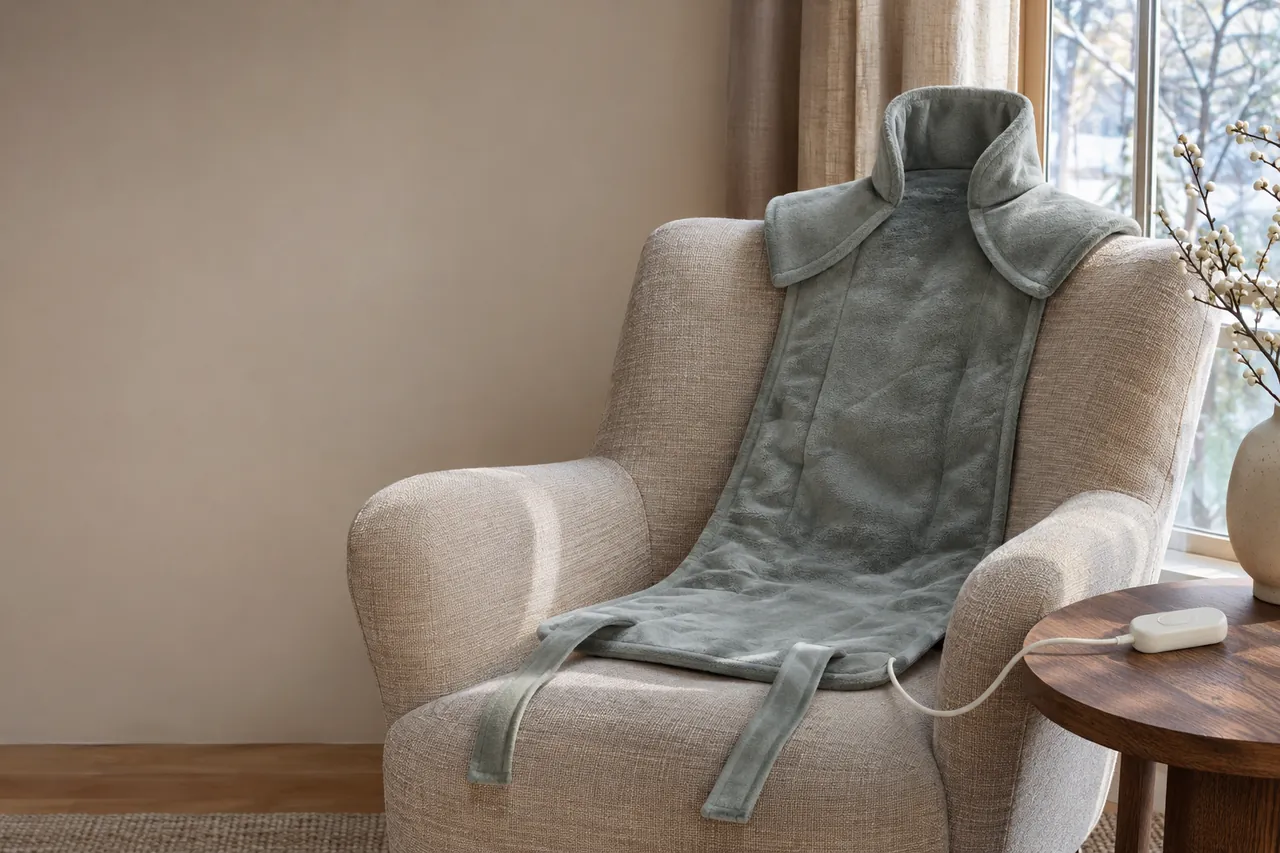
Strapped Wraps: A waist strap can help hold a wrap in place. Compare the strap size and heated area with the fit and coverage you need.
For a strapped wrap, measure around the area where the strap will fasten and compare that measurement with the listed adjustment range. Check the size of the heated panel separately from the strap length. The wrap should feel comfortable rather than restrictive; make sure you can reach the controls and remove it easily. Follow the individual model’s instructions for placement and skin contact.
2. Power Architecture: Corded AC vs. Rechargeable Battery
Match the appliance's power setup to your daily schedule:
Mains-Powered Corded Electric Pads: Connect directly to an AC electrical wall outlet via a power cable. A corded pad avoids battery recharging and needs an outlet nearby. Its settings and any automatic shutoff govern operation, so arrange the cable clear of moving furniture and walking paths.
Cordless Wraps: Rechargeable models avoid a trailing wall cord during use. Check the specific listing for the included power source, charging requirements and care directions.
3. Fabric Care and Hygiene Maintenance
Read the care label and instructions before cleaning. A detachable cord or battery does not automatically make the pad machine washable. Disconnect the device as directed and let any washable parts dry completely before reassembly.
4. Operational Safety Boundaries and Dermatological Guidelines
Operating any electric heating pad safely in your home requires respecting strict physical posture rules and skin safety guidelines:
Use While Awake Only: Never wear or operate any electric heating pad or battery-powered wrap while sleeping or napping. Reduced sensory awareness during sleep prevents you from detecting thermal discomfort or rising skin temperatures, dramatically increasing thermal burn risks.
Avoid Compression: Do not sit or lie on, lean against or compress an ordinary localized heating pad. Position it according to the product instructions.
NEVER Use While Driving: Users should never wear or operate an electric heating pad while driving an automobile. Adjusting digital controls or responding to thermal discomfort while operating a motor vehicle creates dangerous driving distractions.
Microwave Safety: Never put an electric pad, its cord, controller or battery in a microwave. Only microwave a non-electric pack if its own instructions explicitly allow it.
Timers: Automatic shut-off is not a recommended length of skin contact. Follow the particular device instructions, stay awake and check your skin.
Skin Checks: Cleveland Clinic describes toasted skin syndrome as a skin change associated with repeated, prolonged heat exposure. Follow the device directions on protective layers, check your skin and stop if it becomes uncomfortable, unusually red or irritated. Reduced sensation can make excess heat harder to notice.
Red Flag Symptoms: When Back Pain Requires Emergency Medical Care
Certain symptoms accompanying back pain require immediate emergency attention.
The NHS advises emergency care when back pain occurs with any of these signs:
Bladder or Bowel Changes: Sudden loss of bowel or bladder control, difficulty urinating, or sudden inability to pass urine.
Saddle Area Numbness: Sudden numbness, loss of feeling, or a pins-and-needles sensation around your genitals, buttocks, or back passage (anus).
Symptoms in Both Legs: Pain, tingling, weakness, or numbness in both legs.
These symptoms require emergency assessment rather than home self-care. NHS guidance also calls for emergency help when back pain occurs with chest pain, changes in sexual sensation or function, or follows a serious accident. Do not drive yourself to emergency care; ask someone to take you or call emergency services.
Choose a comfortable format, follow the instructions for that device and make space for manageable daily movement.
Sources
Medical News Today — Heat and cold treatment: Which is best? https://www.medicalnewstoday.com/articles/29108
Cleveland Clinic — What Is Toasted Skin Syndrome (Erythema Ab Igne)? https://my.clevelandclinic.org/health/diseases/toasted-skin-syndrome
Cleveland Clinic — Back Spasms: Causes, Treatment & What Is It https://my.clevelandclinic.org/health/diseases/22881-back-spasms
Cleveland Clinic — How To Get Rid of Muscle Knots https://health.clevelandclinic.org/what-are-muscle-knots-and-how-do-i-get-rid-of-them
National Health Service (NHS) — Back pain - NHS https://www.nhs.uk/conditions/back-pain/