
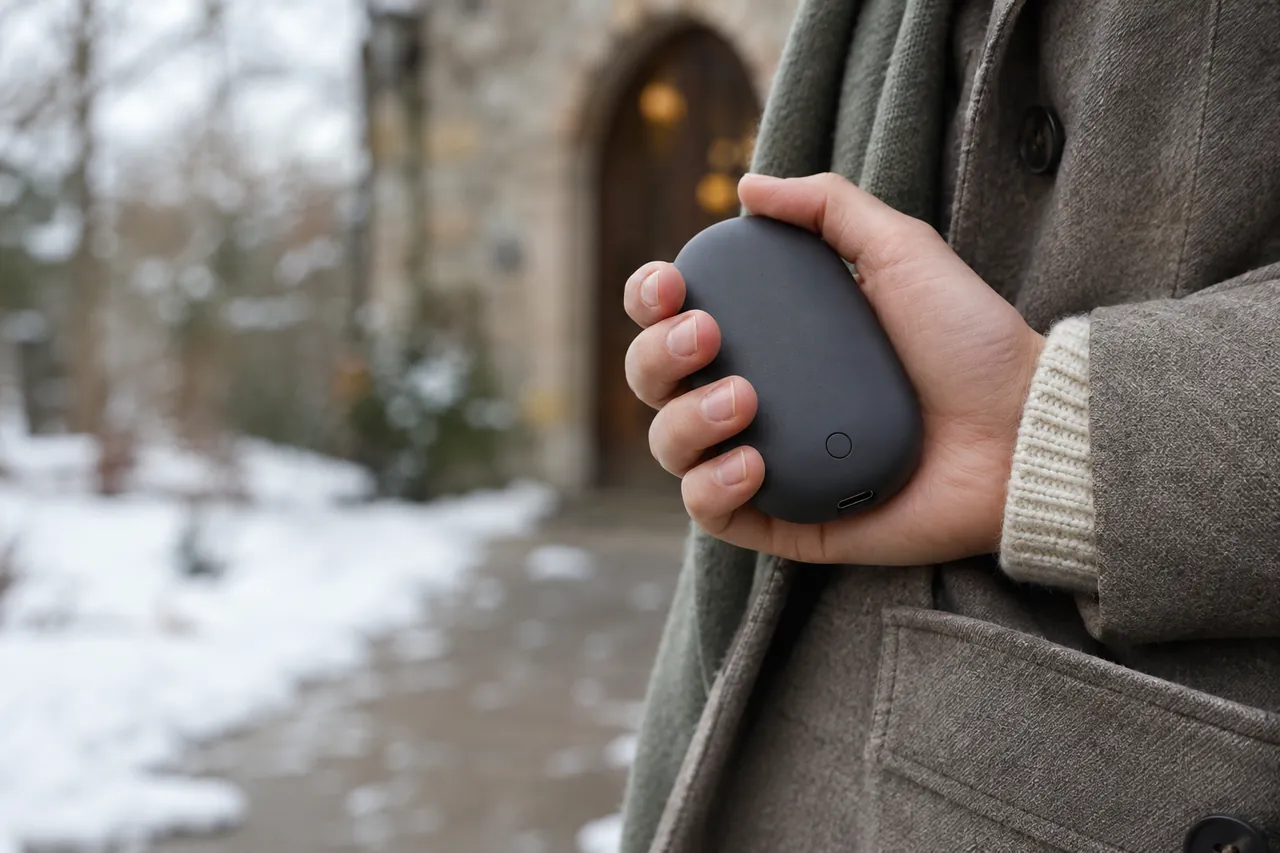
A magnetic electric handwarmer can look straightforward in a product photo: two small pieces join together and separate when you want one for each hand. The useful details are usually elsewhere in the listing. How many pieces are included? Does each one work independently? What does the advertised battery time measure? And what should you check before using an older device?
Introduction
This guide walks through those questions in the order you are likely to encounter them while shopping. The examples describe particular products and published reviews; use the listing and instructions for the exact model you choose.
The photo: one object or two working warmers?
A magnetic pair uses a connection that lets its pieces attach for carrying or storage. On designs that work independently, separating the pair gives you a warmer for each hand. That can be useful when both hands have their own coat pocket, or when two people want to share. When joined, the pair takes up a different shape and may be easier to keep together in a bag.
Do not infer every operating detail from the word “magnetic.” Read whether the package contains two working units, whether both can be used separately, and how each one is switched on and off. A photograph may show two pieces together without explaining the controls or which surfaces warm in each configuration. Those details belong in the model’s description and instructions.
GearJunkie’s review of the OCOOPA UT3 PRO gives a concrete example: its two magnetic units heat and recharge independently, and each has four heat levels. The reviewers preferred holding them separately or placing one in each jacket pocket. They also observed a difference in heating surfaces: each unit warms on all sides when separate, while the outer panels heat when the pair is attached. A later Polish consumer-authority notice describes a Kolba safety campaign covering model UT4102, identified in reporting as UT3 PRO, because its battery may overheat or ignite. Do not use or charge a unit covered by that campaign; follow its return guidance.
The same review describes a different arrangement for the UNIHAND pair: each warmer heats on one side, and the pieces can lock together for two-sided warmth. That distinction matters in use. A pair that looks similar in a photograph can distribute warmth differently once joined; it is worth comparing the warming surfaces as well as the shape.
The controls: look at both halves
A single control button can be convenient, but check how it changes settings and how you know the device is on. An indicator light, a display, or another marking may help you see the selected level. Compare the product instructions with the way you will use the warmer: a button that is easy to press at a desk may feel different when you are wearing thick gloves.
For a pair with separate controls, think about how you will manage both pieces. You may want the same setting on each side, or you may use only one unit at a time. The package should explain how to turn each unit off and how to recognize its state. Do not assume switching off one piece automatically switches off the other.
Start with a comfortable setting according to the device’s instructions and adjust only as needed. If the casing feels too hot or your skin becomes irritated, stop using it. A warmer is a small contact-heat product, so it should be possible to put it aside whenever it becomes uncomfortable.
The runtime number: read the conditions around it
A large “up to” number is a starting point for comparison, not a schedule for your day. Check whether the figure refers to one unit or a pair, which heat setting was used, and whether the listing explains the conditions. A pair can be described in several ways, so look carefully at what the number is counting before comparing it with another product.
GearJunkie notes that cold or damp conditions can affect the battery life of the UT3 PRO it reviewed. It also presents an advertised runtime in its specifications. Read such figures as information about that example, not a guarantee that a different model will last for the same length of time. The setting you use and the time you have available to recharge are practical considerations.
If you usually need warmth for a short walk, pocket fit and easy controls may matter more than the biggest advertised runtime. For a longer outing, look at the complete charging and usage information and plan a separate cold-weather clothing setup. Gloves and appropriate layers remain useful even when you carry an electronic warmer.
Charging: inspect what is actually in the box
Find the listed connector, included cable, and power requirements for the model. A pair may require each piece to be charged; the included cable arrangement can differ between products. GearJunkie reports dual USB-C charging cords with the UT3 PRO it reviewed, but that is not a universal package specification.
The best charging setup is one you can use as directed without forcing a connector or improvising a power source. Keep the charging connection clean and dry, follow the product’s instructions, and check the cable and housing for damage. Store the cable where you can find it again rather than substituting an unfamiliar part.
Do not assume that a charging port can also charge a phone. Ports and secondary functions vary by device. If a listing does not describe a feature clearly, leave it out of your comparison rather than building your purchase around an assumption.
Size and shape matter more than the studio photo
Compare the dimensions and weight with the pockets or bag you actually use. A pair can be slim when separated but feel bulkier when joined. A rounded surface may sit comfortably in the palm, while a flatter shape may pack more neatly. Neither shape is automatically better for everyone.
Look at the way the device is intended to be held or carried. GearJunkie found the UT3 PRO useful in jacket pockets but noted that it would not fit in gloves or boots like disposable warmers. Do not force an electronic warmer into footwear or clothing where it is uncomfortable or contrary to its instructions.
The magnetic connection is a convenience for keeping compatible pieces together; it is not a reason to assume the device will attach safely to every metal surface. Keep the product where you can operate it and move it away from your skin when necessary.
Before using a warmer, check the model and recall notices
On July 30, 2026, the U.S. Consumer Product Safety Commission announced a recall of OCOOPA rechargeable hand warmers because batteries in affected units can overheat and ignite. The listed model numbers are UT3053, UT3056, ZLS-118, ZLS-118S, ZLS-118D, H01, and H01(PD). The CPSC says the model and three-digit batch number are printed on the underside.
If you have an affected OCOOPA unit, stop using it immediately and follow the CPSC recall process for a refund. In October 2026, separate CPSC recalls also covered HotHands rechargeable model H163650 and Gobi Heat model UT3053. Check the brand and model printed on the unit and follow the matching recall notice. Do not put a recalled device in household trash, ordinary recycling or retail battery collection boxes; follow the notice and local hazardous-waste guidance for defective lithium-ion batteries. Check an older or secondhand device before use.
Separate comfort claims from health advice
A hand warmer supplies warmth to the area where it is used. It should not be described as curing Raynaud’s or guaranteed to stop an episode. The NHS explains that Raynaud’s can cause fingers or toes to change color and become painful or numb in response to cold or stress. Keeping warm and avoiding sudden temperature changes are among its recommendations.
If your skin is numb or you have difficulty sensing heat, take particular care with any warming device; intense heat against numb skin can cause injury. Seek medical advice for severe, worsening, one-sided, or disruptive symptoms, as described in NHS guidance. Do not use a higher setting as a substitute for appropriate care.
Your final comparison
Read the model name and recall information first. Then compare the number of working units, independent controls, size, stated runtime conditions, included charging equipment, and care instructions. Choose the pair whose documented features fit the way you will carry and use it. A clear listing makes it easier to choose the right device—and to understand what it does when it arrives.
Sources
GearJunkie, The Best Hand Warmers of 2026: https://gearjunkie.com/winter/best-hand-warmers
OCOOPA, Hand Warmers Collection: https://www.ocoopa.com/collections/hand-warmers
NHS, Raynaud’s: https://www.nhs.uk/conditions/raynauds/
U.S. Consumer Product Safety Commission, OCOOPA Direct Recall: https://www.cpsc.gov/Recalls/2026/OCOOPA-Direct-Recalls-1-5-Million-Rechargeable-Hand-Warmers-Due-to-Risk-of-Serious-Injury-or-Death-from-Fire-and-Burn-Hazards-One-Death-Reported-Imported-by-Shenzhen-Street-Cat-Technology