
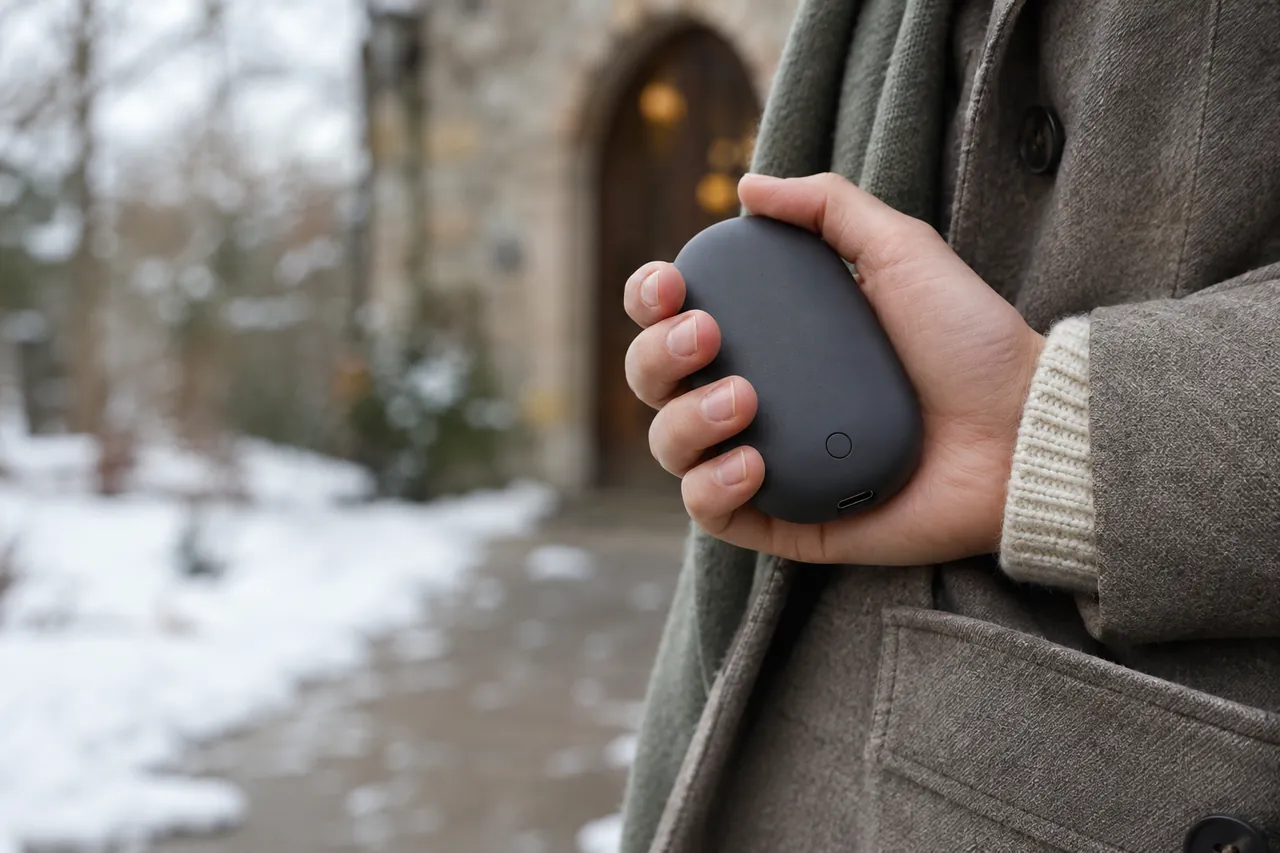
A magnetic hand warmer may look like one small object in a pocket, but many designs separate into two rechargeable pieces. Before using one, identify the exact model, check whether it is subject to a recall, and read how each half is controlled and charged. Then consider whether the pair fits the pockets and activities for which you bought it.
Introduction
This guide begins with an existing device in hand. It uses the published OCOOPA recall and a GearJunkie review as examples, alongside NHS and Mayo Clinic guidance on cold-sensitive fingers. Product names and review findings apply to the models identified in their sources.
1. Find the model number before switching it on
Look for the model designation on the device itself and retain the packaging or instructions. Similar-looking warmers may have different controls or safety notices. For the OCOOPA products in the US Consumer Product Safety Commission’s July 2026 recall, the model and three-digit batch number are printed on the underside.
The recall covers OCOOPA models UT3053, UT3056, ZLS-118, ZLS-118S, ZLS-118D, H01 and H01(PD). CPSC says the lithium-ion batteries in the recalled units can overheat and ignite, creating fire and burn hazards. If your unit matches the recall, stop using it immediately and contact OCOOPA Direct for a refund. CPSC says the process involves marking the warmer “RECALLED” and submitting a photo that shows the mark, model and three-digit batch number. Follow the notice for safe disposal of the defective lithium-ion device.
The notice applies to the identified model numbers. A brand name or a similar marketing name alone is not enough to determine whether a particular unit is covered. Compare the physical model number with the CPSC notice and any current updates. Do not put a defective recalled lithium-ion battery or device in household trash, ordinary recycling or a retail battery collection box. The CPSC advises checking whether a local household hazardous-waste center accepts defective lithium-ion batteries, and following local disposal guidance.
Check the brand as well as the model: in October 2026, the CPSC announced separate recalls of HotHands rechargeable model H163650 and Gobi Heat model UT3053. Stop using an affected device and follow the matching notice for the claim and disposal steps. For these recalls, the model appears on the underside; the HotHands notice also identifies a batch number there. Keep the model and official notice with your instructions so you can check the device again before another season.
2. Separate the pieces and inspect the controls
Some magnetic pairs are made to attach for carrying and separate for use in two hands. GearJunkie describes the OCOOPA UT3 PRO it reviewed as two independently rechargeable units that attach magnetically. The review says each has a button, indicator and charging port. These are observations about that model, not specifications for all magnetic hand warmers. A later Polish consumer-authority notice describes a Kolba safety campaign covering model UT4102, identified in reporting as UT3 PRO, because its battery may overheat or ignite. Do not use or charge a unit covered by that campaign; follow its return guidance.
On the reviewed UT3 PRO, GearJunkie describes heat around each unit when separated and the outside panels warming when the pieces are joined. Its testers preferred using the halves separately. Other designs may warm different faces, so read the exact instructions before deciding which side should face the hand or pocket.
Check whether each half has its own switch and how the indicator shows the selected setting. If the pieces are independently controlled, remember to check both when you are finished. The magnet holds the pieces together; it should not be treated as a medical feature or evidence of an effect on circulation.
Inspect the casing and connections before use. Damage, swelling, scorching or an unusual smell are reasons to stop using the unit. Do not try to repair or open a damaged rechargeable device. Follow the product instructions and local disposal rules for batteries.
3. Match the size to the pocket
Try to picture the warmer in the coat or bag you actually use. A pair may be compact when joined yet still feel bulky in a narrow glove. GearJunkie notes that the UT3 PRO it reviewed does not fit gloves or boots in the same way as a small disposable packet. Dimensions and shape matter more than the word “portable” on a listing.
One piece in each coat pocket leaves the pair separated and easy to reach. Joining the two may make them easier to keep together in a bag when not in use. Check whether a case or straps are included with the exact product, and choose a place where the controls cannot be accidentally pressed against other objects.
If you want to share a pair, check the instructions and make sure both users can adjust their own unit. A pair can also mean two batteries to charge and two items to keep track of. Those are practical trade-offs to weigh against carrying one larger warmer between hands.
4. Read runtime and charging claims together
A product page may state a maximum runtime, but the figure is meaningful only with its test conditions and setting. GearJunkie discusses the effect that cold conditions can have on rechargeable warmers. Check whether the stated figure is for one unit or a pair and how the manufacturer describes the conditions.
Plan when and where you will charge both pieces. Use the charging equipment specified for the product, keep the connection dry and follow the instructions for the device. A connector used to recharge a warmer is not necessarily an output for charging a phone. If that function matters, look for it in the exact model’s documented specifications.
GearJunkie’s detailed UT3 PRO review says it lacks a phone-charging output, while its summary table describes the feature differently. The discrepancy makes it especially important not to assume the feature from a general comparison. Other reviewed warmers do offer an output, but their features cannot be transferred to the UT3 PRO or another model.
Store the warmer according to its own instructions and protect it from damage and moisture. Avoid assuming that every rechargeable battery needs the same storage percentage or recharging schedule. The US CPSC’s battery guidance emphasizes care during charging, use and storage.
5. Use warmth carefully when fingers are numb
The NHS explains that Raynaud’s can cause fingers or toes to change colour and feel cold, numb or painful in response to cold or stress. Keeping warm is part of its self-care guidance. OCOOPA’s article also discusses keeping warm, while Mayo Clinic provides information about symptoms and causes.
Numbness can make it harder to judge whether a surface is too hot. Follow the warmer’s warnings and your clinician’s advice if you have reduced sensation or circulation problems. Check your skin and stop using heat if it feels uncomfortable or causes irritation. A warmer provides external warmth; it should not delay assessment of changing or severe symptoms.
The NHS recommends medical assessment for symptoms that are severe or worsening, interfere with daily life, affect only one side, or occur with joint pain, a rash or muscle weakness. Mayo Clinic advises prompt attention if someone with severe Raynaud’s develops a sore or infection on an affected finger or toe.
A clinician can help determine what is causing persistent or changing symptoms and discuss an appropriate care plan. Keeping track of when episodes happen, which fingers are affected and whether they interfere with everyday activities can make that conversation more useful. A product’s temperature setting does not diagnose the cause of cold fingers.
Other formats solve different problems
A disposable packet requires no charging but is used for one session; follow its own placement and disposal directions. A single rechargeable unit has fewer pieces to manage but may need to move between hands. Compare the whole routine, including charging, storage and the space inside a glove or pocket.
Reusable gel warmers provide another pocket-sized alternative. GearJunkie describes HotSnapZ packs that activate when a disc inside is clicked and are reset by boiling before cooling. In the review’s test, the larger HotSnapZ packs stayed warm for about two hours and the smaller pocket-sized packs for about 30 minutes. Those are observations from the reviewed packs, not a promise for every use. Follow the exact pack’s preparation and handling directions, and protect its pouch from punctures.
For an existing magnetic warmer, the order is straightforward: identify the model and any recall, inspect the two pieces, check fit and controls, then follow the device’s charging and use directions. That process gives you concrete information about your own unit before relying on a general review.
References
US CPSC: OCOOPA rechargeable hand warmer recall — https://www.cpsc.gov/Recalls/2026/OCOOPA-Direct-Recalls-1-5-Million-Rechargeable-Hand-Warmers-Due-to-Risk-of-Serious-Injury-or-Death-from-Fire-and-Burn-Hazards-One-Death-Reported-Imported-by-Shenzhen-Street-Cat-Technology
GearJunkie: The Best Hand Warmers of 2026 — https://gearjunkie.com/winter/best-hand-warmers
Mayo Clinic: Raynaud’s disease symptoms and causes — https://www.mayoclinic.org/diseases-conditions/raynauds-disease/symptoms-causes/syc-20363571
NHS: Raynaud’s — https://www.nhs.uk/conditions/raynauds/
OCOOPA: Rechargeable hand warmers and Raynaud’s — https://www.ocoopa.com/blogs/ocoopa/ocoopa-rechargeable-hand-warmers-help-for-raynauds
Pure Enrichment: WeightedWarmth weighted body pad — https://pureenrichment.com/products/weightedwarmth%E2%84%A2-weighted-body-pad-with-heat
US CPSC: Batteries — https://www.cpsc.gov/Regulations-Laws--Standards/Voluntary-Standards/Topics/Batteries