
Safety recall: check the model number
In July 2026, the US Consumer Product Safety Commission announced a recall of OCOOPA rechargeable hand warmers with model numbers UT3053, UT3056, ZLS-118, ZLS-118S, ZLS-118D, H01 and H01(PD) because their batteries can overheat and ignite. Owners of recalled units should stop using them immediately and contact OCOOPA Direct. The CPSC notice describes a full refund as an OCOOPA gift card or through the original form of payment. The agency says not to place recalled devices in household trash, ordinary recycling or retail battery collection boxes; follow its guidance for defective lithium-ion batteries and local hazardous-waste disposal. The model and three-digit batch number appear on the underside. The recall applies to the listed model numbers; check the actual unit rather than relying on a product family name.
A rechargeable hand warmer is a small device you charge and use again when your hands need warmth. The most useful choice depends on more than the largest battery number: decide whether you need one unit or two, where you will carry it, how long you will be away from a charger, and whether the controls are easy to operate in the cold.
In October 2026, the CPSC also announced separate recalls for HotHands rechargeable hand warmers marked H163650 and Gobi Heat rechargeable hand warmers marked UT3053. Stop using an affected unit and follow the relevant recall notice for the refund process and hazardous-waste disposal. The HotHands recall covers its electric rechargeable model, not every product sold under the brand. GearJunkie’s guide can help compare formats, but check recall notices and the model printed on the actual device before relying on a review.
One warmer or a separate unit for each hand?
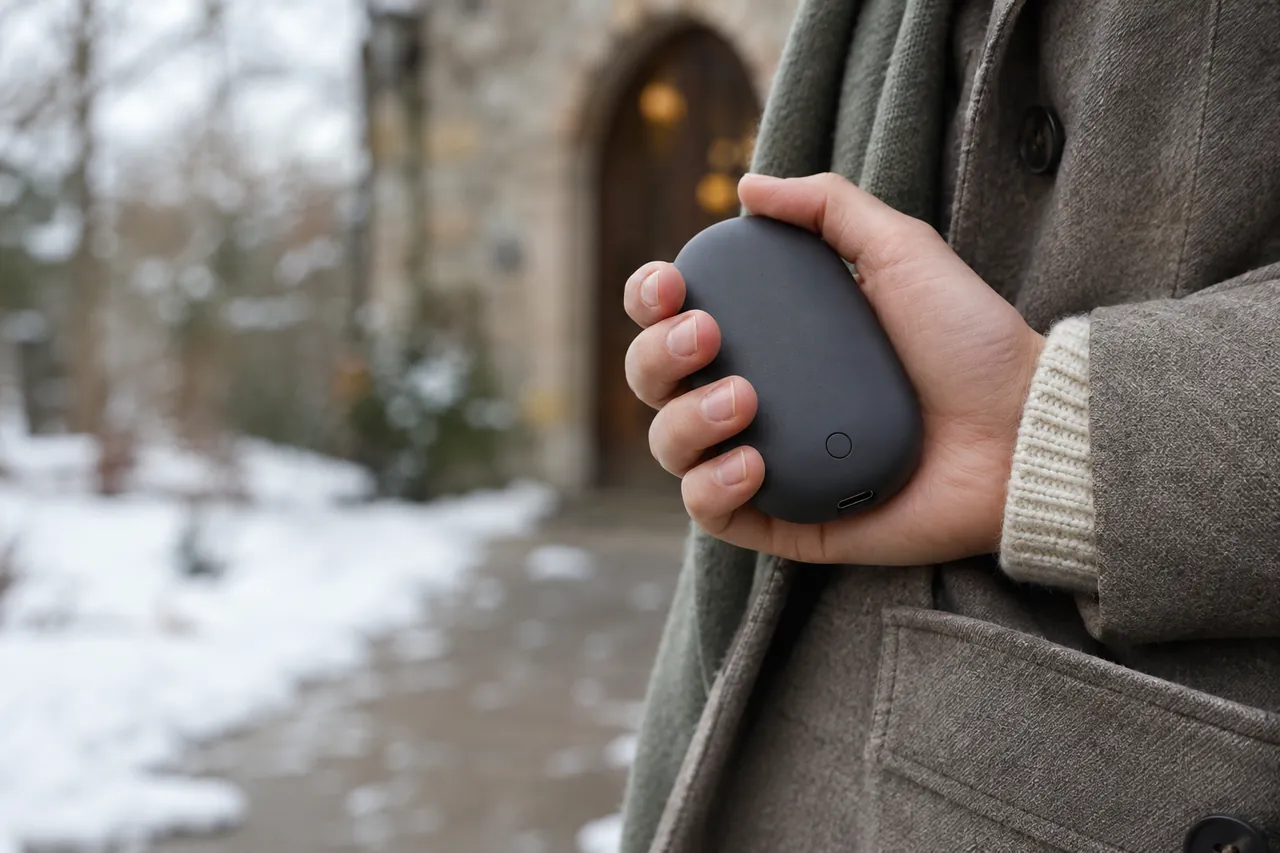
A single warmer is straightforward to carry. It can sit in a coat pocket or be held in one hand, then moved when you need the other hand free. Consider its shape and weight as well as the space it occupies. A rounded unit that feels comfortable in a bare hand may still be bulky in a narrow pocket.
A two-piece set provides a separate warmer for each side. GearJunkie describes the OCOOPA UT3 PRO as two independently rechargeable units that attach magnetically; its reviewers preferred using them separately and used the connection for storage. The product name alone does not establish whether a particular unit is included in the U.S. recall above. A separate Polish consumer-authority notice describes a Kolba safety campaign covering model UT4102, identified in reporting as UT3 PRO, because its battery may overheat or ignite. Do not use or charge a unit covered by that campaign; follow its return guidance.
Two units also mean two pieces to keep track of. Check how each is charged, whether both have their own controls and what comes in the package. If you often alternate between pockets, a single device may be enough. If both hands spend long periods in separate pockets, a pair may be more convenient.
The most compact product is not automatically the easiest to use. Look at the position of the button and indicator light. A small control can be harder to find with gloves on, while a large device may crowd the pocket you also use for keys or a phone. Check dimensions against the pocket or bag where the warmer will actually travel.
Read battery claims as a range of conditions
A stated maximum runtime is useful for comparing listings, but it does not describe every use. Check which setting and conditions accompany the claim. GearJunkie notes that cold conditions can affect rechargeable devices and, for one reviewed model, reports that heat did not last as long as advertised. Treat a maximum as a product claim with conditions rather than a guaranteed duration for a winter outing.
Think through the whole day: when will the warmer be charged, how long will it be away from a power source, and will it be used continuously or only during breaks? A pair with independently charged pieces may need a different charging routine from a single device. Keep the appropriate cable with the unit and follow its instructions.
Some models can also charge another device. GearJunkie describes the Zippo HeatBank 9 as having an output for a phone or other small electronics. Its detailed OCOOPA UT3 PRO review says that model lacks such an output, even though the guide’s comparison table describes it differently. Check the actual product documentation if phone charging matters to you.
Using one battery for more than one task means planning for both tasks. If your phone needs power as well as your hands, do not assume a hand warmer will provide its full stated warming duration after charging another device. Compare the stated functions and use limits for the model rather than inferring them from a port’s shape.
Choose controls you can read and reach
Heat settings vary. A clear indicator makes it easier to tell which setting is active, and an accessible switch helps when you are wearing gloves. Check whether both pieces in a set can be controlled individually and whether they warm on one or more surfaces. These details are model-specific.
Avoid judging a warmer by its highest listed temperature alone. A device can become uncomfortably hot against skin, especially when it is held in one position. Follow the product’s contact and use directions, monitor your skin, and stop if warmth becomes painful or irritating. A comfortable setting and the ability to reposition the unit matter more than chasing a high number.
GearJunkie describes the UT3 PRO as having four heat levels and protective covers over its charging ports. Other reviewed models have different controls and construction. Compare the features that matter to your own routine instead of assuming a feature transfers across a brand’s range.
Rechargeable, disposable or reusable gel?
Rechargeable warmers can be used again after charging and allow the user to switch them on when needed. The trade-off is that they need a charged battery and a suitable way to recharge. If you are away from a power source, the charging plan matters as much as the device itself.
Disposable air-activated packets are another format in GearJunkie’s guide. They do not need charging and can be compact, but they are used for one session and then discarded. Follow the individual packet’s directions for activation, placement and disposal; do not assume every packet has the same wearing time.
Reusable gel packs work differently again and must be reset according to their own instructions. They may suit a short outing or indoor use where the reset method is available. Compare the complete routine—activation, handling, duration and preparation for the next use—with the way you actually travel.
Cold sensitivity and Raynaud’s: use care with direct heat
The NHS explains that Raynaud’s can cause fingers or toes to change colour and feel cold, numb or painful in response to cold or stress. Keeping the whole body warm, including hands and feet, is part of its self-care guidance. Gloves, layers and warm surroundings can be useful alongside any warming product.
Numb skin may make it harder to judge how hot a surface is. Great Ormond Street Hospital advises moving somewhere warm during an episode and cautions that numbness can make water temperature difficult to judge. If you have reduced sensation, circulation problems or Raynaud’s, follow your clinician’s advice about warming methods and the warnings for the specific device.
The NHS recommends medical assessment when symptoms are severe, getting worse, affect daily life, occur only on one side, or accompany joint pain, rash or muscle weakness. Mayo Clinic advises prompt medical attention for someone with severe Raynaud’s who develops a sore or infection on an affected finger or toe. A hand warmer does not replace that assessment.
For joint stiffness, Cleveland Clinic discusses heat and cold as different approaches to arthritis discomfort. Its discussion concerns symptom management rather than a recommendation for a particular electronic hand warmer. Follow the device instructions and your care plan; avoid applying heat to skin that is injured or cannot sense temperature normally.
Charge and store it as the instructions specify
Use the charging equipment specified for the device, inspect the cable and connector for damage, and follow the stated charging and storage directions. Keep the unit and connections dry unless the exact model’s instructions permit the relevant exposure. A water-resistance claim for one model does not make every hand warmer waterproof.
Stop using a device that is damaged, swollen, unusually hot while charging or producing an unusual smell. Keep it away from combustible materials and follow local guidance for battery disposal. The US Consumer Product Safety Commission notes that lithium-ion batteries need care during charging, use and storage.
Before buying, compare the pair or single-unit format, controls, realistic charging routine, pocket fit and the exact instructions. Those details turn a broad search for rechargeable hand warmers into a choice suited to the time you spend outdoors.
References
GearJunkie: The Best Hand Warmers of 2026
Mayo Clinic: Raynaud’s disease symptoms and causes
Great Ormond Street Hospital: Raynaud’s phenomenon
Cleveland Clinic: Ice or heat for arthritis
US Consumer Product Safety Commission: Batteries
US Consumer Product Safety Commission: OCOOPA hand warmer recall