
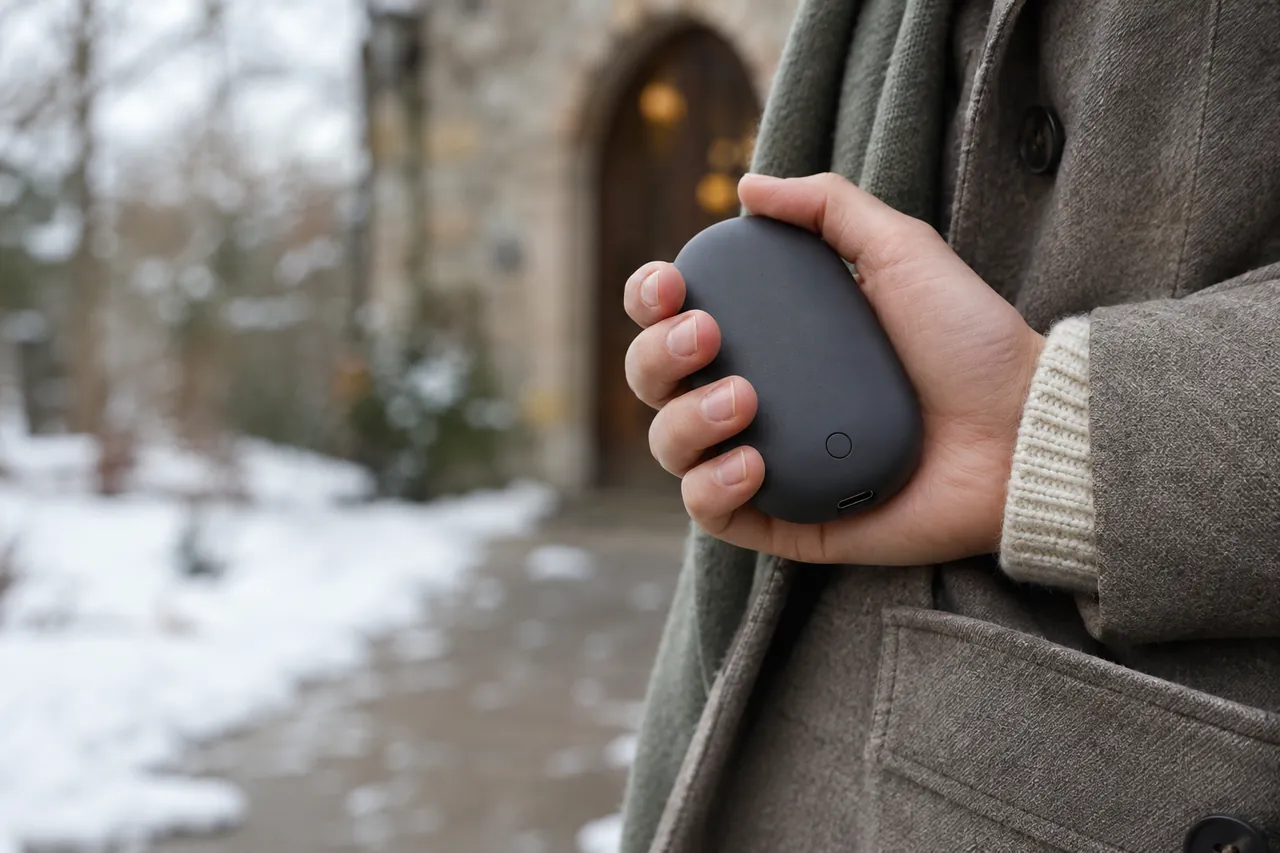
A video can answer questions that a product photograph cannot: how large does a hand warmer look in someone’s hand, where is its button, and what arrives in the box? When searching for rechargeable hand warmers on YouTube, the useful habit is to separate what the creator shows from what the package or product listing says. Both can help, but they answer different questions.
Introduction
This guide follows one published review as an example, then shows how to compare its observations with written information, practical care directions and a current recall notice. The aim is to leave with a better shortlist, not to assume that every warmer works like the one in a single video.
Begin with the exact item on screen
A title such as “rechargeable hand warmer review” may cover a single unit, a magnetic pair or a device with another function. Look for the model name on the box or in the video description and compare it with the listing you are considering. A similar shape or colour is not enough to establish that two products have the same controls, battery or accessories.
In one GoTechGeek video, the presenter reviews a compact OCOOPA magnetic two-pack. The presenter says that the units were sent to the creator for the video. That is useful context when interpreting the demonstration: viewers can see the sample being handled while keeping the relationship and the scope of the review in mind.
The creator shows two units that attach magnetically and describes them as small enough for a jacket pocket. The video also shows a carrying pouch, two wrist straps and a cable with one USB-A end and two USB-C ends. Those are observations about the sample shown in that review, not a guarantee that every seller includes the same accessories.
Watch for how the product is handled
Pause when the reviewer turns the warmer in their hand. A close view of the controls can help you judge whether a button is easy to find or whether an indicator is visible. If the reviewer separates a pair, observe how the pieces are stored and whether each appears to have its own control. Then check the instructions for the exact version you intend to use.
In the GoTechGeek demonstration, the presenter cycles through three settings, shows a battery indicator and demonstrates the sample returning to its previous setting after being switched off and on. Those details are useful for understanding that sample’s interface. They do not establish the button sequence or memory behaviour of a different model.
Fit deserves attention too. A compact device can still be too rigid or thick for a close-fitting glove. GearJunkie’s review of a different model, the OCOOPA UT3 PRO, notes that it does not fit in gloves or boots like smaller disposable warmers. Consider the actual pocket or bag you use, rather than judging size from a close-up alone. A later Polish consumer-authority notice describes a Kolba safety campaign covering model UT4102, identified in reporting as UT3 PRO, because its battery may overheat or ignite. Do not use or charge a unit covered by that campaign; follow its return guidance.
Separate an observation from a specification
A reviewer may read a temperature or runtime from packaging and also show an observation on camera. Keep those two statements separate. In the GoTechGeek video, the presenter reports a surface temperature reading while testing the sample. That observation belongs to the particular demonstration and measuring method; it is not a certified temperature limit for all units or all conditions.
A demonstration of one sample does not establish how multiple devices perform across every setting. If a video does not show those details, use it for the information it actually provides: the appearance, handling and the creator’s reported experience. Look at the model’s instructions and other relevant reviews for the remaining details.
A runtime claim is most useful when it states the setting and the conditions. Ask whether a duration applies to one unit or a pair, whether both pieces are running at once and whether the figure is a maximum or an observed result. A short unboxing cannot by itself show how long a warmer will run throughout a day outdoors.
Avoid turning a capacity number into a promise about warmth. Two devices can have different heating arrangements, settings and operating instructions. Compare the figures given for each named product, the size you are willing to carry and how frequently you expect to recharge it. A review is a starting point for that comparison.
Use the written listing as a second view
Once you know the model, read the current product page and the included-parts list. Look for the number of pieces, cable, pouch and controller description. Check whether the listing identifies the exact variant shown in the video. Seller pages and packages can change, so the order information and the instructions that arrive with the device matter.
Some rechargeable warmers are also sold as power banks, but a USB charging port does not prove that a device can charge a phone. In the GoTechGeek review, the presenter says the sample cannot be used for that purpose. Treat that as a statement about the reviewed sample and check the output information on the exact product you are considering.
The video also shows why the warming surface matters. Around 1:12, the presenter feels heat on the metal side of the sample and says its plastic side does not heat. Later, the presenter joins the two pieces magnetically for storage. For a pocket comparison, note which side faces your hand and whether the shape is comfortable when the pieces are separate. These observations apply to the sample in that video; the OCOOPA collection contains several different products.
Check the date—and check the recall notice
A video remains online after it is published, so it may predate a later safety notice. Before using a device you already own, compare the model number on the unit with the current notice from the relevant safety authority. Keep the box or purchase record if it helps you identify the precise product.
On July 30, 2026, the U.S. Consumer Product Safety Commission announced a recall of OCOOPA rechargeable hand warmers with model numbers UT3053, UT3056, ZLS-118, ZLS-118S, ZLS-118D, H01 and H01(PD). The CPSC says the batteries in affected units can overheat and ignite. The notice identifies the model and three-digit batch number on the underside.
If your warmer matches an affected model, stop using it and follow the official recall instructions. The notice explains the refund process and asks consumers to mark the device and submit a photo showing the marking, model and batch number. It also gives specific disposal guidance and says not to put the defective device in ordinary trash, curbside recycling or retail battery collection boxes.
The OCOOPA notice lists particular models; it does not automatically include every product from that brand. Separate CPSC recalls announced in October 2026 cover HotHands rechargeable model H163650 and Gobi Heat model UT3053. Match the brand and model on the physical unit with the relevant notice, stop using an affected warmer and follow the matching refund and disposal instructions. A video thumbnail alone cannot establish whether your device is covered.
Read charging directions for your own device
A video can show a cable being connected, but the safest source for your device’s charging arrangement is its own manual. Use the specified cable and power supply, and follow the directions on whether the unit should be switched off or how a pair should be positioned during charging. A magnetic connection alone does not establish a universal charging rule.
Inspect the casing, cable and port for visible damage. Keep the device and connection away from moisture unless the instructions for that model permit a particular exposure. Stop using a unit that is swollen, damaged, unusually hot or behaving abnormally, and do not open the case to repair the battery yourself.
Pay attention to skin comfort as well. Avoid direct heat on numb skin, where it can be harder to notice excessive warmth. The NHS describes colour changes, numbness and pain as possible Raynaud’s symptoms and recommends keeping warm in cold weather. A hand warmer is a comfort accessory and does not replace appropriate medical care.
Five questions to carry into the next review
First, what is the complete model name, and does it match the listing? Second, does the creator say how the sample was obtained? Third, which points are actually demonstrated, and which are read from a package? Fourth, what conditions were used for any runtime or temperature test? Finally, has a relevant recall been issued since the video was recorded?
You do not need every video to be a laboratory study. A concise demonstration can be helpful for seeing a clasp, button or pocket fit. The distinction is simply that a video showing one sample should not be made to answer questions it did not test. Combine the useful visual evidence with the model’s written instructions and current safety information.
Sources
GoTechGeek, OCOOPA magnetic hand warmer review
GearJunkie, hand warmer review