
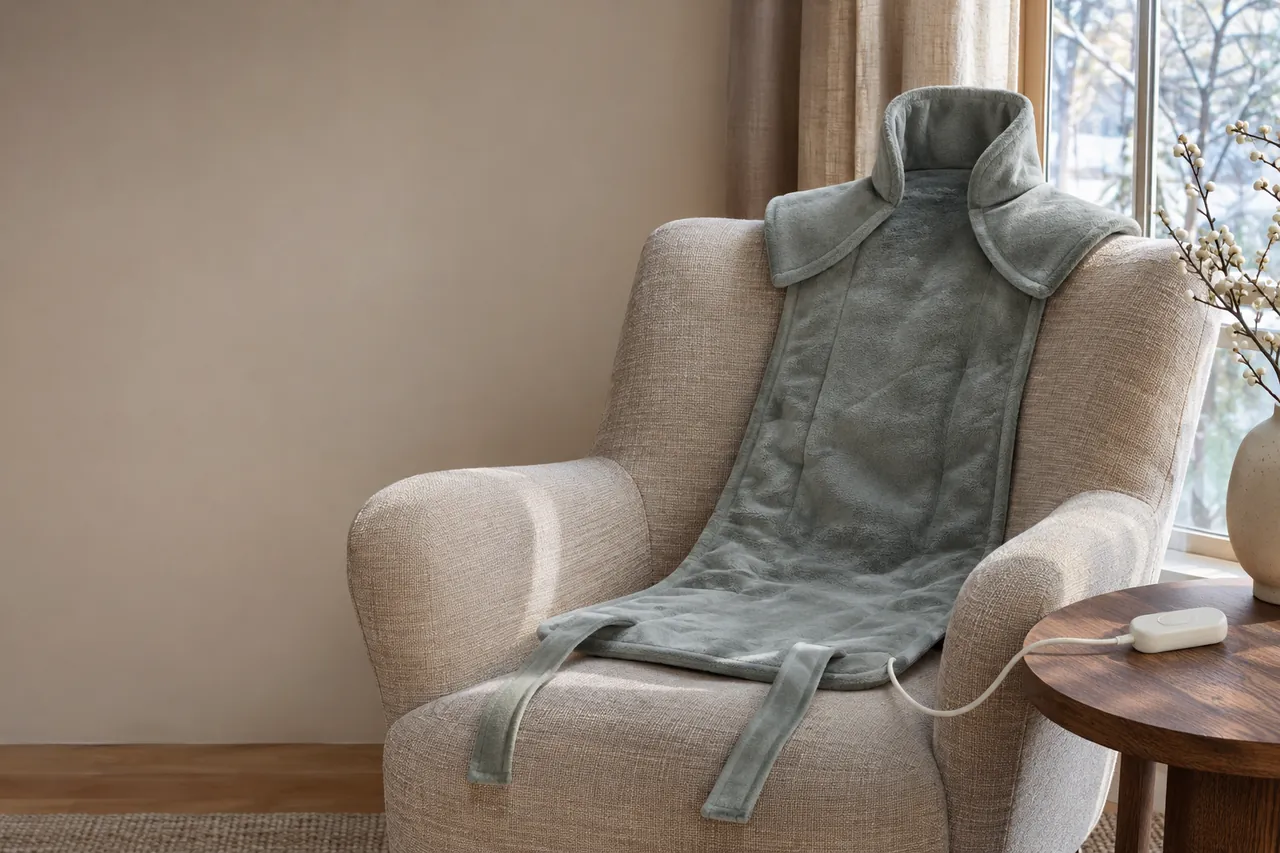
A reusable lower back heat pad comes with a repeat-use routine. A corded pad needs an accessible outlet, a rechargeable wrap needs charging, and a microwaveable pack needs the right preparation before each use. Think beyond the first session: how will you prepare it, clean it, and store it ready for next time? The best fit depends on those steps as well as the shape of the warming area.
Introduction
The NHS lists a wrapped heat pack as an option for stiffness or muscle spasms. This guide starts with practical use and skin safety, then compares the formats and fit details that shape a repeatable routine.
Warmth, Cold, and Session Timing
Understanding how surface warmth interacts with lower back tissue helps set realistic expectations for daily self-care.
How Surface Warmth Soothes Tight Muscles
Spine-health describes warmth as a way to help with some lower-back discomfort and stiffness. The NHS lists a wrapped heat pack among options for stiffness or muscle spasms.
Choose a comfortable warmth level and follow the instructions for your product.
For a reusable pack, preparation and skin protection depend on its design: a microwaveable pack and a plugged-in pad need different handling.
The NHS also recommends staying active and continuing everyday activities where possible.
Heat vs. Cold Therapy
The NHS describes wrapped cold packs as an option for pain and swelling, alongside heat packs for stiffness or muscle spasms.
Cold packs: Follow the pack’s instructions and use a fabric covering as directed.
Heat: Use comfortable warmth and check the skin during the session.
Some products offer dry or moist warmth. Use moisture only where the product instructions permit it.
Recommended Session Timing vs. Automated Timers
Spine-health discusses shorter heat applications for minor back tension; follow the particular product’s directions and stop if skin becomes uncomfortable or irritated.
An automatic shutoff is a device feature, not a recommendation for uninterrupted contact with skin. Use the pad while awake and let skin cool between sessions.
Daily Safety Precautions: Posture, Monitoring, and Burn Prevention
Operating any heating pad safely in your home requires practicing active skin monitoring, respecting posture boundaries, and adhering to essential safety rules.
Posture and Physical Boundaries
Use While Awake Only: Never wear or operate any electric heating pad, battery-powered wrap, or microwavable heat pack while sleeping or napping. Reduced sensory awareness during sleep prevents you from detecting thermal discomfort or rising skin temperatures, dramatically increasing thermal burn risks.
Keep body weight off the pad: Do not sit or lie on a localized pad. Compression can trap heat and increase burn risk.
NEVER Use While Driving: Users should never wear or operate an electric heating pad while driving a vehicle. Adjusting digital controls or responding to thermal discomfort creates dangerous driving distractions.
Dermatological Safety and Burn Prevention
Comfytemp notes that reduced skin sensation can make excessive heat harder to notice. Do not use a heating pad on skin where you cannot feel heat normally.
Check skin during use and follow the product directions for any protective barrier:
Skin protection: Use a fabric barrier as directed for the particular product.
Active Skin Monitoring: Inspect your skin underneath the pad frequently during every session. If the pad feels uncomfortably hot, or if skin shows redness or irritation, stop using the device immediately and turn off the power supply.
Electric Pads and Non-Electric Heat Packs
The practical difference is what you do before the next session. An electric pad needs a suitable power source; a non-electric pack needs to be prepared according to its own instructions. Think about where that preparation will happen as well as where you want to use the pad.
1. Reusable Electric Heating Pads (Corded and Battery-Powered)
Electric heating pads use a power source to produce warmth. The Comfytemp collection includes several formats, so check the specifications of each individual product:
Corded pads: A cord connects the device to an outlet, making it suitable for an awake break near a power source.
Rechargeable wraps: Some use a battery and an adjustable strap, providing warmth without a trailing wall cord during use.
Controls and settings vary by model. Look for controls you can see and reach comfortably.
2. Reusable Non-Electric Heat Packs
Non-electric reusable heat pads rely on passive thermal retention rather than continuous electric power:
Microwavable packs: Some non-electric grain or gel packs are designed for microwave heating. Follow the exact directions on the individual product.
Hot water bottles: These provide non-electric warmth and have their own filling and covering instructions.
Reusable heat packs: Spine-health describes reusable sodium acetate packs that activate by snapping a metal disc. To prepare that type for another use, the source describes immersing the pack in boiling water and allowing it to cool. That reset process belongs to this type of pack, not every gel or grain pack; use the directions supplied with the one you own.
For example, Comfytemp’s Microwavable Heating Pad for Lower Back (K9307A60) uses flaxseed, clay beads and adzuki beans. The manufacturer describes a 15-by-10-inch heating area and an adjustable strap. Unlike an electric wrap, it needs preparation in a microwave before a session; compare both the pad area and strap length when deciding whether its shape suits you. Follow the instructions supplied with this specific pack each time.
Check whether your pack belongs in a microwave
Understanding correct heating methods for different appliance types is essential for household safety:
Never microwave an electric heating pad, cord, controller or battery.
MICROWAVE ONLY PERMITTED NON-ELECTRIC PACKS: Only microwave a non-electric pack when its manufacturer labels it for microwave use. Follow the heating directions and limits for that exact pack.
Which Kind Fits Your Routine?
Think about where you will use the pad most often. A corded electric model needs a nearby outlet; a rechargeable wrap needs a charged battery. A non-electric pack may be useful when you want warmth without a cord during use, provided its preparation method fits your routine. Check the dimensions and strap range before choosing. A wrap can hold the warming area in place, while a flat pad can be positioned over the area without trapping it beneath your body.
A contoured lumbar wrap with adjustable straps can help hold the warming area in position. With a flat pad, arrange it as its instructions direct and avoid placing body weight on it.
Preparing each product for use requires strict attention to individual product labels and safety warnings:
Electric Heating Pads: Always inspect power cords, battery connectors, and fabric covers for wear before turning on the device. Never place an electric heating pad or battery pack inside a microwave oven.
Non-Electric Microwavable Packs: Heat gel or grain packs ONLY if explicitly labeled as microwavable. Strictly follow the manufacturer's exact wattage guidelines and heating times to prevent fabric scorching or gel rupture.
Read the care instructions for the exact product before cleaning or storing it. Remove electrical components only as directed, let washable parts dry fully, and protect the pad from crushing or damage between uses.
What to Compare Before Buying
Before choosing, compare the heated area with the strap’s reach. Then consider where you will prepare the pad and how it will be cleaned and stored between uses.
1. Shape and Ergonomic Fit
Personal heating pads come in two primary physical formats:
Flat pads: These can be placed over the area of interest without compressing the pad under your body.
Strapped wraps: An adjustable belt can hold the pad in position without relying on a chair back.
For a strapped wrap, measure where the belt will fasten and compare that circumference with the stated adjustment range. Check the dimensions of the heated panel separately, since the belt length and warming area are different measurements. The fastening should be easy to release and should not restrict breathing. Follow the particular product instructions for placement and skin contact; some devices must not be covered by clothing or other insulating material while in use.
2. Power Source Trade-Offs
Match the power architecture to your lifestyle:
Choose a corded pad when an outlet is conveniently located near your preferred rest spot.
Choose rechargeable battery belts for active mobility around your home or office during daytime rest breaks.
Choose microwavable non-electric packs for simple, wire-free warmth without electronic components or battery management.
3. Fabric Care and Maintenance
Maintaining hygiene preserves fabric softness over extended use:
Electric pads: Follow the model’s cleaning directions, remove the electrical components specified, and allow washable parts and connectors to dry fully before reconnecting.
Non-electric packs: Follow the specific pack’s cleaning instructions; materials and washable components differ.
4. Storage Guidelines
Proper storage protects internal heating elements:
Store electric pads according to their instructions, avoiding crushing and sharp creases.
Store batteries as directed by the product instructions.
Store non-electric packs as directed and inspect them for damage before reuse.
Emergency Warning Signs: NHS Red Flag Guidance
Some symptoms accompanying back pain require immediate emergency assessment.
According to official back pain clinical guidance from the National Health Service (NHS), you should seek immediate emergency medical assessment (going to an emergency room / A&E or calling emergency services) if your back pain occurs alongside any of the following urgent red flag symptoms:
Bladder or Bowel Changes: Sudden loss of bowel or bladder control, difficulty urinating, or sudden inability to pass urine.
Saddle Area Numbness: Sudden numbness, loss of feeling, or a pins-and-needles sensation around your genitals, buttocks, or back passage (anus).
Symptoms in Both Legs: Pain, tingling, weakness or numbness in both legs.
These symptoms require emergency assessment rather than home self-care. NHS guidance also calls for emergency help when back pain occurs with chest pain, changes in sexual sensation or function, or follows a serious accident. Sudden severe pain, pain that is worsening quickly, or back pain with feeling hot, cold, shivery or generally unwell warrants urgent medical advice.
Before putting the pad away, check what the next use will require: recharge the battery when needed, reset a reusable chemical pack only as directed, and store each item without crushing or sharp folds. Keeping the instructions with the product makes it easier to repeat the correct preparation and cleaning steps.
Sources
Comfytemp — Heating Pad Safety Burn: Who's Most at Risk at Home https://comfytemp.com/blogs/news/heating-pad-safety-burn-risk
Comfytemp — Electric Heating Pads for Pain Relief & Muscle Relaxation https://comfytemp.com/collections/heating-pad
Spine-health — Benefits of Heat Therapy for Lower Back Pain https://www.spine-health.com/treatment/heat-therapy-cold-therapy/benefits-heat-therapy-lower-back-pain
Spine-health — How to Apply Heat Therapy for Pain Relief https://www.spine-health.com/treatment/heat-therapy-cold-therapy/how-apply-heat-therapy
National Health Service (NHS) — Back pain - NHS https://www.nhs.uk/conditions/back-pain/
Comfytemp — Microwavable Heating Pad For Lower Back (K9307A60)