
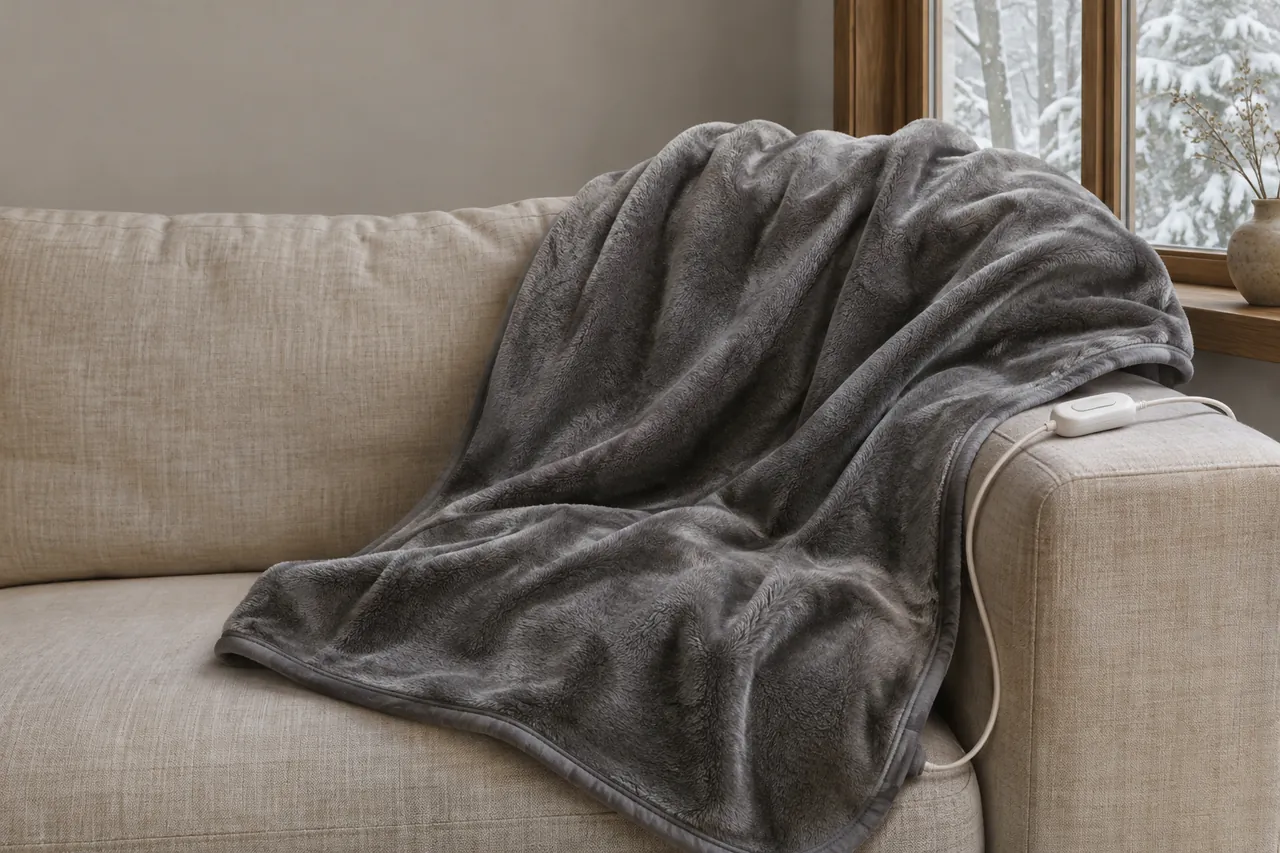
A guest bed may need a removable cover. A fitted underblanket may appeal when the heated layer is meant to stay on the mattress. A fuller heated comforter is another option. Start with where the warmth belongs in your own bed, then compare dimensions and controls.
Choose the layer before the label
A heated overblanket is intended as an upper cover. Its appeal is a familiar blanket-style layer that can be removed when not needed. Follow the specific directions for its position and any permitted layers. Do not lie or sit on an active top blanket, fold or bunch it while operating, or tuck it in where the instructions prohibit tucking.
A heated underblanket or mattress pad is designed for placement on the mattress as directed. Depending on its design, it may attach with a fitted skirt or another fastening system. The fit question is therefore different: its dimensions, attachment method and mattress-depth range need to correspond to the actual bed. A generous overhang is not the same thing as a fitted pocket.
A heated comforter offers another construction: the heated element is incorporated into a fuller comforter-style layer. Bedsure’s comparison describes differences in construction and feel between heated blankets and comforters. If you prefer a fuller bed covering, compare the actual product’s size, weight and care requirements; thickness alone does not establish a particular temperature or running cost.
The three options should not be swapped casually. Choose the product for its intended position and check the mattress and bed-frame instructions too. Some materials, adjustable bases or additional bedding arrangements have restrictions. Follow the directions for both the bed and the heated product rather than inferring compatibility from a single-size label.
For an occasional guest bed, a removable top layer can be put away between visits. A fitted pad keeps the surface of the bed less changeable once installed, while a comforter combines a fuller cover and the heated layer in one piece. Consider how often you remake the bed and where a seasonal item will be stored.
A twin blanket as a measuring example
For a concrete example, Sunbeam lists its Greystone Microplush Twin heated blanket at 62 by 84 inches, with 12 heat settings and a 12-hour automatic shutoff. Those measurements describe that particular blanket, not the dimensions of every single mattress or every twin blanket. The auto-off is a product feature; its instructions determine how the blanket is intended to be used.
The terms “single” and “twin” often appear in searches for one-person beds, but naming conventions depend on the market and the seller. A product labelled single in one region is not automatically identical in size to an item labelled twin elsewhere. Even within a market, the dimensions of a mattress and the dimensions of an overblanket are different pieces of information.
Measure the mattress width and length with the bedding pulled back. If you are considering a fitted underblanket, measure the depth as well, including any attached pillowtop. Write down the numbers and check the product’s size chart and attachment instructions. A fitted layer must match the mattress in the way its maker specifies; a loose top blanket is measured for coverage instead.
With a top blanket, decide how much coverage you want at the sides and foot of the bed. A rectangle drawn to scale can help you compare the listed blanket dimensions with the mattress before buying. Remember that the flat measurements describe the fabric laid out, not the drape after it is arranged around a sleeper.
A longer single mattress, an older bed or a compact guest bed makes measuring especially helpful. Do not buy solely by a label or assume the heated area extends to every edge of the fabric. If a product page provides both overall and heated-area dimensions, look at both. They answer different questions: one describes the fabric you arrange, the other describes the area identified as heated.
For example, if your mattress measures 39 inches across, centering the 62-inch-wide Greystone Twin cover leaves 23 inches of fabric beyond the mattress width in total—about 11½ inches on each side before the blanket is arranged around a sleeper. Measure your own bed and follow the blanket’s placement instructions; the calculation describes flat fabric dimensions, not a fixed drape.
Put the controller where it will be used
A single-bed shopper may find a simple, readable controller more useful than features designed for a shared bed. Look at how the controls are labelled, where they will sit and whether you can reach them from your normal position. The number of settings tells you how many choices the controller offers; it does not specify an exact temperature for each setting or prove one product will feel warmer than another.
The Sunbeam Greystone Twin has a digital controller with 12 settings and a 12-hour auto-off. Sunbeam says its display dims after 10 seconds and remembers the last setting—details that matter if you prefer a less prominent bedside display and do not want to reset the level each time. Other models have different controls and shutoff intervals. Use the selected model according to its instructions and switch it off when finished.
If you prefer to warm the bed before getting in, check whether the particular product permits that routine and how its directions describe it. There is no need to borrow a fixed preheating time from a review of another model. For someone who wants an unheated bed during sleep, switching off after the permitted preparation period is a straightforward preference to consider when comparing controls.
Sunbeam lists a 19-foot cord length for the Greystone Microplush blanket. Use the product’s connection diagram to understand the arrangement and plan a route that keeps the controller accessible without pulling on the lead. Keep the cord clear of walkways, furniture legs and places where it could be pinched; the listed length alone does not establish the usable reach of each segment.
Do not stack operating heated bedding or assume an extra cover is allowed over an active electric blanket. Keep the item flat as directed, inspect its fabric and connections, and stop using it if damage is visible. A timer is not a substitute for arranging the product correctly or following restrictions for the person who will use it.
Make cleaning part of the choice
Look at the care label and the full product directions before choosing a blanket. A machine-washable label is a starting point, not a complete washing programme. The Sunbeam Greystone listing says this model is machine washable and dryer safe; its detailed instructions determine preparation, settings and drying. Other single-bed products may have different requirements.
Switch off and unplug heated bedding before cleaning. Remove any detachable controller as instructed, keep electrical components out of water, and follow the prescribed washing and drying method. Let the blanket and connections dry completely before reconnecting. When storing it, follow the product’s directions and avoid sharp creases, tightly wound cords or heavy objects pressing on the fabric.
Review guides from Good Housekeeping and Forbes Vetted can help identify the details their reviewers considered. Bedsure’s comparison also provides a useful way to think about blanket and comforter construction. Match any review to the exact product and size it discusses, then compare the current product’s dimensions, care instructions and approved use with your bed.
Keep the care label and instructions close to the bedding so they remain available at the first wash and when the season changes. A suitable size, an accessible control and a care routine that fits your home are all part of the same decision.
For the next comparison, place your measured dimensions beside each listing and note whether it describes a fitted pad, an overblanket or a comforter. That simple distinction keeps an attractive size label from disguising a very different way of dressing the bed.
References
Sunbeam — Greystone Microplush Heated Blanket
Good Housekeeping — Best electric blankets
Forbes Vetted — Best heated blankets