
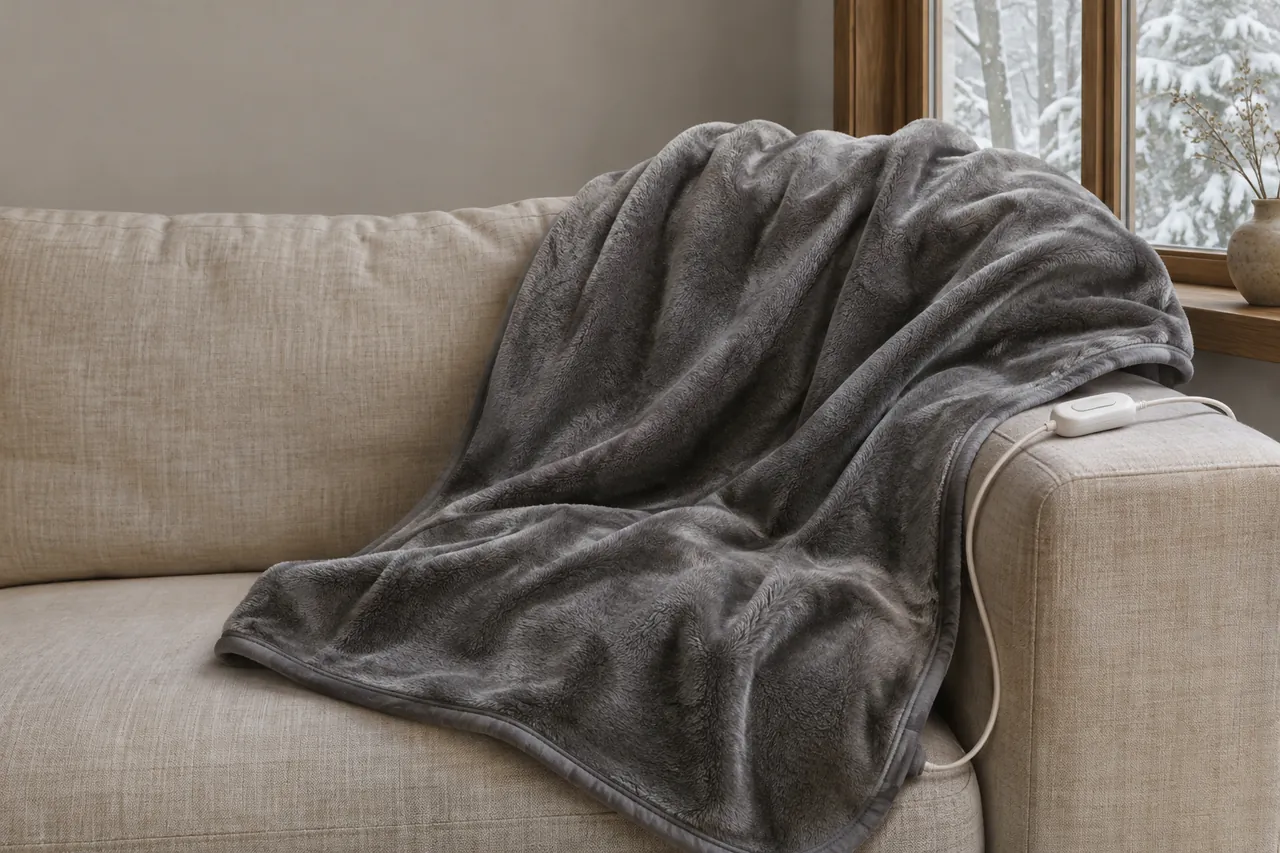
West Yorkshire Fire and Rescue Service advises against using an electric blanket if a person experiences incontinence, even when protective pads are worn. For someone considering an electric blanket for bedwetting, that guidance is the starting point.
Introduction
Moisture and electrical bedding are a safety concern. A protective pad or waterproof cover should not be assumed to make an electric blanket safe in this situation. Non-electric bedding offers ways to keep the bed comfortable and easier to change.
If electrical bedding becomes wet
If an electrical blanket becomes wet, do not continue using it or switch it on to dry it. Isolate power only if this can be done safely.
Do not touch wet plugs, outlets or live electrical components.
Power: If it is safe to reach the switch or circuit breaker without touching wet components, switch off the power. If it is not safe, keep clear and seek appropriate help.
Drying: Never switch on an electric blanket to dry it.
Care: Follow the specific product’s care instructions, and do not use it while wet. Stop using a damaged appliance.
What the fire service advises
The selected fire service guidance addresses the use of electric blankets when incontinence is present.
West Yorkshire Fire and Rescue Service says not to use an electric blanket if you experience incontinence, even if you wear protective pads. This is the service’s advice for electric blankets.
A low-voltage label or an added waterproof layer is not a substitute for that advice. Do not improvise layers around electrical bedding.
Electrical labels: Do not assume that a voltage or protection label permits a product to be used in a wet bed.
Protective products: The fire service’s advice applies even when protective pads are worn.
Covers: An added cover does not by itself establish that an electrical appliance is suitable for exposure to moisture.
Follow the fire service advice rather than relying on a makeshift barrier.
Build an easier-to-change bed
Begin with the mattress and the sheets rather than an electrical appliance. Select a protector that fits the mattress and can be washed or wiped according to its label. Check the dimensions, how it is secured and how long it takes to dry. A spare protector can be useful when the first is being cleaned, but no protector needs to be treated as a guarantee that electrical bedding is safe.
Keep a clean fitted sheet, blanket and any usual continence supplies together in a convenient place. If bedding becomes wet, a prepared set can make a change less disruptive. Use the cleaning method on each item’s label, and replace damp bedding with a clean, dry set. A laundry bag or separate container can make it easier to move used bedding without leaving it in the sleeping area.
Think about who makes the bed and what is practical for them. A fitted sheet that is difficult to remove, a very heavy duvet or a protector that takes a long time to dry may complicate a nighttime change. Compare the weight, fastening and care requirements with the person’s mobility and the available laundry facilities. The aim is a routine that protects comfort and dignity while remaining manageable.
For warmth, use unheated bedding layers that are comfortable for the person and easy to remove if they become too warm. A soft blanket, suitable sleepwear and a comfortable room can be considered together. The best arrangement depends on individual preference and the conditions in the room; it does not require a fixed bedroom temperature or a claim about sleep stages.
If another person provides help, agree in advance where supplies are stored and how the bed will be changed. Speak with the person privately about what assistance they want and preserve as much independence as practical. Bedwetting can affect children and adults for different reasons, so avoid making assumptions about its cause or presenting it as a personal failing.
A bedside setup that works at night
A useful bedside setup is one that a sleepy person can manage without searching through cupboards. Keep a small light within reach, clear the route to the bathroom, and place fresh bedding where it can be found quickly. If someone helps with changes, agree where supplies belong and leave enough space to move comfortably around the bed.
Non-electric warmth
Consider non-electric ways to adjust the sleeping environment:
Unheated layers: Try a light blanket over a comfortable sheet, with another layer nearby for cooler nights. Separate layers are easier to adjust than one very heavy covering and can be washed individually when needed.
Room comfort: Adjust the room for the person sleeping there, rather than aiming for a universal number. Keep any portable heater clear of bedding and follow its instructions. Check comfort at the beginning of the night and again when the seasons change.
Comfortable layers
Non-electric bedding can be selected for comfort and ease of care:
Sheets: Choose a texture the sleeper finds comfortable and check whether the fabric can tolerate the household’s usual wash. A spare fitted sheet in the correct size saves time; storing it folded with a pillowcase also makes the set easier to find.
Blankets: Compare weight, drying time and how easily the sleeper can move the layer. Two lighter blankets provide flexibility: one can go into the laundry while the other remains available, and each can be removed separately if the bed feels too warm.
Mattress protection
For non-electric bedding, a mattress protector can make cleanup easier. Follow its own care instructions.
Mattress protector: Check the mattress depth as well as its length and width. Look at how the protector fastens and whether it can be machine-washed or wiped clean. A good fit makes it easier to remake the bed without the protector bunching beneath the sheet.
Easy changes: A washable absorbent bed pad can help manage overnight leaks on non-electric bedding. The NHS describes washable bed pads as one option; keep a clean spare nearby and follow the care instructions for the particular pad. A lidded laundry container and spare sleepwear can complete the setup.
Understand the different bedding products
The names of bedding products describe different placements, but do not by themselves establish suitability for wet conditions.
An electric blanket is generally a loose covering, while a heated mattress pad is fitted to the mattress. An unheated mattress protector has a different job: it helps protect the mattress from moisture. For a bed affected by incontinence, start with non-electric bedding and follow the fire service advice above.
Electric blankets
A heated blanket is a fabric electrical product; its exact placement and care depend on the model. Keep it dry and follow its instructions.
Heated mattress pads
A heated mattress pad is designed for use on a mattress. The selected sleep guide discusses product features for human bedding; it does not establish an incontinence-safe arrangement.
Do not assume a mattress protector or absorbent pad makes heated bedding safe for a person experiencing incontinence.
Check the fire service advice and the product’s actual instructions rather than treating a bedding review as electrical-safety certification.
Why added barriers do not settle the question
Avoid adding plastic sheets or other improvised barriers to active electrical bedding. A layer intended to protect a mattress is not evidence that a heated product can be used in a wet bed.
Layering and placement
Products have specific placement and layering directions. Do not assume an extra waterproof layer is compatible with a heated blanket.
Combining heating products
Do not combine heating appliances or layer them together unless their instructions explicitly permit the arrangement.
Follow the stated advice
Use products only as their instructions describe. The fire service advice remains relevant even when protective pads are used.
Read bedding listings carefully
Product names can be confusing. “Waterproof,” “washable” and “heated” describe different features, and a listing may refer to a cover rather than the electrical component. Read the description for the exact item and check which parts may be washed. A detachable controller does not automatically mean every part of a blanket is washable, and a waterproof mattress protector is not an electrical approval.
Sleep Foundation’s product guides discuss heated blankets and heated mattress pads as bedding categories. They can help readers understand the difference between a loose blanket and a fitted product, but they do not establish a safe arrangement for incontinence. For that question, the West Yorkshire fire service advises against using an electric blanket even with protective pads.
When comparing listings, make a short checklist: identify whether the item is a protector, an absorbent bed pad, a loose blanket or a fitted mattress pad; measure the bed; then check fastening and care details. This keeps the shopping decision focused on the item’s actual job and avoids confusing a washable cover with an electrical product.
Support for persistent bedwetting
Bedwetting can affect children and adults, and a bedding change does not address every possible cause. The NHS describes several kinds of urinary incontinence and notes that support depends on the individual and the type of symptoms. A private, practical conversation can help someone describe what is happening without blame or embarrassment.
For children, the NHS suggests enough water during the day and regular toilet visits, including before bed. It says not to punish a child for bedwetting. If bedwetting continues after trying measures at home, or returns after more than six dry months, the NHS advises speaking with a GP. Adults can also seek individual support for persistent incontinence.
Use the fire service guidance, keep electrical bedding dry and choose a comfortable non-electric arrangement when incontinence is present.
Sources
West Yorkshire Fire and Rescue Service, Electricals: https://www.westyorksfire.gov.uk/electricals
Sleep Foundation, Electric Blankets: https://www.sleepfoundation.org/best-bedding/best-electric-blanket
Sleep Foundation, Heated Mattress Pads: https://www.sleepfoundation.org/best-mattress-pads/best-heated-mattress-pad
Sleep Foundation, Best Temperature for Sleep: https://www.sleepfoundation.org/bedroom-environment/best-temperature-for-sleep