
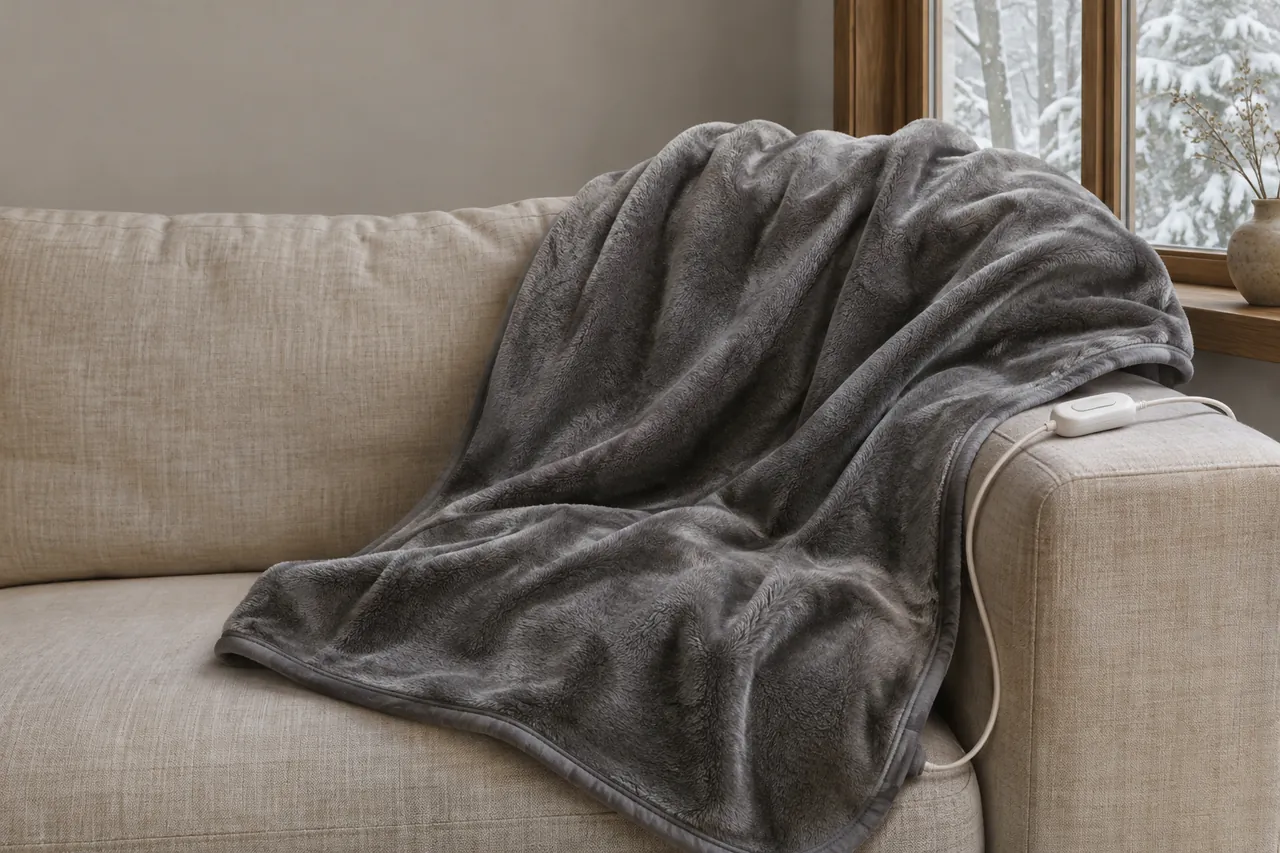
A powered campsite and a backpacking route present different choices for a cold night. In both cases, the sleeping bag and pad need to suit the forecast even when the power is off. That is the starting point for deciding whether an electric blanket or an integrated heated sleeping bag has a role in the trip.
A car-camping weekend with a hookup
For a car-camping weekend with an established power hookup, first choose the bag and pad for the forecast. If you also bring a powered item, use it only where its instructions and campsite rules allow, with a protected power route and an independent plan for a power interruption. A household blanket is not automatically appropriate simply because there is an outlet nearby.
At a powered campsite, read the site rules and the instructions for the equipment you bring. The UK Camping and Caravanning Club recommends a purpose-built hook-up lead for the camping unit, keeping electrical equipment dry and off the ground, and testing the residual current device each time you connect to the site supply. Keep cables clear of pinch points and walkways, and do not use damaged components. A suitable hook-up does not make an indoor-only blanket suitable for a tent.
Never run a generator in a tent, vehicle or other enclosed space, and do not use a stove or other combustion appliance to heat a tent. Carbon monoxide can build up in enclosed spaces. Follow the campsite’s rules and the equipment’s safety directions for location and ventilation. A powered sleeping product is not a reason to bring a combustion device into the sleeping shelter.
A generator placed outside also needs a location where exhaust cannot enter your shelter or someone else’s. The Camping and Caravanning Club warns that fumes can travel into nearby camping units, so account for neighbouring tents as well as your own when setting up.
A backpacking trip without a hookup
For a backpacking trip without a hookup, weight and battery management become part of the packing decision. A purpose-built heated sleeping bag may be an option to investigate, but compare its size, power requirements and use directions with the trip, and still choose passive insulation for the expected weather. Pack the battery and charger according to their instructions and keep a dry set of sleeping clothes protected in the pack.
If you bring a compatible battery-powered product, begin with the battery and charger specified for that product. Charge and pack them according to the directions, protect them from physical damage, and keep the electrical components dry. Know how to switch the device off and disconnect it without searching through the bag in the dark. Do not rely on a battery’s advertised runtime as the only insulation plan.
Plan what happens if the powered item stops working. Carry a bag and pad appropriate for the forecast, keep essential dry clothing protected from moisture, and have a route to warmer shelter or a way to end the trip if conditions become unsafe. A backup plan should not depend on the same battery or outlet that powers the optional heating device.
For a walk-in campsite, consider the space and weight of the entire system: bag, insulated pad, shelter, power bank and charging equipment. An integrated heated bag and its battery take up pack space that cannot be judged from the bag alone; compare the complete load with the distance you intend to carry it.
Read the sleeping bag and pad as a system
Before a trip, check the expected overnight low for the actual campsite and consider the conditions you could encounter there. Elevation, wind and damp ground can make a campsite feel different from a nearby town. Give yourself a margin in the sleeping system you choose rather than counting on an electrical device to make an otherwise inadequate bag work.
A sleeping bag retains warmth around the sleeper, while a sleeping pad provides insulation from the ground as well as cushioning. REI describes the bag, pad and clothing as parts of a sleep system. Assessing them together is more useful than shopping for a bag by name alone. A comfortable-looking inflatable mattress, for example, needs an insulation rating appropriate for the conditions; thickness by itself is not the same measurement.
Sleeping bag ratings are useful comparisons, not a promise that every person will feel the same in the same bag. REI explains that standardized tests use controlled conditions and a sleeping pad; clothing, weather, the shelter and the individual sleeper can all affect the result outdoors. Look for the actual rating on the bag, not only a number in its product name.
Where a bag provides both a comfort rating and a lower-limit rating, they describe different points on its tested range. REI presents the comfort rating as the more relevant reference for a colder sleeper and the lower limit as a reference for a warmer sleeper. Compare those labels with the forecast and your own experience, leaving room for conditions to change.
When a bag has no clearly stated comfort or lower-limit rating, use the information its maker provides and allow a generous margin for the conditions rather than comparing unlike labels as though they came from the same test. For a new or unfamiliar setup, a practice night close to a reliable shelter gives you a chance to learn how the bag, pad and clothing work together before a more remote trip.
For a sleeping pad, the R-value describes resistance to heat flow. A higher R-value means greater insulation from the surface underneath. REI notes that a bag and pad work together: pairing a sleeping bag with a poorly insulated pad in colder conditions can make the overall setup feel colder than expected. Use the pad’s stated rating and the supplier’s recommendations for the trip rather than judging warmth by appearance.
Imagine two trips using the same sleeping bag. At a sheltered summer campsite, a camper might bring a lighter pad suited to those conditions. On a colder trip, that same camper needs to reconsider both the pad and bag for the lower forecast. Adding a powered blanket does not change the tested rating printed on either item or remove the need for adequate insulation beneath the sleeper.
Which powered product is being considered?
A household electric blanket is designed around its own indoor bedding instructions. A sleeping bag creates a different arrangement: its close-fitting, insulated space can bunch or compress a separate blanket. Do not place a running household electric blanket inside, beneath, tightly around or over a sleeping bag, or sleep with one in that setup. A timer on the blanket does not establish that this arrangement is permitted.
A powered blanket marketed for camping still needs careful reading. Check the exact product’s intended environment, power source, placement and sleeping instructions. “Portable” describes how an item is carried; it does not automatically mean that it may be folded inside a sleeping bag, used in damp conditions or left on while someone sleeps. Follow the directions for the precise model and campsite setup.
An integrated heated sleeping bag is a different design. ActionHeat lists three built-in heating panels, three controller settings and an included rechargeable power bank for its model. The same power bank can charge a phone, but ActionHeat notes that using it for other devices reduces heating time. Keep that trade-off in mind when planning access to a separate means of communication and a backup sleeping system.
A small heating pad is another separate category. Ordinary heating pads are intended for localized use and should not be used while sleeping. Do not stack operating electric heating products or treat a pad as a substitute for the bag and ground insulation that the trip requires.
For the ActionHeat bag, the product page describes a gentle machine-wash cycle followed by flat drying. Disconnect the battery as directed and consult the instructions supplied with the bag before cleaning. This care information belongs to the integrated sleeping bag; a separate heated blanket or pad can have different requirements.
After the trip
After either trip, inspect the bag, leads and battery for damage. Clean and dry each component according to its own instructions, disconnecting removable power components as directed. Store the sleeping bag and electrical parts as specified. The best preparation for the next night outdoors is a sleep system that fits the conditions before you switch anything on.
Before the next outing, reassess the destination and overnight forecast: the same bag-and-pad combination may be suitable for one season but need a different insulation plan for another.
References
ActionHeat — Heated sleeping bag
REI — Sleeping bag temperature ratings
REI — Sleeping pad buying guide
REI — Backpacking sleeping bag guide