
Does a low setting on an electric blanket make it safe during pregnancy? The setting tells you how the device is configured; it does not tell you your body temperature or establish a pregnancy-safe level. The more useful questions are how much heat is being applied, whether you are becoming uncomfortably warm, and what the available health guidance actually says.
Introduction
Here is a practical guide to separating general product reviews from pregnancy research, understanding the difference between a localized warm pack and heated bedding, and arranging a bed that can be adjusted easily through the night.
Start with a sleep environment you can adjust
A comfortable setup can start with ordinary bedding and a room where layers are easy to adjust. These choices offer flexibility without requiring an electric heat source.
Layers that are easy to remove
A few separate layers make the bed easier to adjust when it feels warmer or cooler during the night:
• Sheets and covers: Choose a texture and weight that feel comfortable and are easy to change.
• Light blankets: A lightweight unheated layer can be folded back when you feel warm, then pulled up again if the room feels chilly.
Support without added heat
South Tees describes using cushions between the knees, under the bump and behind the back. The NHS recommends settling to sleep on either side, especially after 28 weeks. If you wake on your back, turn onto your side before going back to sleep. Arrange the cushions to support a comfortable position.
• Between the knees: A cushion can make side-lying more comfortable without heating the bed.
• Behind the back: A supportive cushion provides another point of support when resting on your side.
A room that feels comfortable
A room that feels comfortable leaves space to adjust the covers. Personal comfort can change through the night, so keeping a light layer within reach can make adjustment easier without choosing a fixed room temperature for everyone.
For a bed shared by two people, separate ordinary layers can make adjustments less disruptive. One person can fold back a light blanket while the other keeps a cover in place. Consider where a pillow sits and whether it can be moved easily when turning. The aim is a setup that can change with comfort, not a particular arrangement that everyone must follow.
If your hips ache while lying on your side, South Tees suggests leaning back toward the supporting cushion to ease pressure. Keep the cushion positioned so you can adjust it as you settle. Small changes to pillow placement can make the bed easier to adapt without adding another heat source.
If sleep position or pain makes it difficult to settle, a midwife or other prenatal care professional can discuss your symptoms and individual circumstances. Keep the exact product instructions handy if you use a device, and avoid treating a list of settings as a replacement for that discussion.
A blanket setting is not a body-temperature reading
A controller label such as “low” or “medium” identifies a setting on that particular appliance. It is not a thermometer and cannot tell you your core body temperature. Blanket settings also differ between models, so a setting name alone does not establish a pregnancy-specific safety limit.
MotherToBaby describes hyperthermia as an increase in body temperature when the body absorbs more heat than it releases. Fever is one possible reason for an elevated temperature, while environmental heat is another. The distinction matters when deciding what to do: feeling ill or measuring a fever calls for medical advice, not simply a different blanket setting.
A warm room, heavy layers and a heat source can all affect how comfortable a bed feels. If you feel too warm, switch off the heat and remove a layer. A setting that feels mild at the start is not a substitute for paying attention to how you feel over time.
Keep a thermometer accessible when feeling unwell. Record the reading and any symptoms to share with a healthcare professional; the blanket controller cannot provide that information.
What the pregnancy guidance and research discuss
To understand the health considerations surrounding electric blanket use during pregnancy, it is essential to distinguish clinical medical research from general consumer product evaluations.
What fever research can tell us
MotherToBaby describes overheating as a rise in body temperature when the body absorbs more heat than it releases. It notes concern about elevated body temperature early in pregnancy, especially when it lasts a long time, and discusses studies of fever or hyperthermia and neural tube defects. That evidence does not establish a safe operating temperature for an electric blanket.
In a separate article discussing electric blankets and heating pads, MotherToBaby notes that studies of electric blanket use in pregnancy have limitations and have not all found the same results. It advises avoiding higher heat as a precaution. This is different from a finding that every instance of blanket use causes harm or that any particular setting is proven safe.
What a product review can tell you
Consumer reviews from Good Housekeeping, Forbes Vetted and the Sleep Foundation compare heated bedding for general use. They can help a reader understand the design of individual blankets, but their reviews do not establish pregnancy-specific safety.
A highly rated product can be convenient to operate or comfortable to the touch. Those qualities are useful shopping information, but they are separate from a medical assessment during pregnancy.
A warm pack and full-bed heat are different uses
A warm pack used on one area of the body and a heated blanket covering the bed are different ways of applying heat. South Tees describes the former for muscle aches; its leaflet does not address overnight electric blanket use.
Using a warm pack
Clinical guidance from the South Tees Hospitals NHS Foundation Trust (Therapeutic aids for pregnancy) notes that warm—not hot—localized heat applications can be used to manage localized musculoskeletal discomfort during pregnancy, such as pelvic girdle stiffness or lower back tightness.
The South Tees guidance concerns a warm localized pack, not a full-body blanket or a blanket used throughout sleep. It should not be treated as an endorsement of an overnight electric-bedding routine. Keep the distinction clear when comparing advice found online.
When comparing heated bedding
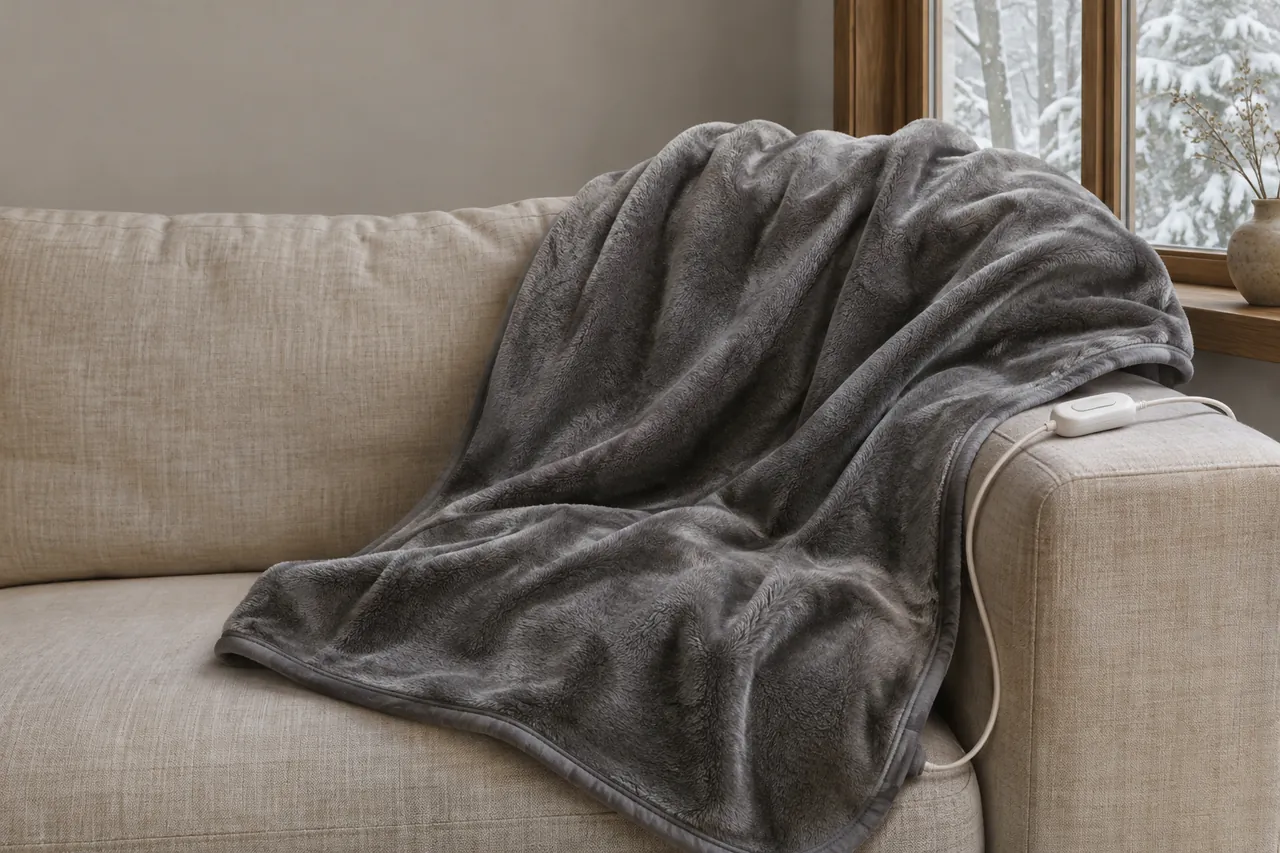
A full-sized electric blanket or heated mattress pad may cover a much larger area than a localized pack. Product directions differ: a throw intended for use while awake should not automatically be treated as bedding approved for sleep. Read the instructions for the specific device and avoid overheating.
Some people consider pre-warming a bed and switching the blanket off before getting in. That is a different pattern of exposure from leaving heat on while asleep, but the sources do not establish it as a guarantee of safety in every pregnancy. A prenatal care professional can help with advice suited to the individual.
A product label can also help distinguish a heated throw from a fitted mattress pad. A throw is placed over the body; a mattress pad is fitted to the bed. Follow the model’s placement and care directions instead of assuming that the two work interchangeably. Neither a timer nor an automatic shutoff establishes a pregnancy-specific safe exposure.
If the appliance or its cord is damaged, stop using it. Keep the controller and lead arranged according to the instructions, and do not fold or cover a running device unless its directions allow that arrangement. These are ordinary appliance-care considerations; they do not answer the separate medical question of how much heat is appropriate during pregnancy.
Feeling cold and having a fever are different situations. Chills can occur with illness, and adding more heated bedding does not address the cause. If you have a fever or feel unwell, use a thermometer and seek medical advice rather than relying on a blanket setting to judge what is happening.
Symptoms that need medical attention
While mild muscular aches and temperature fluctuations are common during pregnancy, certain physical symptoms require prompt professional clinical evaluation rather than home self-care or thermal management.
Seek medical care promptly for concerning symptoms. The CDC identifies fever, difficulty breathing, severe ongoing abdominal pain, vaginal bleeding or leaking fluid, and a slowing or stopping of the baby’s movements among urgent maternal warning signs. Get care immediately for an urgent warning sign; if you cannot reach your healthcare provider, go to emergency care.
• Fever: The CDC lists a temperature of 100.4°F (38°C) or higher as an urgent maternal warning sign. Seek medical care immediately for that warning sign. Feeling warm alone is not a temperature reading, and fever can have different causes.
• Severe or Persistent Pain: Sharp, severe, or worsening pain in the lower back, pelvis, or abdomen that does not resolve with rest and posture adjustment.
• Obstetric Red Flag Symptoms: Any vaginal bleeding, spotting, sudden fluid leakage, or regular, painful uterine contractions prior to full term.
• Systemic Infection Symptoms: Backaches accompanied by chills, burning during urination, or flu-like symptoms.
Your prenatal care team can assess symptoms in the context of your pregnancy. Do not try to manage a fever or concerning symptoms simply by changing bedding.
Sources
MotherToBaby, Fever and Hyperthermia: https://mothertobaby.org/fact-sheets/hyperthermia-pregnancy/
MotherToBaby, Cold Medications and Self-Care During Pregnancy: https://mothertobaby.org/baby-blog/when-the-sniffles-strike-during-pregnancy-cold-meds-your-questions-answered-2/
South Tees Hospitals NHS Foundation Trust, Therapeutic Aids for Pregnancy: https://www.southtees.nhs.uk/resources/therapeutic-aids-for-pregnancy/
Good Housekeeping, Electric Blankets: https://www.goodhousekeeping.com/what-to-buy/g69176799/best-heated-blankets/
Forbes Vetted, Heated Blankets: https://www.forbes.com/sites/forbes-personal-shopper/article/best-heated-blanket/
Sleep Foundation, Electric Blankets: https://www.sleepfoundation.org/best-bedding/best-electric-blanket