
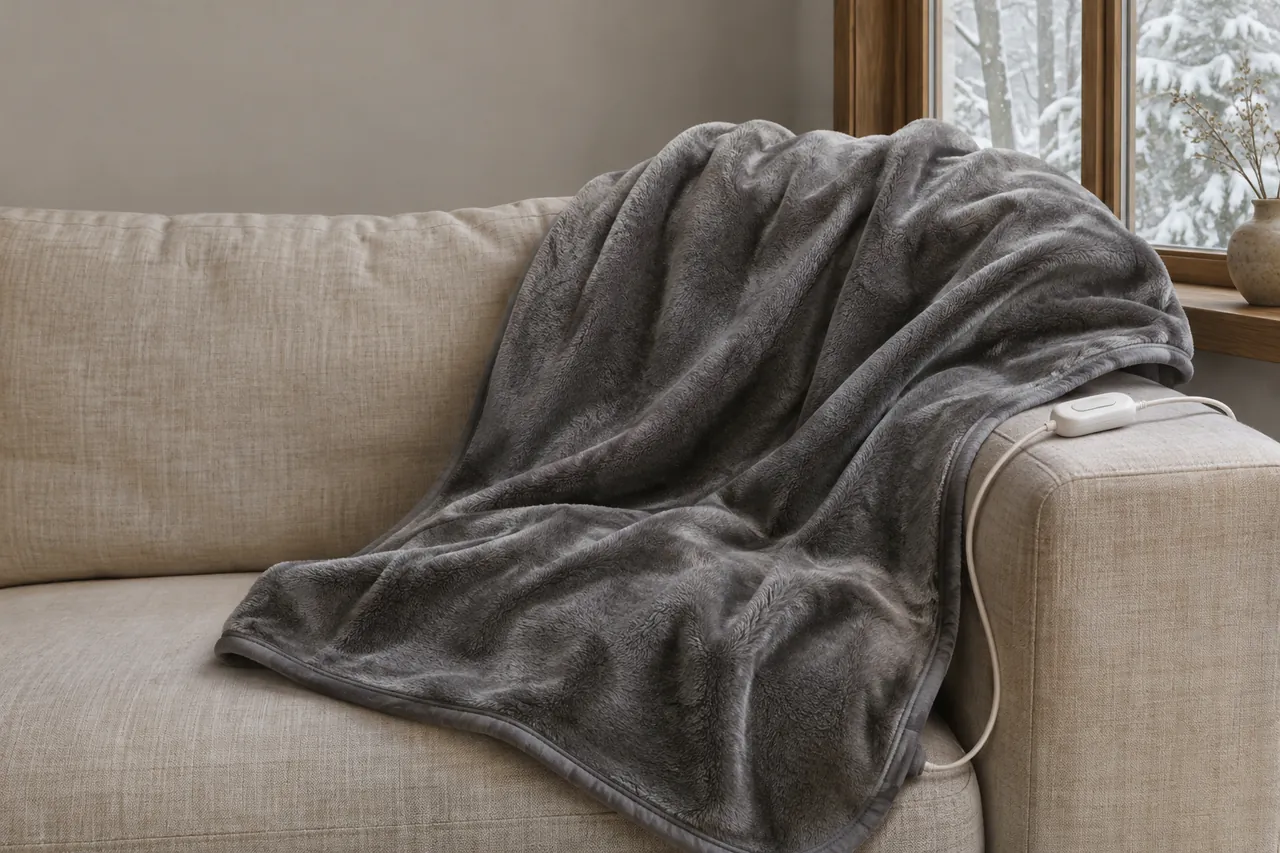
Should a dog or cat sleep unattended on an active electric heated blanket? PetMD advises against leaving a pet alone with a heated blanket. Direct supervision matters, and the animal must be able to move away from the warm area.
Introduction
Electric bedding adds heat and a power cord to a pet’s resting area. Burns, overheating and chewing the cord are risks to consider. A product intended for humans should not be assumed suitable for an animal simply because it feels comfortable to a person.
Start with the resting space
Before using any warming product, look at the whole resting area. PetMD advises that an animal must be able to move away from the warm surface. A large room may provide a clear choice between warm and unheated spots; a small crate may not. If the animal cannot move freely because of its age, mobility or the arrangement of the space, the ability to leave should not be assumed.
Direct supervision means being present and paying attention while the product is in use. A timer is a device feature, not a substitute for watching the animal or a guarantee against injury. PetMD advises against leaving pets alone with a heated blanket. Turn the product off and provide an appropriate unheated resting area when direct supervision is not possible.
Watch the animal’s behaviour and the condition of the bedding. If the pet seems uncomfortable, attempts to leave, chews the fabric or cord, or the product appears damaged, stop using it. Do not wait for a visible burn before responding. Fur can make changes in the skin harder to notice, so suspected injury should be assessed by a veterinarian.
The same basic questions apply to cats, but the right resting arrangement depends on the individual animal and product. A cat should also have a clear way to leave the warm area, and cords should be kept out of reach. Do not assume that because a product is marketed for cats or dogs it can safely be used without supervision.
Why supervision and a way out matter
Supervision and the ability to leave the warm area are central to PetMD’s guidance.
PetMD advises constant direct supervision when a pet is using a heated blanket and says the animal should be able to move away. It also advises against heated blankets for temperature-sensitive breeds such as English bulldogs and Persian cats. In a crate or small bed, check that there is genuinely enough space for the pet to leave the warm area.
VCA warns that heating pads can burn sleeping pets, including when an animal does not wake quickly as the surface warms. Pets with limited mobility need particular attention because moving away may be difficult.
The weight and construction of unheated bedding matter too. PetMD advises against weighted blankets for pets because an animal can become trapped or tangled beneath them. Choose a lightweight, breathable option that the animal can move away from, and inspect it for loose threads or damage.
Compare the bedding choices
Compare human bedding, products marketed for pets and unheated bedding by how the animal will use the space.
Blankets made for people
Human electric blankets and mattress pads are described in the selected Sleep Foundation guides for human bedding. Those reviews do not establish that a model is suitable for pets. Check the intended use and instructions for the particular product.
Pads marketed for pets
A product labelled for pets may have different construction and instructions from human bedding, but the label does not eliminate burn or cord hazards. Compare the model’s placement, cleaning and supervision directions, and make sure the animal can move away from the warm area.
Unheated bedding
Unheated bedding is an alternative when direct supervision is not possible. Choose an appropriate resting place and bedding that the animal can leave freely.
Self-warming pads: Some non-electric pads are marketed to reflect body warmth. Check the construction and care instructions for the specific item.
Unheated blankets: Choose suitable bedding and inspect it for loose threads, damage or chewing.
Beds: Consider a suitable bed and a resting place away from cold floors and drafts.
Check the product and the space around it
Compare the intended user, placement, cleaning method and power arrangement for the exact model. A pet-labelled product may specify its own cover or placement directions. An extra blanket, improvised cover or substitute power supply can change the way a device is used, so follow the instructions supplied with the product rather than combining directions from different models.
Check the space around the power cable as well as the bed itself. Route the cord where the animal cannot chew it and where it will not be caught by a crate door or furniture. A protective sleeve is not a guarantee against chewing. If the cord, plug or cover shows damage, disconnect the product and stop using it.
For an unheated bed, inspect the fabric and filling regularly. PetMD advises avoiding loose threads, tassels and fringe that a pet could chew or swallow, and choosing a lightweight, breathable blanket that is not too large for the space. Keep bedding clean and leave room for the animal to move away without becoming tangled.
If a dog seems unusually cold, weak, disoriented or injured, treat that as a health concern rather than a reason to increase the heat setting. Seek prompt veterinary care for suspected hypothermia or cold-related injury, and do not use a home electric heating pad or blanket to treat it.
Inspect cords and clean the bedding
A pad marketed for pets can still pose burn and cord hazards. VCA describes unheated bedding in a sunny spot as a safer way to keep an animal comfortable. If using a heating pad, provide constant supervision and a clear way for the animal to move away; a label and maintenance routine cannot guarantee safety.
Keep cords out of reach
PetMD warns that chewing an electrical cord can cause serious injury. Keep cords out of the animal’s reach, inspect them for damage and never assume a protective covering makes a cord chew-proof. Stop using a damaged device.
Inspect and clean the bedding
Before turning on any warming pad, conduct a thorough visual and physical inspection:
Check the outer cover and internal pad for teeth marks, claw punctures, seam tears, or exposed wiring.
Inspect the power adapter and cord for fraying, cracking, or bent plug pins.
If you detect any physical damage, moisture penetration inside the electrical housing, or unusual odors, stop using the pad immediately and disconnect the power supply.
Follow the specific product’s cleaning instructions. Disconnect power as directed and keep electrical components away from water. Do not add covers or layers that the product instructions prohibit; allow cleaned parts to dry before reconnecting.
When your pet needs veterinary care
Cold-related illness, burns and electrical injuries need veterinary attention; a warming product is not treatment.
If your pet is cold or injured
A cold, hypothermic, injured or severely lethargic animal needs prompt veterinary assessment. VCA’s emergency handbook advises moving a cold pet to a warm place and wrapping it in warm towels or blankets while arranging care. Do not treat hypothermia with a home electric heating pad or blanket, and do not rub cold or frostbitten tissue.
Pain and arthritis need veterinary care
A warming product is not a substitute for veterinary assessment and treatment of arthritis or other painful conditions.
Recognize an emergency
If you suspect your dog or cat has suffered a thermal burn or electrical injury from a heating device, seek immediate emergency veterinary care.
A burn may be difficult to see beneath fur and can worsen after the initial injury. If a burn is suspected, seek veterinary care promptly. Possible signs include:
Reddened, charred, blistered, or blackened skin underneath the fur.
Patches of hair falling out or skin peeling away.
Sensitivity, crying, or aggression when touched on a specific body area.
Signs of electrical shock or cord injury include:
Burn marks, redness, or ulcerations inside the mouth, tongue, or lips.
Excessive drooling, difficulty breathing, coughing, or lethargy.
Sudden collapse, muscle tremors, or loss of consciousness after contact with a cord.
If you suspect an electrical injury, turn off the power from a safe location before touching the animal or cord, then seek urgent veterinary care. Merck notes that an animal that survives electrical contact can develop breathing problems from injury to the airways or lungs. Do not wait for breathing symptoms before seeking care.
Sources
PetMD, Blanket Safety for Pets: https://www.petmd.com/dog/general-health/blanket-safety-for-pets
VCA Animal Hospitals, Heating Pad Safety: https://vcahospitals.com/resources/lifestyle-cat/hazards-safety/heating-pads-true-or-false
VCA, Pet First Aid Handbook: see the accessible emergency handbook below.
Merck Veterinary Manual, Electrical Injury in Animals: https://www.merckvetmanual.com/generalized-conditions/lightning-strike-and-electrical-injury/lightning-strike-and-electrical-injury-in-animals
Healthline, Toasted Skin Syndrome: https://www.healthline.com/health/toasted-skin-syndrome
Sleep Foundation, Best Temperature for Sleep: https://www.sleepfoundation.org/bedroom-environment/best-temperature-for-sleep
Sleep Foundation, Heated Electric Blankets: https://www.sleepfoundation.org/best-bedding/best-electric-blanket
Sleep Foundation, Heated Mattress Pads: https://www.sleepfoundation.org/best-mattress-pads/best-heated-mattress-pad
VCA Northwest Veterinary Specialists, Pet Emergency Care Handbook