
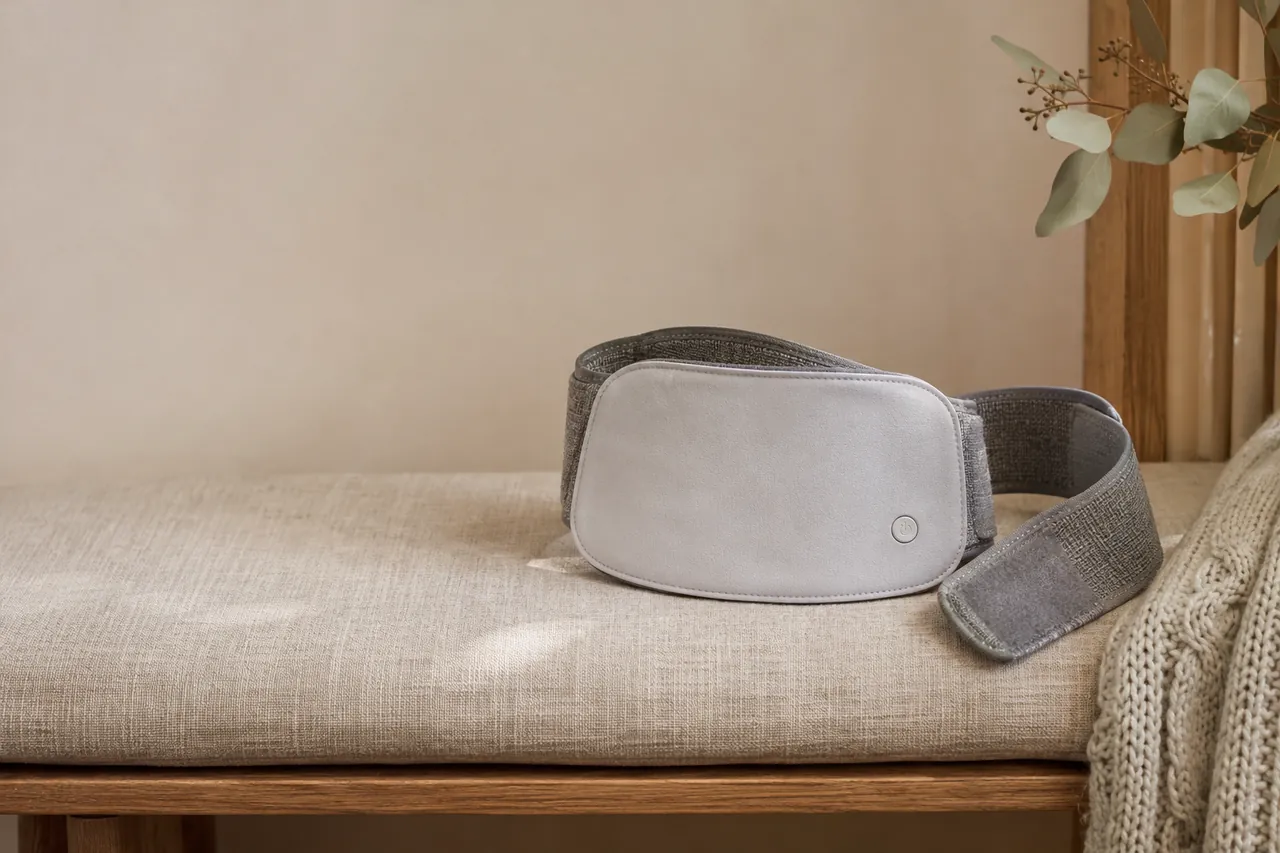
A heating belt advertised as graphene may sound different from an ordinary pad. To decide what that label means for a purchase, look at the material, the research on heat and the complete design of the belt. Each answers a different question.
Introduction
Heat on the lower abdomen is one of the self-care measures Mayo Clinic lists for menstrual cramps. A belt offers a way to position warmth while wearing it. To compare products sensibly, it helps to understand what the material name describes and then look at the details of each complete device.
What does the material name mean?
Graphene is a form of carbon arranged in a sheet one atom thick. The Nobel Prize explanation of the material describes its two-dimensional structure and the research behind its isolation. A product listing that mentions graphene is referring to a material in the heating system; it does not mean that the entire belt consists of a single sheet of carbon.
The finished belt also has fabric or other outer materials, electrical connections, a controller, and a fastening system. One design may use a battery, while another is connected to a separate power source. These parts are part of the experience of wearing and caring for the product, so compare them alongside the heating material.
Some listings also mention far-infrared heat. That phrase describes a part of the infrared spectrum; a product’s actual construction and instructions still matter. The name of a material or a wavelength alone does not tell you the belt’s fit, surface temperature in use, battery duration, or how much relief a particular person will experience.
What the research on heat actually studied
Mayo Clinic notes that a heating pad, hot water bottle, heat patch, or warm bath may ease menstrual cramps. Verywell Health discusses heat among a wider set of approaches people use for period discomfort. Those sources support warmth as a self-care option; they do not establish that a particular belt or material will work better for every person.
A randomized trial indexed by PubMed assigned 104 people with primary dysmenorrhea to a far-infrared-emitting sericite belt or a placebo belt for three menstrual cycles; both groups used hot packs. Pain scores fell in both groups, with no statistically significant difference at the third treatment cycle. At the fifth cycle, during follow-up, the reported pain scores differed between groups; differences in the number taking pain medicine were not statistically significant. This study tested a mineral belt and a particular protocol, not either graphene device below.
That distinction helps when comparing the two graphene belt listings below: the trial provides context about a different device, while each listing describes the construction and features of its own product. Neither listing is a head-to-head test of the two belts.
Compare two belt listings
HEATBAE describes its wearable device as using graphene heating. Its product page lists an adjustable waist belt, a lithium battery, USB-C charging, three heat levels, three vibration levels, and an automatic shutdown after 30 minutes. These are details of the HEATBAE listing and should not be assumed for another belt.
The adjustable belt and rechargeable power arrangement are useful details if you want a wearable option. Look at how the buckle sits when you are seated as well as when you are standing. Consider whether you can reach the buttons comfortably, whether the charging setup suits your routine, and whether you want a vibration function in addition to warmth.
PMA Group describes its D10 Graphene Heating Silk Abdomen Belt differently. Its page lists mulberry silk as the fabric, graphene electric heating, and three temperature levels. The same page provides hand-washing directions for that particular belt, including disconnecting the power cord and allowing the item to dry naturally.
The two examples illustrate why the word “graphene” is not a complete specification. One page describes a rechargeable device with vibration; the other describes a silk belt with its own power and cleaning instructions. Compare the information for the precise version you are considering, including what comes in the package and how the product is meant to be worn.
Try the fit and controls
Start with the area where you want warmth and the belt’s dimensions or stated fit range. A belt should be comfortable when you change from standing to sitting. If a strap digs in, twists, or presses a controller against your body, adjust the fit or stop using it. The goal is to keep the product in its intended position without making it excessively tight.
Check whether the controls are easy to see and operate while wearing the belt. A product can have multiple settings, but a larger number is not automatically more useful. What matters is whether you can select a comfortable level and turn the device off promptly. Follow the product’s directions for contact with skin or clothing.
Good Housekeeping’s heating-pad guide highlights practical shopping criteria such as controls, size, materials, automatic shutoff and safety certification. These are useful details to check on a belt listing, even though a general heating-pad guide does not establish the performance of a specific graphene model. A timer can limit a session, but it does not replace attention to how the device and your skin feel.
Plan for charging and cleaning
A rechargeable belt needs charging before it can be used away from an outlet. Check whether its power unit and charging accessories are included and use the charging setup specified in its instructions. USB-C describes a connector; it does not by itself tell you that every charger or cable is compatible with every device.
Keep a power unit dry and stop using it if the battery, cable, connector or fabric is damaged. Route any cord where it cannot be pulled or trapped. For a directly powered belt, check the intended power arrangement and follow the instructions for the specific model rather than assuming all wearable heating products work the same way.
Care instructions vary by construction. A washable outer textile does not imply that a battery or controller may be immersed. Disconnect power before cleaning, handle removable parts as directed, and make sure washable fabric and connectors are dry before reconnecting them. Keep the care information with the belt so that it is available after repeated use.
Before purchase, think through where you will store the belt and how you will clean it after regular use. A soft exterior can be appealing, but the care label determines whether the fabric can be washed, wiped, or removed. Do not soak or machine-wash an electrical product unless its own instructions permit it.
Keep warmth comfortable and know when to get care
Use the belt only as its instructions describe. Choose a comfortable setting, check your skin during use, and stop if it feels too hot or causes redness or irritation. Do not fold an operating belt, add unapproved covers, or lie on it contrary to its instructions. Turn it off and remove it before sleeping; an automatic shutoff does not grant permission to sleep with an active heating device.
If you have reduced sensation or a condition that affects how you feel heat, seek appropriate medical advice before using a heating product. A heat source can cause injury when it stays against the skin too long, even if it does not initially feel painfully hot. Pay attention to persistent skin changes and have them assessed.
Period pain that disrupts ordinary activities deserves medical evaluation. Seek emergency care for pelvic pain that is severe, worsening or hurts when you move or touch the area, or if pelvic pain occurs with faintness, dizziness, shoulder-tip pain, difficulty breathing, heavy vaginal bleeding or sudden confusion. Get urgent medical advice for pelvic pain if you are pregnant or might be pregnant, or have fever or unusual bleeding or discharge. A warming belt cannot identify the cause or replace care in these situations.
The practical comparison is therefore broader than a single material. A graphene heated belly belt should fit comfortably, provide controls you can use, work with its specified power supply, and have care instructions you can follow. Match those details to your routine and use the device as directed.
References
NobelPrize.org — The 2010 Nobel Prize in Physics: A chip off the old block.
Mayo Clinic — Menstrual cramps: Diagnosis and treatment.
Verywell Health — 15 Things to Help With Period Cramps on Pain Days.
Good Housekeeping — 9 Best Heating Pads of 2024.
HEATBAE — Rechargeable wearable heat device.
PMA Group — Graphene Heating Silk Abdomen Belt.
PubMed — Randomized trial of a far-infrared-emitting sericite belt for primary dysmenorrhea.
NHS — Pelvic pain — https://www.nhs.uk/symptoms/pelvic-pain/