
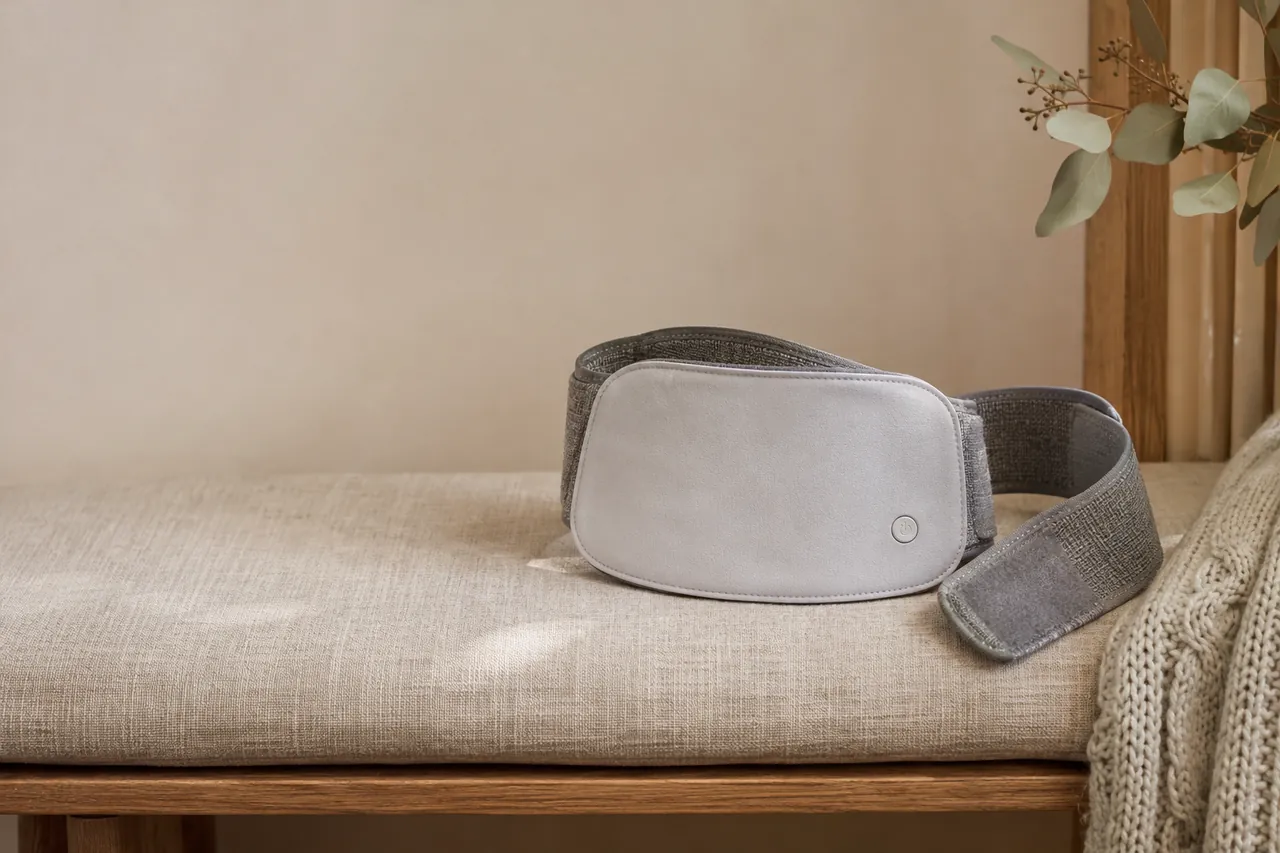
A product page can tell you that a heating belt contains graphene, but the word alone does not tell you whether the belt will fit your waist, where its controls sit, or how it should be cleaned. Those practical details are what make a review useful when you are choosing a pad for period cramps or lower-back comfort.
Introduction
Start with the particular product and the way you intend to use it. Then look for feedback about fit, the feel of the warmth, charging, and durability. Manufacturer descriptions, individual customer experiences, and clinical research answer different questions; reading them together gives you a clearer basis for a purchase.
What does “graphene heating” describe?
Graphene is a form of carbon. In a heating product, a listing may use the term to describe material in a heating element or film. The rest of the device still matters: the cover, controller, strap, power connection, and instructions determine how that particular pad is handled. A material name does not by itself specify the temperature you will feel through clothing or establish a medical outcome.
For instance, Yeamons describes a menstrual heating pad with a graphene heating film and separate heat and vibration functions. DMADU describes its menstrual heating belt as using graphene heating, with an adjustable belt and multiple heat and vibration settings. These are details from two sellers’ descriptions, not measurements taken by HeatNap or a test comparing the devices.
When you see a heating-speed number or a claim about far-infrared warmth, look for the conditions behind it. A time measured at an internal element is not necessarily the time required for the outside surface to feel comfortable. A product description alone does not establish that one heating material produces better relief for menstrual cramps than another.
How to assess reviews for fit and usability
Look first for the context. A review of a pad used for a shoulder may say little about whether its strap fits comfortably around the abdomen. Comments that describe the position, clothing layer, size, and activity during use give you more to compare with your own needs. A star rating can be a starting point, but it cannot show why a product worked well for someone else.
For wearable belts, pay attention to recurring observations about the strap: whether it stays positioned, rubs, folds, or is easy to release. A review that names a waist measurement or describes adjustment over clothing can be more informative than a short note saying a belt is comfortable. Compare several detailed accounts rather than treating a single experience as typical.
Controller comments are useful too. Can the person distinguish settings, reach the buttons, and switch the device off without removing clothing? If a pad vibrates, reviews may describe whether the sound or sensation suits the setting. Vibration is an optional device feature; a customer’s preference does not establish a clinical effect.
Yeamons’ HP-M01 listing displayed two reviews when checked on November 10, 2026. In a 2023 review, a customer who had just received the pad liked its warmth and massage but expressed concern about the charging connection. A 2021 reviewer described using it at work for lower-back discomfort and found it small and quiet. These are individual reports, not independent product tests; two comments cannot establish how often a charging issue occurs or how the pad will perform over time. They do suggest practical points to examine: the charger connection, operating sound and fit in your intended setting.
Fit and controls can matter more than a headline specification
Measure the area you want warmed and compare it with the heated panel, not just the overall belt length. Check whether the adjustable strap accommodates your measurement over the clothing you expect to wear. If the panel bunches when you sit, try another position rather than pulling the strap tighter. You should be able to remove it easily.
Some belts place a control unit or battery on the front; others use a separate pocket or cable. Think about where those parts will rest when you sit, stand, or carry a bag. A compact product can be convenient, but small buttons or an awkwardly placed battery may make it less comfortable for a particular user.
Heat settings give you choices within the product’s range. Start with comfortable warmth, follow the instructions for placement, and check your skin. An automatic shutoff can turn a device off after its programmed interval, but it is not a recommended period of uninterrupted contact and does not make sleeping with an electric pad safe.
Power and care: read the exact product instructions
A rechargeable belt needs a compatible charging arrangement and time to charge. A corded pad needs a suitable electrical connection and a place for the cable. Check what is included in the box and use the power equipment specified for that device. A connector’s shape by itself does not establish that any charger or power bank is suitable.
Plan how you will keep the item clean. Some products have a removable cover; others give spot-cleaning instructions or specify which parts can be washed. Disconnect the power source as directed, keep electrical components out of water unless the instructions expressly allow otherwise, and allow any washed parts to dry completely before reconnecting them.
The same caution applies to storage. Let a pad cool after use and follow its instructions for folding or rolling. Do not compress an active heating panel beneath your body or a tight belt. Inspect the cover, connections, and cable where present; stop using an item that is damaged or behaving unusually. Never put an electric heating pad or its battery into a microwave.
Separate comfort research from a brand claim
Mayo Clinic lists heat as a self-care option for menstrual cramps, and Verywell Health discusses applying warmth to the lower abdomen or back. A 2026 systematic review assessed heat therapy for primary dysmenorrhea; its authors rated the evidence for reduced pain versus no treatment as low certainty. The studies used different forms of heat and did not establish the performance of either graphene belt named here.
This distinction is useful when a listing combines a real feature with a broad promise. A device can have a graphene-labelled heating element, an adjustable belt, and several settings without those details proving that it is the best choice for every person. Check the actual model’s specifications and choose according to fit, care requirements, and comfort rather than the material name alone.
You may prefer a conventional corded pad, a rechargeable wrap, or another form of warmth. Their operating instructions differ, and a product that is convenient during an awake break near an outlet may not meet the same needs as a wearable option. Compare the whole device and its instructions instead of assuming that all pads in one category work identically.
Protect your skin and know when to seek care
Use a heating pad while awake and follow its instructions for skin contact and any clothing barrier. Stop if the heat feels excessive or the skin becomes irritated. Do not use heat on an area where you cannot feel temperature normally. A comfortable sensation is a reason to monitor your skin, not a reason to leave a device in one place indefinitely.
Cleveland Clinic describes toasted skin syndrome, a netlike skin discoloration associated with repeated or prolonged exposure to low-level heat. A fabric layer does not remove the need to check the area or take breaks. Switch the device off and remove it before sleep, and do not rely on an automatic timer as a substitute.
Seek emergency care if pelvic pain is severe, worsening or painful with movement or touch, or if it occurs with faintness, dizziness, shoulder-tip pain, difficulty breathing, heavy vaginal bleeding or sudden confusion. If you have pelvic pain and are pregnant or might be pregnant, or have a high temperature or vomiting, seek urgent medical advice. Pain that disrupts normal activities also deserves medical assessment. Record your symptoms and measures tried so you can describe them clearly.
Before placing an order
Check the listing for the exact model, its dimensions, strap range, power arrangement, care directions, and included parts. Read the seller’s current return and warranty terms, including any conditions for opened personal-care items. Save the instructions and keep the device’s model details with them; they are more useful later than a general claim about graphene.
References
DMADU, Menstrual Heating Pad Belt — https://dmadu.com/en/product/dmadu-menstrual-heating-pad-belt-for-period-pain-relief/
Yeamons, Menstrual Heating Pad — https://www.yeamons.com/Menstrual-Heating-Pad
Mayo Clinic, Menstrual cramps: diagnosis and treatment — https://www.mayoclinic.org/diseases-conditions/menstrual-cramps/diagnosis-treatment/drc-20374944
Verywell Health, What helps with period cramps — https://www.verywellhealth.com/what-helps-with-period-cramps-8413517
Yuan and colleagues, Heat therapy for primary dysmenorrhea: systematic review — https://pubmed.ncbi.nlm.nih.gov/41657584/
Cleveland Clinic, Toasted skin syndrome — https://my.clevelandclinic.org/health/diseases/toasted-skin-syndrome
NHS — Pelvic pain: https://www.nhs.uk/symptoms/pelvic-pain/