
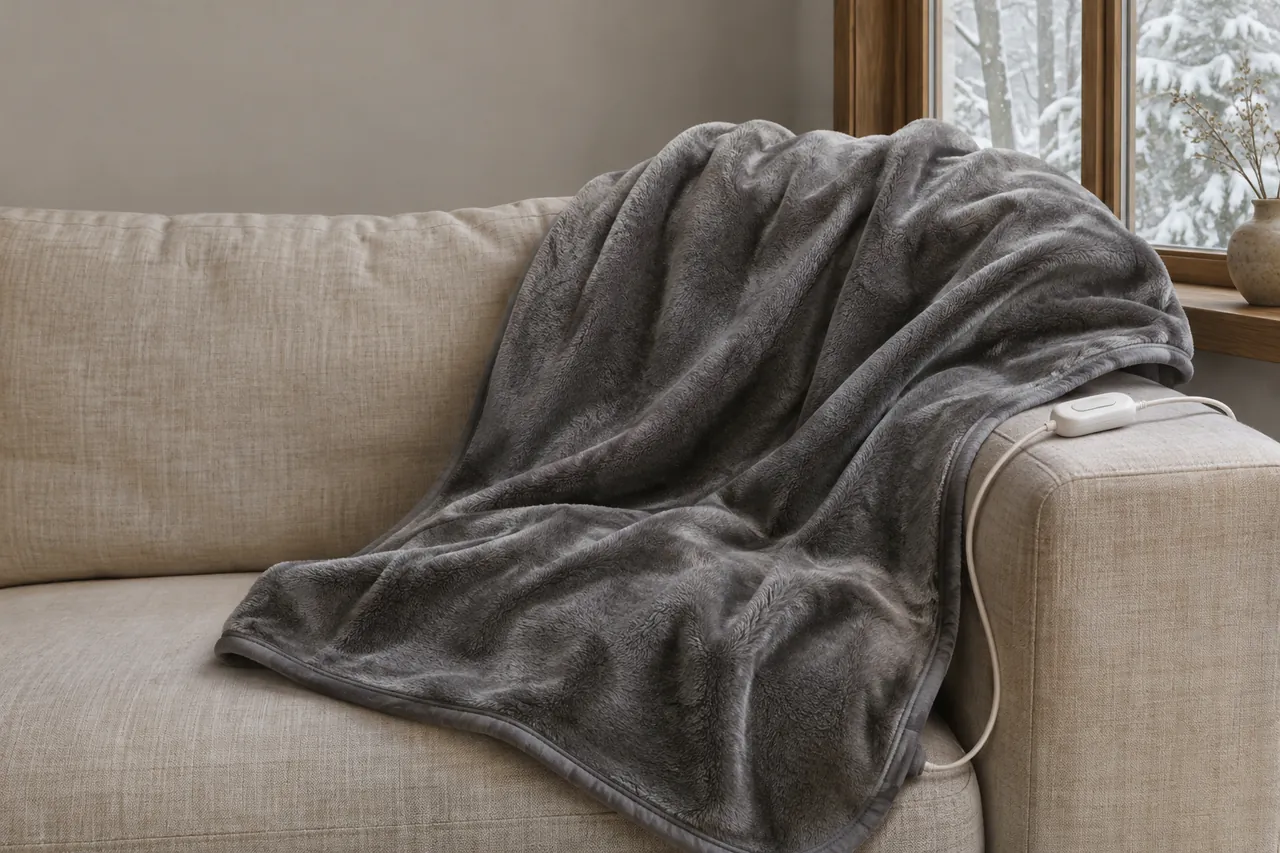
If you are thinking about using a heated blanket during pregnancy, begin with two separate questions: how warm is the overall sleeping environment, and are you trying to ease discomfort in one specific area? A full blanket, a heated mattress pad and a small heating pad cover different areas and come with different instructions. Advice for one should not automatically be applied to another.
Introduction
The American College of Obstetricians and Gynecologists (ACOG) discusses limited local heat for painful back muscles during pregnancy. MotherToBaby explains why a raised body temperature can be a concern, especially early in pregnancy. These sources make a useful starting point for choosing comfortable bedding and recognizing when pain needs medical attention.
Local heat and heated bedding serve different purposes
A heating pad used on sore back muscles targets a limited area. ACOG says a heating pad or warm water bottle can be used for painful back muscles during pregnancy, with the heating pad on its lowest setting. Wrap the pad or bottle in a towel to help prevent burns and limit the time heat is applied. ACOG also mentions a cold compress as another option for sore muscles, with its use likewise limited in time. Follow the appliance directions as well.
A full electric blanket covers a much larger area. It may be designed as a top blanket, while an electric mattress pad is made for a different position on the bed. Their placement, layering and sleep instructions depend on the product. Read the directions for the exact model instead of assuming that every heated item can be used in the same way.
A localized heating pad is not a substitute for a full-bed blanket, and ACOG’s back-pain guidance is not an all-night electric-blanket protocol. An automatic timer on a device is a feature of that device; it does not establish a pregnancy-specific recommendation for how long heat should be applied.
For a decision about using a heated blanket during pregnancy, discuss your circumstances with your maternity care professional. The question is particularly relevant if you tend to overheat or have a health condition that affects temperature sensation. Use the product’s placement and sleep instructions alongside that personal advice.
Why avoiding overheating matters
MotherToBaby describes hyperthermia as a rise in body temperature when the body absorbs more heat than it releases. It notes that a raised body temperature is a concern in early pregnancy, especially when prolonged. Some studies have associated fever or hyperthermia early in pregnancy with a small increase in certain birth defects, while other studies have not found the same associations. These studies do not establish the effect of a particular electric-blanket setting.
Comfort is something you can respond to. If you feel too hot, stop using the heat source, remove extra layers and cool down. A fever or symptoms of illness in pregnancy deserve appropriate medical attention rather than being treated as a bedding problem. A blanket’s heat setting alone does not describe how warm the room, other layers and your body feel together.
It is also useful to make the bed easy to adjust. A light unheated layer can be added or removed as comfort changes, and a comfortable room does not require piling on bedding. Consider the entire arrangement: the mattress, sheets, duvet and any electric item used with them. Check the actual appliance instructions for approved positioning and layering.
MotherToBaby distinguishes fever, often linked to infection, from hyperthermia, which can result from environmental heat. Its examples include prolonged hot weather, hot tubs and saunas. The guidance addresses elevated body temperature generally; it does not provide a tested electric-blanket temperature or setting.
If you use separate controls or share the bed, consider both sides of the sleeping area and the layers each person uses. Adjust the bedding so it remains comfortable for you, and keep any control accessible. Follow the model’s instructions about placement and shared use instead of assuming that two apparently similar blankets have identical controls.
Read the label for the item on your bed
A heated throw, an overblanket and a fitted mattress pad may look similar in an online search, but their intended placements differ. A fitted pad is made to fit a mattress; a throw is a loose cover. Look at the model name, size and diagrams or directions on the product itself so the item is placed where its maker intends.
Check whether the model permits use during sleep and whether its instructions address other bedding placed above or below it. Do not assume that a heated throw may be sat or laid on. Keep cords and controls positioned as directed, clear of pinch points, and avoid pulling the lead when changing position. For a localized pad, follow its own instructions and do not fall asleep with it active.
Before using any electrical bedding, inspect the fabric, lead and controller. Scorch marks, frayed wires or damaged controls are reasons to switch the item off, unplug it and stop using it. Follow the cleaning directions for the specific model, including how to disconnect any removable controls and dry the fabric before reconnecting.
Consumer buying guides can help you compare sizes, fabric feel and controls. Good Housekeeping and Forbes Vetted discuss selected heated blankets, while Bedsure presents its own product range. Their comparisons concern the models they describe; a general product review is not pregnancy-specific medical guidance.
Set up the rest of your bed for comfort
An unheated blanket offers flexibility because you can move it away easily when you feel warm. Choose a texture that feels comfortable and use layers you can adjust without disturbing the entire bed. Some people prefer a lighter cover with an extra layer nearby; others prefer one familiar blanket. The goal is a setup that is easy to change as comfort changes.
Support can matter as much as warmth for an aching back. For later pregnancy, ACOG recommends sleeping on your side with one or both knees bent. It suggests a pillow between the knees and another under the abdomen, or a full-length body pillow. Ordinary pillows can provide that support; adjust their position as your body and comfort change.
For sitting, the NHS recommends keeping the back straight and well supported. When lifting from the floor, it advises bending the knees while keeping the back straight and avoiding heavy objects. It also suggests turning by moving the feet rather than twisting the spine, getting enough rest and wearing flat shoes. These measures do not replace assessment when pain is severe or accompanied by other symptoms.
When you get out of bed, give yourself room to move without catching a cord or pulling an electrical connection. Place the controller where it can be reached without twisting, and keep the route to the floor clear. Small arrangements like these can make the bed easier to use and help protect the appliance from damage.
When back pain needs attention
The NHS advises urgent contact with a midwife or doctor if back pain occurs in the second or third trimester, as it can be a sign of early labour. It also advises urgent contact for back pain with fever, vaginal bleeding, pain when urinating or pain in the side beneath the ribs. ACOG advises contacting an obstetric care professional for severe back pain or pain lasting more than two weeks.
The NHS says to call emergency services or go to an emergency department if back pain is accompanied by loss of feeling in one or both legs, the buttocks or genitals. Use local emergency services for an emergency. These signs need medical assessment rather than another adjustment to a heating product.
For everyday comfort, keep the distinction simple: local back heat has its own guidance, and full-bed heated bedding has a different coverage area and set of instructions. Choose bedding you can adjust, pay attention to overheating, and seek the appropriate maternity care when symptoms call for it.
References
ACOG: Back Pain During Pregnancy — https://www.acog.org/womens-health/faqs/back-pain-during-pregnancy
NHS: Back pain in pregnancy — https://www.nhs.uk/pregnancy/common-symptoms/back-pain/
MotherToBaby: Fever/Hyperthermia — https://mothertobaby.org/fact-sheets/hyperthermia-pregnancy/
Good Housekeeping: Best heated blankets — https://www.goodhousekeeping.com/what-to-buy/g69176799/best-heated-blankets/
Forbes Vetted: Best heated blankets — https://www.forbes.com/sites/forbes-personal-shopper/article/best-heated-blanket/
Bedsure: Electric Blankets Compared for Warmth and Value — https://bedsurehome.com/blogs/bedsure/electric-blankets-heated-throws-warmth-value-2026