
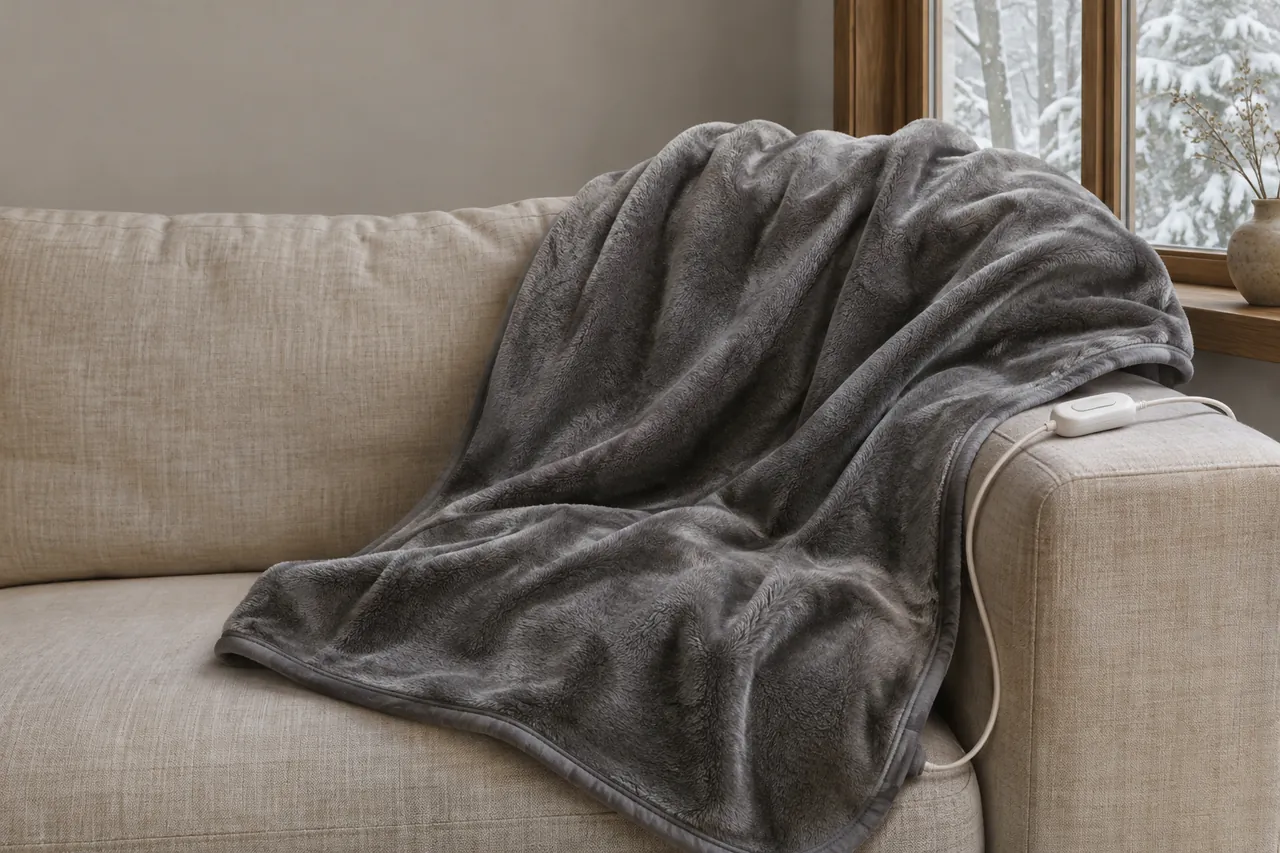
The forecast is dropping, your sleeping bag is packed, and a heated blanket sounds like an easy addition. Before choosing one, look at the whole sleep system: the bag, the pad underneath it and the clothes you will wear. A heated blanket for a sleeping bag is a separate decision, shaped by the product’s intended placement and the power available at camp.
Start with the sleeping bag, pad and clothing
REI describes a sleep system as the sleeping bag, sleeping pad and clothing working together. The bag’s temperature rating is a guide based on test conditions; real comfort depends on the person, clothing, shelter, weather and pad. Choose the system for the conditions expected on the trip rather than relying on an electrical device to make inadequate insulation sufficient.
Compare the bag’s comfort rating with the forecast, allowing for colder conditions. REI distinguishes the ISO/EN comfort rating from the lower-limit rating: they describe different types of sleepers. A number without either label may instead be a manufacturer’s estimate, so do not assume that every advertised temperature uses the same test. No rating guarantees comfort for every person. Consider fit and shape too: the bag should accommodate the clothing and movement you expect without forcing extra equipment into an unapproved space.
The sleeping pad matters because it separates the sleeper from the ground. Its R-value describes resistance to heat flow; REI notes that an insufficiently insulated pad can affect how a bag performs. Select a pad appropriate to the conditions and compatible with the sleeping arrangement.
Bring dry clothing suitable for the forecast and shelter. A spare non-electric layer or an appropriate warmer bag provides a fallback if a battery runs flat or damp conditions make electrical equipment unusable. Do not depend on a single heat source to cover a gap in the basic system.
When comparing bags, look at the stated packed size and weight as well as the comfort rating. A product that suits a vehicle-based trip may be less convenient to carry on foot. Make sure the bag fits the sleeper’s height and leaves enough room for the clothing intended for the trip without assuming extra equipment belongs inside.
Plan how the bag and mat will be kept dry during travel and at the campsite. Store wet shelter fabric separately from sleeping gear when practical, and follow the bag maker’s care directions. If the insulation becomes wet, its performance can change; have a contingency appropriate to the forecast and the location.
Choose between a heated sleeping bag and a separate blanket
A purpose-designed heated sleeping bag is different from putting a loose household electric blanket inside a zipped bag. Do not assume that an indoor blanket can be folded, enclosed, placed underneath a sleeper or left on during sleep. The instructions for the particular item determine its permitted use.
An integrated heated sleeping bag builds the heating panels into the bag itself. For a concrete comparison, ActionHeat lists its 5V Heated Sleeping Bag with three heating zones and an included 9,300 mAh power bank. The product page describes three heat settings and up to six-plus hours on low, alongside gentle machine washing and flat drying. These are the manufacturer’s details for that model, not specifications for a separate blanket.
A loose electric blanket or heated throw is a separate appliance. It may be intended for a dry indoor setting or a specific placement. A sleeping bag is an enclosed, insulated item, so the fact that a blanket fits inside does not mean the combination is authorised by either product’s instructions.
Do not place a household electric blanket inside or underneath a sleeping bag, tuck it tightly, fold it while operating or leave it powered during sleep unless its instructions explicitly permit that exact arrangement. Do not add a second active heating device unless the directions for both products permit the combination.
Read the product warnings for the intended user too. A person who cannot sense heat, adjust the control or move away from the heat may be excluded by the instructions. A timer or battery label does not cancel those warnings.
What the setup must allow: placement, sleep and care
Think about the way the item will be used once the lights are out. A heated bag, a top blanket and a mattress pad place their heating elements in different positions, and each has its own care and operating instructions. Check the intended position, whether the sleeper may lie on the item, the surrounding bedding and whether the model is designed to remain on during sleep.
The Sleep Foundation reviews electric blankets and heated mattress pads as home bedding categories. Those reviews do not approve an unrelated blanket inside a camping sleeping bag. A fitted heated mattress pad is designed for a compatible mattress and must be installed according to its own instructions; it should not be treated as a generic sleeping-bag insert.
Avoid compressing, pinching or sharply folding a powered heating product contrary to its instructions. Route its lead so it cannot be trapped by a bed frame, zip or camping furniture. Keep the controller accessible and do not cover it where the manual prohibits covering it.
Before the trip, inspect the fabric, control, connector and lead for visible damage. If there is damage, an unusual burning smell or uncomfortable heat, stop using the product and disconnect it when safe. Do not open the controller, splice a cable or use a substitute part that is not specified for the model.
Cleaning and storage vary. Disconnect power as instructed, use the care method on the label and reconnect only when the item is completely dry and its instructions permit it. Store the bag and battery according to their separate directions, avoiding crushing the cord or heating areas.
Plan power for the actual campsite
A heated product may require a particular battery, connector or supply. Match the input and output specified by the product and use only approved accessories. A USB-shaped connector does not prove that every power bank is suitable, and a household plug does not establish that an inverter or generator is permitted.
If using a tent hook-up, the Camping and Caravanning Club recommends purpose-made equipment with protective devices and keeping appliances and connections dry and off the ground. It also advises being ready to stop using electricity when the tent becomes damp. An RCD is protection against certain electrical faults; it does not waterproof a sleeping bag or controller.
Keep electrical equipment away from wet tent fabric, water containers and condensation. Do not use a wet or damaged product. If a connection becomes wet, switch off and disconnect only when it is safe to do so; do not handle a wet plug or socket. Follow the product’s drying and inspection instructions before considering any further use.
A power source can fail or lose charge. Before the trip, consider how the battery will be charged, transported and stored under its own instructions. Keep a non-electric sleeping system suitable for the forecast so that the loss of optional heat does not leave the sleeper dependent on a depleted battery.
For a campsite booking, find out whether the pitch provides a hook-up and what equipment the site requires. A tent, caravan and campervan have different electrical arrangements. The Camping and Caravanning Club’s advice for tents describes purpose-made hook-up equipment; it should not be read as permission to use any household blanket in any shelter.
When comparing battery-heated bags, put the battery and control alongside the bag’s size, weight and insulation on your checklist. ActionHeat estimates 6+ hours on low, 5+ on medium and 2.5+ on high for its included battery. It also gives this bag a 33°F rating when unpowered. These are manufacturer figures for this model; the temperature figure should not be treated as a stated ISO/EN comfort rating, and run time will depend on actual conditions.
Before you pack: a practical comparison
Sleep Foundation’s room-temperature advice concerns indoor sleep environments; it does not establish a safe temperature for a heated sleeping bag. Healthline describes skin changes associated with prolonged heat exposure, not an approval for a particular camping product. Stop if heat is uncomfortable and seek medical advice for persistent skin changes.
For a car-camping trip, size and a campsite hook-up may matter more than the weight of a packed bag. For a backpacking trip, every item must fit in the pack and be carried to camp. In either case, compare the bag’s temperature rating and pad first, then the heating product’s intended use, power and cleaning instructions. Choose a combination that suits the actual sleeper and conditions.
References
ActionHeat: https://actionheat.com/products/actionheat-5v-battery-heated-sleeping-bag
REI: https://www.rei.com/learn/expert-advice/sleeping-bag-backpacking.html
The Camping and Caravanning Club: https://www.campingandcaravanningclub.co.uk/advice/equipment/using-electricity-in-your-tent/
Sleep Foundation: https://www.sleepfoundation.org/bedroom-environment/best-temperature-for-sleep
Sleep Foundation: https://www.sleepfoundation.org/best-bedding/best-electric-blanket
Sleep Foundation: https://www.sleepfoundation.org/best-mattress-pads/best-heated-mattress-pad
Healthline: https://www.healthline.com/health/toasted-skin-syndrome