
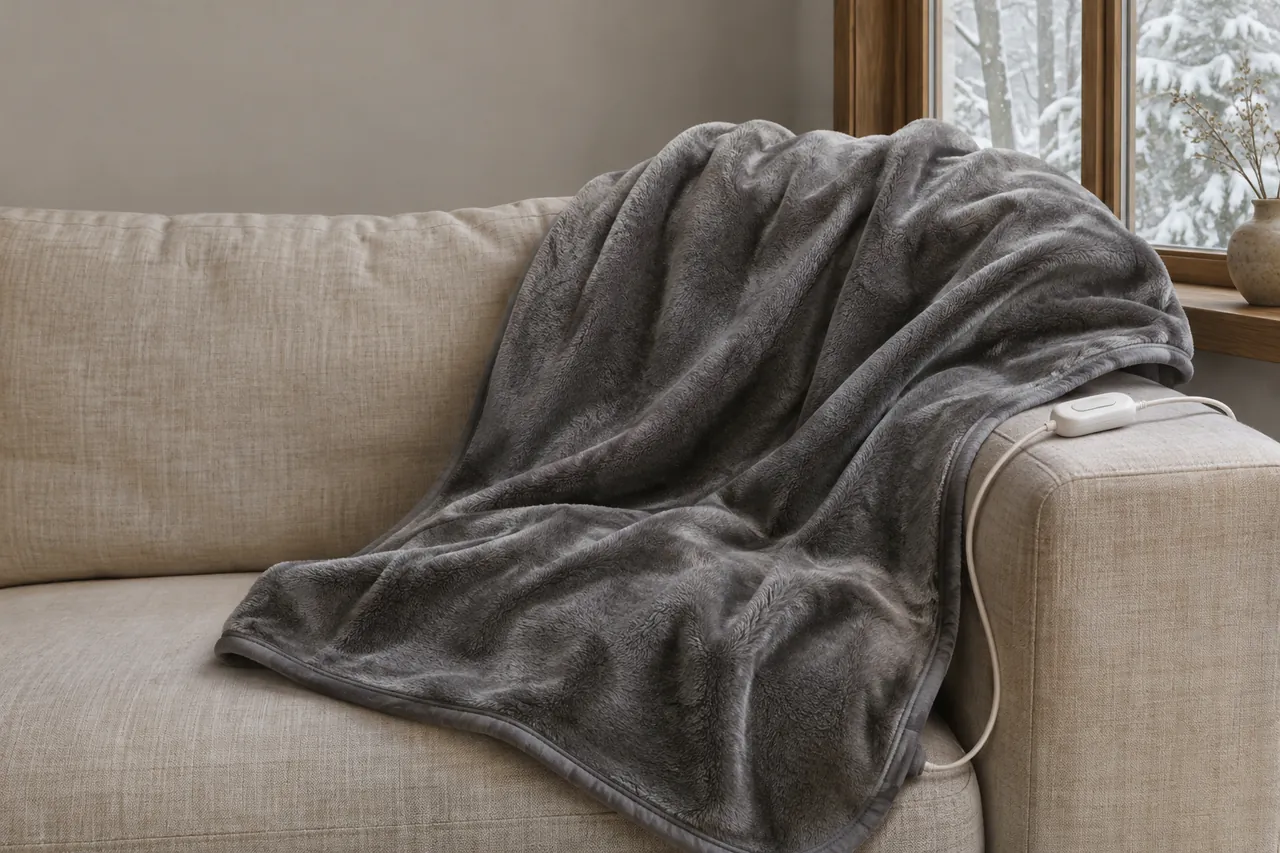
A spill on a heated blanket raises a useful question before laundry day: which part is actually washable? A heated blanket with removable cover can make the answer easier to find because the outside layer is designed to come away from the heated product. The care label still determines how that particular cover should be cleaned and dried.
Introduction
A removable cover is different from a detachable controller, and neither phrase tells you that every part of the blanket can go into a washing machine. Start with what the product says can be removed, where the blanket is intended to be used, and what its care instructions allow. Those details matter more than a general washable label.
Cover, controller or whole blanket: identify the washable part
A removable cover is a separate outer layer that comes off the product. Depending on the design, it may be fastened in a way that allows the owner to take it off for cleaning. Its label should explain the approved cleaning method. Keep the electrical parts away from water and follow the product instructions for separating and reassembling the pieces.
A detachable controller is a different feature. The controller or its connection can be removed from the blanket, but the rest of the blanket may still contain its heating components. Some products permit their fabric portion to be cleaned after the controller is detached; others have different instructions. The word detachable by itself does not settle the washing question.
A washable heated blanket describes the cleaning permission for a specific appliance. Before purchasing, look for the actual care directions rather than assuming that a removable plug, a soft cover or a familiar fabric means the entire item is washable. Also distinguish a cover supplied for a specific device from an ordinary duvet cover bought separately.
The difference changes what happens when a small part of the outside needs attention. With a removable cover, the cover may be the only piece taken to the laundry. A washable one-piece blanket has its own preparation and cleaning steps. Neither arrangement automatically makes a product better: one person may prefer a separate cover, while another may prefer a single piece with fewer parts to manage.
Laundry day: from unplugging to reassembly
Begin by switching the appliance off and disconnecting it from power. Let it cool as directed, then identify which pieces the care label says can be removed and cleaned. If the outer cover is washable, use the washing and drying method specified for that cover. Keep controllers, plugs and other electrical components away from water.
Do not transfer instructions between products. One model may permit machine washing of a cover, another may call for a different method, and a washable wired blanket will have its own directions. Avoid adding a default water temperature, cycle or detergent to your routine unless the product label calls for it. If the cover and the heated section have separate care labels, follow each label for its own piece.
Before reassembly, allow cleaned parts to dry fully as the instructions require. Refit the cover in the way specified by the product and check that the blanket and its connections are in good condition. If you notice damage, exposed wiring or scorch marks, stop using the appliance. Do not reconnect a damp component.
Before putting everything back together, spread out the dry cover and identify the opening and fastening points. Reassemble it as directed without forcing connectors or twisting the heated section. A cover supplied for the device should fit the intended arrangement; an ordinary substitute can change how the layers sit.
A real example: a removable cover for an outdoor blanket
BougeRV describes its upgraded 12V Portable Electric Heated Blanket as a four-layer blanket with a removable, zippered, washable cover. The green model, SKU HB002-AGTYAA, is listed at 180 by 130 cm with five heat levels and a timer. The cover can be removed for washing as directed; the page does not thereby say that the wired heating section has the same wash instructions. These details belong to this specific model.
The example also shows why context matters. A portable outdoor model and a full-size home bedding product may serve different purposes, use different power arrangements and have different instructions for placement. Compare the dimensions and intended setting with your own plans rather than choosing solely on the basis of the removable cover. Follow the product directions for its power supply and operating position.
BougeRV describes a timer on the upgraded model, with one to three hours selected by button and four to ten hours through its app. The listed package also includes a controller cable and a cigarette-lighter power cord. These details help distinguish this portable 12V product from a household plug-in throw when planning where to use it.
Pick a blanket, comforter or pad for the right job
Bedsure distinguishes an electric blanket from a heated comforter by their overall construction and feel. A blanket is a cover with built-in heating; a heated comforter combines heating with a fuller bedding form. The comparison is useful when deciding whether you prefer a lighter cover or a more substantial bedding layer. Features, controls and care still depend on the individual model.
A heated mattress pad is another kind of bedding. It is designed for placement on the mattress, while a top blanket is used over the person. Check the stated dimensions and placement instructions for the model you choose. A cover intended for one device should not be assumed compatible with another, and an extra layer should only be used in a way the appliance instructions allow.
A heating pad has a more local purpose. Bedsure describes heating pads as products for smaller areas, while heated bedding covers a broader space. A neck pad, an electric throw and a mattress pad are therefore not interchangeable simply because all produce warmth. Follow the instructions for the product and avoid using a heating pad while asleep.
Think about the setting as well as the size. For a sofa, you may want a throw that fits the space and has controls within reach. For a bed, compare the blanket dimensions with the coverage you want. If two people will share a blanket, check its actual controls rather than assuming a larger size offers separate settings.
Check fit and controls before everyday use
A blanket that looks large in a product image can feel different when spread out. Check the listed dimensions against the surface you plan to cover, taking into account how much room you need around the sides. Look at the position of the controller and cable as well. They should be accessible without pulling on the fabric or creating an obstruction where people walk.
For a removable-cover design, look at how the cover is meant to fit and how you will put it back after cleaning. Follow the directions for keeping the product in its intended position. When a blanket is operating, avoid folding or bunching it; Bedsure’s safety guide emphasizes keeping heated bedding flat and checking it for wear.
Warm-up time is another product-specific question. Bedsure notes that a blanket’s settings and surrounding conditions can affect how quickly it feels warm. Use the device according to its instructions rather than relying on a fixed time promised for another model. A comfortable setting and a timer are useful controls; they are not a substitute for proper placement and attention during use.
If the blanket feels uncomfortably hot, switch it off and stop using it. Do not try to solve excess heat by wrapping the appliance in additional fabric. Follow the model’s instructions about contact, layering and whether it may be used during sleep. People who have reduced heat sensation or difficulty responding to heat should take particular care with heated products.
Choose the care routine that suits you
A removable cover is appealing when you want to clean the outside layer separately and are happy to manage the extra assembly. A washable one-piece design may be simpler to put away, provided its care instructions suit your laundry routine. An outdoor blanket may be a useful comparison if portability matters, while a bedding product may better match a bed-sized space.
A useful comparison begins with the task you expect to do most often: remove and wash an outer cover, or clean the whole blanket according to its own directions. The answer can narrow the field before you compare fabrics, size and controls.
References
BougeRV — Portable Electric Heated Blanket
Bedsure — Electric Blanket vs. Heated Comforter: Which Type Fits Your Sleep Routine?
Bedsure — Heating Pad vs Electric Blanket vs Heated Mattress Pad.
Bedsure — Are Electric Blankets Safe? Risks, Myths and Safe Use.
Bedsure — Electric Blanket Heat-Up Time and What Affects It.