
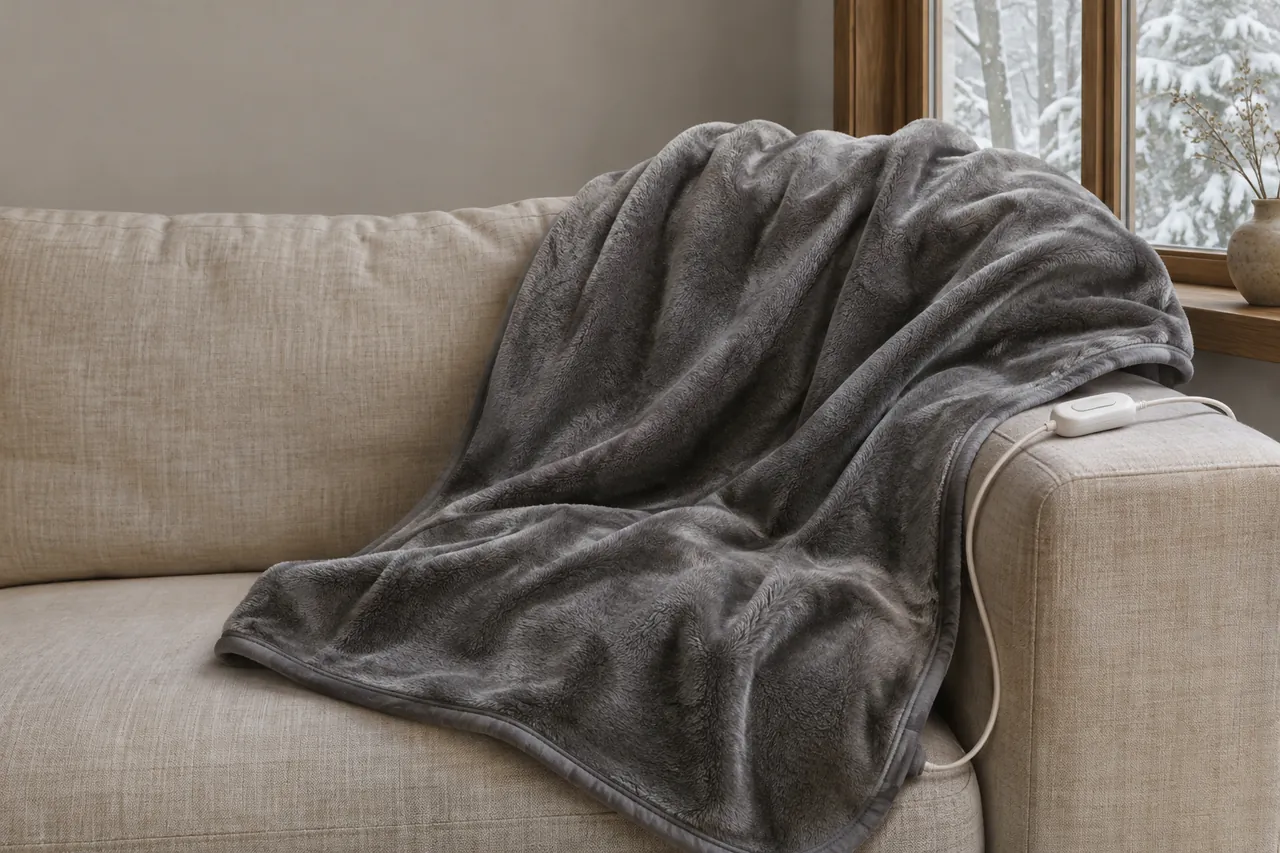
A warm bath, a covered hot water bottle or a heating pad can make a difficult period day more manageable. The NHS lists these as ways to help ease period pain, along with gentle exercise and pain relief.
Introduction
If you are considering a heating blanket for cramps, think about whether you want warmth focused on your abdomen or a broader covering while you rest. A throw serves a different purpose from a small pad, and severe, worsening or unusual pain needs medical attention.
First, notice when pain needs medical attention
Some period discomfort is common, but a change in your usual pattern or pain that disrupts daily life deserves attention. A clinician can help investigate the cause; symptoms alone do not establish a diagnosis.
For period pain that is worse than usual and has not improved with painkillers, the NHS period-pain page advises an urgent GP appointment or NHS 111. For severe or worsening pelvic pain, its pelvic-pain guidance calls for emergency care.
The NHS advises urgent help for pelvic pain during a possible pregnancy or alongside symptoms such as unusual discharge or bleeding, feeling feverish or shivery, nausea, or difficulty passing urine or stool. Its guidance adds that someone who is 20 weeks pregnant or more should contact their midwife or maternity unit. Seek emergency care for the severe symptoms below.
Seek emergency care immediately for pelvic pain that is severe, getting worse or painful when you move or touch the area. The NHS also lists fainting or dizziness, heavy vaginal bleeding, shoulder-tip pain, difficulty breathing and sudden confusion as emergency signs when they occur with pelvic pain.
These are different levels of urgency. Severe or worsening pelvic pain, faintness or heavy bleeding needs emergency attention; a recurring pattern that has changed still deserves a routine appointment even when no emergency signs are present. The NHS guidance is written for the UK, so use local emergency services if you are elsewhere.
Should you reach for a pad, a bottle or a blanket?
Think about the area you want to warm, where you will sit or rest and how easy it will be to stop using the item. Bedsure’s comparison describes a heating pad as a way to concentrate warmth on a small area, including the lower abdomen, while an electric blanket provides broader coverage. The two formats serve different practical purposes.
When you want warmth in one place
A heating pad or a hot water bottle can be used for a more focused area. The NHS specifically suggests a heat pad or hot water bottle wrapped in a towel on the abdomen; ACOG also discusses warmth on the abdomen.
Follow the specific product instructions. The NHS recommends wrapping a hot water bottle or heat pad in a towel; do not use a cover or layer that conflicts with the electrical appliance’s instructions. Stop if your skin becomes uncomfortable or irritated.
A smaller pad or bottle is easier to position over one area while you sit or rest. Keep the controller within reach, use the covering specified for the item and choose comfortable warmth. If your skin becomes irritated or the heat feels uncomfortable, stop using it.
When you want a warmer resting area
A heated blanket or throw offers broader coverage and can be used for general warmth in a cool room when its instructions permit. General warmth is a comfort choice, not a treatment for the cause of menstrual pain.
If you prefer a lighter cover while using a targeted pad, an ordinary unheated blanket may be an option. Keep the active device positioned according to its instructions, and do not layer a heating pad on an operating electric blanket.
Coverage and targeted placement answer different needs. Someone resting in a cool room may prefer a throw for general comfort; someone who wants warmth on the abdomen may prefer a pad or wrapped bottle. You do not have to use every option at once.
Build the rest of your comfort plan
Warmth is one of several options. The NHS and ACOG also mention gentle activity and pain medicines among approaches that may help some people.
Movement, rest and pain medicines
The NHS suggests activities such as walking, swimming, cycling or yoga. A short walk or gentle movement may fit a day when a full workout does not. Choose what feels comfortable and stop if activity makes the pain worse.
Rest is also a practical choice. You can change plans or take a break without assuming that the amount of pain is something you must simply tolerate.
The NHS lists paracetamol and ibuprofen among options for period pain. Medicines have different instructions and are not suitable for everyone; follow the package directions and any advice already given to you by a healthcare professional.
If period pain is worse than usual and painkillers have not helped, seek urgent medical advice. Severe or worsening pelvic pain needs emergency care. Do not keep adding treatments at home as a substitute for that assessment.
Warm water and electrical products belong in separate steps
A warm bath or shower is an NHS and ACOG self-care option. Treat it as a separate activity from using electrical heating products.
Keep electric blankets, throws and pads away from water and wet surfaces. Disconnect them safely before cleaning and follow their care instructions.
After a bath or shower, dry off and use any electrical product only in an appropriate dry setting. A hot water bottle should be wrapped as the NHS advises.
Set up a comfortable place to rest
A painful day may involve moving between a desk, the sofa and errands. Think about whether the device is intended for that setting, how to reach its controls and how to keep its cord clear of walkways.
Choose a position that is comfortable and allowed by the product instructions. Keep cords away from walkways, pets and furniture mechanisms.
At a desk, keep the controller easy to reach and the cord away from the chair wheels and walking route.
On a sofa or recliner, follow the model’s instructions for furniture use; do not place cords where a moving mechanism can catch them.
If a particular posture or amount of warmth feels uncomfortable, adjust the setup or stop using it.
Allow room to change position without pulling on a cord, and keep water nearby at a safe distance from electrical equipment. A setup that is easy to adjust lets you take a break and return to your day without rearranging the whole room.
Use the product safely
Different products have different placement, duration and care instructions. Read those for the item you use and choose a setup that makes it easy to turn the heat off.
Placement: Do not lie or sit on a heated product, fold it or wrap it tightly unless its instructions explicitly permit that use.
Sleep: Do not fall asleep with an active heating pad. Check the instructions for any blanket before using it during sleep; not every heated product is intended for overnight use.
Skin: Avoid applying heat to numb or insensitive skin. Stop using the device if the skin becomes uncomfortable, unusually red or irritated.
Condition: Keep electrical parts dry, use the correct controller and stop using an item if its cord, fabric or controls are damaged.
If this happens again, record the pattern
If discomfort recurs, a brief note can help you see the pattern and explain it at an appointment.
Record when the pain starts and how long it lasts in relation to your period.
Note whether pain affects work, school, sleep or other usual activities.
Write down any changes in bleeding, other symptoms and what you have already tried.
The NHS advises seeing a GP when periods become more painful, heavier or irregular, or when period pain stops you doing your usual activities.
It also recommends assessment for pain during sex, urination or bowel movements. Causes of painful periods can include conditions such as endometriosis, adenomyosis, fibroids or infection, but an individual cannot determine the cause from a symptom list alone.
The NHS also recommends seeing a GP for pelvic pain that keeps returning or does not go away.
Warmth and rest can be part of a comfort plan, while a clear record of symptoms helps you decide when to seek care.
References
ACOG — Dysmenorrhea: Painful Periods