
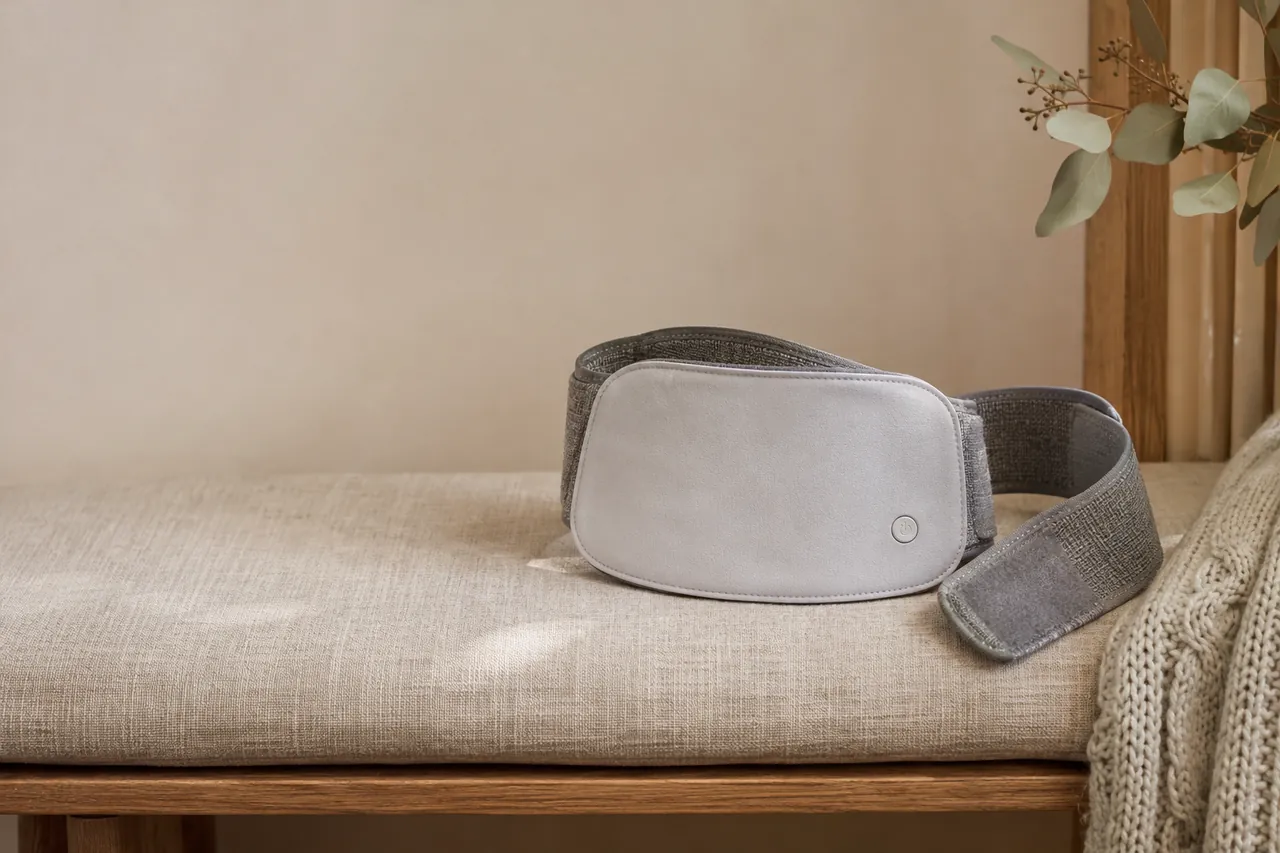
A reusable menstrual heat pad can be used more than once, but reuse alone does not establish its overall environmental impact. Materials, manufacturing, transport, energy, care and disposal all contribute to a product’s life cycle. A useful comparison starts with the details you can actually find for the item you intend to use.
Introduction
For period comfort, heat is one self-care option: Mayo Clinic includes a heating pad among approaches that may ease menstrual cramps. If you are looking for a menstrual heat pad with environmental considerations in mind, the questions below help you compare choices without relying on a vague “green” label.
What does “reusable” tell you?
A reusable pad is intended for repeated use according to its instructions. That differs from a single-use patch, which is discarded after its stated use. Fewer items purchased or discarded can be relevant to a person’s choices, but it does not by itself measure total emissions, resource consumption or environmental impact.
The comparison depends on what is made, how often it is used and what happens at the end of its life. A rechargeable belt, a plug-in pad and a microwavable insert have different components and routines. A broad claim that one is always the most sustainable would require a comparable life-cycle assessment, not just a count of items in a bin.
Before buying, make a small use plan: check whether a suitable pad or hot-water bottle is already at home, where you would use it and how you would clean it. If you are comparing a reusable pad with single-use patches, estimate how many sessions you expect and how many patches those sessions would require. That count helps plan purchases; it does not measure either option’s full environmental footprint.
Read the claim, then look for the detail
The US Federal Trade Commission’s consumer guidance encourages shoppers to look for specific explanations behind environmental claims. “Recycled content,” “recyclable” and “reusable” refer to different things. One concerns material already used in a product, another concerns possible end-of-life processing, and another describes repeated use.
Check whether a statement applies to the product, the cover or only the packaging. If a package says it contains recycled material, look for the proportion and the part it describes. If a product is described as recyclable, check the materials and the options available in your area. A recycling symbol or a colour on a box is not a complete disposal instruction.
A heating pad can combine fabric, a controller, wiring or a battery. The fact that one component can be separated does not establish that the entire device belongs in household recycling. Keep the product’s disposal instructions and use local collection guidance for electrical items and batteries. Do not cut open or dismantle an electrical pad to sort it yourself.
Look for a clear comparison whenever a seller says “less” or “lower.” A meaningful claim identifies what is being compared and which part of the product or package is involved. “Less packaging than the previous version,” for example, addresses packaging; it does not automatically describe the electricity used by the pad or the impacts of its materials. Keeping those claims separate makes a product page easier to evaluate.
What three product designs show
Pure Enrichment’s PureRelief Lumbar & Abdominal Heating Pad is a corded reusable example. Its listing describes adjustable straps, four heat settings and a separate hot-and-cold gel pack. Its placement, care and power needs are properties of that model; they do not establish a measured environmental ranking against another pad.
The company’s WeightedWarmth Weighted Body Pad with Heat is a different reusable product. The listing describes a six-pound weighted pad, three heat settings and spot-clean-only care. Its size, weight and care routine may matter to a buyer, but those features alone do not tell you its lifetime footprint or whether its materials can be recycled locally.
Sunbeam’s GoHeat Cordless Heating Pad uses a rechargeable battery and a strap. Its cordless operation changes where it can be worn, while charging adds a power supply and battery to the care and disposal questions. Compare the exact model and included components rather than assuming that all rechargeable wraps use identical parts.
Turn those descriptions into a practical comparison: note whether the power source is built in or separate, what surface needs cleaning, and where the item will be stored. Then look for a specific environmental claim about that same version. The number of settings or the name of a filling alone does not establish how long a product will last or its carbon footprint.
Care is part of a realistic reuse plan
Before choosing a pad, check the care label. A machine-washable component, a removable cover and a spot-clean-only surface require different routines. Pure Enrichment lists spot cleaning for the weighted body pad; follow its instructions instead of applying a washing method from another heating product.
For an electric or battery device, switch it off and disconnect the permitted components as directed before cleaning. Keep controllers, batteries and cords away from water unless the product instructions explicitly say otherwise. Allow cleaned components to dry as directed before reconnecting power, and store the pad according to its manual without damaging cords or heating elements.
Inspect the product before use. Frayed cables, damaged fabric, a compromised battery or an unreliable control are reasons to stop using it. Do not keep a damaged heating device in service merely to avoid replacing it, and do not attempt to repair internal electrical parts unless the product’s instructions explicitly provide a safe procedure.
Power and disposal are separate questions
A corded pad draws power during use; a cordless model needs its battery charged. The amount depends on the actual device and use. Without comparable measurements, a rechargeable belt cannot be called more energy-efficient than a plug-in pad simply because it is cordless. Match any power supply to the device and follow its own instructions.
When a product reaches the end of its useful life, look up the collection rules for your location. Electrical equipment and batteries may be handled differently from ordinary packaging, and local programmes vary. A detachable battery or controller should only be separated in the way the product instructions allow; if it is not designed for user removal, do not force it apart.
Packaging has its own end-of-life route. A cardboard sleeve, plastic film and mixed-material pad may need different handling. The FTC also distinguishes recyclable from compostable: a compostability claim concerns whether a material can safely become usable compost under stated conditions, not whether it belongs in a recycling bin. Read the claim for each component and check the collection options where you live.
Use warmth safely as part of period care
A systematic review of heat therapy for primary dysmenorrhea reports that heat may reduce pain; individual response and the products studied vary. A device’s eco claim does not establish a medical effect, and a timer does not prescribe how long heat should remain against your skin. Follow the instructions for your own pad.
Stay awake when using an electric pad and check your skin frequently. Stop if the pad feels uncomfortably hot or your skin becomes irritated. Cleveland Clinic describes toasted skin syndrome as discoloration associated with repeated heat exposure. Never put an electric pad, battery or controller in a microwave; heat a separate insert only when its own directions permit it.
The GoHeat 2000-825 manual says not to sit on, lean against or crush that pad. It also says the model must not be used by people with diabetes, poor circulation or insensitivity to heat, or by children and people who are sleeping or unable to respond. These are specific instructions for that model; read all warnings for the product in your hands.
Pain that regularly disrupts ordinary activities deserves medical evaluation. Get emergency help for severe or worsening pelvic pain, pain that hurts when you move or touch the area, or pelvic pain accompanied by faintness, dizziness, shoulder-tip pain, difficulty breathing, heavy vaginal bleeding or sudden confusion. If you have pelvic pain and are pregnant or might be pregnant, seek urgent medical advice. A reusable heat pad is a comfort option and cannot identify the cause of pain or replace care in these situations.
References
FTC — Eco-Friendly and Green Marketing Claims: https://consumer.ftc.gov/articles/eco-friendly-and-green-marketing-claims
Mayo Clinic — Menstrual cramps: diagnosis and treatment: https://www.mayoclinic.org/diseases-conditions/menstrual-cramps/diagnosis-treatment/drc-20374944
PubMed — Heat therapy for primary dysmenorrhea: systematic review and meta-analysis: https://pubmed.ncbi.nlm.nih.gov/41657584/
Pure Enrichment — PureRelief Lumbar & Abdominal Heating Pad: https://pureenrichment.com/products/purerelief-lumbar-abdominal-heating-pad-gray
Pure Enrichment — WeightedWarmth Weighted Body Pad with Heat: https://pureenrichment.com/products/weightedwarmth%E2%84%A2-weighted-body-pad-with-heat
Sunbeam — GoHeat Cordless Heating Pad: https://www.sunbeam.com/pain-relief/general-muscle-pain/sunbeam-goheat-cordless-heating-pad/SP_438956.html
GoHeat 2000-825 user manual: https://newellbrands.imgix.net/ebc87331-047b-3ddc-a7bf-c7795cb72a72/ebc87331-047b-3ddc-a7bf-c7795cb72a72.pdf
Comfytemp — Period Pain Relief Without Pills: https://comfytemp.com/blogs/news/period-pain-relief-without-pills
Cleveland Clinic — Toasted Skin Syndrome: https://my.clevelandclinic.org/health/diseases/toasted-skin-syndrome
NHS — Pelvic pain: https://www.nhs.uk/symptoms/pelvic-pain/