
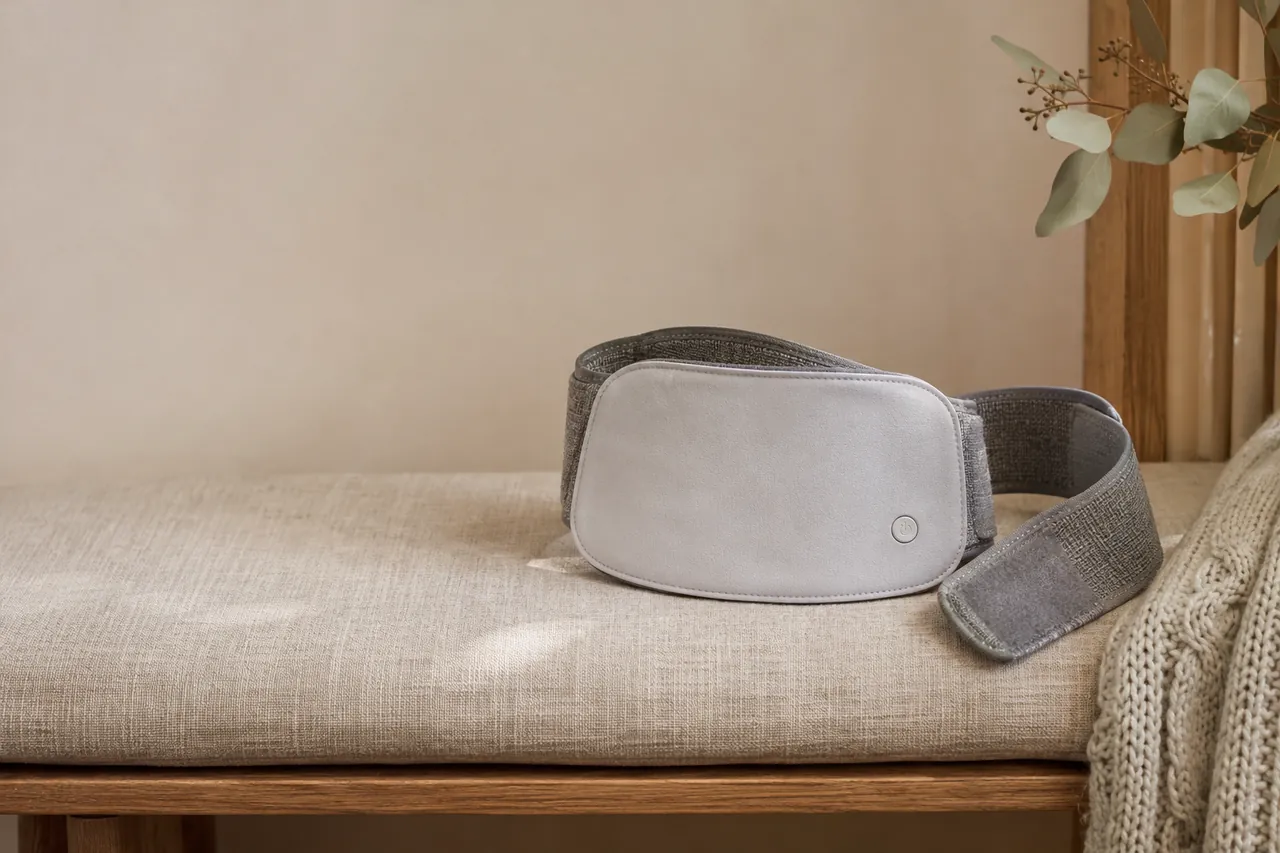
A lavender wheat bag brings two separate things to a period-care routine: warmth against the lower abdomen or back, and a botanical scent in the surrounding air. The warmth is the part used for comfort during cramps. The lavender is a fragrance choice, so whether it belongs in your routine comes down to how you respond to its smell.
Introduction
That distinction makes shopping easier. Start with the shape, the way the pack is heated, and how it sits on your body. Then decide whether you actually want fragrance. A scented pack is not a requirement for heat care, and an unscented pad can be a better fit if floral smells bother you.
What to look for before choosing lavender
Think about where you expect to place the pack. A broad, flexible bag can cover the lower abdomen or rest across part of the lower back; a smaller shape may be easier to position when seated. Choose a size you can move away without effort and that fits comfortably over a layer of clothing. If the pack shifts or bunches, reposition it instead of tightening clothing over it.
Consider the smell before committing to a scented product. Lavender is recognizable, but preferences differ: some people welcome a floral scent during a quiet break, while others find fragrance distracting. If you share a room or often feel sensitive to odors, an unscented version leaves more control over the surrounding environment. A scent is an optional part of the experience, not a measure of how well a pack warms.
The heating method matters just as much as the filling. A microwavable wheat bag is heated before use and gradually cools. A corded electric pad needs a power connection, while a battery-powered wrap depends on its own charging system. These products have different care and operating instructions, so their directions cannot be exchanged. Medical News Today’s heating-pad review provides a useful overview of the range of formats.
A real example: wheat and lavender buds
Scentered’s Lavender Wheat Bag is one example of the scented grain-bag format. Its product page identifies a cotton bag containing wheat and lavender buds. That description tells you what is inside; it does not establish that the fragrance treats menstrual pain or that this particular bag performs better than an unscented alternative.
Compare that construction with a plain wheat bag if the soft weight and shape appeal to you but you prefer less fragrance. Compare it with an electric pad if you would rather use a device with controls than prepare a pack in a microwave. The right choice depends on your own preference, how you plan to position it, and whether you can follow the care directions for that format.
Scentered lists this bag at approximately 47 by 14 centimetres. That long, narrow shape gives you a concrete comparison with a square pad: consider how it would lie across the area you want to warm and whether you can move it away easily. For this bag, Scentered specifies heating in a clean microwave with a rotating turntable for one to two minutes maximum on a medium setting. Its care directions say to wipe the bag with a damp cloth. These details belong to the Scentered wheat bag and should not be transferred to another pack or an electrical device.
How to prepare a microwavable wheat bag
Read the directions attached to the particular bag before the first use and each time you need a reminder. Fire and Rescue NSW advises following those instructions and not overheating wheat-filled packs. The correct heating instructions belong to the product in front of you; a timing suggestion for another bag is not a substitute. Never place an electric heating pad, its cord, controller, or battery in a microwave.
Stay with the microwave while the bag is heating and make sure the turntable can move freely. If smoke or fire appears inside the oven, switch it off and unplug it if safe to do so; keep the door closed and contact emergency services. Do not open it until the fire is completely out. Discard a scorched or damaged bag rather than using it again.
Once heated, handle the bag carefully and check that its warmth is comfortable before placing it over clothing. Do not add essential oils or other fragrances to a wheat bag: Fire and Rescue NSW warns that adding oils increases fire risk. A bag that already contains lavender buds should be used as supplied, according to its own directions.
Let the bag cool completely before reheating. After use, place it on a non-combustible surface to cool fully before putting it away. Do not use a wheat bag to warm bedding, and do not sleep with one. These steps matter because heat retained inside the filling can create a fire risk even after the microwave has stopped.
A comfortable placement is one you can monitor
For period cramps, many people place a warm pack over the lower abdomen; lower-back discomfort may make a back placement more appealing. Set the bag over a light layer of clothing and arrange it so you can remove it promptly. Avoid trapping a hot pack beneath your body or squeezing it tightly under bedding. Stay awake while using it, and take it away if the heat feels excessive.
Check your skin during use. Stop if you notice irritation, redness, or discomfort. Repeated or prolonged exposure to heat can lead to a mottled skin change called erythema ab igne, sometimes known as toasted skin syndrome. Cleveland Clinic describes this pattern in relation to repeated heat exposure, which is a useful reminder that a comfortable sensation does not make constant exposure a good routine.
Healthline’s guide to heat and cold also emphasizes matching the approach to the situation. A soft pack is a comfort tool rather than a reason to ignore skin changes. If you have reduced sensation or a condition that affects your ability to detect heat, obtain medical guidance before using heat therapy.
When fragrance is not your friend
Lavender is not equally comfortable for everyone. The National Center for Complementary and Integrative Health notes that lavender-oil aromatherapy can cause headache or coughing, while topical lavender products can trigger allergic skin reactions. These observations concern different kinds of exposure rather than a test of this wheat bag. If its fragrance bothers you, move it away and choose an unscented option.
The same distinction applies to the word “aromatherapy.” Enjoying a fragrance and treating a medical symptom are different claims. Choose lavender because you like having its scent nearby; use a suitable heat source for warmth. There is no need to add perfume, essential oil, or a scented spray to make an existing pack more fragrant.
If you already own an unscented heat pad, you do not have to replace it to build a pleasant routine. A comfortable chair, a favorite book, or a quiet pause can make room for rest without adding anything to the heating product. Keep the pad’s care directions and your skin’s response at the center of the decision.
Putting heat in context during your period
Mayo Clinic lists heat among self-care measures for menstrual cramps. It also discusses exercise and over-the-counter pain relievers as options for some people. Follow medicine labels and any clinical advice that applies to you; not every medication is suitable for every person. A heat pack can sit alongside those choices without being treated as a cure.
Make the routine practical. Keep a clean layer of clothing between the bag and your skin, settle into a position where you can monitor it, and put the pack aside when the warmth no longer feels comfortable. If you change position, check that the filling has not gathered in an awkward spot. Afterward, give the bag the cooling time its safe storage requires.
Seek emergency care if pelvic pain is severe, worsening or painful with movement or touch, or if it occurs with faintness, dizziness, shoulder-tip pain, difficulty breathing, heavy vaginal bleeding or sudden confusion. If you have pelvic pain and are pregnant, might be pregnant, or have a high temperature, seek urgent medical advice. Pain that regularly disrupts everyday activities also deserves medical evaluation. Heat can provide comfort, but it cannot identify the cause of persistent or changing symptoms.
References
Mayo Clinic, Menstrual cramps: diagnosis and treatment — https://www.mayoclinic.org/diseases-conditions/menstrual-cramps/diagnosis-treatment/drc-20374944
Healthline, Treating pain with heat and cold — https://www.healthline.com/health/chronic-pain/treating-pain-with-heat-and-cold
Medical News Today, Heating pads for pain relief — https://www.medicalnewstoday.com/articles/best-heating-pads
Cleveland Clinic, Toasted skin syndrome — https://my.clevelandclinic.org/health/diseases/toasted-skin-syndrome
National Center for Complementary and Integrative Health, Lavender — https://www.nccih.nih.gov/health/lavender
Fire and Rescue NSW, Wheat filled heat packs — https://www.fire.nsw.gov.au/fire-safety/home-fire-safety/topics/wheat-filled-heat-packs
Scentered, Lavender Wheat Bag — https://us.scentered.com/products/lavender-wheat-bag
Fire and Rescue NSW, Microwave oven fire safety — https://www.fire.nsw.gov.au/fire-safety/home-fire-safety/topics/microwave-oven-fire-safety
NHS — Pelvic pain: https://www.nhs.uk/symptoms/pelvic-pain/