
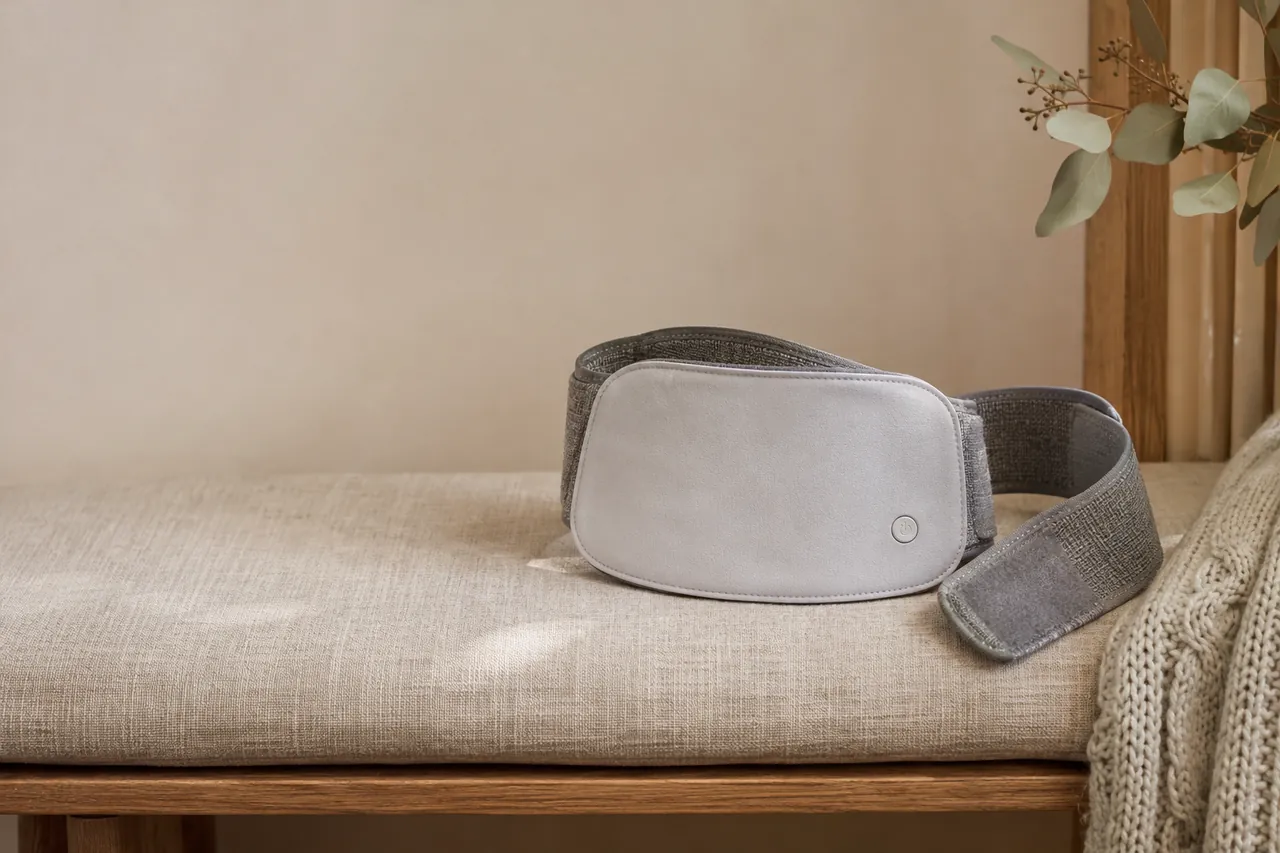
A corded pad, a rechargeable wrap and a microwaveable pack solve the same immediate problem in different ways: each brings warmth to an area affected by cramps. The decision is less about finding a single best machine than choosing the format you can position, monitor and put away comfortably.
Introduction
Compare how each option works first, then consider safe use and how heat fits alongside other measures for period pain.
Choose the format around your day
A menstrual heat pad machine generally refers to an electric warming device used over the lower abdomen or back. Some are flat pads with cords; others are rechargeable wraps held in place by a belt. Other heat formats, including microwaveable packs and disposable patches, do not need a live electrical connection during use. Medical News Today describes several kinds of heating pads and their different designs.
At home near an outlet
A corded electric pad can be a straightforward choice for an awake rest break near a socket. Check that the cord reaches without crossing a walking route, and place the controller where you can reach it easily. A larger pad may cover more of the lower back, while a smaller one can be easier to position over the lower abdomen. Dimensions, settings, and construction vary by model.
Compare controls that you can see and operate comfortably. A pad with adjustable warmth lets you choose among its available settings, but start conservatively and remove the pad if it feels too hot. An automatic shutoff is an additional device feature; it does not mean a pad should be worn during sleep or used against uncomfortable skin.
Away from an outlet
A rechargeable wrap can avoid a trailing cord during an awake break. If the product has a strap, check that it holds the heating area where you want it without pulling tightly. Consider the weight and position of any battery or controller, the range of adjustment, and how easily you can remove the wrap. Recharge it with the equipment and method described in its instructions.
A disposable heat patch is another portable format. Some are attached to clothing or underwear rather than directly to skin. Directions differ among products, including the permitted application site and duration, so read the actual package before use. Do not transfer instructions from an adhesive patch to an electric pad or assume that a battery runtime is a recommended period of skin contact.
When you prefer a non-electric pack
A microwaveable pack is warmed before use and then cools. Only heat a pack that is designed for microwave use, and follow its own heating instructions. Electric pads, cords, controllers, and batteries do not belong in a microwave. A pack that needs reheating also needs time and access to the appropriate appliance, which may influence whether it fits your day.
The surface and shape matter regardless of power source. Look for a size that covers the area you intend to warm without bunching, and choose a device you can adjust or remove on your own. A belt is helpful only if it fits comfortably; tightening a wrap to force it into position can make an uncomfortable session worse.
Make the first session easy to monitor
Read the directions for your pad before switching it on. Inspect the fabric, cord, connector, and controller for damage, and do not use a damaged electrical product. Settle in a position where the heating surface remains flat and you can reach the controls. Keep a light clothing layer between the pad and skin when the directions call for a barrier.
Use gentle, comfortable warmth while awake. Do not lie on top of an electric heating pad, trap it beneath your body, or fall asleep with it operating. Check the area periodically and stop if the skin becomes irritated, unusually red, or uncomfortably hot. Do not use heat on an area where you cannot sense temperature normally.
Repeated or prolonged exposure to low-level heat can cause erythema ab igne, often called toasted skin syndrome. Cleveland Clinic describes a netlike discoloration that can develop over time from sources including heating pads. A fabric layer is helpful but does not make repeated prolonged exposure harmless; give your skin a break and pay attention to any change.
Timers and batteries answer questions about the device, not about your skin. Do not use an advertised runtime as a promise that uninterrupted contact for that entire period is appropriate. You should be able to switch off and remove the pad whenever it feels uncomfortable, regardless of how much charge remains.
After the heat: put the device away safely
Switch off an electric pad when the session ends and disconnect it as directed. Let the device cool before storing it, and avoid wrapping a cord tightly around it or crushing the heating surface. Store a rechargeable device and its battery as specified in the product instructions. If a component is damaged or behaves unusually, stop using it.
Cleaning instructions can differ even between similar-looking pads. Some products have removable covers; others have specific washing procedures or should not be immersed. Disconnect any power components as directed, wash only parts the instructions permit, and make sure washable components are completely dry before reconnecting them. Never put a powered controller, cord, or battery in water.
For microwaveable wheat bags, Fire and Rescue NSW advises allowing the bag to cool completely before reheating and cooling it on a non-combustible surface before storage. Do not overheat it, leave the microwave unattended during heating, use the bag to warm bedding, or sleep with it. Never add essential oils to a wheat bag. These fire-safety steps apply to that format, not as substitute instructions for an electric pad.
Start with the pain you are experiencing
Menstrual cramps often appear around the start of a period and can be felt in the lower abdomen or back. Prostaglandins, substances involved in menstruation, help the uterus contract; these contractions are associated with menstrual pain. The American College of Obstetricians and Gynecologists calls period pain without an underlying pelvic condition primary dysmenorrhea.
A familiar pattern can help you prepare. Notice when discomfort starts, where you feel it, and whether it disrupts work, sleep, school, or ordinary activities. A brief record of symptoms and what you tried is useful if you later need to explain the problem to a clinician. Your experience can change over time, so a new or much more severe pattern deserves attention.
Mayo Clinic includes heat among home measures for menstrual cramps. A systematic review of primary dysmenorrhea studies reported that heat may reduce pain compared with no treatment; the authors rated this pain evidence as low certainty. The trials examined different forms of heat, so their results do not establish that a particular retail pad or setting will work best for an individual.
Know when it is time for medical care
Period pain that prevents normal activities, gets worse, or does not respond to your usual care deserves medical attention. Severe pain can have causes beyond primary dysmenorrhea, including conditions such as endometriosis or fibroids. An evaluation helps distinguish a recurring cramp pattern from symptoms that need a different treatment plan.
Get emergency help for severe or worsening pelvic pain, pain that hurts when you move or touch the area, or pelvic pain accompanied by faintness, dizziness, shoulder-tip pain, difficulty breathing, heavy vaginal bleeding or sudden confusion. If you have pelvic pain and are pregnant or might be pregnant, or have a high temperature or vomiting, seek urgent medical advice. These symptoms should not be managed with heat alone. Bring a list of medicines or treatments you have tried when you receive care.
Add other measures that suit you
Heat is one option among several. Mayo Clinic and ACOG discuss medicines such as nonsteroidal anti-inflammatory drugs for menstrual cramps. Follow the package directions and any medical advice you have received; these medicines are not suitable for everyone. If you cannot take them or your usual approach is not helping, a clinician can discuss other options with you.
Gentle exercise is another self-care option described by the cited health sources. A short walk or a comfortable stretch may be easier on some days than others. Give yourself permission to adjust the activity to how you feel rather than pushing through severe pain. A warm bath or shower is also listed by Mayo Clinic as a way to apply heat.
References
Mayo Clinic, Menstrual cramps: diagnosis and treatment
Medical News Today, Heating pads for pain relief
Verywell Health, What helps with period cramps
Cleveland Clinic, Toasted skin syndrome
Yuan and colleagues, Heat therapy for primary dysmenorrhea: systematic review
American College of Obstetricians and Gynecologists, Dysmenorrhea: painful periods
Fire and Rescue NSW, Wheat-filled heat packs
Fire and Rescue NSW, Microwave oven fire safety
NHS — Pelvic pain: https://www.nhs.uk/symptoms/pelvic-pain/