
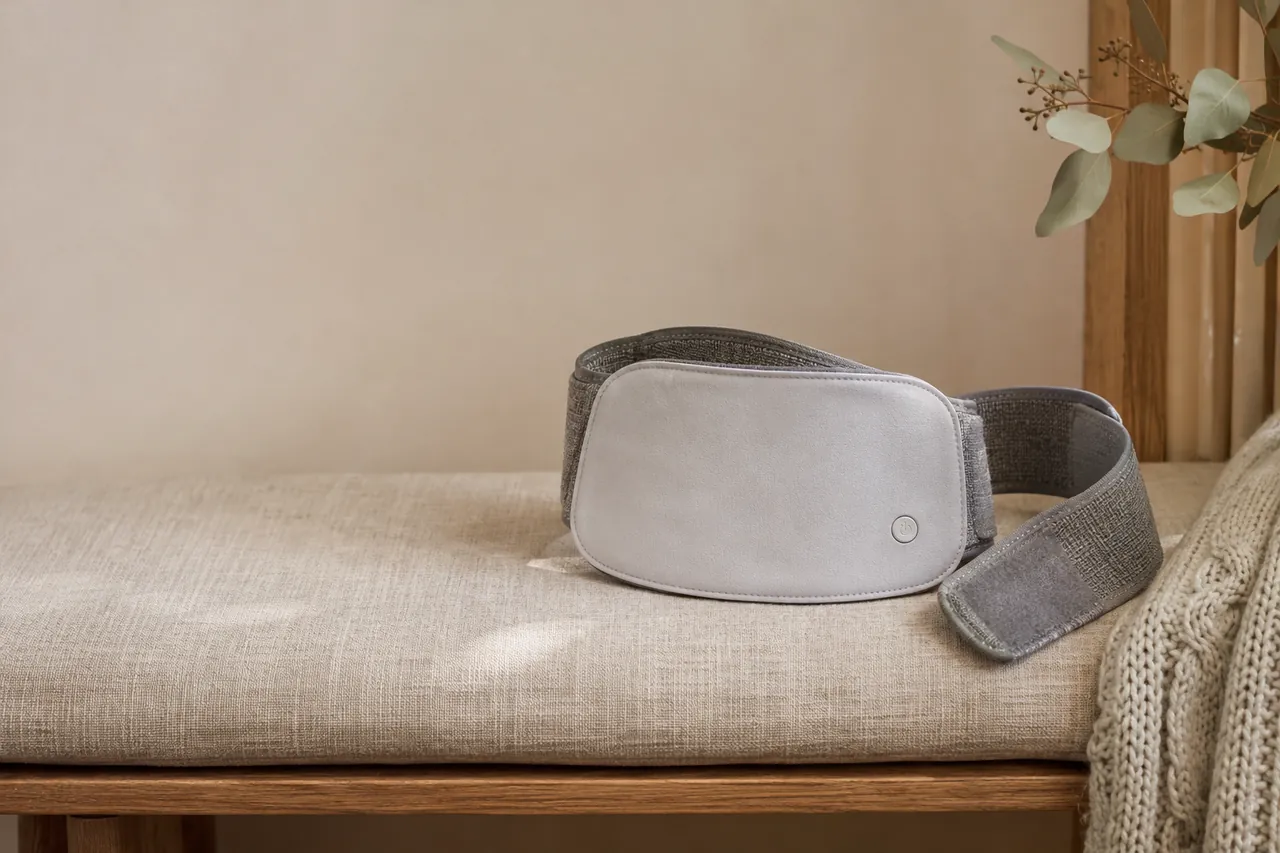
A heating pad acts first where you can feel it: on the skin of the lower abdomen. The warmth may make period cramps easier to manage, and Mayo Clinic includes a heating pad among self-care options for menstrual discomfort. What happens between that warm sensation and a change in pain is more complicated than a pad “switching off” a cramp.
Introduction
Heat applied to the outside of the body warms the local tissues and can increase local blood flow. Studies of period pain generally measure how participants rate their discomfort; those scores do not directly show how deeply a particular pad heats the body or prove that it changes uterine contractions. The practical question is whether a comfortable, correctly used heat source helps you manage symptoms.
The first action is local warmth
Place an appropriate heat source on the lower abdomen and the surface tissues become warm. Healthline describes heat therapy as increasing blood flow in the warmed area and helping soothe muscle pain or stiffness. Medical News Today similarly explains that heat can widen local blood vessels. These are general descriptions of heat applied to the body, rather than measurements of what happens inside the uterus during a particular session.
Warmth is also a sensation. A comfortable temperature can make a tense area feel easier to rest, while heat that feels too intense is a reason to stop. A pad’s fabric, shape, and placement affect how the warmth feels against the body. Follow the product’s instructions for a clothing layer or cover and for the areas where the pad is intended to be used.
The experience does not have to be dramatic to be useful. Someone may prefer a small pad on the lower abdomen while sitting in a chair; another person may choose a hot water bottle or a warm bath. Mayo Clinic includes each of these among options for menstrual cramps. The common element is warmth, while the preparation and safety instructions differ.
Why cramps and the abdominal wall are not the same thing
Menstrual cramps are associated with contractions of the uterus. The pain can be felt in the lower abdomen and may be accompanied by discomfort elsewhere. A heating pad sits on the outside of the body, so a simple description of warming skin or local muscles should not be presented as a direct measurement of heat reaching the uterus.
Researchers have proposed several ways heat could contribute to comfort, including changes in blood flow and muscle tension. A plausible explanation is not the same as proof that one particular mechanism accounts for every person’s response. It is more useful to describe what studies actually measured: participants’ reports of pain under the conditions of a trial.
This distinction also prevents a common shopping mistake. A product label that mentions a material, a heating technology, or a vibration mode does not by itself establish that the feature treats uterine contractions. Compare the product’s documented functions with your practical needs, and interpret medical claims using the evidence that specifically supports them.
What the research shows about menstrual pain
A systematic review published in 2026 assessed heat therapy for primary dysmenorrhea: menstrual pain without an identified pelvic pathology. It included 57 randomized trials involving 5,359 participants. In pooled comparisons with no treatment, the authors reported that heat was associated with a reduction in pain intensity. The reviewed interventions were varied, so the result should not be attributed to a single commercial heating pad.
The authors also described limitations. Some included trials had weaknesses in randomization or allocation concealment, and certain analyses combined studies that differed substantially. The review helps explain why heat is considered a self-care option, but it does not guarantee an identical result for every person or establish one universal temperature and duration.
Primary dysmenorrhea is different from pain associated with an underlying condition, such as endometriosis or fibroids. Heat may still be part of an individual comfort routine, but the research result alone does not diagnose or treat those conditions. Pain that becomes severe, worsens, or disrupts normal activities deserves medical attention.
How different pads create warmth
Electric heating pads use a power source and controls to generate heat. Some connect to an outlet; others use a rechargeable battery. Medical News Today describes both formats and notes that heating devices differ in size, shape, and mechanism. When comparing them, check the listed application area, control arrangement, and product instructions.
A corded pad can suit a place where an outlet is available. It does not require a battery to be charged, but the cord needs a safe route and a comfortable amount of slack. A rechargeable wrap avoids a wall cord during use, although the battery needs charging and its operating time depends on the specific model and setting.
A microwaveable pad works differently. A suitable non-electric pack is warmed first and then gradually cools while it is used. It requires access to a microwave and product-specific heating instructions. Never place an electric pad, cord, controller, or battery in a microwave, and do not use one pack’s timing as the rule for another.
The way a device produces warmth and the result a study measures are separate details. A trial can compare reported pain after heat with a control group without measuring whether a particular heating element changes uterine activity. When reading a product claim, look for a study of that exact claim rather than assuming that a description of its construction establishes a clinical effect.
What a comfortable session looks like
Start with the instructions for the device you have. Inspect an electric pad and its cord or battery for visible damage before use, and select a level of warmth that feels comfortable. Position the pad only on areas named by its instructions. A pad designed for the lower abdomen is a better match for that placement than a product whose listed use is limited to another body area.
Stay awake while heat is applied. Check the skin periodically and stop if the pad feels too hot or causes irritation. Do not lie on top of an active pad or cover it with heavy bedding unless the product explicitly permits that use. An automatic shutoff is a useful feature, but it does not replace attention to your skin and comfort.
Repeated or prolonged exposure to heat can cause a netlike skin discoloration known as toasted skin syndrome. Cleveland Clinic advises avoiding the heat source when this occurs. Stop using heat if skin changes develop, and seek medical care for persistent changes. People with reduced skin sensation need particular caution because excessive heat may be harder to notice.
Cleaning follows the product, too. Disconnect an electric device before cleaning and keep batteries and controllers away from water. Some covers can be washed after specified components are removed; others require spot cleaning. Let the parts dry as directed before reconnecting power. A grain-filled pack may have a different care routine from an electric wrap.
Warmth can be one part of a wider plan
The Comfytemp period-comfort article discusses gentle movement, changing position, and supported rest alongside warmth. Mayo Clinic also notes that physical activity helps ease cramps for some people. A short walk or a position change can be chosen according to how you feel; stop an activity that increases discomfort.
Pain that interferes with work, school, sleep, or other daily activities deserves medical evaluation. Pelvic pain needs emergency care when it is severe, getting worse or hurts when you move or touch the area. Seek emergency help as well if it occurs with faintness, dizziness, shoulder-tip pain, difficulty breathing, heavy vaginal bleeding or sudden confusion. Get urgent medical advice for pelvic pain if you are pregnant or might be pregnant, or have fever or unusual bleeding or discharge. Heat cannot identify the cause or replace care in these situations.
The clearest answer to how a menstrual heating pad works is therefore practical and evidence-aware: it supplies warmth to the area where it is applied, and heat has been studied as a way to reduce primary menstrual pain. Choose a format you can use as directed, keep the warmth comfortable, and give persistent or disruptive symptoms the attention they deserve.
References
Medical News Today — 8 of the best heating pads for pain relief: https://www.medicalnewstoday.com/articles/heating-pads-for-cramps
Healthline — Treating Pain with Heat and Cold: https://www.healthline.com/health/chronic-pain/treating-pain-with-heat-and-cold
Mayo Clinic — Menstrual cramps: diagnosis and treatment: https://www.mayoclinic.org/diseases-conditions/menstrual-cramps/diagnosis-treatment/drc-20374944
Yuan and colleagues — Heat therapy for primary dysmenorrhea, systematic review: https://pubmed.ncbi.nlm.nih.gov/41657584/
Comfytemp — Period Pain Relief Without Pills: https://comfytemp.com/blogs/news/period-pain-relief-without-pills
Comfytemp — Heating Pad Collection: https://comfytemp.com/collections/heating-pad
Cleveland Clinic — Toasted Skin Syndrome: https://my.clevelandclinic.org/health/diseases/toasted-skin-syndrome
NHS — Pelvic pain — https://www.nhs.uk/symptoms/pelvic-pain/