
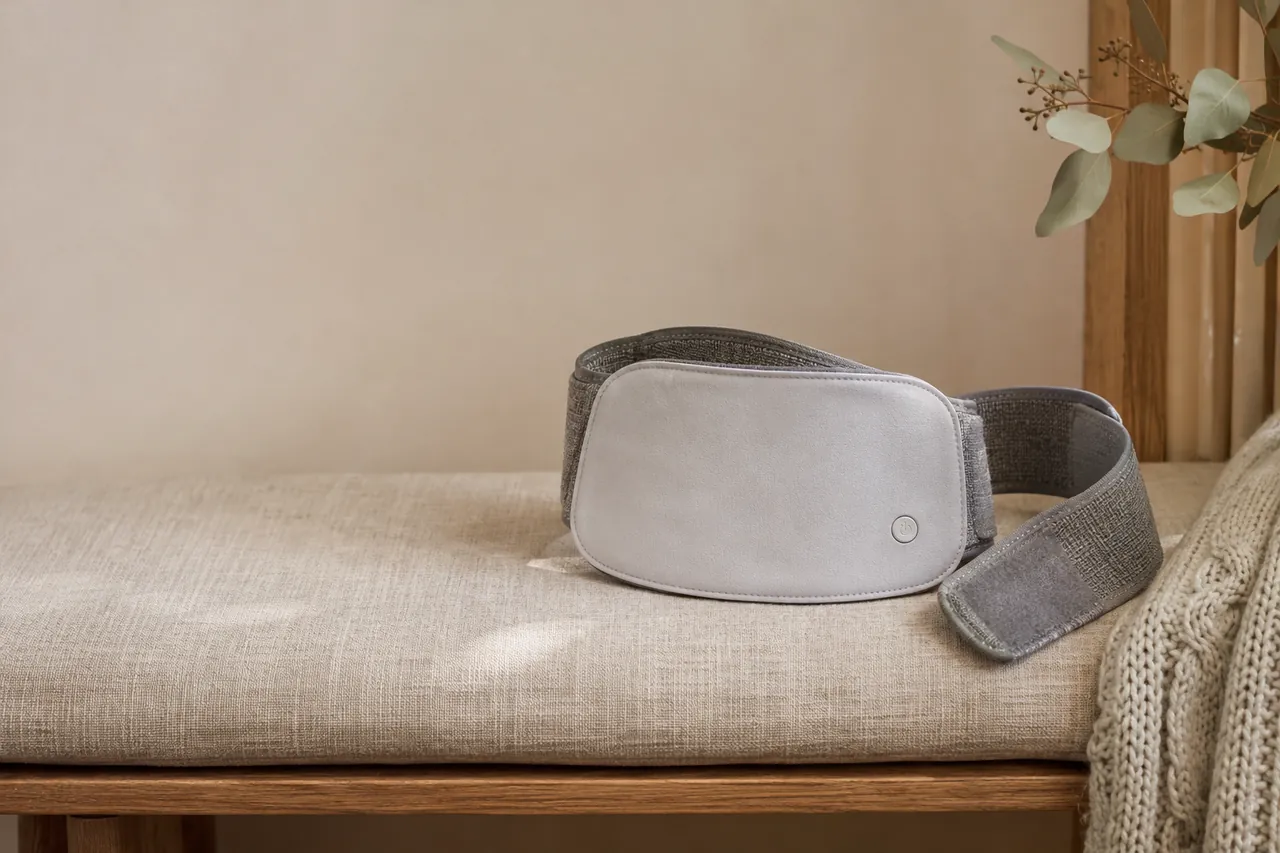
Mayo Clinic lists a heating pad, heat patch, hot water bottle or warm bath among self-care options that may ease menstrual cramps. A pad brings warmth to a chosen area, and its shape and controls affect how it fits into a routine.
Introduction
The research tells a more specific story. Studies have examined heat for primary dysmenorrhea, a term for menstrual pain without an identified pelvic condition. Their results help explain why heat is used for comfort, while the design of an individual pad affects fit, controls, and convenience. Here is how to understand both sides of the choice.
The benefit most people are looking for: easing cramps
Menstrual cramps can make ordinary activities harder, whether the discomfort is brief or persists through the day. Applying warmth to the lower abdomen is one approach Mayo Clinic includes in its discussion of menstrual cramp care. A pad is not the only way to do this: a hot water bottle, heat patch, or bath is another option in the same guidance.
The experience is individual. A comfortable level of warmth and a convenient shape can make a pad easier to use, but neither its appearance nor the number of buttons guarantees the same result for everyone. Pay attention to your own comfort and follow the directions for the particular product.
Heat is a way to manage discomfort; it does not identify why pain is happening. If periods become unusually painful, worsen, or interfere with work, school, or normal activities, a medical evaluation can help identify the cause and appropriate treatment. A warming routine can sit alongside that care rather than delaying it.
What researchers have studied
In a 2018 systematic review, researchers assessed randomized trials of heat for primary dysmenorrhea. They found six eligible trials and reported results suggesting that heat helped reduce menstrual pain in the studied groups. The authors also noted that the evidence came from relatively few trials with small samples and called for more rigorous research.
A 2026 systematic review included 57 randomized trials involving 5,359 participants with primary dysmenorrhea. Its comparison of heat with no treatment after three months pooled a subset of 25 trials involving 2,393 participants and found lower reported pain with heat. The review included different forms of heat and study designs; these numbers describe the research groups, not the performance of a particular retail pad.
The later authors also described important limitations, including weaknesses in randomization or allocation concealment in many trials and substantial differences between studies in some analyses. That matters when interpreting a pooled result. A review can tell us that heat is a reasonable option to consider; it cannot promise the same degree of relief for each person or establish a perfect setting for every device.
The distinction between primary and secondary dysmenorrhea is also useful. Primary dysmenorrhea refers to menstrual pain without an identified pelvic pathology. Secondary dysmenorrhea is pain associated with an underlying condition. Findings from trials focused on the first group should not be presented as proof that a heating pad treats a particular underlying condition.
Comfort depends on how the pad fits your day
The research question and the shopping question are related but different. A study might measure changes in pain scores; a buyer also needs to decide whether a pad stays where it is wanted, how it receives power, and whether its care routine is manageable. Those practical features affect convenience, not proof that one brand works better medically.
A corded pad can be a straightforward choice for use near an outlet. A wrap with an adjustable strap may appeal to someone who prefers a pad held in position while seated. Check the manufacturer’s listed application areas, the location of the controller, and whether the pad fits comfortably over your usual clothing.
A rechargeable device offers a different arrangement. Sunbeam’s GoHeat Cordless Heating Pad uses a rechargeable battery, has three heat settings, and includes an adjustable strap. Sunbeam describes this model for the back, arms, legs, and shoulders; the listing should not be taken as an instruction to use it on an unlisted area. The manufacturer states up to four hours on a charge at the low setting.
A microwaveable pad has no electrical cord during use, but it needs a suitable microwave for preparation and gradually cools afterward. Only warm a product that is explicitly labelled for microwave use, using its own time, power, and cooling instructions. A battery-powered or corded electric pad must never go into a microwave.
A result compared with no treatment answers a particular research question. The 2026 review reported an average difference of 1.85 centimetres on a 10-centimetre pain scale after three months in that pooled comparison. It is a group estimate, not a prediction for one person, and it does not isolate the effect of a particular product, setting or material.
Making warmth part of a manageable routine
A useful routine does not need to be elaborate. Choose a place where you can sit comfortably and remain awake, position the pad as its instructions direct, and use a level of warmth that feels comfortable. If the device has a strap, it should hold the pad without feeling restrictive. Stop or reposition it if it bunches or becomes uncomfortable.
The Comfytemp period-comfort article also discusses changing position and gentle movement during the day. Mayo Clinic notes that physical activity helps ease cramps for some people. A brief walk, a comfortable change of posture, or a warm bath may fit the day alongside heat; choose what feels manageable rather than forcing a routine that increases discomfort.
Think about access as well. A pad kept with its controller and instructions is easier to find when needed. A rechargeable model needs a charging routine, while a microwaveable item needs a place to cool. These small arrangements can make a comfort measure more practical without turning it into a complicated protocol.
Protect your skin and follow the device instructions
Heat should feel comfortable, not intense. Follow the product directions for temperature, duration, and any clothing or fabric barrier. Check your skin periodically and stop using the pad if it feels too hot or causes irritation. Do not lie on top of an active electric pad or trap it under heavy bedding unless the specific instructions explicitly permit the arrangement.
Do not fall asleep with an active heating pad or warmed pack on your body. Turn off an electric pad and remove it before sleeping or napping. An automatic shutoff is a useful product feature, but it does not replace paying attention to comfort while awake.
Repeated or prolonged exposure to heat can cause a netlike skin discoloration called toasted skin syndrome. Cleveland Clinic describes this condition and advises avoiding the heat source. Stop applying heat when skin changes appear, and seek medical advice if they persist. People with reduced skin sensation need particular care because they may not notice excessive heat promptly.
Cleaning is model-specific. Sunbeam says the GoHeat pad and strap can be washed after its battery unit is removed according to its instructions; the pad and connector must be completely dry before reconnection. Other pads are spot-clean only. Keep batteries, controllers, and electrical connections out of water and follow the supplied care label.
When to look beyond a heating pad
Pain that disrupts daily life deserves medical evaluation. Pelvic pain requires emergency care if it is severe, getting worse or hurts when you move or touch the area. Seek emergency help as well if pelvic pain comes with faintness, dizziness, shoulder-tip pain, breathing difficulty, heavy vaginal bleeding or sudden confusion. Get urgent medical advice for pelvic pain if you are pregnant or might be pregnant, or have fever or unusual bleeding or discharge. Heat cannot identify the cause or replace care in these situations.
A sensible choice brings the evidence and the practical details together. Heat has been studied for primary menstrual pain, and clinical guidance includes it as a self-care option. Select a format that suits the intended use, follow its instructions, and give your skin and comfort the same attention as the product’s features.
References
Mayo Clinic — Menstrual cramps: diagnosis and treatment: https://www.mayoclinic.org/diseases-conditions/menstrual-cramps/diagnosis-treatment/drc-20374944
Jo and Lee — Heat therapy for primary dysmenorrhea, 2018 systematic review: https://pubmed.ncbi.nlm.nih.gov/30389956/
Yuan and colleagues — Heat therapy for primary dysmenorrhea, 2026 systematic review: https://pubmed.ncbi.nlm.nih.gov/41657584/
Comfytemp — Period Pain Relief Without Pills: https://comfytemp.com/blogs/news/period-pain-relief-without-pills
Comfytemp — Heating Pad Collection: https://comfytemp.com/collections/heating-pad
Sunbeam — GoHeat Cordless Heating Pad: https://www.sunbeam.com/pain-relief/general-muscle-pain/sunbeam-goheat-cordless-heating-pad/SP_438956.html
Healthline — Treating Pain with Heat and Cold: https://www.healthline.com/health/chronic-pain/treating-pain-with-heat-and-cold
Cleveland Clinic — Toasted Skin Syndrome: https://my.clevelandclinic.org/health/diseases/toasted-skin-syndrome
NHS — Pelvic pain — https://www.nhs.uk/symptoms/pelvic-pain/